In The Navy (1941) review-pratfall propaganda

Much has been written about the manufacturing might of the United States during times of conflict.

This is especially true during the Second World War, which sparked an industrial boom that single-handedly lifted America out of the Great Depression.

But outside of producing tanks, planes, and battleships, the U.S. was also keen on pumping out a flood of pop culture properties that kept the public sympathetic to the war effort.

This was mostly accomplished through the U.S. Office of War Information, which reviewed over 1,600 scripts throughout 1942-1945, excising anything that cast the country in a bad light.

But even before America officially entered the conflict (in December 1941), military officials were already deeply involved in various Hollywood productions, including the escapist comedies of Bud Abbott and Lou Costello.

In fact, the duo got their first big break in the movies through the military-themed Buck Privates (1941), which became so financially successful that it spawned two follow-up “service comedies” that same year.

The second part of this spiritual trilogy, In the Navy, was shot and released four months after the original, and that quick turnaround definitely shows.

While Buck Privates was charming because of its loose plot and slapstick gags, this nautical follow-up feels pretty lazy by comparison, content with coasting off Abbott and Costello’s newfound fame on the big screen.

The filmmakers’ military overseers also had a noticeably heavier hand in production this time around, to the point that the movie’s finale gets completely torpedoed thanks to third-party meddling.

As a result, it’s hard to see In the Navy as anything other than a blatant piece of military recruitment propaganda, despite it being able to squeeze in a couple decent laughs here and there.

After being relegated to a supporting role in Buck Privates, Abbott and Costello get promoted to main-character status for In the Navy, serving as a pair of hapless sailors who are eager to prove themselves on the high seas.

The duo eventually cross paths with a famous crooner (Dick Powell), who enlists in the navy under a fake name to escape the showbiz limelight.

Abbott and Costello agree to help the singer conceal his identity, which is a lot easier said than done now that an ambitious photojournalist (Claire Dodd) is on the hunt for an exclusive.

Many of the observations I made during my original review of Buck Privates hold true in this pseudo sequel, although the formula has hit some diminishing returns.

As expected, Abbott and Costello’s comedic chemistry is beyond reproach, with rapid-fire zingers and swift physical gags being delivered with pinpoint precision.

The pair work wonders even when things don’t go according to plan. An obvious outtake involving Abbott and Costello spitting water at each other is just left in the final cut of the film and remains one of biggest laughs In the Navy has to offer.

However, several of these routines drag on for far too long and bring the movie’s pace to a screeching halt.

One memorable scene involving a chaotic shell game eats up around five minutes of screen time, ending on a punchline that fails to justify such a lengthy, plotless detour.  

Another skit involving Costello’s unique math skills is similarly disconnected from the overarching narrative and is most likely included to pad the film’s runtime.

A lot of these bits are obviously holdovers from the duo’s stint on the vaudeville stage, given how they would continue to recycle this same material in future projects.

While these career callbacks had some novelty in Buck Privates, they’ve grown stale by this point, especially since these digressions are so disconnected from the ongoing plot concerning Powell’s crooner.

This is a shame, since Powell’s attempts to conceal his identity from Dodd’s photojournalist are quite charming. The pair establish a contentious yet flirty back-and-forth early on, which would have given the film another layer of appeal if it was given time to breathe.

But because of director Arthur Lubin’s focus on unrelated schtick (and another factor we’ll get into later), the film fails to synthesize its various plot threads into a cohesive whole, serving as a showcase for its headlining stars more than anything.

That being said, In the Navy does improve over Buck Privates in one area, and that is how the Andrews Sisters are used.

While the singing trio were a glorified Greek chorus last time, here they function as actual characters in the plot, with Costello looking to woo one of the sisters throughout.

Additionally, the sisters offer a wider variety of musical performances this time around, ranging from a military march to a jazzy club number to a luau-themed ditty.

Unfortunately, whatever goodwill In the Navy built up during its runtime is completely washed away in its third act.

Until this point, the movie’s propagandistic aims were visible but nothing I haven’t seen in other films produced during this era.

Just like with Buck Privates or Caught in the Draft (starring Bob Hope), the military is clearly involved in the movie’s production, providing access to vehicles, equipment, and other window dressing to present an appealing vision of service life.

However, the military’s involvement is taken one step further for In the Navy, since they basically vetoed the film’s climax.

U.S. naval officers reportedly took issue with the film’s ending sequence, where Costello [SPOILERS] unwittingly commandeers a battleship and wreaks havoc in a Hawaiian harbour.  

Not being able to edit this scene out of the movie, the studio opted to assuage the navy’s concerns via costly reshoots, which turned the real-life vehicular mayhem into a dream Costello experiences after ingesting a sedative.  

As if the “it was all a dream” ending wasn’t bad enough, the filmmakers also kneecap the ongoing romance storyline by kowtowing to this pressure from the military.

Since Powell and Dodd can’t be included in this dream sequence climax, their development as a couple is squeezed into the dying minutes of the film, having apparently resolved all their personal hangups off screen.

Some may bristle at me putting so much thought into the plot mechanics of a silly slapstick comedy, but sacrificing your big finale due to outside interests really is beyond the pale.

When this kind of meddling is so obvious, even to the naked eye, it really mutes the film’s other admirable qualities, regardless of how appealing Abbott and Costello’s brand of humour remains in the modern day.

And by the time the credits roll, all you’re left with is the feeling that you’re being fed a meal that is severely undercooked, despite there being way too many cooks in the kitchen.

But don’t let these cliched food metaphors mislead you into thinking that I’m above enjoying some World War II movies phantom-produced by Uncle Sam.

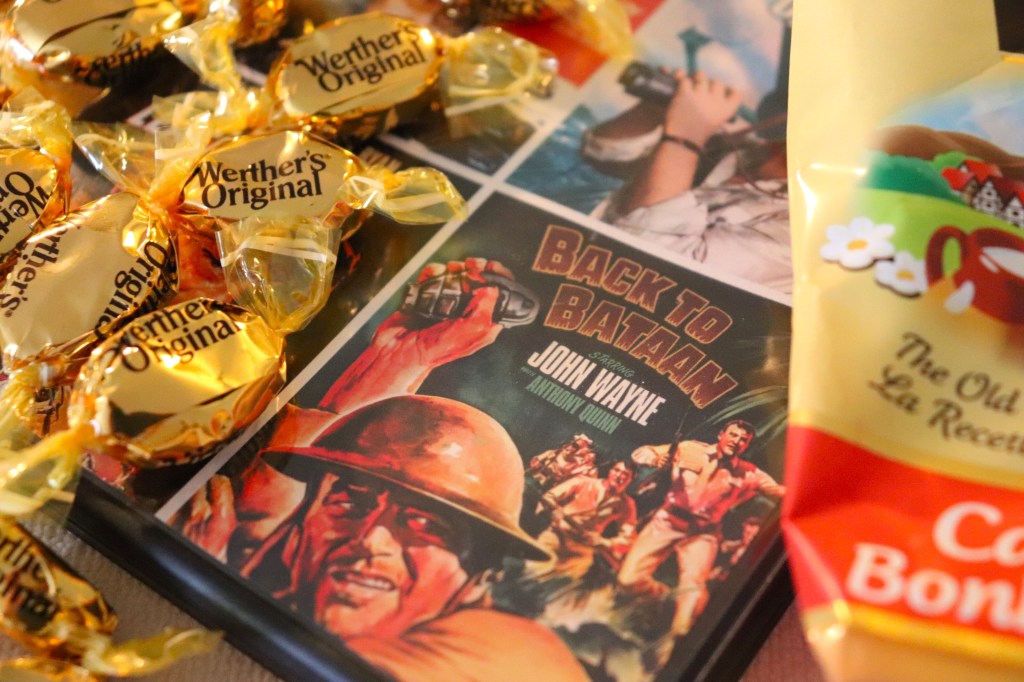
In the past, I’ve given a tepid recommendation to glorified recruitment ads starring American golden boy John Wayne (Back to Bataan, Operation Pacific), because the people behind those projects at least 1) knew how to somewhat disguise their propagandistic aims and 2) deliver on what was being advertised.

With In the Navy, the filmmakers largely failed on both of those fronts, with the movie’s only real saving grace being its eclectic soundtrack.

However, the American public obviously didn’t see it that way in 1941, since this film netted Universal Pictures a tidy profit and continued to push Abbott and Costello as a major box office draw.

The pair then used their newfound fame to help the military more directly once the U.S. officially entered the war, conducting a 78-city tour in 1942 that sold $85 million in war bonds.

Perhaps this cross-country campaign was a better venue for the two parties to collaborate, especially if their other service comedies turned out to be as slap-dash and half-baked as In the Navy.

Verdict:

4/10

Corner store companion:

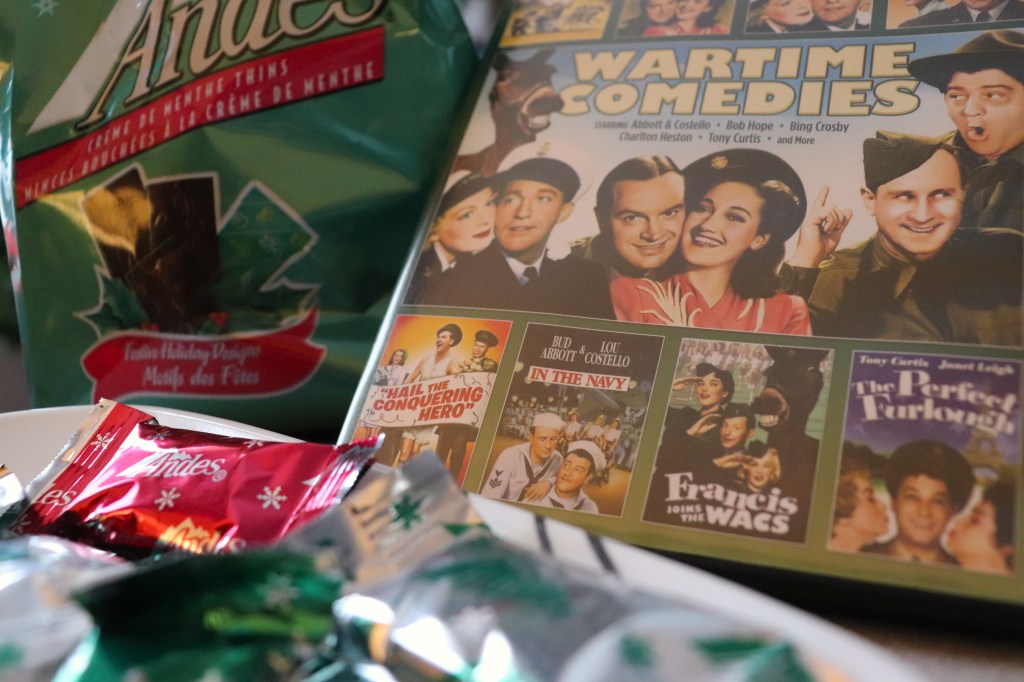
Andes thin chocolate mints (because it’s Christmas, dammit, and I need something sweet!)

Fun facts:

-Release date: May 31, 1941

-Budget: $379,207 (estimated)

-Box office: $2 million (estimated)

-The final entry in Abbott and Costello’s 1941 service comedy trilogy, Keep ‘Em Flying, was released on Nov. 28. This film features the comedy duo enlisting in the U.S. Army Air Corps.

-Outside this 1941 service comedy trilogy (Buck Privates, In the Navy, Keep ‘Em Flying), Arthur Lupin directed Abbott and Costello in Hold that Ghost (1941) and Ride ‘Em Cowboy (1942). Lupin is also responsible for helming five films in the Francis franchise, which features a talking mule enlisting in various branches of the military. 

-Musical highlight: “Gimme Some Skin, My Friend,” by the Andrews Sister

(despite the blatant cultural appropriation on display, originally being recorded by The Delta Rhythm Boys, this is the movie’s catchiest number by far)

Take One False Step (1949) review-tripped over its own two feet

When it comes to escapist cinema, crime thrillers and film noir always hit that sweet spot for me.

While sci-fi and fantasy movies are often marketed as the ultimate break from earthly concerns, the settings and characters are sometimes a little too outlandish to be relatable.

Film noir, however, always keeps one foot rooted in the real world by focusing on the kinds of gritty crime stories that have been grabbing news headlines since Prohibition.

But at the same time, these movies also present a heightened reality full of broad archetypes, hard-nosed dialogue, and stylized visuals.

Another recurring trope is the protagonist (whether that be a private eye, journeyman boxer, or everyday schmuck) getting wrapped up in a vast criminal conspiracy beyond their comprehension, which serves as an ideal audience surrogate.

All these elements are at play in Chester Erskine’s Take One False Step (1949), one of three movies bundled into Kino Lorber’s Film Noir: The Dark Side of Cinema IX collection.

For the first half-hour or so, this project showcases some of the best that the “classic” era of film noir has to offer, with an intriguing mystery and appealing cast that draws you into the story.

Unfortunately, Erskine’s film kind of falls apart after taking a major plot digression in its second act, resulting in an experience that feels like the cinematic equivalent of a giant red herring.

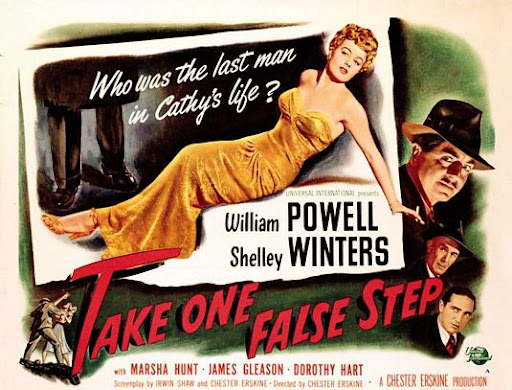
In Take One False Step, William Powell stars as Andrew Gentling, a respected professor who is visiting the State of California to secure funding for a new university.

However, Gentling’s plans get waylaid by the sudden appearance of an old flame (Shelley Winters), who strong arms him into a night of flirtatious drinking before vanishing the following day.

Fearing he could become the prime suspect in this missing persons case, Gentling must scramble to find out what happened to his former lover and dodge a cadre of shady characters in the process.

Despite its title, and a goofy opening montage showcasing a bunch of random people tripping over themselves, Take One False Step actually kicks off on the right foot.

Powell does such a good job at playing the strait-laced academic that his descent into the criminal underworld, where he is forced to constantly lie and break the law to evade police, feels like a big deal.

This tonal shift is hammered home thanks to a nice selection of colourful characters, who give the film’s first act a lot of weight and texture.

Winters’ femme fatale is an obvious example of this, since her glamorous wardrobe and hot-blooded persona serve as the perfect foil for Powell’s dry everyman.

The two also make for an interesting pair considering their contrasting views towards post-WWII America.

While Winters is content with wallowing in the excitement and uncertainty of wartime, Powell remains committed to leaving his military service in the past and build towards a better future (hence the new university).

However, as the story moves forward, Powell is increasingly put in a position where he must abandon these high-minded ideals for his own self-preservation, which adds a nice psychological wrinkle on top of everything.

His descent into moral ambiguity is made even more compelling thanks to some strong supporting players besides Winters.

This includes Marsha Hunt as Winters’ level-headed best friend and James Gleason as the police detective on Powell’s heels, with the latter projecting an unassuming intelligence reminiscent of Peter Falk’s Columbo.

All this is all tied together with some snappy dialogue and slick visuals that one would expect from the genre, combined with an energetic score that helps move the action along at a nice pace.

Unfortunately, all this good set-up is thrown out the window 33 minutes into the movie when Powell gets bitten by a supposedly rabid dog.

Once that happens, the broader mystery regarding Winters’ disappearance is quickly abandoned in favour of this rabies sub plot, where Powell must avoid the authorities while fighting off any emerging symptoms of the disease.

This leads to a handful of scenes where the movie basically stops so that medical professionals can explain what rabies is and how it affects the human body.

It got to the point that I started to wonder if the film’s budget was subsidized by some advocacy group, with its funding being dependent on the script containing some amount of educational content concerning rabies.

This is extra puzzling given the fact that rabies was hardly considered a scourge in North America at that point, with around 40 cases reported each year in the early 1940s and decreasing to a total of 99 for the entire next decade.

While Erskine eventually circles back to the main mystery plot, the film has lost much of its momentum by that point and must settle for a bunch of rushed resolutions.

We don’t even find out about the true nature of the bad guy’s criminal dealings until the last five minutes of the movie, which comes across as a complete afterthought.

This weak revelation is also preceded by one of the stupidest cinematic deaths I’ve seen in a while, which takes place [SPOILERS] when Powell confronts the bad guy in a rail yard.

After a brief tussle with Powell, the villain is spooked by incoming police and quickly finds himself caught between two trains travelling in the opposite direction.

Even though there is clearly enough space and time to avoid these oncoming locomotives, the bad guy stutter-steps like an idiot and gets crushed.

Despite not being shot in a comedic style, I was instantly reminded of the steamroller scene from the first Austin Powers movie, where a henchman’s severe lack of self-preservation is played up for yuks.

The similarly ridiculous death in Take One False Step is extra confusing since the film is sprinkled with humorous moments throughout, which don’t always land or gel with the more serious story beats.

This points to a broader problem with the film, since it lacks a cohesive vision that can marry the good performances and moody visuals with a complimentary script. 

As a result, watching Take One False Step is a profoundly frustrating experience, since you can tell its merits are being weighed down by a few head-scratching decisions.

Turning this mystery story into a rabies PSA is obviously the filmmakers’ biggest blunder, and it might be one of the strangest narrative detours I’ve witnessed covering movies for this blog.

Admittedly, it is kind of funny that a film called Take One False Step so noticeably trips over itself in its second half, a fate that might have been willed into existence by running with such an unwieldy title in the first place.

Hopefully the remaining two films in this Kino Lorber collection can provide more of that crime thriller escapism I mentioned earlier, while containing at least 50% less canine fear mongering.

Verdict:

5/10

Corner store companion:

Nature’s Recipe Chewy Bites (because dog owners will pick up a lot of useful information watching this film)

Fun facts:

-Release date: Aug. 14, 1949

-Budget: $855,000

-Kino Lorber’s DVD case for Take One False Step claims that actor Tony Curtis makes an uncredited appearance in the film, with AFI listing his role as “hot rod driver.” However, Curtis is not included amongst other uncredited actors on the movie’s IMDB page and I personally didn’t spot him during my multiple viewings of the film.

-William Powell received three Best Actor Oscar nominations throughout his career for his work in The Thin Man (1934), My Man Godfrey (1936), and Life With Father (1947). Powell retired from acting following his supporting role in the Best Picture-nominated Mister Roberts (1955) due to health issues.

-I might have subconsciously selected Take One False Step (1949) for a screening based on its titular similarity to Carl Franklin’s One False Move (1992), another crime thriller that I covered back in 2018.

-Despite her extensive filmography throughout the 1930s and 40s, Marsha Hunt was largely blacklisted from Hollywood in the 1950s for speaking out against the House Committee on Un-American Activities and being branded as a Communist sympathizer. Hunt was mostly relegated to working on TV throughout this time, although she would return to film in the decades to come and received a star on the Hollywood Walk of Fame in 1960. She passed away in 2022 at the age of 104.

Take One False Step can currently be watched in its entirety on YouTube.

Back to Bataan (1945) review- military retribution through cinema

The American public was riding a collective high in the spring of 1945, with the Third Reich having officially surrendered to the Allies in early May of that year.

With the fighting in Europe now wrapping up, the United States military turned its full attention to the Pacific theatre of World War II, with the hope of bringing this destructive conflict to a swift end.

Several weeks after Germany’s surrender, American cinemas were able to capitalize off this massive change in fortune through the release of Edward Dmytryk’s Back to Bataan, a film that chronicles the US’ attempt to liberate the Philippines from Japanese control.

Now, I’ve sampled a decent number of WWII-era propaganda for this blog, including another war film starring John Wayne called Operation Pacific (1951).

While that movie was a lot more easy-going in its tone, Back to Bataan features a much more palpable sense of urgency, probably due to the fact that it was shot and released while the Philippines campaign was still underway.  

In fact, Dmytryk’s film could be seen as a form of cinematic retribution on behalf of the US military, who had been handed a monumental defeat when Japan successfully invaded and conquered the Philippine islands several years earlier.

Even though the war would eventually come to an end in summer of 1945, Back to Bataan was probably viewed as a way to keep American morale high in the interim, with a fictionalized recount of the hardship US soldiers and local resistance fighters endured to take back the commonwealth territory.

Admittedly, this “ripped-from-the-headlines” kind of story doesn’t hold nearly the same weight as it did 78 years ago, especially with world-shaking conflicts in Europe and the Middle East holding everyone’s attention in the final months of 2023.

So while Back to Bataan is pretty dated, it at least serves as a time capsule of a lesser known chapter of WWII, with some well-produced action sequences that hammer home the desperation and brutality that characterized the Pacific theatre of that war.

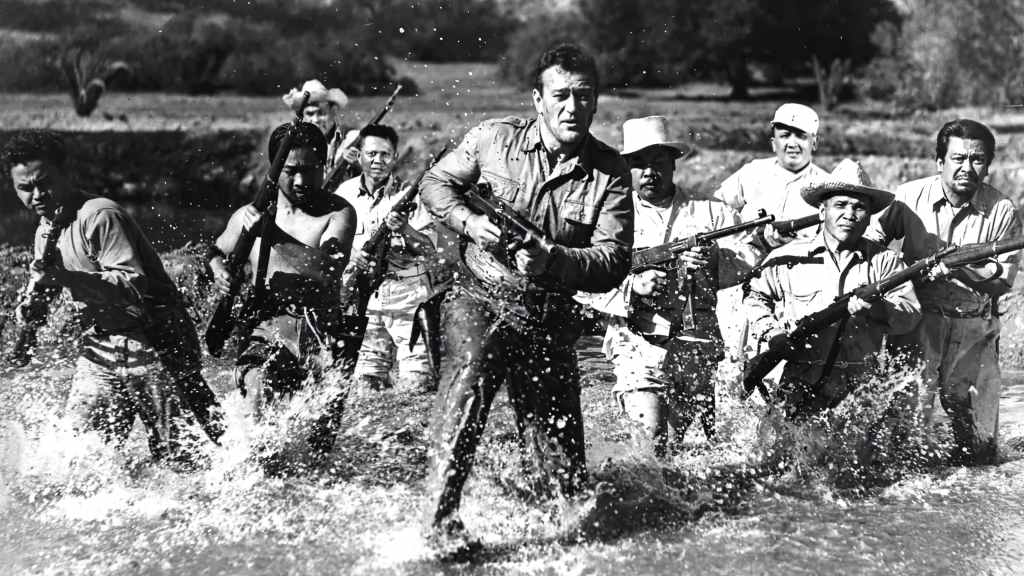
Instead of sailing the high seas like he did in Operation Pacific, John Wayne mostly sticks to dry land this time around as Joseph Madden, an army colonel who is tasked with mobilizing Filipino guerilla fighters to drive Japanese troops out of their homeland.

After making contact with some eager recruits, Madden and his men find themselves in a hopeless situation after US forces are decimated following the Battle of Bataan in early 1942.

Despite being outnumbered and outgunned, this small resistance group is determined to liberate the islands from this invading force, especially with the grandson of Filipino revolutionary Andrés Bonifacio (played by Anthony Quinn) on their side.

Some may bristle at my use of the word “propaganda” to describe Back to Bataan, but I think it’s pretty apt.

Not only does the film begin with a title card thanking the US armed forces for their aid in the production of this film, but it’s followed up by a parade of supposedly real-life American POWs rescued from Japanese prison camps in the Philippines.   

While you could brush this off as just patriotic window dressing, Dmytryk and his screenwriters actively bake these themes and images into key points of the film, usually to its detriment.

For example, the film opens with a puzzling flash forward, where US Army Rangers raid a Japanese prisoner camp near Cabanatuan City in 1945.

This scene is only included because the real-life Raid at Cabanatuan (also known as “The Great Raid”) took place in January of that year and the filmmakers wanted to include it even if they couldn’t organically work it into their story that’s set three years earlier.

By introducing the movie with such a momentous military victory, Dmytryk and his team immediately deflate the ongoing tension in favour presenting the audience with a comforting narrative right off the bat.

American movie-goers are presented with further nationalistic navel gazing once the actual plot gets underway.

This includes a moment when some Filipino school children take turns listing all the great things the US has done during its occupation of their country (like importing soda pop, baseball, and Hollywood movies).

The school’s principal then adds his two cents by proclaiming that America taught the Filipino people that “men are free or they are nothing,” underplaying the fact that the US took control of these islands through shedding lots of blood in the Philippine–American War (1899-1902).

However, the principal’s martyr status is solidified once he is executed by the Japanese several minutes later, firmly establishing the Americans as the benevolent colonizers in this scenario.  

Revisionist history aside, the scenes are pretty blunt and heavy-handed in their presentation, focusing on political talking points rather than the humanity of the people caught up in this conflict.

Thankfully, all this patriotic cheerleading is largely balanced out by the filmmakers’ sound technical expertise, particularly when it comes time to blow shit up.    

Rather than pushing the complicated action off screen, or hiding it behind convenient edits, Dmytryk’s team relies on long takes that keep a lot of the explosions in-camera.

Special credit should be also given to the stunt team on this project, who were willing to stand uncomfortably close to these pyrotechnics to create a tangible sense of danger.

This praise must be extended to Wayne himself, who noticeably performed a lot of his own stunts for this project, including a scene where he was tied to a leather harness to simulate being blown away by a mortar shell.

For the time, Back to Bataan also features some particularly grizzly kills that highlight the nasty jungle fighting that the Pacific front of WWII was known for.

Midway through the film a Filipino resistance fighter takes out a Japanese soldier with a throwing knife and the director is not shy about showing the bloody blade visibly sticking out of both sides of the sentry’s neck.

And despite not being shot in the Philippines, for obvious reasons, the filmmakers do a decent job of replicating the look and feel of a south-pacific battlefield with some interior sets and scenic exterior locations in southern California.

I understand that this visceral action aesthetic is meant to reinforce the movie’s propagandistic aims, but the caveman part of my brain can’t help but admire the high level of craftsmanship on display.

And while Wayne puts in the kind of stilted, stoic performance you would expect from this kind of film, the rest of the cast is filled out by some decent supporting performances that give the dry military proceedings some life.

Outside of veteran character actors like Beulah Bondi and Paul Fix, Anthony Quinn puts in some good work as the film’s co-lead, whose Aragorn-like reluctance to accept his destiny as a leader injects the story with some much-needed humanity.

Still, your enjoyment of this project is entirely dependent on whether or not you can disassociate it from the politics of the time.

While the US’ entry into WWII was undoubtedly a just course of action, some of the government’s domestic policies during this period were decidedly not, like the internment of Japanese citizens from 1942 to 1946.

Despite not being explicitly stated in the film itself, I can’t shake the feeling that movies like Back to Bataan were made to reassure American audiences that their xenophobic paranoia towards certain groups is justified during wartime.

But with all those caveats out of the way, I still think Dmytryk and his team put together a slickly produced piece of entertainment that works as an action movie and an interesting window into the past.

And if you’re still concerned about the film’s propagandistic aims, just know that the negative impact of one war movie from 1945 pales in comparison to all the social media misinformation currently being spread about conflicts in Israel and Ukraine.

That may seem like cold comfort, but in today’s incendiary political landscape old movies like Back to Bataan seem quaint and harmless by comparison.

That’s not a ringing endorsement, by any stretch, but these days I’ll take some dumb escapism where I can find it.

Verdict:

6/10

Corner store companion:

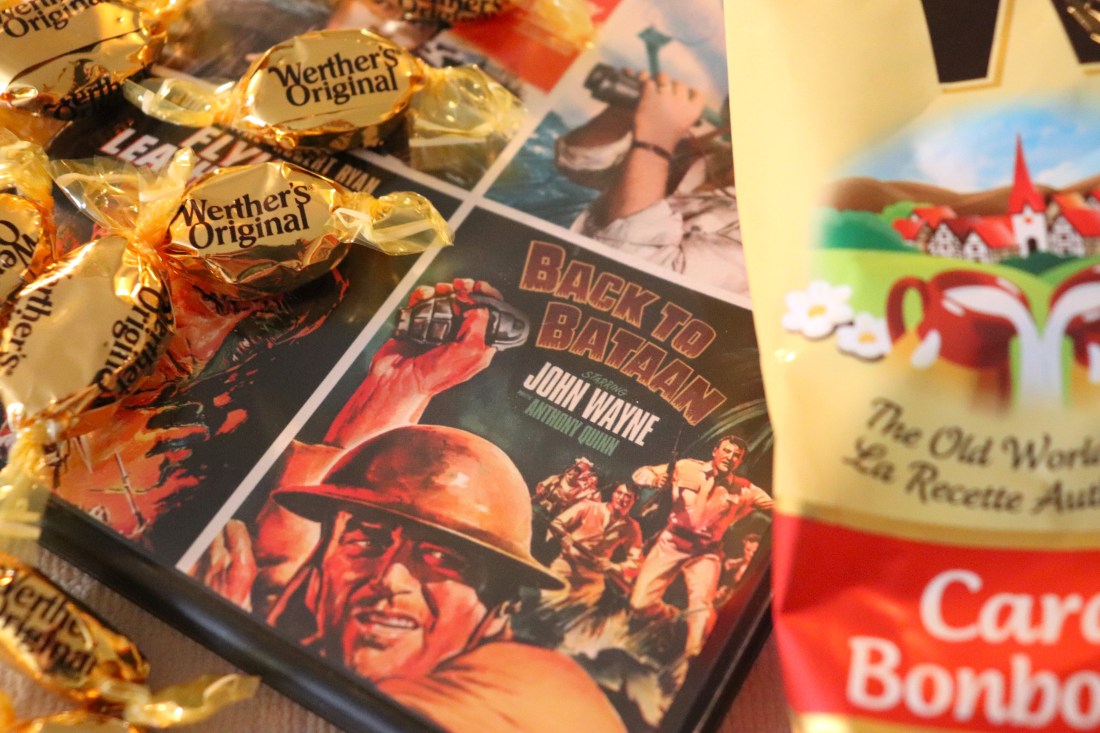
Werther’s Original Caramel Hard Candies (because it’s something your grandpa would enjoy)

Fun facts:

-Release date: May 31, 1945

-Box office: $2,490,000

-Despite the strong nationalistic themes present in Back to Bataan, director Edward Dmytryk was actually a member of the Communist Party in 1945 and was later called to testify before the House Committee on Un-American Activities. Alongside nine other directors, screenwriters, and producers —collectively known as the “Hollywood 10” — Dmytryk refused to testify before the committee and was blacklisted from the American film business as a result. However, Dmytryk managed to worm his way back into Hollywood after telling the committee about his former communist associations in 1951. He would go on to work steadily throughout the next three decades, including high-profile gigs like The Caine Mutiny in 1954 (which earned him seven Oscar nominations including Best Picture).

-The Axis occupation of the Philippines officially ended on Aug. 15, 1945 following the atomic bombing of Hiroshima and Nagasaki earlier that month. Japanese forces in the Philippines were ordered to surrender by the mainland government, who officially capitulated on Sept. 2 aboard the USS Missouri in Tokyo Bay.

-The Philippines finally received its independence on July 4, 1946 through the Treaty of Manila, which relinquished US sovereignty over the land.

Caught in the Draft (1941) review-we could all use a little Hope right now

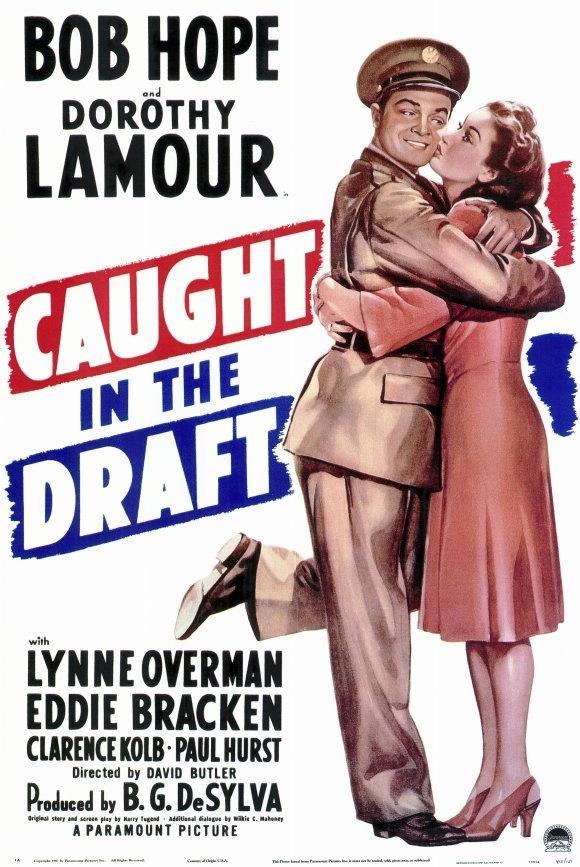
While Bob Hope’s USO tours remain an indelible part of his career as a stand-up comedian, he would occasionally play a military man on the big screen as well.

A quick scroll through the actor’s lengthy filmography will reveal that projects like Give Me a Sailor (1938), Caught in the Draft (1941), Let’s Face It (1943), Off Limits (1952), The Iron Petticoat (1956) and The Private Navy of Sgt. O’Farrell (1963) all fit into this category.

However, David Butler’s Caught in the Draft feels a little bit different from the rest and not just because it became the fifth highest grossing film of 1941 (alongside Howards Hawks’ Ball of Fire).

After all, the United States would enter World War Two five months after this movie premiered, which gives this comedy a real “calm before the storm” kind of vibe.

Throughout the next four years, Hollywood pretty much became the unofficial propaganda arm of the military, with members of the Bureau of Motion Pictures exercising tremendous oversight in terms of what ended up on screen.

In this environment, it’s hard to imagine a film like Caught in the Draft getting greenlit without major changes, since most of the runtime consists of Hope and the cast using basic training as an excuse to chase women, slack off, and treat the whole experience like a giant farce.

But from a 2022 perspective, this sense of anarchic fun is what makes Butler’s film such an enjoyable watch and the perfect vehicle to showcase Hope’s unique flavour of self-deprecating humour and slap-stick comedy.

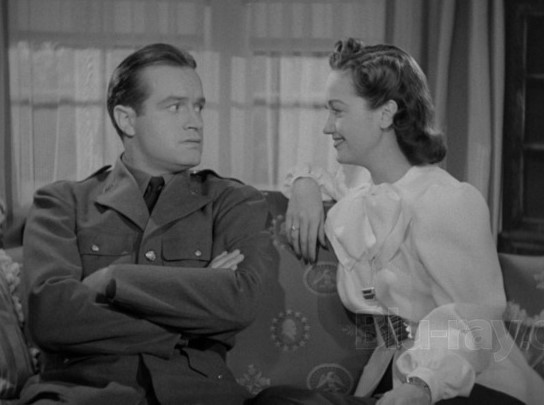
In terms of the overall plot, Hope plays a famous actor named Don Bolton, who accidently enlists in the military in a misguided effort to impress the daughter of an army colonel.

The kicker is that Don is terrified of loud noises and possesses all the negative qualities one would associate with a pampered celebrity, which doesn’t endear him to his superior officers at all.

But Don is still determined to make it as a well-disciplined soldier, especially since his love interest’s father agreed to let the pair marry if he can achieve the rank of corporal.

When it comes to structure, Caught in the Draft is actually very similar to Buck Privates (1941); the last movie I looked at on my “Wartime Comedies” DVD.

In that film, Bud Abbott and Lou Costello also get enlisted in the military against their will and pratfall their way through basic training for the bulk of the runtime.

Both movies even climax with a war games exercise that quickly spirals out of control, giving the respective protagonists an opportunity to prove their mettle without going overseas. 

However, Butler and his team manage to pull off this story with a little more clarity and gusto, since they had the confidence to really prop up their lead actor instead of shuffling him off to the sidelines (which is the fate that befell Abbott and Costello in Buck Privates).

As someone who wasn’t very familiar with Hope’s comedy until watching this film, it’s pretty obvious to me now why this actor was able to carve out a show biz career that lasted almost eight decades.

His vaunted reputation for being able to execute a variety of physical comedy ticks while firing off witty one-liners is well preserved here, especially with a character who is so accident-prone.

But what really impressed me about Hope is that his comedic chops still manage to shine through in some of the film’s more low-key scenes that don’t involve tanks or explosions.

The first 30 minutes of the film mostly consist of Don trying to worm his way out of getting conscripted in the first place, whether that means faking an injury or marrying one of his many former girlfriends.

While this is undoubtedly scummy behaviour, Hope manages to maintain some degree of likability through his boyish charm and quick movements, which make the most of scenes that mostly consist of dialogue.

But a leading man is only as strong as his supporting cast, and the film is definitely elevated by talented journeyman actors like Lynne Overman and Eddie Bracken, who portray Hope’s agent and driver, respectively.

The trio all have tremendous chemistry and bring a ton of energy to any scenario the screenwriters cook up for them, even if it involves something as mundane as peeling potatoes.

Dorothy Lamour should also be given a lot of credit for breathing some life into the film’s main love interest, since this kind of character archetype is so often completely devoid of personality (especially in movies from this era).

Instead, Lamour comes across as the perfect foil for Hope, using her quick wits and level head to immediately see through a lot of his buffoonery and zany schemes.

While this may sound like she’s being pigeonholed as a typical “female killjoy” archetype, Lamour actually serves an important role in the story, since her mere presence forces the immature male protagonist to actually grow up and take some responsibility.

It also helps that the film’s writers didn’t force these two together through dishonest means, quickly jettisoning any “love by deception” storylines before they get started.

And having already watched five Nicholas Sparks films for this blog, that was a very refreshing discovery.

But that doesn’t mean that all the writing decisions are top notch.

Even though I laughed pretty consistently through the film’s 82-minute runtime, there were a couple dated jokes that did dampen my enjoyment somewhat.

Outside of an unfortunate reference to The Jazz Singer (1927), this movie also contained a couple period-specific jokes that will leave modern audiences scratching their heads.

The most egregious of these cultural/political deep cuts is a jab at the failed 1940 presidential campaign of Republican nominee Wendell Willkie, which probably felt like a dated reference even for 1941 movie-goers. 

It also must be said that the film’s third act and denouement feel pretty rushed, although that same complaint could be lobbed at a lot of Hollywood’s output during its Golden era.

However, those minor weaknesses can be largely brushed aside due to the treasure trove of snappy lines and well-choreographed physical gags that Hope and company bring to the table.

In the end, it’s really difficult to wring any meaningful analysis out of this kind of well-executed comedy, so the best compliment I could pay to Caught in the Draft is that it simply works at a core level.

And for anyone who is worried about the film feeling like a star-studded recruitment ad, the setting mostly comes across as cinematic window dressing or an excuse for Hope to ply his trade with military-themed props and costumes.

This career decision turned out to be quite prophetic, since the actor started to perform in front of US troops on a regular basis when the nation entered World War Two shortly after the film’s release.

Those were difficult times to be sure, with the globe being plunged into such a far-reaching conflict, but I’m sure Hope was able to provide these soldiers with a small sliver of comfort through his comedy stylings.

And now that Europe is in the middle of another self-destructive war that threatens to draw in the rest of the world, we could all use a little Hope in our lives, even if it is just for an hour and twenty minutes.

Verdict:

8/10

Corner store companion:

Kraft peanut butter and Premier Plus crackers (because it just works on a fundamental level and doesn’t require a lot of explanation)

Fun facts:

-Release date: July 4, 1941

-Box office: $2.2 million

-Between 1941 and 1991, Hope took part in 57 different USO tours. Because of this, and his various other contributions to the American military, Hope became an honorary veteran of the US Armed Forces in 1997 (six years before his death).

-Outside of Caught in the Draft, Bob Hope and Dorothy Lamour starred in many other films together over the years, including all seven entries in the popular Road To … series (1940-1962).

Caught in the Draft contains multiple references to real-life Hollywood stars in its script, with Hope name dropping director Cecil B. DeMille and actor Gary Cooper at one point. The writers even make a weird meta reference to Hope’s co-star by having the actor describe her as looking like “Dorothy Lamour with clothes on” within the film.

-Outside of acting, vaudeville and performing at USO shows, Bob Hope was also best known for being a recurring host at the Oscars, having fulfilled this role 19 times (more so than any other entertainer).

Caught in the Draft can be watched in its entirety on YouTube right now.

Operation Pacific (1951) review-America takes a victory lap

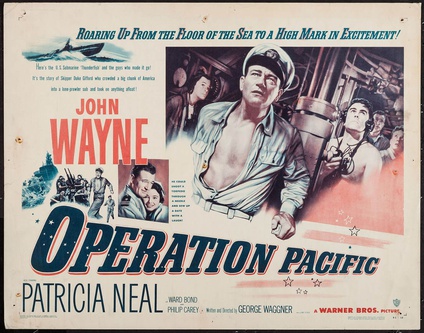
While most classic Hollywood war films have a pretty clear set of objectives (selling bonds, driving up recruitment numbers, etc.), George Waggner’s Operation Pacific (1951) is an entirely different animal.

This John Wayne-led naval adventure is much more celebratory and easy-going in tone, clearly riding off the protracted high that many Americans were still feeling since World War II ended six years earlier.

As a result, the film is a lot more interested in exploring what a soldier’s life might be like after “the fight” comes to an end, rather than providing some insight into what this specific conflict looked like in a larger context.

Even though this tone might upset some military diehards, Operation Pacific actually benefits from the gift of hindsight, since it doesn’t get completely bogged down in the cynical saber rattling that kneecaps so many other war films of that era.

The plot of Operation Pacific revolves around Duke Gifford (Wayne), who serves as an executive officer aboard a submarine called the USS Thunderfish during World War II.

After returning from a dangerous mission in the Philippines, Duke runs into his ex-wife Mary Stuart (Patricia Neal) while on leave at Pearl Harbor.

Even though the two still have feelings for each other, Duke’s responsibilities as a naval officer keep getting in the way of his romantic advances toward Mary, especially as his patrols in enemy waters get increasingly treacherous.

Now, some of you might be scratching your heads after reading this plot synopsis, since this sounds more like a Nicholas Sparks novel rather than a gritty war epic starring John Wayne.

This element caught me by surprise as well, since lengthy sections of the film are dedicated to Wayne and Neal making doe eyes at each other, while a lot of the naval combat scenes are pushed to the sidelines.

Operating Pacific also goes out of its way to depict the more blasé and uneventful aspects of military life that border on the comical, some of which wouldn’t be out of place in an Abbott and Costello movie.

In one scene, while on shore leave, Wayne is tasked with bailing his men out of a Honolulu jail after they get into a drunken brawl with some local police officers.

When the crew is at sea, they use some of their down time to screen a movie in the submarine’s mess hall.

And after rescuing an infant from enemy territory, the men of the USS Thunderfish figure out how to feed the child using a rubber glove.

While these moments do tonally clash with the naval combat scenes—which are awash with gunfire, explosions and technical mumbo jumbo — they do add some much-needed variety to what would otherwise be a pretty by-the-numbers war movie.

And by shifting the film’s focus away from the “battlefield,” Waggner (who also wrote the screenplay) is very clearly trying to appease a post-World War II audience, whose appetite for outright bloodshed had definitely cooled after six years of peacetime. *

Plus, by 1951 the US Baby Boom was noticeably underway, with the romance between Wayne and Neal in this film serving as an obvious nod to the kind of cathartic, romantic energy embodied in classic wartime imagery like Alfred Eisenstaedt’s “V-J Day in Times Square” photograph.

In fact, this film is so uninterested with broader conflict itself that there’s not really any main antagonist to speak of.

Sure, Wayne has to butt heads with a fellow soldier who is also after his ex-wife’s affections, but their relationship is always very cordial and never escalates beyond a harsh word.

Because of this, most of the film’s charm comes from its quieter moments, where the main characters hang out and discuss what life is like back on dry land.

That being said, Operation Pacific does slightly buckle under some clichés that one would expect from a Hollywood war epic from that era.

For one thing, a lot of the film’s action sequences rely way too heavily on stock imagery, which isn’t spliced into the director’s original footage in an organic fashion.

Additionally, Waggner is pretty upfront about presenting this story as a piece of military propaganda, opening up the movie with a Star Wars-style crawl that pays tribute to those who lost their lives in the line of duty.

While there’s nothing wrong with this kind of cinematic remembrance, it does set the tone for a movie that casts World War II in an overly simplistic light, where all American soldiers are depicted as being absolute paragons of virtue.

This approach to characterization turns into a problem whenever the movie veers off into a territory that isn’t morally black and white, like the aforementioned moment where Wayne has to bail his men out of jail.

Even though these characters assaulted several police officers under the influence of alcohol, this scene is largely played for laughs, where the crew is ultimately left off the hook for committing such a serious crime.

This uncritical eye is prevalent throughout the rest of the movie as well, since the filmmakers don’t provide any insight into the Imperial Japanese Navy, outside of the fact that they are a mostly faceless enemy who must be defeated.

Thankfully, this outdated propaganda isn’t so heavy handed that it ruins the movie, although everyone’s mileage may vary (especially if you don’t care for the term “Japs” being thrown around in casual conversation).

And even if you’re not a big fan of romance being mixed in with your violent war movie, at least take comfort in the fact that Waggner does a pretty decent job of balancing those two elements throughout the film’s 111-minute runtime.

For what it’s worth, I’ve seen this kind of genre bending done way worse, with Paul Gross’ crushingly melodramatic Passchendaele (2008) immediately coming to mind.

Plus, in this case, the relationship between Wayne and Neal actually saves Operation Pacific from being completely irrelevant to a 2021 audience.

After all, [SPOILERS] their successful reconcilement at the end of the movie is obviously meant to tap into America’s desire to return to some state of normalcy after a long period of societal upheaval.

And in that respect, Operation Pacific has become way more relatable than ever in the seven decades since its original release now that the country (and North America more broadly) is turning the tide in the fight against COVID-19. **

Verdict:

6/10

Corner store companion:

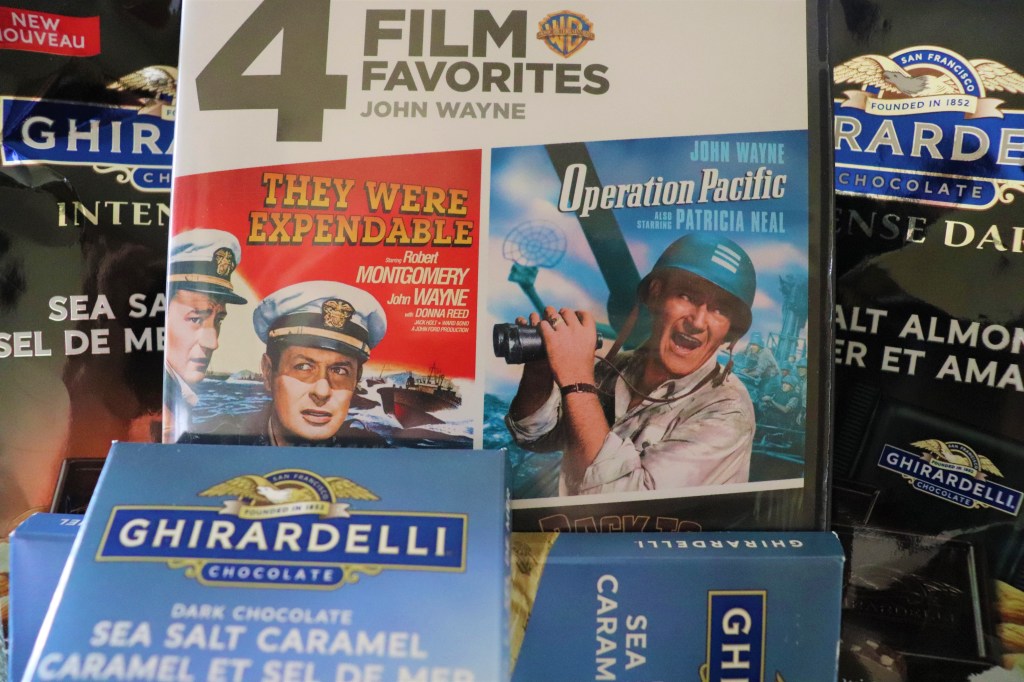
Ghirardelli sea salt chocolate (because it’s the only nautical-themed snack food that I could find)

Fun facts:

-Release date: Jan. 27, 1951

-Budget: $1.46 million (estimated)

-Box office: $2.56 million (US), $1.3 million (worldwide)

-Retired US navy admiral Charles A. Lockwood served as a technical advisor on Operation Pacific to ensure its accuracy when depicting submarine warfare. According to Wikipedia, Hollywood producers sought out Lockwood a couple more times to advise them on a variety of other film projects, including Hellcats of the Navy (1957), On the Beach (1959), and Up Periscope (1959).  

-Near the finale of Operation Pacific, the men of the USS Thunderfish can be seen exchanging film canisters with a friendly American sub so that both crews can enjoy a movie night. These films, Destination Tokyo (1943) and George Washington Slept Here (1942), were both produced by Warner Bros. Pictures in real life.

-Following the release of Operation Pacific, George Waggner mostly directed television for the remainder of his career, including episodes of The Green Hornet, Maverick, The Man from U.N.C.L.E. and Batman.

* I realize that the US was involved in the Korean War by 1951, but that conflict wasn’t nearly as pervasive in American society as World War II was, so I think my original point stands.

** I sincerely hope this statement doesn’t become extremely dated in the coming weeks and months.

Bitter Victory (1957) review-war may be hell, but it sure makes for compelling drama

One of the most interesting things about Mill Creek Entertainment’s “5 Classic War Films” DVD is that the majority of its content is pretty subversive in nature.

Sure, something like Commandos Strike at Dawn (1940) is pretty clear-cut military propaganda, but entries like The Prisoner (1955) and Castle Keep (1969) are openly anti-war stories that showcase just how absurd and dehumanizing these protracted conflicts can be.

That’s a pretty impressive ratio considering that this product is designed to be sold to a decidedly older and more conservative demographic.

Nicholas Ray’s Bitter Victory (1957) operates on largely the same subversive level, and does a great job of disguising its real message by presenting viewers with visceral violence and potent melodrama on the surface.

The film stars Richard Burton and Curd Jürgens as two very different British officers in World War II, who are tasked with leading a raid on a Nazi outpost in Benghazi to retrieve some top-secret documents.

Of course, the operation doesn’t go exactly as planned, and the two men butt heads as their squad is forced to retreat across the Libyan desert to safety.

To make matters more complicated, Burton’s character previously had an affair with the wife of his superior officer (Jürgens) which drives an even larger wedge between them.

BitterVictory5

The aforementioned clash of personalities between Burton and Jürgens is the absolute highlight of the movie, both from a writing and acting perspective.

The two characters are diametrically opposed in virtually every way except for the fact that they both wear a uniform, and screenwriters Ray, René Hardy, and Gavin Lambert do a great job of illustrating that fact to the audience.

Five minutes into the movie it becomes abundantly clear that Jürgens’ Major Brand is a careerist in the military, who is much more interested in handing out orders and appeasing his superiors rather than getting his hands dirty.

In fact, it’s quickly revealed that Brand has been relegated to a desk throughout most of his career, which doesn’t inspire much loyalty in his men when he’s expected to lead them behind enemy lines.

Conversely, Burton’s Captain Leith is an experienced academic and field researcher who speaks multiple languages and actively volunteers to go on this into a dangerous mission, rather than waiting to be told.

Plus, Leith’s compassion for the well-being of his fellow soldiers (and even some enemy combatants) easily eclipses Brand’s indifference to anybody who isn’t his wife.

This sounds like basic stuff on a scriptwriting level (and it is), but that solid foundation is taken to a whole new level thanks to Burton and Jürgens themselves.

BitterVictory4

Outside of fully committing to their respective performances, these two actors also provide enough nuance and complexity to prevent their characters from coming across as broad stereotypes.

While Major Brand is cowardly and definitely not fit for command, you can’t help but feel sorry for him since Jürgens’ 1000-yard stare hammers home the idea that he knows he is way in over his head.

And even though Captain Leith is much more capable under fire, he does not come across like a stoic badass cut from the same cloth as Sgt. Rock or John Rambo (from First Blood: Part Two onwards at least).

In fact, Burton has this sorrowful look on his face every time he’s forced to commit an act of violence, which does a better job of highlighting the film’s anti-war themes than a lengthy monologue ever could.

Unfortunately, the same praise can’t be dished out for a lot of the film’s supporting players, who kind of fade into the background in order to make room for the two towering leads.

This is a real shame, since the cast is full of talented English actors like Christopher Lee (yes THAT Christopher Lee) who only get a few lines before they are shuffled off to the side.

However, maybe the disposable nature of all these secondary characters was by design.

After all, the filmmakers are really preoccupied with showcasing how these lower ranking soldiers are often forced into situations where they have no choice but to be sacrificial lambs so that officers like Major Brand can complete their objective and get a promotion.

Outside of the violent deaths that occur in the film’s main action sequences, Ray and his fellow screenwriters communicate this theme through much subtler means thanks to key strategic visuals.

One of Bitter Victory’s strongest lasting images is the practice dummies that litter the opening and closing of the film, which serve as stand-ins for the nameless soldiers who are simply used as pawns by the uncaring military machine.

BitterVictory3

Of course, clever visuals can’t make up for some of the film’s more noticeable blemishes, like little production shortcuts that come hand-in-hand with such a modestly budgeted war movie.

For example, even though Brand’s squadron is supposed to air drop behind enemy lines, all the audience sees is a quick dissolve edit and a group of men packing up their parachutes on the ground.

I get that the filmmakers probably didn’t have the technology to properly capture a real HALO jump in 1957, but the least they could have done is spring for some cheap military stock footage.

And although this might be an unfair gripe, one of my biggest pet peeves in older movies is when characters get shot and they have to clutch their chest dramatically to make up for the obvious lack of an entry wound.

Again, I understand that squibs were not widely used in movies at that time, but this style of production always takes me out of a movie no matter how it is shot.

Outside of those small quibbles, Bitter Victory is still a hell of an engaging war movie that works on a variety of levels.

For those who just want to sit back and enjoy an old-school, men-on-a-mission type story with a love triangle sprinkled in, Ray and his fellow scriptwriters have you covered.

But if you want to dig a little deeper and find a film that is all about sticking up for individuals who are suffering under the thumb of an authoritarian institution, there’s still a lot to chew on.

This film also serves as a great follow up to Stanley Kubrick’s Paths of Glory, which tackled nearly identical themes from that same year.

In fact, the only group who wouldn’t enjoy Bitter Victory is the masterminds behind the modern military-industrial complex, since they would realize that people have been on to their shit from the very beginning.

Verdict:

8/10

Corner store companion:

Spitz Sunflower Seeds (because you chew them up and spit them out, the same way that the upper brass treat lower ranking soldiers in this movie)

IMG_8773

Fun facts:

-Release dates: Aug. 28, 1957 (Venice Film Festival), Nov. 29, 1957 (UK), March 3, 1958 (US)

Bitter Victory is an adaptation of the book Amère Victoire written by the film’s co-writer, and WWII-era French resistance fighter, René Hardy.

-French-Swiss director Jean-Luc Godard championed Bitter Victory as the best movie of 1957.

-Nicholas Ray’s biggest claim to fame before helming Bitter Victory was directing James Dean in Rebel Without a Cause (1955).

-This film was nominated for the Golden Lion award at the 1957 Venice Film Festival, but lost to Satyajit Ray’s Aparajito (the second part of his famous Apu Trilogy).

Bitter Victory features two future Bond villains in its cast: Christopher Lee would go on to portray Francisco Scaramanga in The Man With the Golden Gun (1974) and Curd Jürgens became Karl Stromberg in The Spy Who Loved Me (1977).

-After serving a supporting role in Bitter Victory, Christopher Lee starred as The Creature in Hammer Studios’ The Curse of Frankenstein during that same year. In 1958, Lee hit the big time by taking on the lead role in Hammer’s Dracula and would go on to star as the horror movie icon another eight times.


The Prisoner (1955) review-A real hidden gem

Thanks to the advent of social media and the YouTube comments section, words like “worst” or “epic” have really lost their meaning in the current pop culture discourse, based on how frequently they’re used online.

“Obscure” should be added that list as well, since I’ve seen people use this term to describe properties that are decidedly not hard to track down and consume.

Rule of thumb: if you can watch a movie or tv show on a multi-billion dollar streaming platform, then chances are it’s not the entertainment equivalent of finding the Dead Sea Scrolls.

But I think calling Peter Glenville’s The Prisoner (1955) “obscure” is a pretty safe bet, since the film doesn’t even show up immediately when you type it into IMDB’s search bar.

Screen Shot 2019-10-07 at 9.17.35 AM

But if you’re lucky enough to own a copy of Mill Creek Entertainment’s “5 Classic War Films” DVD pack like myself, then you should definitely give this thought-provoking drama a look.

In terms of plot, Sir Alec Guinness stars as a nameless Cardinal accused of high treason by a nameless interrogator (Jack Hawkins) following the events of World War II.

Even though the country remains nameless as well, the basic conceit is that the Hawkins represents the kind of Eastern European government that traded in the fascistic boot heel of the Nazis for some form of Communist authoritarianism after the conflict subsided.

As such, Hawkins’ intentions to force Guinness to confess to trumped up charges are made clear from the very start, and a compelling battle of wills between the two men ensues for the next 90 minutes.

Obviously, the film’s biggest draw is the back-and-forth between Guinness and Hawkins; two classically trained actors who are experts at conveying complex emotions through looks and body language alone.

And they don’t disappoint here, since the film remains a compelling watch even though half of the runtime is just the two men talking in a room.

The conversations that take places between the two is almost akin to a well-choreographed fight scene, with plenty of unexpected verbal jabs and parries to keep the audience on their toes.

Guinness is especially impressive in his role as the nameless Cardinal, since he’s willing to undertake a rather unflattering transformation from a dignified man of the cloth to an emotionally shattered shell of his former self.

For mainstream audiences who are used to seeing Guinness take on mentor roles like Obi-Wan Kenobi, it might be a little upsetting to watch him undergo such psychological torture that reduces him to a nervous, groveling wreck by the film’s end.

But putting in such a raw, unfiltered performance definitely left a big impression on me, and Guinness should be applauded for taking this kind of risk.

Similar to other stage plays turned into films like Frost/Nixon and Glengarry Glen Ross, The Prisoner also benefits from a script that’s was polished way ahead of time, which gave director Peter Glenville the opportunity to focus most of his energy on filling in the gaps.

While some filmmakers might have just let Bridget Boland’s dialogue speak for itself, he decided to give this story a full cinematic treatment anyway, with plenty of gorgeous cinematography to serve as the backdrop.

Some of these shots even display elements of German Expressionism, since he uses harsh shadows, moody lighting, and gothic architecture to highlight the oppressive nature of Guinness’ captivity.

ThePrisoner1

And even though most the action takes place indoors, Glenville does his best to keep the audience’s attention through utilizing strategic blocking and dynamic camera movements.

However, not every decision the director made for this screen adaptation is a winner, since he decided to include this time-wasting subplot featuring one of Guinness’ guards, who is having an affair with a married woman.ThePrisoner2

I’m not sure if this subplot was included in the original play, but it seems like something a clueless producer lobbied to include in film to appeal to a larger audience, even though it’s cliched and has next to no bearing on the overall story.

The Prisoners’ ambiguous setting also threw me off during my initial viewing, since I went in blind and spent way too much time trying to figure out which European country this was supposed to take place in.

But after doing my research, the film was much easier to digest with a second viewing and it gave me the opportunity to pick up on the smaller nuances of Guinness and Hawkins’ performances.

And at the end of the day, the mere presence of these two acting heavyweights gives the filmmakers a pretty solid foundation to work with from the outset, with Boland’s tight script and Glenville’s smart directing elevating the story beyond just being a stage play put to film.

This movie’s obscure status might make it a little difficult to track down, but it’s definitely worth making a couple clicks on Amazon to order a Blu-Ray copy.

Just make sure you order the right version of The Prisoner, unless you’re in the market for some high definition pornography or old school British sci-fi.

Screen Shot 2019-10-07 at 9.19.07 AM

Verdict:

8/10

Corner store companion:

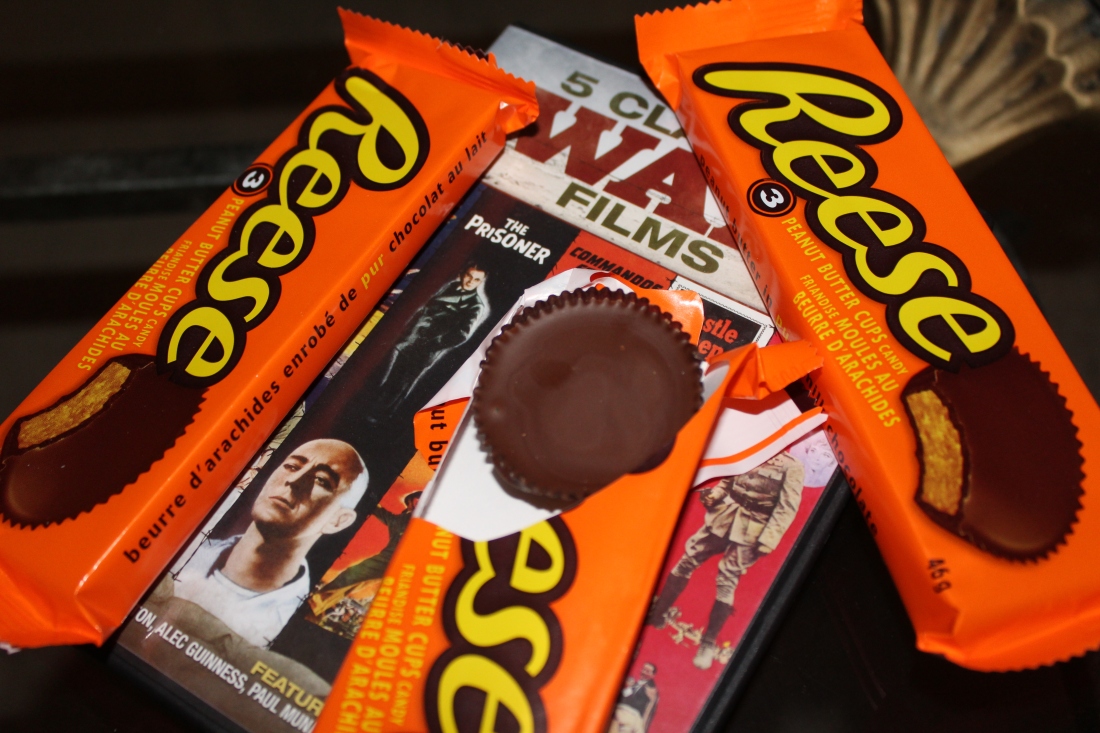
Reese’s Peanut Butter Cups (because Guinness and Hawkins are the acting equivalent of putting chocolate and peanut butter together)

IMG_0009

Fun facts:

-Release date: April 19, 1955 (UK), December 11, 1955 (US)

-While the film’s setting remains ambiguous, Guinness’ character is based on real-life cardinals Aloysius Viktor Stepinac and József Mindszenty, who underwent similar show trials in Croatia and Hungary, respectively.

-According to TV Guide, this film was banned from both the Venice and Cannes film festival for being “anti-Catholic” and “anti-Communist.” However, residents of Ireland slapped it with a “pro-Communist” label.

-Two years after The Prisoner was released, Hawkins and Guinness would go on to star in The Bridge on the River Kwai, although the pair wouldn’t share any scenes together. However, the two would be reunited on screen in 1962 for director David Lean’s next big epic Lawrence of Arabia.

The Prisoner would go on to be nominated for five BAFTA awards for acting (Hawkins and Guinness), script writing (Boland) and best overall film (from Britain or any other source).

-The obscurity of Peter Glenville’s The Prisoner might have something to do with the fact that there are more famous pop culture properties with the same name, including a 1967 British science fiction series starring Patrick McGoohan.

Commandos Strike at Dawn (1942) review- Uncle Sam gets creative with his recruitment techniques

The 1940s was truly a golden age in terms of Hollywood produced war propaganda.

Not only would these productions play as cartoons or documentary shorts before the beginning of a feature film, but sometimes they would take the form of the main attraction itself.

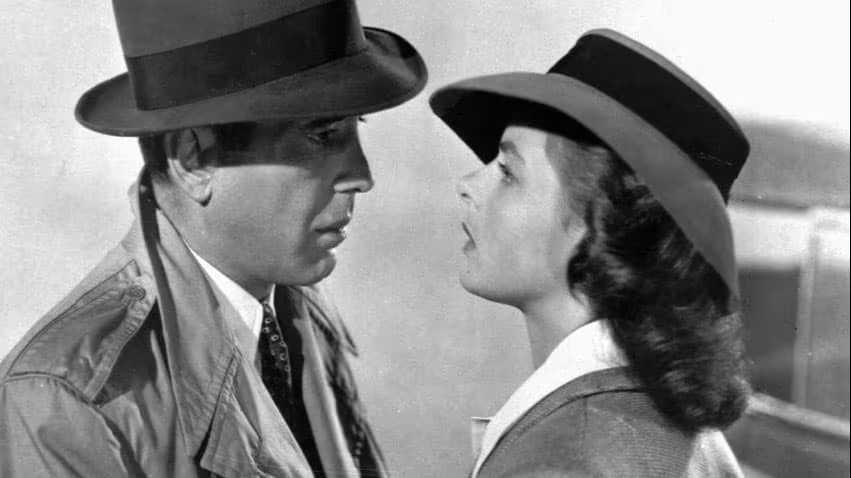
This can even be seen through a screen classic like Casablanca, which was made entirely to capitalize on America’s decision to enter the Second World War and reassure the US public that their government had made the right decision.

John Farrow’s Commandos Strike at Dawn, released at the very tail end of 1942, operates on that very same logic, since its plot and characters are meant to serve as an stand-in for America’s transition from neutrality to outright involvement in the Allied war effort.

In this film, the role of audience surrogate doesn’t go to Humphrey Bogart but Paul Muni, who plays a mild-mannered Norwegian fisherman whose sleepy village is taken over by the Third Reich in 1939.

While Muni’s character originally believes that the best course of action is to simply cooperate until the war blows over, he’s gradually pushed to violence after witnessing the atrocities committed by the Nazis and recruits a squad of British commandos to help liberate his home.

Now, when I use the term “propaganda” to describe this film, I don’t use it in an entirely negative sense. After all, I’m perfectly willing to stomach some ham-fisted messaging in my entertainment as long as the end product is well-made.

For example, even though Casablanca is a pretty transparent World War II allegory, it’s done with a certain level of sophistication and the film contains a pretty timeless love story that still strikes a cord with audiences to this day.

Unfortunately, the same really can’t be said for Commandos Strike at Dawn, since the filmmakers settle for cheap gimmicks that relegate the production to being simply a product of its time.

This kind of tone is established in the first couple seconds of the film, when the opening credits prominently display all the flags of the Allied powers, including the Soviet Union’s hammer and sickle. This kind of intro immediately dates the film, especially with the Cold War being right around the corner.

Even though there are times where the movie’s attempts to be timely do work out in its favour (like how the characters mention the persecution of Jews at a time when they were being slaughtered in concentration camps in real life) this kind of tacky filmmaking has way more misses than hits.

Although Muni is a compelling lead, he’s saddled with a lot of corny lines about how “nobody’s going to win the war for anybody else,” which sound like they are meant to lecture the 1942 audience rather than inform the movie’s characters.

The rest of the film’s cast is even more disposable.

Despite the fact that all the major players are given a long introduction through a fairly impressive tracking shot, most of them disappear halfway through the movie as the narrative focuses exclusively on Muni and his mission to coordinate a rescue operation.

The worst example of this is probably Muni’s love interest, who doesn’t affect the plot in any way and only seems to exist to reassure the audience that their protagonist has (if I may borrow a term from Red Letter Media) a “case of the not gays.”

The writers don’t even have the decency to provide us with a main antagonist, and settle for flooding the screen with a bunch of nameless German foot soldiers instead.

With that being said, the one segment of the cast who do manage to make an impression are the “British” commandos themselves.

The climactic clash between them and the Nazis feature some really impressive stunt work, which probably has something to do with the fact that they were played by real-life members of the Canadian Armed Forces.

Commandoes(1)

What’s even better is that director John Farrow compliments their military acumen with some good production decisions, since a lot of explosions are done in-camera and aren’t watered down by post-production trickery.

With that being said, basically none of these commandos are given personalities or even a single line of dialogue, which means it’s hard to get emotionally invested in this climax beyond admiring the pure spectacle of it.

And that’s probably the biggest problem with Commandos Strike at Dawn: it doesn’t know what it wants to be.

Sure, the filmmakers make a big show at the beginning about how they want to present an intimate character piece, but it’s clear by the final frame of the film that that’s all window dressing.

Instead, they’d much rather settle for showcasing flashy pyrotechnics and real-life military hardware, something that would have worked as long as they fully committed to this idea.

As a result, Farrow and his team fall victim to the classic filmmaking mistake of trying to make a movie for everyone, which inevitably means that they made a movie for no-one (especially by 2018 standards).

(Side note: it’s clear that the final climactic battle wasn’t shot in the early in the morning, but I guess “Commandos Strike at Mid-Day” wouldn’t have looked great on a movie poster.)

Verdict:

4/10

Corner store companion:

Bits & Bites Original (because it should have stuck to doing one thing, instead of mixing a bunch of stuff that doesn’t belong together).

IMG_0278

Fun facts:

-Release date: Dec. 30, 1942.

-Box office gross: $1.5 million (estimated).

-This film was nominated for an Oscar in the category of Best Scoring of a Dramatic or Comedy Picture at the 1944 Academy Awards (the same year Casablanca won Best Picture).

-Paul Muni is probably best know for starring in the original Scarface from 1932, when the title character was an Italian gangster named Tony Camonte.

-Even though he’s kind of slumming it in this movie, Muni has five Oscar nominations for Best Actor under his belt, with an eventual win in 1937 for starring in The Story of Louis Pasteur.

-Unexpected cameo: Lillian Gish (a silent movie star best known for playing the pivotal role of Elsie Stoneman in the Birth of a Nation) makes her first screen appearance in almost a decade by portraying one the Norwegian villagers under Nazi siege.

-According to IMDB, the entirety of this film was shot on Vancouver Island, British Columbia.

Castle Keep (1969) review-You got your Vietnam in my WWII movie

When I originally picked up a DVD titled “5 Classic War Films” for $4.99 I didn’t expect it to include a movie like Sydney Pollack’s Castle Keep.

Judged solely on the low price and the cheesy posters featured on the cover, I strapped myself in to watch some bottom-of-the-barrel, exploitative trash.

The hokey plot synopsis for this film specifically didn’t help matters either, since it centres around a rag-tag group of American soldiers tasked with defending a medieval castle full of priceless art pieces during the Battle of the Bulge.

However, while Castle Keep doesn’t attain “classic” status, as advertised, the filmmakers should be given credit for trying to inject some art house sensibilities into an otherwise formulaic war movie.

Within the first 20 minutes, the movie stomped my expectations into the ground by establishing a detached, laid-back tone that doesn’t initially seem to fit with other “man-on-a-mission” World War II epics of the time (think The Dirty Dozen).

Instead of getting down to business and showing the audience how the castle is being fortified for the on oncoming German assault, most of the first and second act features our main characters just farting around.

They drink, they smoke, they fuck (with several trips to a nearby brothel) and they carry on inane conversations that don’t really go anywhere. Mid-way through the movie one of the soldiers spouts off about how indestructible Volkswagen Beetles are, and that this particular model of car will inherit the earth after the war wipes out all human life.

Coupled together with a dream-like score that seems like it jumped right out of an old perfume commercial, and Castle Keep becomes a truly bizarre viewing experience, to the point where I even wondered if I put in the wrong DVD by mistake.

In the last 40 minutes the story does eventually turn into a more conventional direction, with plenty of explosions and gritted teeth that would satisfy even the most jaded action junky. However, this kind of action climax gets so exaggerated that it veers off into the direction of satire, especially when Germans soldiers start using fire trucks to mount the castle walls.

To be fair, most of these strange choices make sense if you put this film’s release in the right historical context.

By 1969 the United States had been escalating their involvement in the Vietnam War for over a decade, with no real end in sight. With that in mind, it’s understandable that Americans like director Sydney Pollack would have become disillusioned with traditional military heroics and decided to make a film about the tedium and pointlessness that’s involved in a protracted foreign conflict.

Actor Peter Faulk (who plays sergeant Rossi Baker) even reveals the filmmakers’ intentions at one point during the chaotic climax by blurting out “What the hell war is this?”

While the filmmakers should be applauded for this kind of ambition, Castle Keep is not without its problems.

Certain sections of the film suffer from poor ADR and sound mixing, to the point where you can’t even tell which character is supposed to be talking.

Because the movie adopts the look and feel of a waking dream, the middle part of the story really drags, something that could have been solved by chopping at least 20-30 minutes off the runtime.

And while the individual actors do a really good job with the material they’re given, it doesn’t stop them from being flat caricatures with no real depth. This usually what happens when characters are written to hammer home a theme rather than to tell a good story.

Overall, even though I think calling Castle Keep “pretentious” would be a bridge too far, I wouldn’t fault anybody else for using that label to describe it.

After all, the filmmakers are obviously much more concerned about waxing poetic on lofty topics like war, art, and sex rather than telling a good story with fleshed out characters, which definitely prevented me from engaging with the movie on an emotional level.

With that being said, Castle Keep did at least take me by surprise and give me something to think about once it was over. Hopefully this becomes a re-occurring theme throughout my adventures into the darker corners of Corner Store Cinema.

Verdict:

6/10

Corner store companion:

Skor butter toffee (because it looks fancy, but it’s still really just cheap candy on the inside)

IMG_3875


Fun facts:

-Release date: July 23, 1969

-Budget: $8 million (estimated)

-Box office gross: $1.8 (Canada/US)

-Two years after this film was released, Peter Faulk (one of the main supporting cast members) would go on to find great success by staring in the series Columbo. Faulk ended up playing the titular, unassuming detective in a grand total of 69 specials, with the final episode airing on Jan. 30, 2003.

-Mass murderer Ronald Defeo Jr. claimed that he was watching Castle Keep right before he shot his parents and four siblings to death in Amityville, New York on Nov. 13, 1974.

-While this film ultimately flopped, both critically and financially, director Sydney Pollack would bounce back with his next project They Shoot Horses, Don’t They?, which landed him 10 Oscar nominations (including one for Best Director).