Man Hunt (1984) review- a journey into the uncanny valley

If you’re looking to pick a fight on social media these days, a good place to start (outside of the ongoing Israel-Hamas conflict) is talking about generative artificial intelligence.

This is especially true in sections of the internet where people like to discuss the arts, since this new technology is viewed (depending on who you ask) as something that will either revolutionize the entertainment industry or bring about its downfall.

Personally, most of the AI-generated images and videos I’ve seen aren’t a convincing substitute for the projects made by flesh-and-blood creators, since they almost always possess some bizarre alien quality that makes my skin crawl.

However, the recent advances in AI shouldn’t distract you from the fact that humans have always had the potential to produce works of art that are completely uncanny, off-putting, and devoid of logic.

Enter Fabrizio De Angelis’ Man Hunt (1984), a neo western so lazy and nonsensical in its construction that you think the script was written during a drunken round of Mad Libs.

Admittedly, this does result in somewhat of an engaging viewing experience, since you’re constantly left wondering when the next wacky story development or plot hole will pop up. 

But taken as a whole, Man Hunt’s pervasive weirdness can’t sustain a feature-length runtime and it just leaves you with the creeping feeling that your home has sprung a gas leak.

Some may look at this film’s synopsis on IMDB or Wikipedia and conclude that I’m being a little hyperbolic, since the set-up is typical western shenanigans.

The plot of Man Hunt revolves around a nameless stranger (Ethan Wayne), who buys a pair of horses at a rodeo and accidently wanders onto some land belonging to a corrupt rancher (Ernest Borgnine).

After the rancher steals the horses for himself, the stranger gets thrown in prison after attempting to retake his property.

The rest of the film details the stranger’s attempts to escape from captivity and clear his name, all the while trying to stay one step ahead of the law.

You’ve probably seen a variation of this plot in a dozen other movies, but it’s the way that De Angelis and his crew tell this story that’s truly baffling.

For one thing, the stranger’s first escape from prison is never shown or discussed on screen, even though it’s supposed to represent a major turning point in the story.

Before you can get your head around such a weird creative decision, the stranger is immediately caught and gets thrown back behind bars, leading to his second escape minutes later.

After hijacking a bus and blasting his way through an army of cops, the stranger is then given safe passage thanks to Borgnine’s corrupt rancher, whose change of heart comes out of nowhere and is never given any explanation.

This kind of plot progression would make sense if Man Hunt was a comedy or Zucker Brothers-esque parody of old prison break movies.

But the tone of the film is deadly serious throughout its 91-minute runtime, which exposes the grim reality that De Angelis and his team have no idea what they’re doing.

That lack of direction is laid bare in the first four minutes of the film, which consists almost entirely of boring b-roll footage of the rodeo where the stranger buys his horses.

This opening remains a pretty blatant example of “Shooting the Rodeo,” a term coined by RedLetterMedia that describes the tendency for directors of low-budget movies to pad their runtime by filming real public events.

Man Hunt is an especially egregious example of this trope, since De Angelis lingers on this intro for way too long and includes elements like unnecessary slow motion to add insult to injury.  

These strange filmmaking techniques persist throughout the entire narrative, so much so that I was almost convinced that De Angelis was trying to create the kind of surreal, dream-like atmosphere one would find in a David Lynch movie.

But unlike Lynch’s works, Man Hunt is a pretty boring and lifeless affair for long stretches of its runtime, which is made even worse by a lead performance that is dull as dishwater.     

For those of you who are unaware, Ethan Wayne is the son of Hollywood icon John Wayne, who found work as an actor throughout the 1980s, 1990s, and early 2000s.

A brief scan of Wayne Jr.’s acting credits reveal that he never really made it as a major leading man like his dad, and in Man Hunt it’s easy to see why.

Pretty much every line that comes out of his mouth is stiff and robotic, almost like he’s a non-English speaker who learned the language for this role.

Wayne’s monotone performance extends to his blank facial expressions, which I’m assuming he employed to come across as a stoic western hero archetype just like his father.

But Wayne just doesn’t have the presence or charisma to pull this off and ends up looking like a pretender, especially when he’s asked to do anything physical.

This includes a couple of embarrassing running scenes, where Wayne gets to show that he has all the dignified grace and coordination of a young Steven Seagal.

To be fair, even a lauded thespian like Orson Wells would have trouble grasping this material, since it never finds its footing in a consistent style or tone.

Instead, the filmmakers decide to put a bunch of other movies in a blender, with the beginning of Man Hunt serving as a clumsy fusion of First Blood (1982) and Cool Hand Luke (1967).

The last third of the film ultimately becomes a downscaled version of Clint Eastwood’s The Gauntlet (1977), where the stranger has to evade an army of trigger-happy cops.

And to the film’s credit, these chase sequences do at least feature a lot of impressive pyrotechnics and automotive stunt work.

One scene near the end of the film stands out as a particular highlight, where a police cruiser flips over and showers the concrete street with broken glass.

Seconds later, two cruisers collide into each and explode, treating us to the amusing sight of flaming wheels skipping down the road.

All this technical expertise comes to a head in the film’s climax, where [SPOILERS] Wayne gets cornered in a mobile home and the cops open fire on him for what feels like five minutes.

This one-sided shooting is so excessive that it becomes a complete farce and instantly reminded me of a famous gag from The Naked Gun 21/2(1991).

Unfortunately, the filmmakers had to ruin this fun time by delivering one of the dumbest endings that’s ever been committed to celluloid.

Once Wayne emerges from this bullet-riddled trailer, completely unscathed of course, the cops go to arrest him, but he has a secret weapon up his sleeve.

Instead of carrying a gun or smoke bomb, the stranger produces a bill of sale which proves that he legally bought the horses at the beginning of the story.

This magical receipt completely freezes the corrupt cops in their place and forces them to let the stranger go, even though they were trying to unlawfully cut him into Swiss cheese seconds earlier.

Of course, this piece of paper shouldn’t absolve Wayne of all the property damage and lives he put in mortal danger during his multiple escape attempts.

But I guess we’re well past the point of pretending like Man Hunt takes place in a world that adheres to logic or reason, unless there’s some real legal precedent that gives you immunity from all manner of prosecution if you simply yell “It’s okay, officer! I have a receipt!!”

I know I’ve spent a lot of time on this one plot point, but I think it’s a microcosm of how disorienting this film is as a whole.

Almost every aspect of this project feels artificial or randomly generated, from its script to the acting to the musical score.

Part of me feels like this comes down to De Angelis’ inexperience as a director, since Man Hunt is only his third feature film after nearly a decade of producing Italian genre schlock.

Perhaps that jump into the director’s chair was too much to handle, so he resorted to throwing a bunch disparate American film tropes at the wall to see what would stick.  

De Angelis’ scattershot approach to directing Man Hunt is probably what triggered the AI comparison I brought up earlier, since that technology (in its current form) is only able to generate new works of art using pieces of pre-existing material.

Some may argue that this is no different than the creative process most humans undertake, and maybe there is some merit to that line of thinking.

But with a man-made trainwreck like Man Hunt, I can at least trace the creative influences of the people who worked on it and see that the director went on to embrace his exploitation roots by making films like Killer Crocodile (1989), Karate Rock (1990), and Breakfast With Dracula (1993).

This form of film analysis is infinitely more interesting than looking at the prompts and lines of code that went into creating an AI-generated blockbuster, which sounds about as fun as filing my taxes.

I would much rather look into the history of a deeply imperfect filmmaker than stare into the gaping maw of a machine-driven algorithm, even if the former ends up producing a completely incomprehensible piece of shit like Man Hunt.    

Verdict:

3/10

Corner store companion:

Buffalo Ranch Pringles (because this film is seriously lacking in real western flavour)

Fun facts:

-Release date:

Nov. 30, 1984 (West Germany)

Dec. 6, 1984 (Italy)

-Outside of the film’s original Italian title of Cane Arrabbiato (which roughly translates to “Mad Dog”), Man Hunt was also known as Uppercut Man in France.

-For most of his directing career, Fabrizio De Angelis was credited under the more American-sounding name of “Larry Ludman,” including for his work on Man Hunt. De Angelis also directed under the alias of “Ted Russell” for Breakfast With Dracula (1993).

-As an actor, Ethan Wayne is probably best known for portraying Storm Logan on The Bold and the Beautiful. Wayne played this character throughout 217 episodes of the long-running soap opera, eventually retiring from acting after he left the show for good in 2003.

Man Hunt can currently be watched in its entirety on YouTube (with Asian subtitles).

She Demons (1958) review – micro-budgeted monotony

While independent filmmakers are often lauded for their ability to work outside the system and complete a project using a modest amount of money, they don’t always arrive at the same destination career-wise.

For example, directors like Quentin Tarantino and Paul Thomas Anderson have become critical darlings despite their humble beginnings; debuting with simple crime features that lead to increasingly complex projects.

Meanwhile, people like Robert Rodriguez and John Carpenter have largely stuck with their lurid genre roots and developed more of a cult following as a result.

Then you have luminaries like Roger Corman, who is remembered more as a genius businessman because of his ability to turn a profit by shooting fast and cheap.

Some renegade directors have even cemented a legacy through their sheer lack of talent and business sense, which is largely the case with B-movie king Ed Wood.

But for every Ed Wood there are probably a thousand independent filmmakers like Richard E. Cunha, whose name has been cast into the dustbin of history while his similarly schlocky work lives on in the realm of public domain.

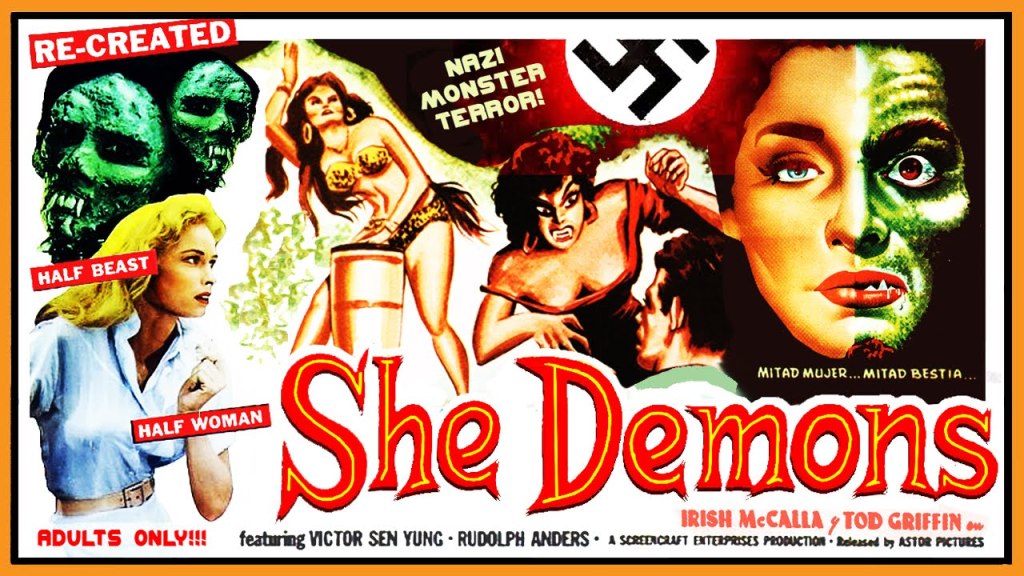
One of these projects is She Demons (1958), a sleazy science-fiction horror film whose production values are about on par with an elementary school play.

But to be fair, most elementary school plays at least go to some lengths to maintain some sense of stylistic consistency, whereas Cunha’s film feels like it consists of assets leftover from eight different movies.

And while part of me always admires the entrepreneurial spirit it takes to get any film project off the ground, especially on a micro budget, I can’t ignore the reality that She Demons feels like it is held together with chewing gum and masking tape.

For as disjointed as this movie gets, the plot is mercifully simple from the outset, where a spoiled heiress (Irish McCalla) and her entourage get shipwrecked on an uncharted island following a hurricane.

As the group gradually explores the island they stumble upon a menagerie of horrors, including Nazi soldiers, a mad scientist, and the titular female monstrosities, which turn out to be some conventionally attractive women wearing cheap Halloween masks.

After a bunch of corny fist fights and lengthy expositions dumps, the mad scientist eventually turns his attention towards McCalla, wanting to use her youth and vitality to restore the beauty of his horribly maimed wife.

Watching She Demons I was constantly reminded of a couple old episodes of Star Trek, the ones where the Enterprise crew would visit an alien planet that looked suspiciously like Earth during World War II or the Prohibition Era.

Of course, this sense of familiarity turned out to be a cost-saving measure, since it allowed the producers to re-use old sets, props, and costumes from other Paramount properties rather than shell out a bunch of money to create new ones.

It seems like Cunha’s team operated under the same penny-pinching philosophy, except they didn’t have access to the same caliber of writers that made those original Star Trek adventures so compelling.

Here, it seems like the story of She Demons was totally dependent on whatever sets, props, and costumes the filmmakers could get their hands on, leading to a weird sense of disconnect throughout the entire 77-minute runtime.

Admittedly, some of the exterior scenes look alright, since Cunha and his team at least had the good sense to shoot on an actual beach and public park in California to maintain the illusion that his characters are stuck on a tropical island.

But that illusion completely shatters whenever the actors venture indoors and are forced to interact with these cheap sets that were either quickly made or taken from other movies.

The patchwork nature of this production is present in a lot of other places as well, with the overuse of stock footage being a repeat offender.

The filmmakers didn’t even bother to set up important establishing shots in some cases, outright omitting any depiction of the giant shipwreck that’s supposed to set the entire plot in motion.

Now, you could excuse a lot of these shortcomings as being a byproduct of the film’s reported $65,000 budget, since that kind of money doesn’t leave a lot of creative wiggle room for a sci-fi, horror mashup, even by 1958 standards.

But what isn’t excusable is the movie’s script, which is simultaneously sloppy, nonsensical, and extremely long-winded.

For whatever reason, Cunha decided to take a simple premise (people getting stuck on an island populated with monsters) and weigh it down with a bunch of extraneous nonsense.

Instead of focusing on the characters’ struggle to survive, the film keeps introducing new outlandish concepts that come out of nowhere, like long-lost Nazis, experimental gene therapy, and using lava as a renewable energy source.

Cunha gets so carried away with these ideas that the titular “She Demons” barely factor into the plot and are only used as set dressing past a certain point.

It also doesn’t help that the movie’s complicated fake science is explained during a 10-minute-long speech from the main villain that only succeeds in bringing the film to a grinding halt.

The characters themselves aren’t much to write home about either, although you can at least tell that certain members of the case are trying to squeeze something meaningful out of this bonkers script.

The only person who comes close to making a lasting impression is Rudolph Anders as the main villain, since this German actor made a career out of playing doctors and Nazis and knows how to fuse those two archetypes together.

Irish McCalla also makes an impression as the leading lady, but that probably has more to do with her measurements than her acting ability.

Tod Griffin isn’t even worth bringing up as the main love interest, since his monotone delivery constantly sounds like he’s reading his dialogue off of cue cards.

While Victor Sen Yung is saddled with the hapless role of the wisecracking sidekick, the filmmakers at least had the decency to not force him to adopt a stereotypical Asian accent (as was the style at the time).

However, that didn’t stop Cunha and his co-writer from inserting some eye-rolling Oriental-flavoured expressions into the script, getting Yung to yell “jumpin’ wanton!” and “Great Confucius’ ghost!” at various points in the movie.

And despite the overall zaniness of the plot, She Demons’ biggest sin is it is a boring watch most of the time, with a punishingly sluggish pace that only picks up in the final five minutes.

So if you’re planning a Halloween-themed bad movie night, it’s best to avoid this film even in that context, since including it in your lineup will only succeed in killing the vibe.

The only real value you can glean from watching She Demons is purely academic, since it might give you some insight on what to avoid if you plan on shooting a movie for $65,000.

Now, I know that sounds harsh, especially since scrappy movie makers like Cunha still serve as inspiration to aspiring artists looking to break into the industry today.

But as much as cinephiles like to celebrate independent filmmaking as a whole, it’s always important to acknowledge the trash alongside celebrating the treasure, with She Demons being a prime example of the former.

Verdict:

2/10

Corner store companion:

OMG! Milk Chocolately Clusters (because you deserve to enjoy a delicious snack while watching this dreck)

Fun facts:

-Release date: Jan. 3, 1958 (U.S.)

She Demons was originally released in theatres as a double feature with Giant from the Unknown (1958), another cheaply made sci-fi, horror mashup directed by Cunha and released by Astor Pictures.

-Richard Cunha got his start in show business during World War II, where he served as an aerial photographer for the military. From there, he was transferred to Hal Roach Studios in Los Angeles to make training films, newsreels, and documentaries. After the war, Cunha worked his way up to becoming a cinematographer on television and eventually started directing his own feature films.  

She Demons marked the only time actress Irish McCalla received top billing in a feature film. She was also known for her starring role in the cult TV show Sheena: Queen of the Jungle (1955-56). McCalla retired from acting in the early 1960s and would go on to establish herself as a respected oil painter.  

She Demons can be viewed in its entirety on YouTube (the picture quality here is actually an improvement over my DVD copy from Echo Bridge Entertainment).

Sisters of Death (1976) review-too dumb to live

If I were to give any unsolicited advice to an aspiring screenwriter it would be this: start with a bang and end strong.

In my experience, a good beginning and conclusion can salvage a complete cinematic misfire, or at least help you forgive some of the glaring problems that dominate a movie’s middle section.

Outside of the newest entry in the James Bond franchise, my most recent encounter with this phenomenon took place during a viewing of Joe Mazzuca’s Sisters of Death (1976), a low-budget horror film that is rife with plot holes, cheap titillation, and bad production values.

However, I couldn’t bring myself to truly hate this film, since there were enough interesting elements at play to hold my attention for 97 minutes (including a really entertaining finale).

Still, I wouldn’t go as far to say that Sisters of Death is some kind of underrated horror masterpiece or anything, since the film often looks and feels like a porno with all the explicit sex scenes taken out.

The plot of Sisters of Death kicks off with a literal bang, where a secret college sorority initiation ceremony goes horribly wrong and results in one of the pledges being shot in the head.

Seven years later, the surviving members of the sorority meet up for a reunion at a secluded compound, although nothing is as it seems.

Once the women realize that they have been trapped by an electric fence, paranoia begins to set in once a mysterious killer starts picking them off one by one.

On paper, this sounds like a perfectly serviceable premise for an exploitation flick, especially with noted b-movie queen Claudia Jennings serving as the main lead.

And like I mentioned before, the opening couple minutes of this film serve as a great hook, where the filmmakers use an ethereal score and sudden burst of violence to set the stage for a movie that’s meant to be equal parts mystery and slasher.

Unfortunately, the script really starts to fall apart as soon as the plot gets rolling, since virtually all of the characters make one bone-headed decision after another, even by horror movie standards.

For one thing, the invitation to this college reunion was sent out by a mystery benefactor, which doesn’t set off any alarm bells for most of the women involved.

The majority of these ladies also find no problem with getting into a car with two strange men who were hired to drive them out into the middle of the desert.

And when they finally arrive at their destination, the sorority sisters are thrilled to find that this shadowy figure has supplied them with champagne and their own bathing suits to enjoy the compound’s luxurious pool area.

This serious lack of curiosity and self-preservation makes you resent these characters before they are even put in mortal damage, which robs the latter half of this movie of any real tension.

And that’s a real shame, since the entire cast are obviously doing their best to work with the material they were given.

Even though the sorority sisters are brainless idiots, the actresses playing them all have great chemistry and really sold me on the idea that they are old friends.

The movie’s screenwriters also do a decent job of imbuing the five main actresses with unique personalities, which helps you at least keep track of all the main characters once they start dropping like flies.

The people behind the camera should be given some credit as well, since they made the wise decision to utilize a lot of long takes to build suspense. 

Combine all these lingering shots with an eerie, atmospheric score and Sisters of Death occasionally resembles the better “Giallo” Italian horror movies that were coming out around the same time, albeit with a fraction of the same directorial skill that was wielded by filmmakers like Dario Argento.

Because as hard as he tries, Mazzuca’s cinematic ambitions are constantly at odds with the poor production values that plague most of this movie.

One of the most glaring examples of this dynamic is the “giant” electric fence that is meant to keep all the main characters from escaping the compound.

While I’m sure the original script for Sisters of Death specified that this fence needed to be 20-30 feet high, what ends up on the screen is a structure that is barely taller than an average man.

As pointed out by YouTuber Robin Bailes, the characters could have easily escaped this deadly scenario if they simply stacked some furniture next to this fence and hopped to the other side.

Instead, the sorority sisters and their two male companions simply wait around like sitting ducks and continue to go about their day and night almost like nothing had even happened, deciding to take hot showers and go to bed in their underwear.

This would have made sense if Sisters of Death was an outright porno, where the filmmakers were financially obligated to crowbar some inorganic sex scenes into the plot every five minutes or so.

But since that never happens, all I’m left with is the cinematic equivalent of blue balls and lingering thoughts like: “why didn’t they stay outside where the killer can’t sneak up on them?”

It also doesn’t help that the movie’s editor was seemingly asleep at the wheel, since I spotted the crew’s boom mic in at least five different shots.

But despite all those shortcomings, Sisters of Death actually manages to pull itself together for the final 10 minutes, where all the various plot threads wrap up in a pretty compelling fashion.

I won’t spoil what happens, but suffice it to say that Mazzuca and his screenwriters successfully threw some curveballs at me that I wasn’t expecting for a film of this caliber.

And while a strong ending isn’t enough to override the film’s many shortcomings, it at least made me feel like I hadn’t completely wasted my time.

Is this a back-handed compliment? Sure. But if the writers of Seinfeld have taught me anything, it’s that glaring character flaws can be forgiven if you leave the audience on a high note.

Verdict:

5/10

Corner store companion:

Wagon Wheels (because the middle is the worst part)

Fun facts:

-Release date: April 19, 1976 (IMDB), August 1977 (Wikipedia)

-According to IMDB, this movie was originally shot in 1972, but wasn’t released until several years later.

-Actress and Playboy Playmate Claudia Jennings, who plays the lead character in Sisters of Death, tragically died in an automobile accident on Oct. 3, 1979, only a few years after this movie was released. She was 29 years old.

Sisters of Death marks Joe Mazzuca’s last project as a live-action film director before switching over to being a production manager for several animated TV shows. His filmography includes work on programs like: Fat Albert and the Cosby Kids, He-Man and the Masters of the Universe, She-Ra: Princess of Power, Muppet Babies, and Dexter’s Laboratory.

Sisters of Death can be viewed in its entirety on YouTube.

Lady Frankenstein (1971) review-This exploitation film is poorly stitched together, just like the monster itself

Comic book franchises and cinematic universes are all the rage in Hollywood right now, but any keen film historian could tell you that this trend was pioneered way before the Avengers assembled back in 2012.

The Universal Studios monster mash of the 1940s is probably the earliest example of this, where larger-than-life characters like Dracula, the Wolf Man, and Frankenstein’s monster dominated the box office and would regularly pop up in each other’s movies.

While Universal’s take on the Frankenstein monster was one of the most iconic figures to emerge from this cycle, neck bolts and all, he wasn’t the only version of Mary Shelley’s original characters to grace the silver screen.

Outside of being featured in eight movies made by Universal, Shelley’s Frankenstein characters would play a prominent role in at least 58 other feature films produced by film studios from around the world, ranging from Britain (Hammer) to Japan (Toho).

In 1971, the Italian studio Alexia Films took a stab at adapting this property with Lady Frankenstein,which shifted the focus to a female perspective and injected a healthy dose of sex and violence into the proceedings.

lady_frankenstein_poster_02

Even though this movie starts off by following the basic framework of most Frankenstein stories (where an eccentric European aristocrat digs up corpses and uses their limbs to create a unholy monstrosity) the filmmakers begin to deviate from this source material around 30 minutes in.

After completing his initial experiment, Baron Frankenstein (Joseph Cotten) is killed by his creation and the rest of the story follows his daughter Tania (Rosalba Neri) as she tries to carry on the family name by bringing her own “monster” to life.

On the surface this premise is full of potential, since Frankenstein stories aren’t usually told from a female point-of-view. With a motivated creative team behind it, this film could have subtly explored gendered expectations in the 19th century scientific community and how that influences Tania’s monster making process.

However, the filmmaking on display is shackled by grindhouse sensibilities and an extremely low-budget, which means that most of that interesting subtext gets swept under the rug in favourof bad monster make-up and cheap nudity.

Of course, there’s nothing wrong with selling your film using this kind of lurid subject matter, but the filmmakers decided to take the laziest possible route to get there.

For example, the screenwriters decided to put their unique stamp on that famous scene from the 1931 Boris Karloff Frankenstein film where the monster accidently drowns a small girl by throwing her into a lake.

In Lady Frankenstein, the monster’s drowning victim is an adult female … and naked, which is an edgy 13-year-old’s idea of making a classic story more “mature.”

This grade school understanding of adult dynamics also pervades the rest of the movie, since Tania’s motivation for carrying on her father’s work is to create the perfect “man” through combining the body of a hunky servant and the brain of her father’s assistant.

This is a big step down from most other Frankenstein protagonists, since they were mainly preoccupied with unlocking the secrets of life and death and couldn’t care less about their own sex life.

The filmmakers pay some lip-service to the idea that Tania’s creation is the only thing that can stop her father’s original monster from rampaging throughout nearby villages, but they seem much more preoccupied with the idea of an Italian beauty like Neri bumping uglies with a reanimated corpse.

Again, this concept could have been salvaged if it was put in the right hands, since acclaimed storytellers like David Fincher and Bryan Fuller have established successful careers through creating high art from trashy source material (like in Gone Girl and the most recent Hannibal TV series, respectively).

However, it doesn’t help that the film’s production values are in the toilet.

I didn’t expect much from a 70s exploitation horror movie, but the least they could have done is sync up the actor’s dialogue with their lip movements, which seems to be off at least 70 per cent of the time.

The film’s editing also operates on the same level of incompetence, since scenes abruptly change without any natural rhythm. These transitions are so sudden that the editor even managed to cut off key lines and important pieces of music.

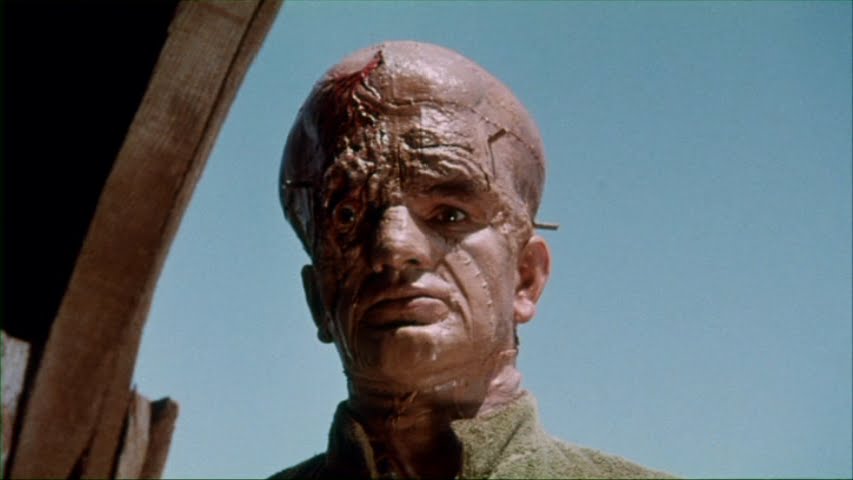
And since most Frankenstein films live and die based on their unique monster design, the specimen on display here is mostly forgettable. The only interesting thing about Lady Frankenstein’s signature creature is a goofy prosthetic eyeball that looks equal parts fake and laughable.

ladyfrankenstein2

Not even a solid lead performance from Neri can salvage this exploitation remake, since she does an admirable job of balancing Lady Frankenstein’s alluring sensuality and her drive to meddle with the forces of nature.

Unfortunately, the rest of the film buckles under the weight of its own unrealized potential, poor production values, and unmitigated sleaze, which makes it much more interesting to talk about rather than to actually watch for entertainment purposes.

Lady Frankenstein isn’t even interestingly bad enough to justify viewing it as a cult classic, which means you might have to dust off that old Blu-ray copy of Blackenstein to get your fix.

Verdict:

3/10

Corner store companion:

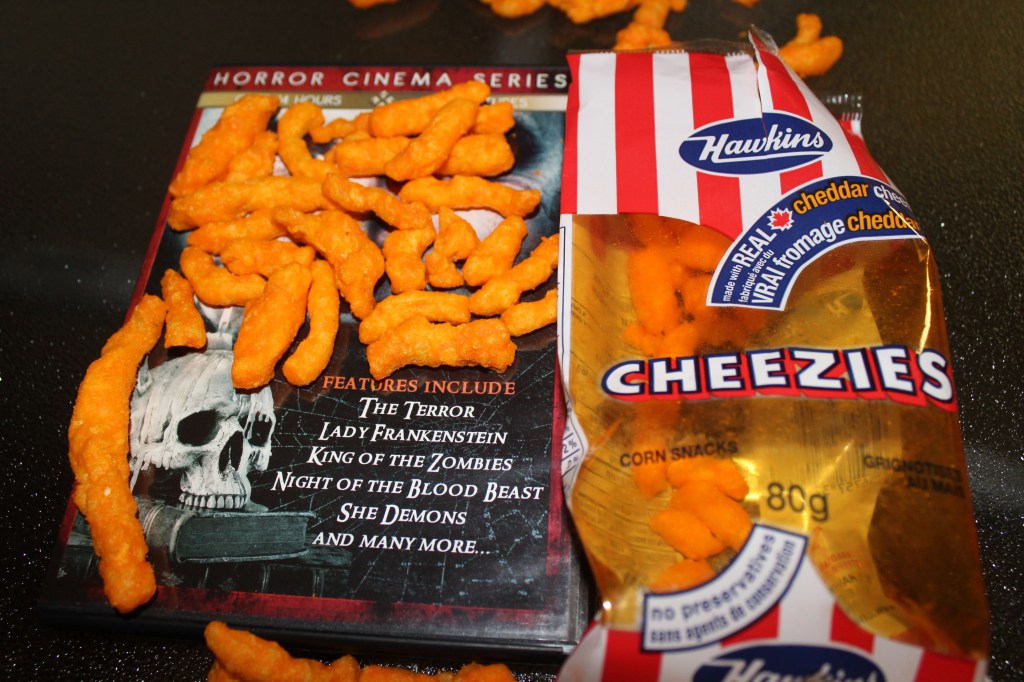
Cheezies (because they’re just a cheap imitation of a better product)

img_0125

Fun facts:

-Original release date:

October 22, 1971 (Italy)

October 1973 (US)

-Budget: Under $200,000.

-Box office gross: ₤ 139.683 (Italian lire).

-This film was distributed in America through Roger Corman’s New World Pictures after this American studio provided the Italian filmmakers with an additional $90,000 to complete principal photography.

-Musical highlight: “Living Dead Girl” by Rob Zombie (Rob samples a line from the movie’s trailer at the very beginning of the song).

-You can watch the full movie on YouTube here.