More American Graffiti (1979) review-a brilliant, acid trip of a sequel

Lately, it seems like the Internet’s most valuable currency isn’t Bitcoin or Instagram likes; it’s Star Wars hot takes.

One of the more thought-provoking topics to emerge from this ongoing discourse is whether or not the franchise suffered because series creator George Lucas wasn’t on writing duties or sitting in the director’s chair after he sold it to Disney.

While I don’t want to add to that speculation, I thought it would be interesting to talk about another much-maligned sequel to a Lucas property: More American Graffiti (1979).

For those of you who don’t know, the original American Graffiti (1973) was Lucas’ big claim to fame before he created the most popular media franchise in the history of human civilization.

But in stark contrast to the sweeping scale and sci-fi bombast of the original Star Wars, American Graffiti is a small, intimate coming-of-age story that centres on a group of California youth in 1962 who just graduated high school and are on the cusp of early adulthood.

The film follows these kids during one hectic night and morning, where they get into street races, fall in love, and decide if they even want to go to college, all set to a period-appropriate rock ’n’ roll soundtrack.

Thanks to Lucas’ uncanny ability to capture the sights and sounds of the early baby boomer generation, the film went on to gross $140,000 million off of a $777,000 budget, which paved the way for the Hollywood outsider to bankroll his ambitious space opera.

I don’t have to tell you what happened when Star Wars (later dubbed Episode IV: A New Hope) finally came out in May 1977, but suffice it say that Lucas got very busy, which forced him to put other projects on the backburner.

Because of this, when a sequel to American Graffiti was in development Lucas only served as an executive producer (and uncredited editor), handing off directing/writing duties to Bill Norton.

Rather than just rehash the same format, Norton decided to take this sequel into new and interesting directions, following the original film’s characters (except Richard Dreyfuss’ Curt) across four different New Year’s Eve celebrations from 1964 to 1967.

When More American Graffiti was eventually released in 1979, it was savaged by critics, with many calling this new structure “confusing,” “pointless” and “a mess.” Currently, the film holds a 20% rating on Rotten Tomatoes (based on 10 reviews) and a not-so-great 5.3/10 user rating on IMDB.

Having recently watched this film for the first time, I do wish people would give More American Graffiti a second shot, since it’s genuinely one of the most creatively ambitious sequels I’ve ever seen.

First let’s talk about the film’s aforementioned structure.

Going into the movie blind, I’ll admit that splitting the story into four segments did catch me by surprise and took some getting used to.

Not only do these storylines happen simultaneously (constantly switching back and forth) but they’re also shot in their own unique style and aspect ratio.

The opening segment in 1964 follows now professional drag racer John Milner (Paul Le Mat) and is shot using a wide angle, stationary camera that was typical of 1950s exploitation cinema.

MoreAmericanGraffiti1

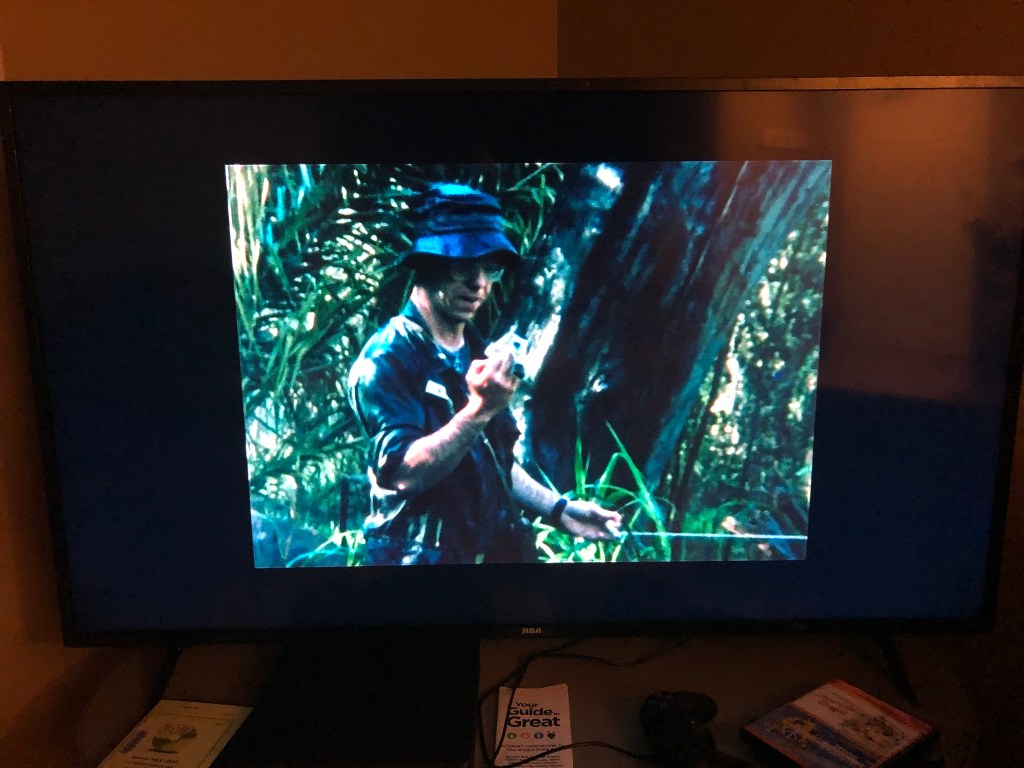
Terry the Toad’s (Charles Martin Smith) attempts to survive the jungles of Vietnam in 1965 are captured using a handheld, 16mm camera.

MoreAmericanGraffiti2

The psychedelic adventures of Debbie Dunham (Candy Clark) in 1966 San Francisco are probably the most experimental sections of the film, since the director utilizes multiple split-screen camera angles to depict the character’s wild, drug-fueled hippie lifestyle.

MoreAmericanGraffiti3

Thankfully, the movie settles down for the final segment in 1967 California, where the buttoned-down, domesticated Steve and Laurie (Ron Howard and Cindy Williams) get swept up in a violent student protest.

MoreAmericanGraffiti4

After cycling through this process a couple times, you’ll quickly find that this visual style is not just some dumb gimmick.

In fact, this kind of filmmaking elevates More American Graffiti from being a cheap, cash-grab sequel to something that expands on the story of the original while also maintaining its own unique voice.

For one thing, these contrasting filmmaking styles kept me engaged through the entire 110-minute runtime, since there was always something new and exciting to gawk at.

At the same time, Norton manages to exercise some restraint in the editing department and gives each scene just enough room to breathe before jumping ahead in time.

The contrasting aspect ratios also do a great job of telling you what year it is without the need to artificially slap a distracting title card on the screen every time the setting changes.

Plus, on a creative level, I just have to admire the balls it must have taken to greenlight such a weirdo sequel in the first place.

I imagine the filmmakers were seriously tempted to simply replicate the structure of the first film, where all the action takes place within a couple hours. Maybe the characters from American Graffiti come back together for a high school reunion or a wedding, and hijinks ensue from there.

But instead, Norton and company decided to split these characters up (for the most part) and scatter their stories across different stretches of time and geographic space, robbing the audience of the warm nostalgic comradery that made the original American Graffiti so popular in the first place.

To bring the conversation back to Star Wars for a second, that was a very Rian Johnson move.

TheLastJedi

But the fractured nature of More American Graffiti serves a very specific thematic purpose, since it’s meant to reflect the tumultuous, divisive nature of the United States in the 1960s.

Not only are most of the characters thrust into some of the biggest political and cultural touchstones of that era (like Vietnam, the hippie music scene and student protests) but we, the audience, view them all happening at the same time.

And while this mixture of sights and sounds can be slightly disorienting, it paints a really beautiful picture a bunch of people trying to find their way in an increasingly complicated and chaotic world.

Film critic Nathan Rabin actually sums up the experience better than I ever could in a write-up for The Dissolve, saying: More American Graffiti is about the fracturing of a culture, and the simultaneously exciting and terrifying freedom of that splintering.”

Even if you hate this stylistic approach, most American Graffiti fans will at least appreciate the sequel’s stellar soundtrack.

Following up the original’s famous set list is no easy task, since it featured pioneering rock ’n’ roll figures like Chuck Berry and Buddy Holly.

However, Norton managed to cultivate a set list that perfectly encapsulates how that same genre of music evolved throughout the1960s, with songs from counterculture icons like Bob Dylan, The Doors, Simon & Garfunkel, and The Byrds.

The film’s cast is equally strong, which is impressive considering they could have easily phoned in their performances for (if we’re being honest) a sequel that no-one was really asking for.

Instead, these actors, thanks in part to Norton’s script, are fully committed to injecting new depth into their characters.

High school nerd Terry the Toad finally grows a spine in the jungles of Vietnam. Debbie’s impulsive personality finally bites her in the ass and she is forced to take on more responsibility. John realizes that his “cool guy” status from high school is quickly fading. Meanwhile, Steve and Laurie’s conservative values are put to the test when they witness the horrors of police brutality first-hand.

I’m also thoroughly impressed with how Norton managed to recruit pretty much all the major players from American Graffiti to reprise their roles, even down to minor characters like the members of the Pharaohs street gang.

Heck, he even got Harrison Ford to make a brief cameo as Bob Falfa even though the next Star Wars movie was looming on the horizon.

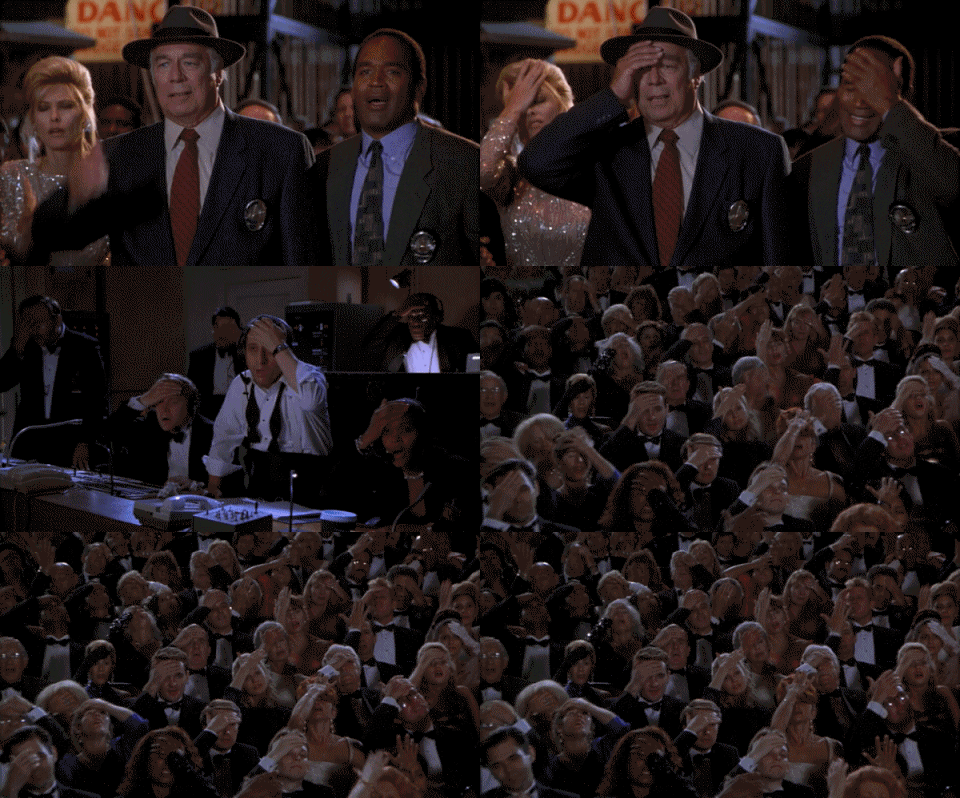
To bring this conversation back full circle, I guess watching More American Graffiti was exactly the palette cleanser I needed after sitting through The Rise of Skywalker.

Instead of playing it safe and relying on cheap nostalgia to tell your story, this Lucas sequel decided to challenge its audience by going way off the reservation and taking some real creative risks.

Of course, this approach didn’t really work out in the short term, given the thrashing it received from critics at the time.

And More American Graffiti definitely has its fair share of rough edges that even I can’t excuse, with some obvious production gaffs (like obviously fake props and a visible camera man being in frame at one point) that somehow making it into the final cut.

But I’ll definitely take a messy film full of heart and interesting ideas over a glorified corporate line item any day of the week, although I’m worried that Disney is choosing the latter approach when it comes to all their newly acquired intellectual properties.

Oh, and on an unrelated topic: here’s my 50-page master’s thesis on why The Last Jedi is [content redacted].

LukeGreenMilk

Verdict:

9/10

Corner store companion:

Salt & Vinegar, Barbecue, All Dressed, and Ranch Crispers (so you can enjoy four distinct flavours for each section of the film)

IMG_7487(a)

Fun facts:

-Release date: Aug. 3, 1979

-Budget: $3 million

-Box Office Gross: $15,014,674

More American Graffiti served as Ron Howard’s last major film role. After this movie wrapped, the actor would only appear in television before transitioning into directing, producing and voice-over work only.

-The filmmakers attracted thousands of extras for the movie’s climactic drag race scene by promising them free Star Wars toys.

-Bill Norton would go on to carve out a nice career for himself by directing television, including episodes of The Twilight Zone, Law & Order: Criminal Intent, Buffy: The Vampire Slayer and Angel.

-Musical highlight: there are so many great tracks to choose from, but I’m going to have to go with Bob Dylan’s “Like a Rolling Stone,” which plays over the closing credits.

Jingle All the Way 2 (2014) review-needs more Sinbad

For reasons that continue to baffle me, Jingle All the Way (1996) has sort of become a new holiday classic amongst my fellow millennials.

I know the potency of 90s-stalgia is overpowering to a lot of people in my age demographic, but the reality is that this comedy is aggressively mediocre and is mostly remembered for its cast, which included Arnold Schwarzenegger, Sinbad, Phil Hartman, and a pre-Episode I Jake Lloyd.

It’s possible that the plot even resonated with some parents at the time, since it involved two rival dads (Schwarzenegger and Sinbad) nearly killing each other to get their hands on the season’s hottest toy.

The influential meme economy also might have given this film some extra room in people’s collective memory now that there are more YouTube remixes of Schwarzenegger spouting the line “put that cookie down” than I care to count.

However, I do find it comforting that Gen Z movie buffs won’t remember Jingle All the Way 2 (2014) with the same resonance, if at all, because it’s just as bad as the first one but without the budget, weirdness, or Hollywood star power to pull the wool over people’s eyes.

Despite its name, Jingle All the Way 2 is a sequel in name only, since it doesn’t feature any characters from the original film.

Instead, we’re saddled with fake redneck Larry the Cable Guy acting out the same basic plot, where a father tries to secure his child’s affection during Christmas by buying a toy that every other kid is after.

To the filmmakers’ credit, they didn’t try and replicate the original story beat for beat, choosing instead to mimic its overall concept and structure, which left screenwriter Stephen Mazur plenty of room to fill in the blanks.

The problem is he decided to clog the runtime with a bunch of half-baked shenanigans that would barely prop up a half-hour of network television.
I hate to give the original Jingle All the Way any sort of compliment, but at least that movie had momentum. At least you were kind of invested in the cutthroat rat race between Schwarzenegger and Sinbad that served as the backbone of the story.

While Cable Guy is saddled with his own parental rival (his ex-wife’s new husband) in this straight-to-video sequel, their back-and-forth never really rises above passive aggressive sniping until the very end.

As a result, all we’re left with is the film’s attempts at physical comedy, which involves Larry getting electrocuted, thrown off a mechanical bull, and beaten up by old people.

While I’m not above a good prat fall or quality nut shot, these gags aren’t even well executed as the timing seems to be off by a couple seconds. It’s almost like the filmmakers thought they were shooting a TV sitcom and left room for canned audience laughter to be added in later.

Of course, the shift in quality between the two films is directly tied to the difference in budget, with the 1996 entry having the financial backing to pull off lots of grand spectacle.

For example, one of the film’s most memorable sets pieces features Schwarzenegger getting into a brawl with a bunch of black-market toy dealers before it is broken up by an entire precinct worth of police officers.

https://www.youtube.com/watch?v=rdZXtsumB_0

In Jingle All the Way 2, this same scene is staged between only a handful people, including a sparse trio of cops.

While having a small $5 million budget is a definite disadvantage, that doesn’t excuse the sheer level of incompetence on display from the screenwriter and director.

From a writing perspective, Mazur doesn’t even know how to structure this simple story, since one of the supporting characters blurts out the film’s moral 24 minutes in. After Larry is directly told that his daughter will love him no matter what, how are we, as an audience, supposed to remain invested in the story?

By revealing this information this early on, all we have to look forward to is Cable Guy’s manufactured working-class charm for the next hour.

In terms of providing fun holiday visuals for kids, I wouldn’t even recommend playing this movie on mute, because it mostly looks like shit.

The filmmakers made the baffling decision to shoot this movie near Vancouver, which isn’t known for its traditional festive scenery even in mid-December.

And since the Jingle All the Way 2 crew didn’t have the resources to transform soggy Langley into a winter wonderland, the production design looks rushed and slapped together, like they bought a bunch of discount holiday decorations the night before principal photography began.

Say what you will about the Christmas movies they mass produce for Netflix and the Hallmark Channel, but at least they put their money where it matters: set dressing and ambiance.

The people behind Jingle All the Way 2 couldn’t even be bothered to find a frozen lake for an exterior shot of an ice fishing shack and just provided a static image instead.

IMG_1485

This is seriously a shot from the movie.

Even basic technical stuff like scene transitions are noticeably cheap, almost like they were ripped straight from Microsoft PowerPoint.

The only thing I can really say in the sequel’s favour is that the child actress who plays Cable Guy’s daughter (Kennedi Clements) is actually pretty charming and is a way better performer than Jake Lloyd in the original (although, in retrospect, that’s a pretty low bar to clear.)

Otherwise, the rest of the movie is a complete comedy dead zone and its mere existence as a low-effort, cash grab sequel emphasizes the absolute worst elements of the holiday: naked commercialism dressed up as a wholesome family entertainment.

The original Jingle All the Way is guilty of the same thing, sure, but the filmmakers behind that movie managed to inject some energy in the proceedings, something that this follow-up is sorely missing.

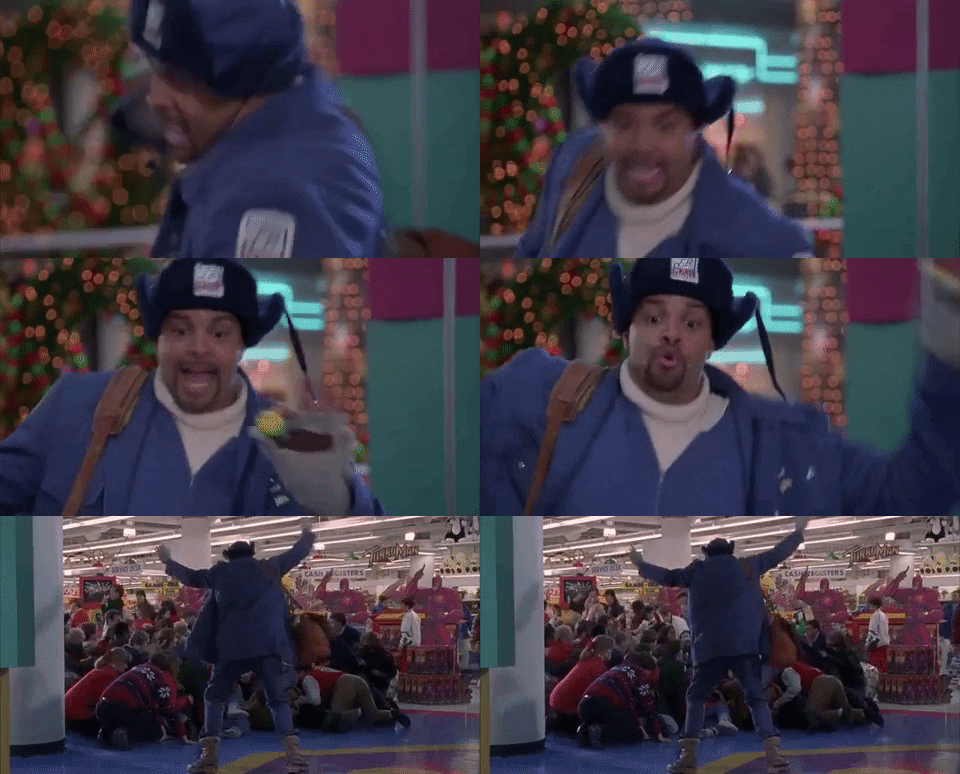
And I never thought I would type these words in any context, but this sequel desperately needed some Sinbad to liven things up.

Sinbad

Verdict:

3/10

Corner store companion:

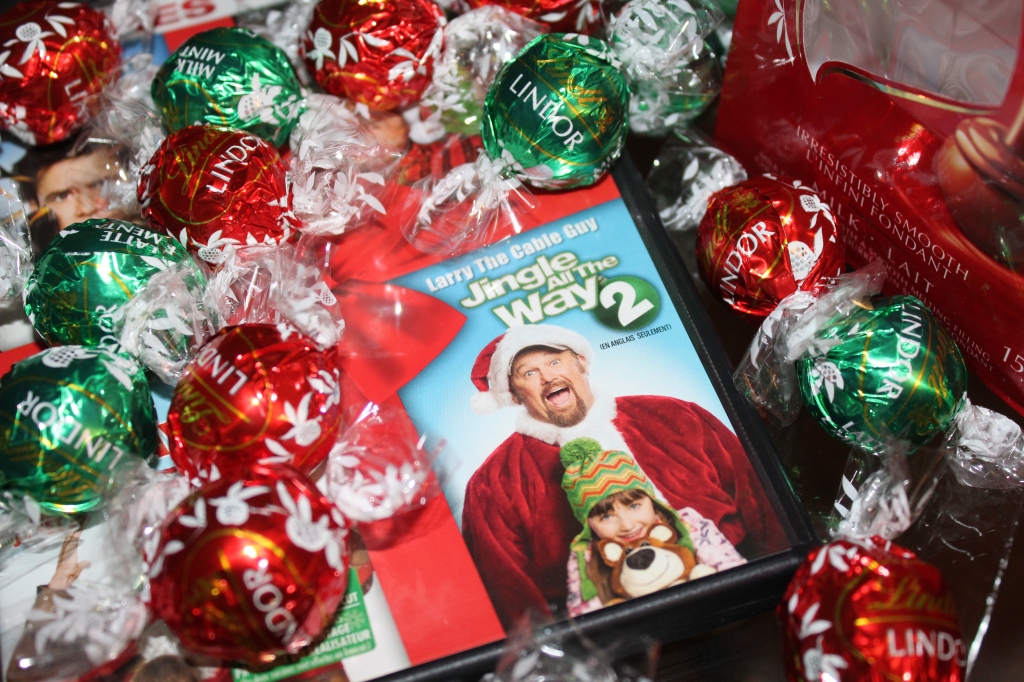
Lindt Lindor chocolates (because you deserve to consume something of quality while watching this dreck)

IMG_7200

Fun facts:

-Release date: Dec. 2, 2014 (straight-to-video)

-Budget: $5 million

-Mercifully, Larry only shouts his signature catch phrase “git’ r done” once in this movie.

-Following Jingle All the Way 2, director Alex Zamm would go on to helm a bunch of regal holiday movies, including A Royal Christmas (2014), Crown for Christmas (2015) and A Christmas Prince (2017).

Jingle All the Way 2 marks the feature film debut of Anthony Carelli, better known as WWE wrestler Santino Marella, who plays Larry’s best friend Claude.

Jingle All the Way 2 is the 31st film that was produced by WWE Studios.

-Around 2014, WWE Studios made a habit of producing straight-to-video movies featuring intellectual properties from other companies. Outside of Jingle All the Way 2 (20th Century Fox), they also released Leprechaun: Origins (Lionsgate) and Scooby-Doo! WrestleMania Mystery (Warner Brothers) in that same year.

The Satanic Rites of Dracula (1973) review-Christopher Lee deserved a better send-off as the Count

Besides Bela Lugosi, Christopher Lee is probably the most prolific actor to ever don Count Dracula’s cape on the silver screen.

This is no easy feat, since the Prince of Darkness has been portrayed in over 200 films by some of the industry’s most respected thespians, like Gary Oldman, Klaus Kinski, and Frank Langella.

But from 1958 to 1973, Hammer Studios turned Lee into a horror icon by casting him as the main antagonist in their revival Dracula series that took the character into new and interesting directions.

This is definitely true for The Satanic Rites of Dracula, the last film in the series to feature Lee, since the story revolves around a morbid cult helping the Count carry out his evil deeds in 1970s London.

Luckily, the descendent of Dracula’s old foe Van Helsing (played by Peter Cushing for the fourth time) catches wind of these malicious machinations and teams up with a group of government agents to stop this undead fiend once and for all.

Full disclosure, I haven’t watched any of the other Hammer Dracula films starring Lee, since my horror DVD 12-pack only came bundled with this single entry.

But based on what I’ve been able to glean from online critics like James Rolfe, the series’ continuity is all over the place and doesn’t really make sense anyway.

All you need to know is that Dracula is skulking around modern day London and most of the older films’ gothic sets and atmosphere have been replaced with cheap on-location shooting.

For some reason, the filmmakers also decided to try and modernize this story by imbuing it with period appropriate funk music, which makes it sound like Shaft is going to jump out of the shadows at any moment and kick vampire ass.

The movie’s tone in general is all over the place, switching from scenes involving satanic cults and human sacrifice to dry exchanges between government agents that resemble a John le Carré spy novel.

Based on this description, you might be fooled into thinking that The Satanic Rites of Dracula is a fascinating mess of a film that keeps you hooked based on how off-the-wall some of its ideas and concepts are.

While this does happen occasionally, the movie is mostly a giant bore that barely features Lee in any meaningful way.

Dracula himself doesn’t show up until half-an-hour into the film and takes up less than 20 minutes of total screen time.

While this is apparently par for the course when it comes this series, critics like Rolfe said that previous entries at least made up for the lack of Dracula by providing some interesting performances, eerie atmosphere, and impressive gore effects.

Satanic Rites really doesn’t bring any of that to the table with its bland main characters, goofy score, and tepid use of bloodshed.

The most compelling thing about the film is Peter Cushing as Van Helsing, since he at least tries to take this bonkers material serious. Sadly, he isn’t given that much to do, since 90% of his dialogue consists of dolling out exposition.
The movie’s plot also really starts to go off the rails in its second half when Van Helsing discovers that [SPOILERS] Dracula is planning to wipe out humanity by developing a new strain of the bubonic plague. How he would be able survive in a world without human blood to feast on I have no idea.

The writers try to salvage this idiotic turn by suggesting that Dracula wants to die himself and take the world down with him. However, that doesn’t explain why he spends so much of film’s running time turning pretty English girls into his vampire brides instead of focusing on his plan to commit mass genocide.

https://www.youtube.com/watch?v=zTSsydfLalI

The last nail in this film’s coffin is its insulting finale, where [SPOILERS] Dracula meets his end by walking into a hawthorn bush.

NakedGunHeadSlap

Obviously, the people over at Hammer were running out of ways to kill Lee at the end of every movie, so I guess they came up with some bullshit about how vampires are vulnerable to the crown of thorns that Jesus wore on the cross.

So yeah, not a great way for Lee to cap off his iconic run as Dracula.

Even though the actor revealed in later interviews that he grew less and less fond of playing the character as time went on, there’s no denying that he injected some new blood into Bram Stoker’s original creation.

Not only was Lee one of the first actors to portray the Count in vivid Technicolor, but horror movie fans also got to see this classic character inflict new levels of gratuitous violence on his victims thanks to Hammer’s famously schlock-heavy approach to filmmaking.

Sadly, that initial spark of creativity is completing lacking in Satanic Rites, which ends this franchise with a dull whimper rather than a deafening bang.

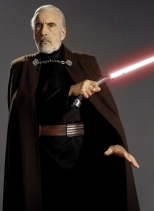
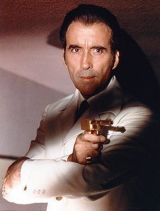
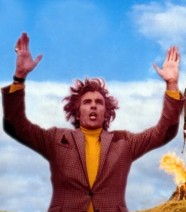
But luckily, I don’t think this film hurt Lee’s legacy in the long run, since he would go on to portray a litany of other iconic movie villains until his death in June 2015 at the age of 93. And that’s on top of his decorated military service and amazing run as a heavy metal recording artist.

Count-dookuFrancisco_ScaramangaSarumanpm_338485

So yeah, I don’t think he gave this movie a second thought after he collected his paycheck … and that’s about all it deserves.

Verdict:

3/10

Corner store companion:

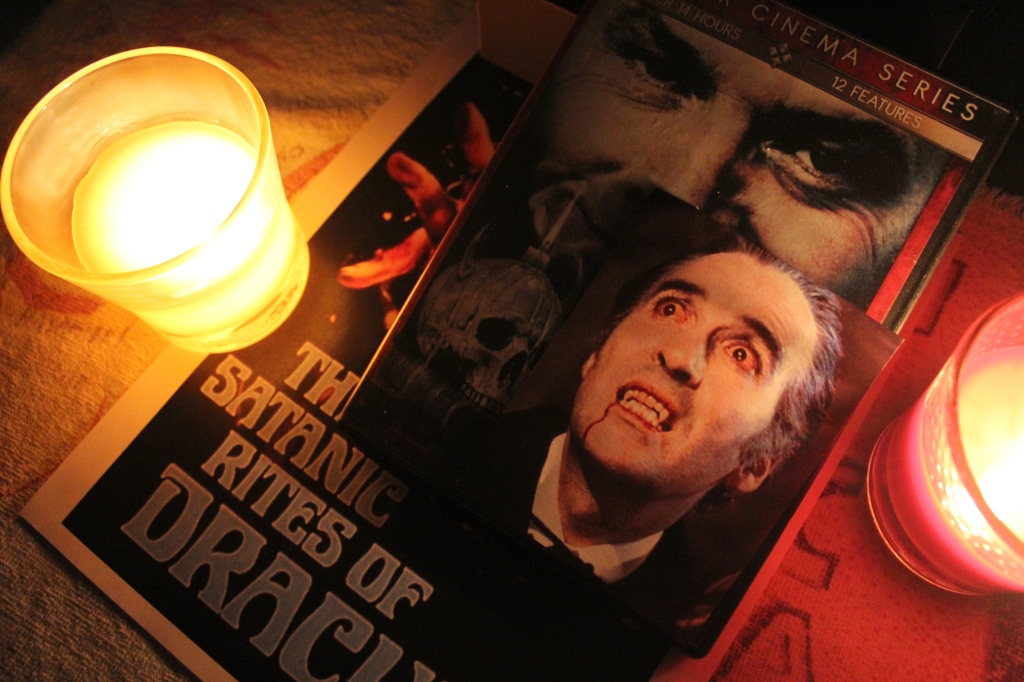
Glade scented candles (because they provide better gothic atmosphere than the movie itself)

IMG_0067

Fun facts:

-Release date: November 3, 1973 (West Germany), January 13, 1974 (UK), October 1978 (US)

-Box office gross: ₤223,450

-Alternative title: Dracula Is Alive and Well and Living in London

-While Hammer produced nine films in their revival Dracula series, Christopher Lee only appeared in seven of them. However, the second and ninth films in the franchise, The Brides of Dracula (1960) and The Legend of the 7 Golden Vampires (1974), still feature Peter Cushing as Van Helsing.

Satanic Rites wasn’t the last time Lee would be cast as Dracula, since he donned the cape one last time in the 1976 French comedy Dracula and Son.

-Before he played Dracula for the first time in 1958, Lee also got the opportunity to portray Frankenstein’s monster in Hammer’s The Curse of Frankenstein from 1957. Lee’s run as the creature only lasted one movie, since the remaining six films in the franchise focused on the adventures of Baron Victor Frankenstein, played by Cushing.

-Musical highlight: “Massacre of the Saxons” by Christopher Lee (this song has nothing to do with the movie, I just wanted to remind everyone that Lee recorded a series of heavy metal albums when he was in his late-80s and early-90s).

You Light Up My Life (1977) review- Why you should give this film (and the song) a second chance

Movies don’t always stick into the popular consciousness the way their directors would like them to. Some films, for example, are only remembered for one particular thing, whether it’s a standout scene or a single iconic performance.

You Light Up My Life is an obvious victim of this phenomenon, since many people forget that it was even a movie in the first place.

Instead, most people associate this film with its title track, which was one of the biggest hit songs of 1977, staying at the #1 position in the Billboard charts for an unprecedented, at the time, 10 consecutive weeks.

Not only did this single’s popularity make Debby Boone a star, but the following year it also netted director/composer Joseph Brooks an Oscar for Best Original Song, giving him a lot of credibility in the eyes of Hollywood elites (albeit temporarily).

Meanwhile, the original 1977 film that spawned this track is definitely not remembered as a classic, judging by its low rating on sites like Rotten Tomatoes (20%) and IMDB (4.6).

And even though the song initially fared well in the eyes of the public, its stock has severely diminished with time. In fact, if you Google “You Light Up My Life” right now you’ll find a bunch of modern culture critics writing about how it is one of the worst songs of the 1970s.

This overwhelmingly negative critical consensus on both fronts definitely came as a big surprise to me, since I found this film to be a charming romantic drama and the song to be an absolute show stealer.

MPW-39057

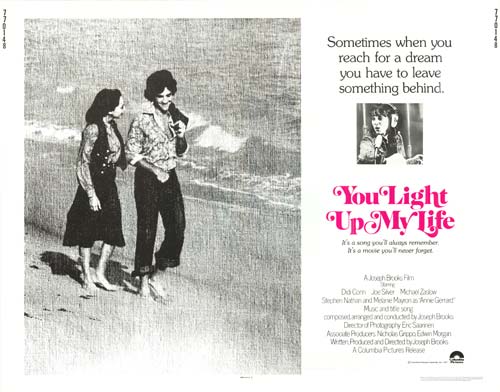
The story proper follows Laurie Robinson (Didi Conn), a working artist in Los Angeles who bounces around different commercial auditions and comedy acting gigs at the behest of her overbearing showbiz father (Joe Silver). However, her true passion lies with composing music and she even gets the opportunity to showcase this talent when she meets an established director (Michael Zaslow) by chance.

Laurie’s personal life is also put in jeopardy when she starts to develop feelings for this director, which complicates her impending marriage to another man.

Now, I’ll admit, there’s a lot of melodrama packed into this movie, especially when the run time is a slim 90 minutes. But Conn’s lead performance as Laurie really holds everything together, since she carries this entire movie on her back almost single-handedly.

It’s hard to put into words how endearing and likable she is on screen, as her character goes from audition to audition, facing rejection and failure at almost every turn. Conn’s optimistic personality and lack of cynicism really makes her a captivating underdog to watch, someone who also isn’t afraid to show cracks in that sunny demeanor when things get really rough.

Her relationship with Joe Silver is also a pivotal part of the movie’s appeal.

While Silver’s showbiz dad is totally ignorant of his daughter’s real interests, he isn’t trying to be malicious or exploit his only child for financial gain. Instead, he pushes her in a certain direction out of a genuine belief that stand-up comedy is her real passion, even though that’s mostly projection on his part.

The warm back-and-forth between Conn and Silver comes across as being very authentic and makes you believe that the actors would carry out these same conversations once the cameras stopped rolling.

In fact, most of the characters and dialogue in the movie comes across as very naturalistic, to the point where I almost thought I was watching a slice-of-life drama in the same vein as a Richard Linklater or Cameron Crowe film.

But I know what you’re asking: “What about the title song? Isn’t it awful and derail the entire movie?”

Actually, no. I would actually argue that the title track works on many levels and is one of the film’s biggest highlights.


https://www.youtube.com/watch?v=NZP9iCfkSAE

From a filmmaking point of view, this uplifting number comes in at just the right point in the story, when Laurie desperately needs a win and finally gets the chance to showcase her singing and song writing ability in front of some Hollywood big wigs.

This exulted feeling is hammered home by the way the scene is shot, since it is all presented to the audience in a single take with fluid, sweeping camera movements.

And even though Conn obvious isn’t providing her own singing voice, she still acts the hell out of this moment, since her body language and facial expressions perfectly match the pipped in vocals.

(Plus, if Rami Malek can win an Oscar for lip syncing, why should I hold back praise for another quality pantomime performance?)

On a musical level, it’s important to point out that the movie version of “You Light Up My Life” is different than the Debby Boone rendition most people are familiar with.

The track was originally performed by classically trained opera singer Kasey Cisyk, whose powerful, uplifting voice effortlessly elevates the admittedly simple lyrics and makes them sound profound.

Boone’s performance is pretty bland and lifeless by comparison, which is part of the reason why, I imagine, this song has garnered such a bad reputation in the intervening 40 years.

I also feel like the instrumental accompaniment in the movie version of the song is alot stronger, especially the string section, but that could just be my imagination.

And even if you don’t like Cisyk’s version of the “You Light Up My Life,” the film is sprinkled with a handful of other catchy numbers, with “Do You Have a Piano” being another standout.

That’s not to suggest that every song is used appropriately.

The director has a bad habit of artificially squeezing his original music into scenes just to pad out the run time, like whenever Conn has to drive from one location to another.

Plus, not every track is a winner, with the dreary “California Daydreams” coming across as a bad Simon and Garfunkel rip-off.

In terms of filmmaking weaknesses, I would be remiss not to mention that You Light Up My Life occasionally veers off into the realm of a sappy soap opera, with some cheesy lines and plot contrivances that really strain the realm of believability.

But at its core, this movie still has a beating heart and the director is obviously very passionate about showcasing the struggle one must endure to make it in the entertainment industry.

The filmmakers in general do good job of blending the music with the overarching narrative, so movie-goers who have re-watched the recent A Star is Born remake for the 15th time might get a kick out of this story too.

I know that singing You Light Up My Life’s praises won’t win me any critic brownie points, since the movie has fallen into relative obscurity and the song has garnered a pretty unshakable reputation as being seven shades of uncool.

But every now and then I’m in the mood for some romantic fluff, especially if the lead performance is strong and the soundtrack adds an extra layer of intrigue.

For everyone else, just make sure you go in with an open mind and don’t buy into the anti-hype that’s built up around this song (and the movie that bears its name) for the last four decades.

Verdict:

8/10

Corner store companion:

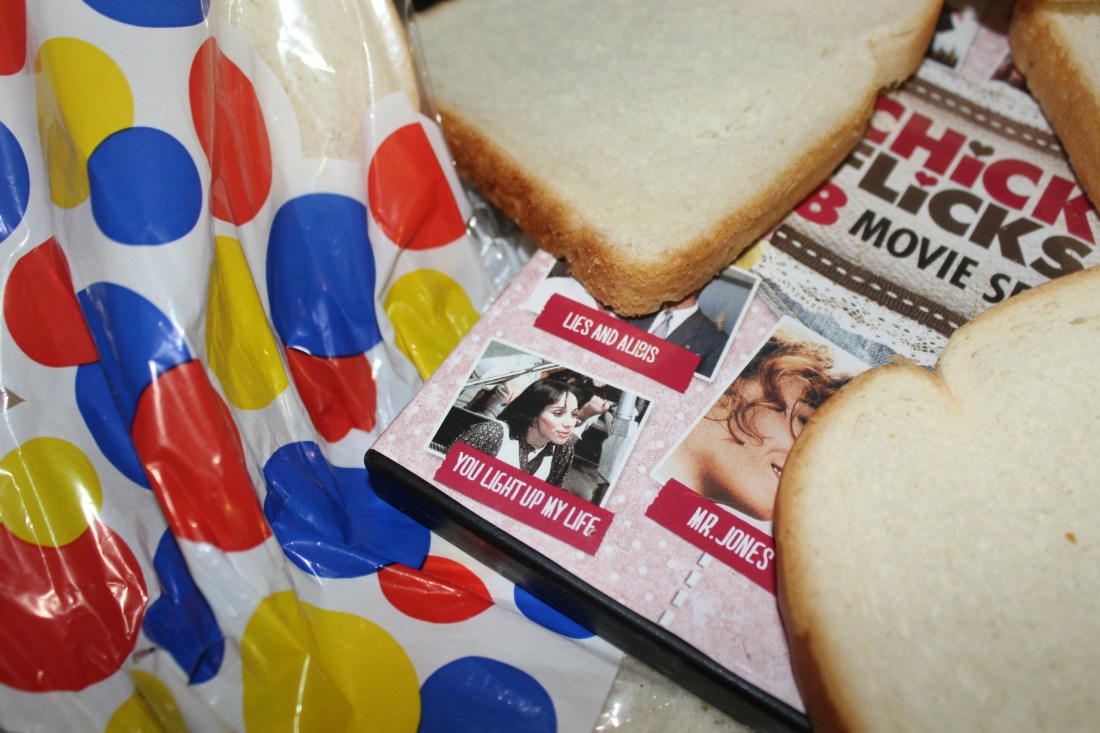
White Wonder Bread (because it’s bland but emotionally satisfying)

IMG_9385

Fun facts:

-If you’re wondering why director Joseph Brooks didn’t use the Kasey Cisyk version of “You Light Up My Life” for radio play it’s because he is a giant piece of shit. According to Cisyk’s second husband Ed Rakowicz, Brooks made improper advances towards the young singer and became angry when she rejected him. The director went on to hire then newcomer Debby Boone to re-record the song and even instructed her to replicate Cisyk’s performance as closely as possible.

-Even though her rendition of “You Light Up My Life” is (arguably) inferior to Cisyk’s version, Boone’s career took off like a rocket after it hit the airwaves. Not only did the single earn her an Oscar and Golden Globe for Best Original Song, but she also won a Grammy for Best New Artist in 1977 and Song of the Year in 1978.

-Brooks’ monstrous behavior with Cisyk was only the tip of the iceberg. In June 2009 he was arrested for raping or sexually assaulting over 10 different women after his assistant lured them to his Manhattan apartment. Brooks committed suicide on May 22, 2011 before he could be tried for 91 counts of rape, sexual abuse, criminal sexual act, assault, and other charges.

Star Trek scholars cite Michael Zaslow, who plays the director Didi Conn falls for, as being the franchise’s first-ever “red shirt” or expendable crew member that perishes during a planetary expedition. During the Original Series’ first official episode titled “The Man Trap,” Zaslow’s character, crewmember Darnell, famously met his end after being seduced and killed by a shape-shifting alien.

-You can watch the entire movie on YouTube for free (with Spanish subtitles) here:

https://www.youtube.com/watch?v=qxjPEwUAN7Y&t=2025s

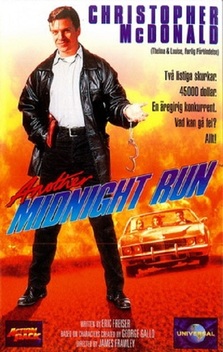
Another Midnight Run (1994) review-Flagrant false advertising

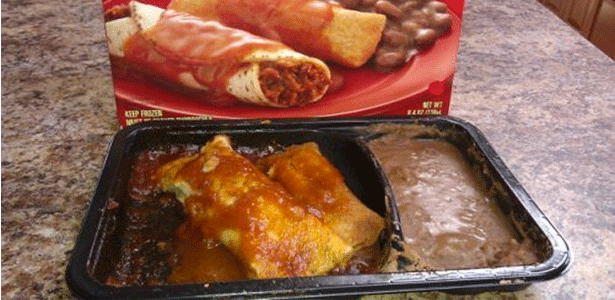
You ever buy some frozen food based solely on the strength of the brand name or box art, and it turns out to be some bland, goopy piece of shit? That is what’s it’s like watching Another Midnight Run.

FrozenFood(1)

This made-for-TV movie bills itself as an continuation of the original Midnight Run, a 1988 action-comedy that gained a lot of traction from critics at the time thanks to its potent mix of exciting car chases and sharp dialogue.

It also didn’t hurt that this original project starred Robert De Niro, who injected street-smart bounty hunter Jack Walsh with a lot of edge and gravitas, qualities that would have been neglected by a lesser actor.

However, pretty much all of those elements are missing from this 1994 pseudo-sequel, which retains the names of some of the principle characters from the 1988 original but none of its charm.

That being said, the film does at least mimic the basic structure of its predecessor, since it finds Walsh being hired by a bail bondsman (again) to transport a pair of criminals from San Francisco to Los Angeles.

Of course, Walsh’s captors (married con artists played by Jeffrey Tambor and Cathy Moriarty) are always trying to give him the slip every step of the way and go into business for themselves.

But after that promising set-up, it doesn’t take long before the filmmakers reveal that they don’t have any new ideas and are content with poorly rehashing old elements from the original film.

Strike one against Another Midnight Run is the fact that they replaced Robert De Niro with Christopher McDonald in the role of Jack Walsh.

No offense to the future Shooter McGavin, but he leans way too much on buffoonish comedy to play a convincing world-weary bounty hunter and comes across like he’s playing a parody version of the character on Saturday Night Live.

Shooter(1)

It also doesn’t help that the screenwriter makes him out to be a complete idiot, who is constantly outsmarted by his captors.

Sure, De Niro’s Jack Walsh was a screw-up as well, but he at least displayed a basic level of competence and quick thinking that helped him get out of sticky situations.

In Another Midnight Run, McDonald can barely tie his shoes without fucking up, let alone keep a pair of career con artists in check.

At one point, the married couple successfully distract their captor by convincing him that a nearby bar patron is giving him the bedroom eyes, which he completely falls for like horny 14-year old.

And without a likable protagonist to anchor the narrative, or any supporting performances on par with Charles Grodin from the 1988 original, the rest of the movie completely falls apart.

Strike two against the film is that it’s hampered by a restrictive TV budget, which means it can’t come close to replicating the intricately staged action sequences that made the original film so memorable.

All Another Midnight Run can offer up in terms of excitement are scenes of McDonald falling into some trash cans or mildly jogging through an airport.

While this downgrade is to be expected when a property makes the transition from film to television, Another Midnight Run doesn’t even have a good script or likable characters to fall back on.

All it can provide in exchange is lame comedy and annoying characters that you wish would just drive off a cliff so the movie could end.

The third and final strike that sends Another Midnight Run back to the figurative dugout is that it comes across as being a big pile of wasted potential.

A motivated director and screenwriter could have used this opportunity to think outside the box and expand on the Jack Walsh character.

Maybe they could have explored his past as a police officer in Chicago or shown us his first stint as a bounty hunter after resigning from the force. You know, typical origin story type stuff that people can’t get enough of.

Instead, the filmmakers decided to play it safe and replicate the basic structure of the original, albeit without any of sharp wit or fun that made it so successful six years ago.

I know most of this rundown is just me bitching about how this made-for-TV sequel pales in comparison to the original film, but the filmmakers definitely invite this criticism.

The only reason Universal greenlit this project in the first place (as well as the two other made-for-TV sequels released in the same year) is because they wanted to cash in on a recognizable name that was still worth something in the mid-90s.

AnotherMidnightRunPoster(1)

But rather than putting in the work to remind people why this property was valuable in the first place, all they did was slap the name Midnight Run onto an otherwise generic, low-energy road trip comedy and hope that nobody notices the difference.

And while the film did manage to siphon a couple chuckles out of me here and there, I still couldn’t shake the feeling that I was being grifted by the same kind of con artists and trickster characters that make up two-thirds of the cast.

Verdict:

3/10

Corner store companion:

Blue Water Seafoods’ Pacific Pink Salmon (because it promises quality but delivers a sub-standard product instead)

IMG_6624

Fun facts:

-Original air date: Feb. 6, 1994.

Another Midnight Run was followed be another two made-for-TV sequels in the same year: Midnight Runaround and Midnight Run For Your Life. All three films were produced for Universal Television’s “Action Pack” block that aired from 1994 to 2001.

-While the “Action Pack” line produced a lot of duds, like Knight Rider 2020 and Cleopatra 2525, Universal also debuted some landmark 90s television under this umbrella. Not only did they introduce the world to Kevin Sorbo’s Hercules through a series of TV movies, but the spin-off Xena: Warrior Princess proved to be even more popular and still has a cult following to this day.

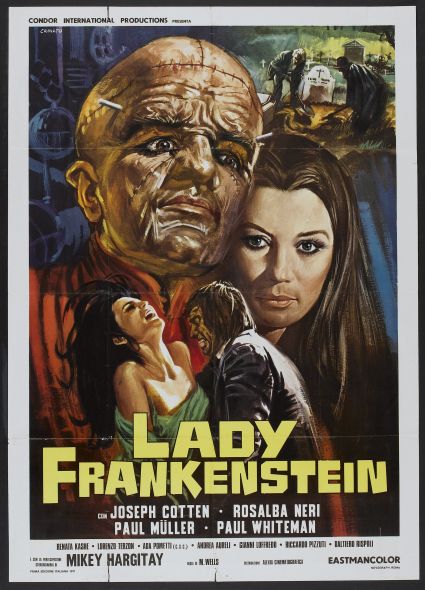
Lady Frankenstein (1971) review-This exploitation film is poorly stitched together, just like the monster itself

Comic book franchises and cinematic universes are all the rage in Hollywood right now, but any keen film historian could tell you that this trend was pioneered way before the Avengers assembled back in 2012.

The Universal Studios monster mash of the 1940s is probably the earliest example of this, where larger-than-life characters like Dracula, the Wolf Man, and Frankenstein’s monster dominated the box office and would regularly pop up in each other’s movies.

While Universal’s take on the Frankenstein monster was one of the most iconic figures to emerge from this cycle, neck bolts and all, he wasn’t the only version of Mary Shelley’s original characters to grace the silver screen.

Outside of being featured in eight movies made by Universal, Shelley’s Frankenstein characters would play a prominent role in at least 58 other feature films produced by film studios from around the world, ranging from Britain (Hammer) to Japan (Toho).

In 1971, the Italian studio Alexia Films took a stab at adapting this property with Lady Frankenstein,which shifted the focus to a female perspective and injected a healthy dose of sex and violence into the proceedings.

lady_frankenstein_poster_02

Even though this movie starts off by following the basic framework of most Frankenstein stories (where an eccentric European aristocrat digs up corpses and uses their limbs to create a unholy monstrosity) the filmmakers begin to deviate from this source material around 30 minutes in.

After completing his initial experiment, Baron Frankenstein (Joseph Cotten) is killed by his creation and the rest of the story follows his daughter Tania (Rosalba Neri) as she tries to carry on the family name by bringing her own “monster” to life.

On the surface this premise is full of potential, since Frankenstein stories aren’t usually told from a female point-of-view. With a motivated creative team behind it, this film could have subtly explored gendered expectations in the 19th century scientific community and how that influences Tania’s monster making process.

However, the filmmaking on display is shackled by grindhouse sensibilities and an extremely low-budget, which means that most of that interesting subtext gets swept under the rug in favourof bad monster make-up and cheap nudity.

Of course, there’s nothing wrong with selling your film using this kind of lurid subject matter, but the filmmakers decided to take the laziest possible route to get there.

For example, the screenwriters decided to put their unique stamp on that famous scene from the 1931 Boris Karloff Frankenstein film where the monster accidently drowns a small girl by throwing her into a lake.

In Lady Frankenstein, the monster’s drowning victim is an adult female … and naked, which is an edgy 13-year-old’s idea of making a classic story more “mature.”

This grade school understanding of adult dynamics also pervades the rest of the movie, since Tania’s motivation for carrying on her father’s work is to create the perfect “man” through combining the body of a hunky servant and the brain of her father’s assistant.

This is a big step down from most other Frankenstein protagonists, since they were mainly preoccupied with unlocking the secrets of life and death and couldn’t care less about their own sex life.

The filmmakers pay some lip-service to the idea that Tania’s creation is the only thing that can stop her father’s original monster from rampaging throughout nearby villages, but they seem much more preoccupied with the idea of an Italian beauty like Neri bumping uglies with a reanimated corpse.

Again, this concept could have been salvaged if it was put in the right hands, since acclaimed storytellers like David Fincher and Bryan Fuller have established successful careers through creating high art from trashy source material (like in Gone Girl and the most recent Hannibal TV series, respectively).

However, it doesn’t help that the film’s production values are in the toilet.

I didn’t expect much from a 70s exploitation horror movie, but the least they could have done is sync up the actor’s dialogue with their lip movements, which seems to be off at least 70 per cent of the time.

The film’s editing also operates on the same level of incompetence, since scenes abruptly change without any natural rhythm. These transitions are so sudden that the editor even managed to cut off key lines and important pieces of music.

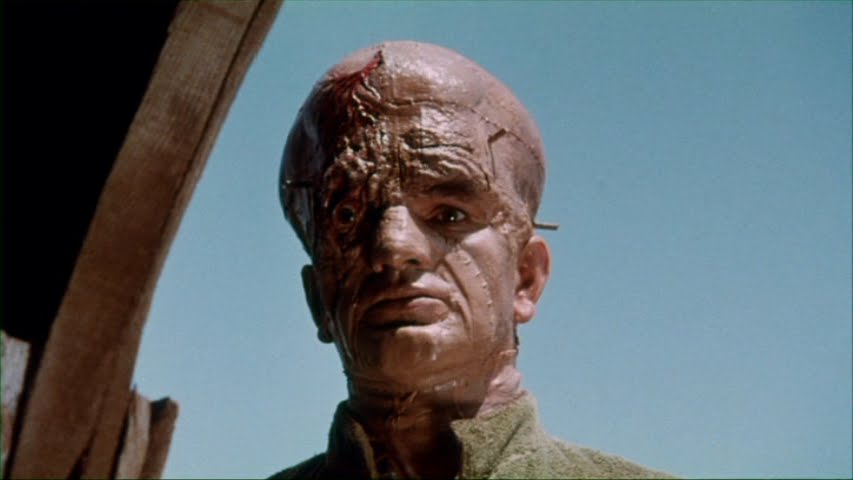
And since most Frankenstein films live and die based on their unique monster design, the specimen on display here is mostly forgettable. The only interesting thing about Lady Frankenstein’s signature creature is a goofy prosthetic eyeball that looks equal parts fake and laughable.

ladyfrankenstein2

Not even a solid lead performance from Neri can salvage this exploitation remake, since she does an admirable job of balancing Lady Frankenstein’s alluring sensuality and her drive to meddle with the forces of nature.

Unfortunately, the rest of the film buckles under the weight of its own unrealized potential, poor production values, and unmitigated sleaze, which makes it much more interesting to talk about rather than to actually watch for entertainment purposes.

Lady Frankenstein isn’t even interestingly bad enough to justify viewing it as a cult classic, which means you might have to dust off that old Blu-ray copy of Blackenstein to get your fix.

https://www.youtube.com/watch?v=6bxOc–RLtA

Verdict:

3/10

Corner store companion:

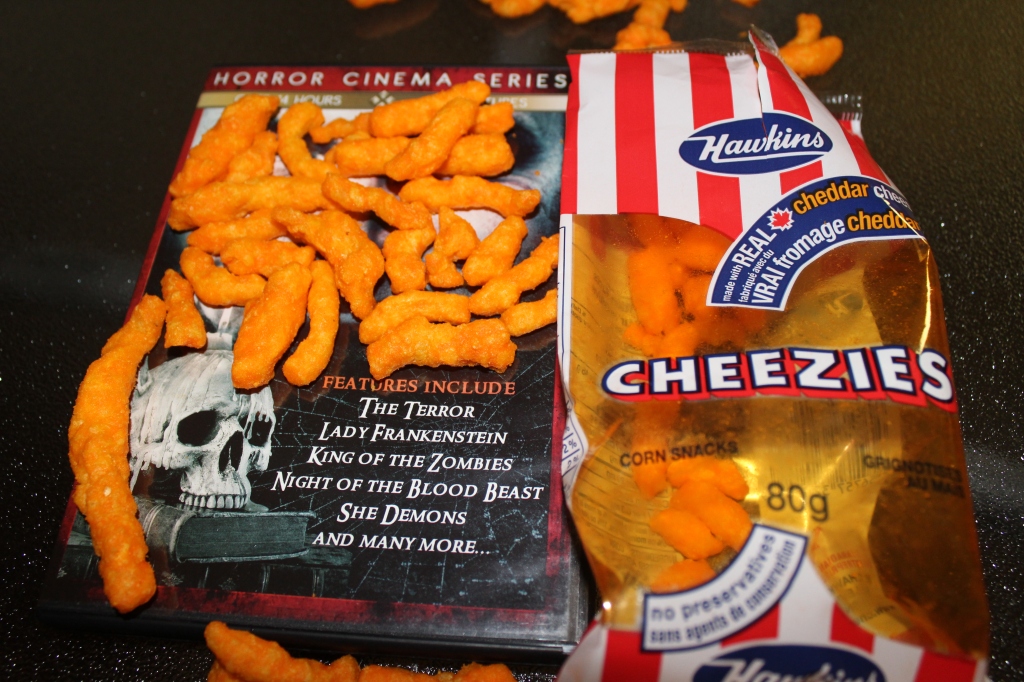
Cheezies (because they’re just a cheap imitation of a better product)

img_0125

Fun facts:

-Original release date:

October 22, 1971 (Italy)

October 1973 (US)

-Budget: Under $200,000.

-Box office gross: ₤ 139.683 (Italian lire).

-This film was distributed in America through Roger Corman’s New World Pictures after this American studio provided the Italian filmmakers with an additional $90,000 to complete principal photography.

-Musical highlight: “Living Dead Girl” by Rob Zombie (Rob samples a line from the movie’s trailer at the very beginning of the song).

-You can watch the full movie on YouTube here.

The President’s Man (2000) review- Everybody gets old, even Chuck Norris

As a pop culture figurehead, Chuck Norris has left behind a very complex legacy.

Despite being lauded as an action movie heavyweight alongside Schwarzenegger and Stallone, the U.S. Air Force veteran turned actor never really got the chance to star in any classic films that have stood the test of time.

Instead, Norris wallowed in B-movie schlock throughout most of the 80s and 90s, riding off his reputation as a real life martial artist and fitness spokesperson to generate box office returns. Even Norris’ lead role in the TV show Walker, Texas Ranger, which ran for nine-ish seasons on CBS, is mostly enjoyed ironically today thanks to comedians like Conan O’Brien and Chris Elliot.

This strain of ironic appreciation was brought to a whole new level in 2005 with the popularization of “Chuck Norris Facts” on the Internet, which cemented the exaggerated power of his roundhouse kicks and facial hair for a whole new generation.

Even though these jokes are old hat in 2018, I think it’s safe to say that Norris was at least vaguely aware of his own vaunted reputation several years before these memes started to spread, since that’s the only way I can explain his ridiculous character in the 2000 TV movie The President’s Man.

In this film, Norris plays Joshua McCord, an American government operative who is such a badass that he’s called in to complete dangerous missions that even the Marines Corps can’t handle. Basically, he’s a combination of James Bond, Batman, and Solid Snake, with a dash of Bushido philosophy thrown in for extra seasoning.

When he’s not busy breaking necks for the good ol’ US of A, McCord also busies himself with playing chess, teaching philosophy at a Dedman College in Dallas, and other scholarly pursuits.

This diverse skill set is put on full display in the first 15 minutes of the film, when McCord is summoned from a Japanese tea ceremony to rescue the First Lady after she is held hostage by terrorists in Rio de Janeiro.

After this latest mission is complete, McCord begins to wonder if he’s getting too old to carry on the mantle of “the President’s Man” and begins to train a younger replacement to maintain his legacy and keep Americans safe from domestic and international threats.

Now, an ambitious director and screenwriter could have taken this premise and elevate the story above what one would expect from the star of Invasion U.S.A and Lone Wolf McQuade.

Similar to what Clint Eastwood tired to accomplish in Unforgiven and Gran Torino, The President’s Man could have easily turned this into a meaningful deconstruction of Norris’ legacy as an 80s and 90s action star and what that means for a whole new generation of film fans.

Unfortunately, since this is a TV movie made by Norris’ production company and co-directed by his youngest son, any promise that this premise might have had is flushed down the toilet in the first 20 minutes, when it becomes painfully obvious that this film was shot for cheap and pumped out as quickly as possible to satiate the Walker, Texas Ranger fanbase watching CBS.

This means that the film is littered with production shortcuts that exposes its status as a TV movie, such as stock sound effects, bad original music, sloppy fight choreography, a generous use of stock footage and sub par acting from a lot of the cast’s major players.

Even someone who is a big fan of Norris won’t really get what they’re looking for here, since he’s not really the main focus of the plot after the first 15 minutes.

By then the movie mostly follows his protégé Deke Slater (played by Dylan Neal), who is doing all the heavy lifting in terms of character development as he trains to become the next “President’s Man.”

As such, Norris is mostly saddled with a mentor role for the next hour, which means all he has to do is give stern looks, dish out fortune cookie wisdom and barely break a sweat during the few action sequences he takes part in.

And despite being in great shape for someone who is over 60, Norris’ age is big detriment to his status as a believable action hero in this movie, since it becomes blatantly obvious whenever a stunt double 20 years his junior takes over on screen.

It also doesn’t help that Neal is much more charismatic and likable that his mentor, who can’t even be bothered to raise his voice a few octave levels above normal once he confronts the man who killed his wife during the film’s climax.

With that being said, I’m still a sucker for these kinds of legacy-hero stories, where a grizzled veteran takes a cocky young upstart under his wing and molds him into a more responsible person who is willing to sacrifice his well-being for the greater good.

Even though this dynamic was done much better in films like The Mask of Zorro and Ant-Man, I still found myself charmed by Neal’s gradual transformation and his good-natured flirting with Norris’ daughter Que (Jennifer Tung), who also serves as his liaison to the President.

However, Norris himself still barely registers as a presence on screen, which is a shame since he is obviously written to serve as the glue that holds this entire film together.

Instead, it’s obvious that he’s only interested in showing up to collect a paycheque and maintain his almost decade long stranglehold on the CBS television landscape.

And while I do think that Norris has earned his place alongside the Schwarzeneggers and the Stallones in the pantheon of American action heroes, The President’s Man is not a good representation of why he earned that reputation in the first place.

Verdict:

4/10

Corner store companion:

Jack Link’s Original Beef Jerky (because it’s the manliest snack you’re likely to find, despite being bland and largely flavourless).

IMG_4526

Fun facts:

-Original air date: April 2, 2000 (on CBS).

-Budget: $2 million.

-Chuck Norris’ birth name is Carlos Ray Norris.

-Despite his reputation for dishing out white-hot death through the barrel of a gun, Norris only tallies one firearm related kill in this film. The rest of his fatalities are courtesy of neck breaks, throwing knives, and roundhouse kicks.

-Two years later, Norris would star in this film’s direct sequel The President’s Man: A Line in the Sand. While Tung returns as his daughter Que, Neal wouldn’t reprise his role and the character Deke Slater is played by actor Judson Mills, instead. The only other thing worth noting about this sequel is that it’s actually a lot more competently put together than the original, which makes it much less interesting to talk about.

-Between the original airing of The President’s Man in 2000 and today, Norris would only star in four more feature films. The rest of his film and TV credits roles throughout that time consist of the last two seasons of Walker, Texas Ranger and cameo appearances in movies like The Expendables 2 and Dodgeball: A True Underdog Story.

You Got Served (2004) review-“How do you do, fellow kids?” the movie

Honestly, I feel like I’m cheating with this one.

Unlike the two previous films that I’ve covered for this blog, Chris Stokes’ You Got Served is pretty well known among millennials my age, which is evident from the massive box office returns that it raked in during its opening weekend back in January 2004.

It’s also well remembered as being a single piece of a larger movement, since Hollywood was completely obsessed with spitting out these “urban” dance movies throughout the 2000s, which were cheap to produce and (usually) guaranteed a tidy profit.

However, unlike a lot of its contemporaries, You Got Served really hasn’t left a lasting legacy in pop-culture outside of its title, which became somewhat of a meme before most people even knew that memes were a thing.

But outside of that, there’s nothing about this film that sets it apart from the rest.

It doesn’t boast the novelty of starring then up-and-coming actors who would go on to find great success in the industry, like the original Step Up (Channing Tatum) or Bring It On (Kirsten Dunst).

Instead, we are saddled with two dull leads (Omari Grandberry and Marques Houston) who aren’t very charismatic or believable, even with the limited character work that they are given.

The film also doesn’t benefit from the impressive production values that characterized some of the later entries in the Step Up franchise, since You Got Served is noticeably cheap looking, especially whenever the characters venture away from the dance floor.

And, probably the biggest sin of all, the dancing on display isn’t even that distinctive. At least a film like Stomp the Yard had the foresight to anchor its premise around something unique and interesting like competitive stepping.

But I’m getting ahead of myself. I’m sure you’re all dying me to talk about the plot to this magnum opus.

Well, surprisingly, there’s a lot going on plot wise in You Got Served outside of the dancing, which is one of its biggest problems.

Now, I don’t claim to be an expert on this specific genre of film, but from the few 2000s dance movies that I’ve seen I can pinpoint a recognizable formula that works. Most of the time, the plot is just background noise or an excuse to stich together impressively choreographed dance sequences.

But in You Got Served it seems like the dancing takes a back seat to the story, which is horribly clichéd, uninteresting, and full of cringy melodrama.

The main thrust of the plot follows David and Elgin (Grandberry and Houston, respectively) who live out their young lives battling dance crews for cash in a surprisingly sanitized Los Angeles.

The pair have their sights set on greater things, which are never clearly defined, but a number of obstacles stand in their way, including a rival dance crew from Orange Country and the city’s violent criminal underbelly.

Now, this sounds like a simple enough premise, but it gets bogged down in a bunch of extraneous details that detract from the main reason people came to see the film: the dancing.

Here are just some of those dazzling plot points:

  • David starts falling for Elgin’s sister, which drives wedge between the two of them.

Word?

  • David and Elgin work for a drug kingpin on the side, which inevitably encroaches on their lives in the world of dance.

DrinksWhiskey

  • A precocious child called “Lil Saint” hangs around with David and Elgin’s dance crew for the sole purpose of getting himself caught up in some life-threatening situations later on.

EyeRollGif

  • Steve Harvey plays the movie’s mentor character called “Mr. Rad”, who organizes all the local dance battles and spews out fortune cookie wisdom while also serving as an unexpected deus ex machina.

FacePalm

And even though this film is awash with this extraneous bullshit, they still managed to leave out some really important details.

We never find out how David and Elgin originally met, formed a dance crew, or why they are so passionate about what seems like their full time gig (since we never see them in school or holding down fulltime jobs).

Even when the film gets around to the dancing, it’s nothing to write home about.

Director Chris Stokes doesn’t really take advantage of the medium of film, since the camera remains largely slow moving and doesn’t emphasize the impressive athleticism of that its cast clearly possesses.

As a result, the big climatic dance battle at the end of the film comes across as some lifeless b-roll that would play at the beginning of any MTV program from the early to mid 2000s.

Speaking of MTV, one of the most redeeming things about You Got Served is how desperately it’s trying to appeal to the youth of that era.

The script is stuffed to brim with so much dated hip-hop vernacular and celebrity cameos (anybody else remember Wade Robson???) that it’s actually kind of adorable. I can just imagine a boardroom full of old, out-touch-executives trying to cram in as much trendy fashion and pop-culture artifacts in order to reach that lucrative teen demographic.

Basically, this film is the cinematic equivalent of that clip of Steve Buscemi from 30 Rock. You know the one.

SteveBuscemi

In the end, even though You Got Served is a hilarious viewing experience in spots, it doesn’t make up for the long stretches of film that are a chore to get through.

And since this movie is supposed to be all about high-energy dance moves, being boring is probably its biggest failing.

Verdict:

2/10

Corner store companion:

Listerine cool mint antiseptic mouthwash (to rinse that bad taste out of your mouth).

IMG_4879

Fun facts:

-Release date: Jan. 30, 2004.

-Budget: $8 million (estimated)

-Box office gross: $40,066,497 (US)

-Became number one at the box office in its opening weekend, which also coincided with Super Bowl 38 (aka, the one where Janet Jackson’s nipple closed out the halftime show).

-Musical highlight: “The One” by ATL.

-Unexpected cameo: Kevin Federline (yes, that Kevin Federline) made his cinematic debut as one of the film’s many backup dancers.

-Both of the film’s leads were members of American R&B boy bands from the mid-2000s, with Grandberry being a member of B2K and Houston belonging to IMx. Several of their tacks are featured on the movie’s soundtrack.

-Personal confession: The copy of the DVD I bought consisted of two discs, You Got Served and You Got Served: Take it to the Streets. I stupidly thought that that second title was a straight-to-DVD sequel, which would have made for a more appropriate to review, since I’ve never heard of it. Surprise!!! It turns out You Got Served: Take it to the Streets is an instructional video, where the cast of the original film walk you through how to pull off those slick dance moves. I haven’t drummed up the courage to watch it yet.

-A straight-to-DVD sequel in name only was finally released in 2011 called You Got Served: Beat the World, which doesn’t star anybody from the 2004 film or have anything to do with the original plot.

The Devil’s Own (1997) review-Sexy, terrorist Brad Pitt

One of my main objectives with this website is to showcase movies that have fallen through the cracks in a vast entertainment industry that’s been sent into overdrive thanks to the Internet.

Now, this doesn’t mean every film I review will be a hidden gem or a cinematic monstrosity on par with The Room. However, sometimes it means that the subject in question will be a solid outing with a few noticeable flaws that keep it from attaining greatest.

Enter Alan J. Pakula’s 1997 action-thriller The Devil’s Own, a film that received lukewarm reviews upon its initial release and very little retrospective fanfare in the subsequent 20+ years. Which is too bad, because the movie is quite well put together overall.

This is obvious from the first five minutes of the film, which features an intense Michael Mann quality shoot-out between IRA assassin Frankie McGuire (Brad Pitt) and members of the British Army on the streets of Belfast, Northern Ireland. After McGuire survives this fire-fight by the skin of his teeth, he’s sent on a mission to New York City to acquire a bundle of Stinger Missiles that his terrorist brethren will use to rain hot, sweet death on even more government forces back home.

To complete his mission, McGuire takes refuge with unwitting police sergeant Tom O’Meara (Harrison Ford) and his family, who are eventually caught in the crossfire when this weapons deal gets more and more complicated.

(warning: trailer contains major spoilers)

Obviously, the movie’s biggest surface level draw is its star power, since its two leads were at the peak of their own career trajectories at the time of its release.

In 1997, Ford was in the middle of perfecting his mid-aged, reluctant everyman action hero shtick, while Pitt was just starting to prove himself as a “pretty boy actor” who doesn’t hesitate to take on edgier roles.

The pair also play-off each other really well on screen, hammering home the film’s underlining story about two Irishmen from different backgrounds and how their divergent upbringings colour their outlook on life.

If nothing else, it’s good movie to watch with your parents, since mom gets to ogle mid-90s Brad Pitt and dad gets a chance to live vicariously through Ford’s baby boomer grit.

However, this dynamic also highlights the movie’s biggest flaw.

Even though I’m far from an expert on conflict in Northern Ireland, I know that it’s a tricky, intricate subject that’s difficult to do justice on screen. This is especially true in the mid-90s, when tensions between the IRA and the British government were at a fever pitch.

The filmmakers of The Devils’ Own opted to side step this problem by downplaying the rougher edges of Brad Pitt’s character and portray him as a sexy freedom fighter instead. However, because of this, the film runs into problems with tonal consistency. One minute Pitt’s character is a ruthless killer who doesn’t hesitate to gun down government soldiers, and the next he’s shown to be a sweet, sensitive soul who gets down on one knee when he talks to small children.

While Pitt does his best with this material, the contrast between serious drama and romanticized fluff is still very jarring and hasn’t aged very well in a post-9/11 world.

Also, the less said about Pitt’s Irish accent the better.

Despite these hang-ups, the movie is still very well shot and paced, probably thanks in large part to veteran director Alan J. Pakula (All the President’s Men, Sophie’s Choice) being at the helm.

And while The Devils’ Own probably won’t change your life, it’s still a welcome two-hour distraction that does a great job of showcasing two Hollywood heavyweights in the prime of their respective careers.

Verdict:

7/10

Corner store companion:

Lucky Charms (for obvious reasons)

IMG_3256

Fun facts:

-Release date: March 26, 1997

-Budget: $86 million (estimated)

-Box office gross: $140,807,547 (worldwide)

-Unexpected cameo: Julia Stiles plays one of Ford’s teenage daughters (side note: this film was release theatrically two days before her 17th birthday)

-Musical highlight: “God be with you Ireland” by Dolores O’Riordan (plays over the opening credits)

-Shortly before her untimely death in August of 1997, Diana, Princess of Whales, took 15-year old Prince William and 12-year old Prince Harry to see this film. Diana was fiercely criticized in the media for taking her sons to see a rated-R movie that appears to glamorize the IRA.

The Devil’s Own serves as the final film of director Alan J. Pakula’s career before he passed away on November 19, 1998 at age 70.