Jingle All the Way 2 (2014) review-needs more Sinbad

For reasons that continue to baffle me, Jingle All the Way (1996) has sort of become a new holiday classic amongst my fellow millennials.

I know the potency of 90s-stalgia is overpowering to a lot of people in my age demographic, but the reality is that this comedy is aggressively mediocre and is mostly remembered for its cast, which included Arnold Schwarzenegger, Sinbad, Phil Hartman, and a pre-Episode I Jake Lloyd.

It’s possible that the plot even resonated with some parents at the time, since it involved two rival dads (Schwarzenegger and Sinbad) nearly killing each other to get their hands on the season’s hottest toy.

The influential meme economy also might have given this film some extra room in people’s collective memory now that there are more YouTube remixes of Schwarzenegger spouting the line “put that cookie down” than I care to count.

However, I do find it comforting that Gen Z movie buffs won’t remember Jingle All the Way 2 (2014) with the same resonance, if at all, because it’s just as bad as the first one but without the budget, weirdness, or Hollywood star power to pull the wool over people’s eyes.

Despite its name, Jingle All the Way 2 is a sequel in name only, since it doesn’t feature any characters from the original film.

Instead, we’re saddled with fake redneck Larry the Cable Guy acting out the same basic plot, where a father tries to secure his child’s affection during Christmas by buying a toy that every other kid is after.

To the filmmakers’ credit, they didn’t try and replicate the original story beat for beat, choosing instead to mimic its overall concept and structure, which left screenwriter Stephen Mazur plenty of room to fill in the blanks.

The problem is he decided to clog the runtime with a bunch of half-baked shenanigans that would barely prop up a half-hour of network television.

I hate to give the original Jingle All the Way any sort of compliment, but at least that movie had momentum. At least you were kind of invested in the cutthroat rat race between Schwarzenegger and Sinbad that served as the backbone of the story.

While Cable Guy is saddled with his own parental rival (his ex-wife’s new husband) in this straight-to-video sequel, their back-and-forth never really rises above passive aggressive sniping until the very end.

As a result, all we’re left with is the film’s attempts at physical comedy, which involves Larry getting electrocuted, thrown off a mechanical bull, and beaten up by old people.

While I’m not above a good prat fall or quality nut shot, these gags aren’t even well executed as the timing seems to be off by a couple seconds. It’s almost like the filmmakers thought they were shooting a TV sitcom and left room for canned audience laughter to be added in later.

Of course, the shift in quality between the two films is directly tied to the difference in budget, with the 1996 entry having the financial backing to pull off lots of grand spectacle.

For example, one of the film’s most memorable sets pieces features Schwarzenegger getting into a brawl with a bunch of black-market toy dealers before it is broken up by an entire precinct worth of police officers.

https://www.youtube.com/watch?v=rdZXtsumB_0

In Jingle All the Way 2, this same scene is staged between only a handful people, including a sparse trio of cops.

While having a small $5 million budget is a definite disadvantage, that doesn’t excuse the sheer level of incompetence on display from the screenwriter and director.

From a writing perspective, Mazur doesn’t even know how to structure this simple story, since one of the supporting characters blurts out the film’s moral 24 minutes in. After Larry is directly told that his daughter will love him no matter what, how are we, as an audience, supposed to remain invested in the story?

By revealing this information this early on, all we have to look forward to is Cable Guy’s manufactured working-class charm for the next hour.

In terms of providing fun holiday visuals for kids, I wouldn’t even recommend playing this movie on mute, because it mostly looks like shit.

The filmmakers made the baffling decision to shoot this movie near Vancouver, which isn’t known for its traditional festive scenery even in mid-December.

And since the Jingle All the Way 2 crew didn’t have the resources to transform soggy Langley into a winter wonderland, the production design looks rushed and slapped together, like they bought a bunch of discount holiday decorations the night before principal photography began.

Say what you will about the Christmas movies they mass produce for Netflix and the Hallmark Channel, but at least they put their money where it matters: set dressing and ambiance.

The people behind Jingle All the Way 2 couldn’t even be bothered to find a frozen lake for an exterior shot of an ice fishing shack and just provided a static image instead.

IMG_1485

This is seriously a shot from the movie.

Even basic technical stuff like scene transitions are noticeably cheap, almost like they were ripped straight from Microsoft PowerPoint.

The only thing I can really say in the sequel’s favour is that the child actress who plays Cable Guy’s daughter (Kennedi Clements) is actually pretty charming and is a way better performer than Jake Lloyd in the original (although, in retrospect, that’s a pretty low bar to clear.)

Otherwise, the rest of the movie is a complete comedy dead zone and its mere existence as a low-effort, cash grab sequel emphasizes the absolute worst elements of the holiday: naked commercialism dressed up as a wholesome family entertainment.

The original Jingle All the Way is guilty of the same thing, sure, but the filmmakers behind that movie managed to inject some energy in the proceedings, something that this follow-up is sorely missing.

And I never thought I would type these words in any context, but this sequel desperately needed some Sinbad to liven things up.
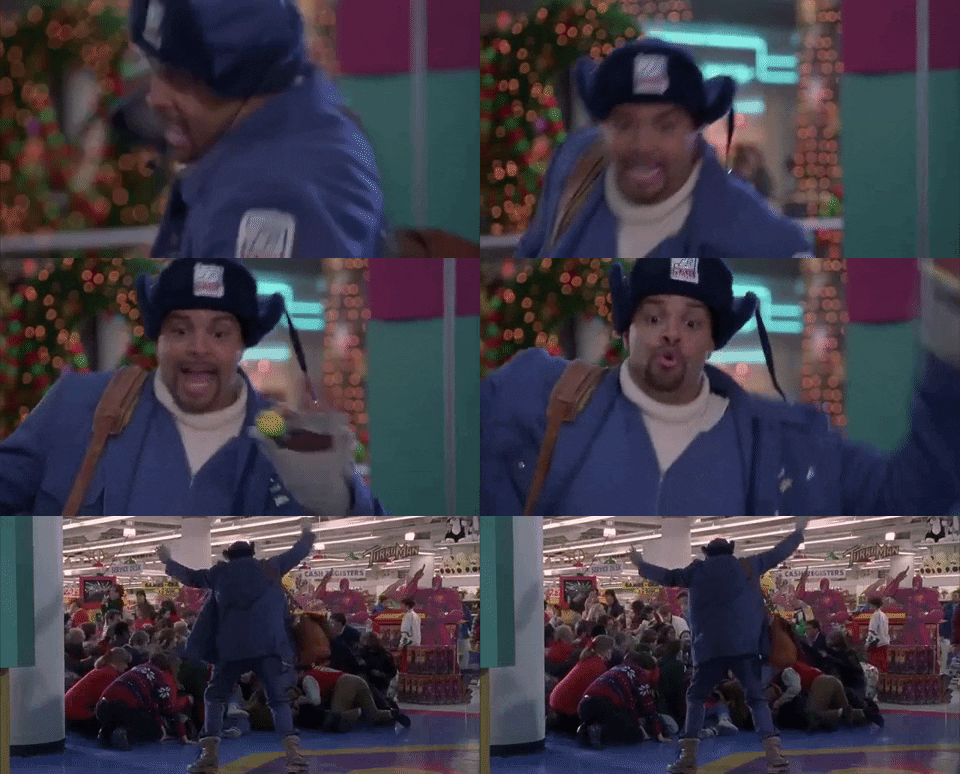
Sinbad

Verdict:

3/10

Corner store companion:

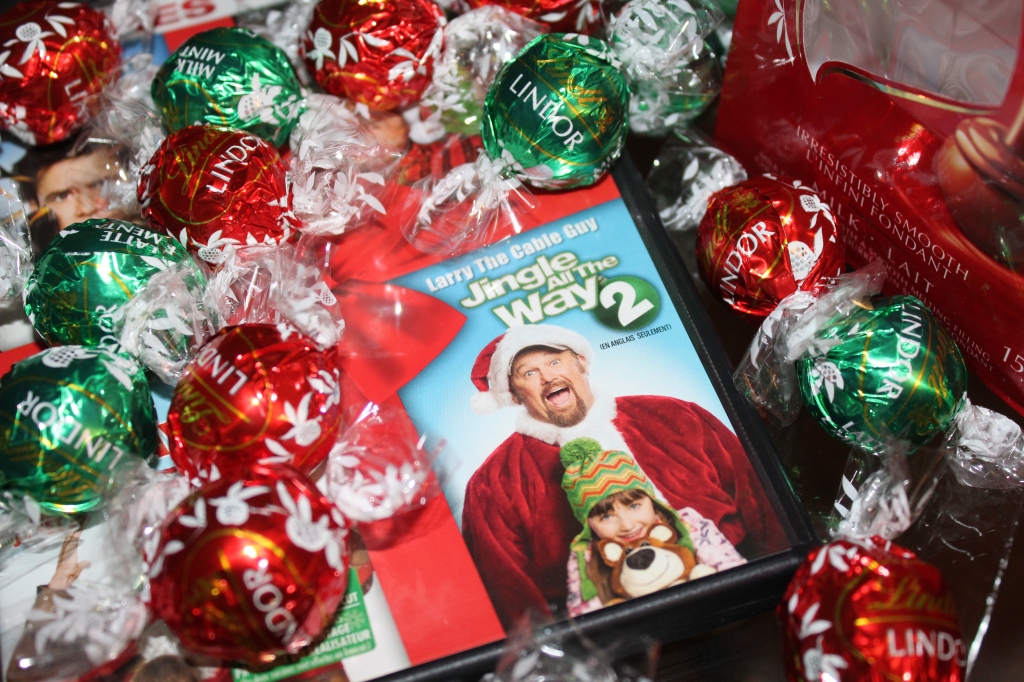
Lindt Lindor chocolates (because you deserve to consume something of quality while watching this dreck)
IMG_7200

Fun facts:

-Release date: Dec. 2, 2014 (straight-to-video)

-Budget: $5 million

-Mercifully, Larry only shouts his signature catch phrase “git’ r done” once in this movie.

-Following Jingle All the Way 2, director Alex Zamm would go on to helm a bunch of regal holiday movies, including A Royal Christmas (2014), Crown for Christmas (2015) and A Christmas Prince (2017).

Jingle All the Way 2 marks the feature film debut of Anthony Carelli, better known as WWE wrestler Santino Marella, who plays Larry’s best friend Claude.

Jingle All the Way 2 is the 31st film that was produced by WWE Studios.

-Around 2014, WWE Studios made a habit of producing straight-to-video movies featuring intellectual properties from other companies. Outside of Jingle All the Way 2 (20th Century Fox), they also released Leprechaun: Origins (Lionsgate) and Scooby-Doo! WrestleMania Mystery (Warner Brothers) in that same year.

Stop! Or My Mom Will Shoot (1992) review-just as bad as you remember

I honestly find no joy in dogpiling on a universally reviled piece of 90s media, mostly because there’s nothing really left for me to add after all this time.

Case in point: Stop! Or My Mom Will Shoot (1992) has been an industry laughing-stock ever since it was released and remains a stain on Sylvester Stallone’s illustrious career.

Not only did the film “win” three big Golden Raspberry awards, but critics across the board absolutely torn it apart, with Roger Ebert famously calling this action-comedy “one of the worst movies I’ve ever seen” twice in a single review.

Even Stallone holds nothing but contempt for this project. In 2006 interview with Ain’t It Cool News the actor pegged it as “maybe one of the worst films in the entire solar system” and that “a flatworm could write a better script.”

The movie-going public also remained largely ambivalent to this star-studded vehicle, since the film only regained 63% of its $45 million budget at the domestic box office (although it did go on to gross around $70 million thanks to international audiences).

But my guiding philosophy is that every famously bad movie is worth a revisit just in case I end up finding something worth recommending (check out my write-up of You Light Up My Life for proof of that).

However, in this instance I’m going to have to fall in line with the critical consensus, because Stop! Or My Mom Will Shoot fucking sucks!

Sly1

The film’s plot follows Stallone’s tough-as-nails LAPD police sergeant Joseph Bomowski, whose world is turned upside down when he gets a visit from his overbearing, elderly mother Tutti (played by Estelle Getty from The Golden Girls).

When Tutti witnesses a murder on the streets of Los Angeles, Joe is forced to keep her around for a longer period of time and tolerate her excessive mothering as he tries to catch some illegal gun dealers.

Of course, the two eventually team up to nab the bad guys and to make sure the screenwriters have an excuse to shoehorn the movie’s title into a cringe-inducing line of dialogue.

Like Stallone pointed out in that 2006 interview, the film’s biggest offense is its script.

Even though the two leads have decent chemistry, the “overbearing mother-exasperated son” dynamic gets old quickly and doesn’t develop past something you would see in a two-minute SNL sketch.

You never get a real sense of where this familial dysfunction came from or why Joe has allowed it to continue well into his adult life. There’s some passing mention of Joe’s father dying when he was a kid, leaving Tutti all alone to raise him, but it’s not explored in any significant detail.

Beyond that, around 95% of the jokes land with a dull thud, since the screenwriters only find two things funny: Stallone getting embarrassed and Getty using harsh language occasionally.

For some reason, they also thought it was a good idea for this Golden Girl to quote lines from Dirty Harry and The Terminator, which is the comedy equivalent of your own mom tagging you in an outdated meme on Facebook.

Additionally, the screenwriters have a tough time keeping Getty’s character consistent in terms of her intelligence.

Despite the fact that Tutti showcases pretty impeccable crime detection ability, she still can’t grasp pretty basic stuff like how it’s not a good idea to wash your son’s service weapon in the sink.

Tutti

All these script writing problems culminate in the film’s finale, where (SPOILERS) the filmmakers expect us to take Tutti’s side and castigate Joe for being too uptight.

Even though the ending is meant to be heartwarming, I couldn’t help but think that none of their underlying problems were resolved and that Joe is going to turn into Norman Bates somewhere down the line.

If it seems like I’m spending way too much time analyzing this movie’s shallow script, it’s because Stop! Or My Mom Will Shoot doesn’t bring anything else interesting to the table.

Not only is Roger Spottiswoode’s direction flat, but all of the side characters are boring carboard cutouts and the music seems like it was composed by a computer program set on “default.”

Admittedly, some of the stunts and practical effects are well done. There’s a particularly impressive scene during the film’s climax where Stallone drives a big-rig truck into an airplane propeller.

But those moments are few and far between and don’t make up for the rest of the movie being a total misfire.

Stop! Or My Mom Will Shoot also isn’t hilariously bad enough to be put in the same category as other famous 90s disasters like Cool As Ice (1991) or Batman and Robin (1997).

Say what you will about those latter two films, but at least the people behind them had a vision and managed to produce something that was entertaining in terms of how misguided it was.

This Stallone vehicle is pretty lifeless by comparison, since the filmmakers never take any risks and just rely on recycling a bunch of tired buddy-cop clichés instead.

So does Stop! Or My Mom Will Shoot earn its status as one of the worst high-profile movies of that decade? Maybe.

But will I ever watch it again to gleefully gawk at the sheer level of incompetence that managed to make it on screen? Definitely not.

Verdict:

3/10

Corner store companion:

Glad garbage bags (because this movie is trash)

IMG_6553

Fun facts:

-Release date: Feb. 21, 1992

-Budget: $45,000,000

-Box office gross: $28,411,210 (US), $70, 611, 210 (worldwide)

Stop! Or My Mom Will Shoot officially “won” three Razzie Awards in 1993 for Worst Actor (Stallone), Worst Supporting Actor (Getty) and Worst Screenplay (Blake Snyder, William Osborne, William Davies).

-The 20th episode of The Simpsons’ 18 season is titled “Stop! Or My Dog Will Shoot” in reference to this film.

-Unexpected cameo: Ving Rhames plays one of the thugs that Stallone takes out in the opening scene of the movie.

-Director Roger Spottiswoode would recover from this giant flop by directing some much better action films in the future, including the 18th entry in the James Bond franchise Tomorrow Never Dies (1997).

-Arnold Schwarzenegger famously tricked Stallone into starring in this film, feigning interest in the project in order to get his big screen rival to audition. Schwarzenegger confirmed this story during a recent interview with Jimmy Kimmel in October of this year.

The Terror (1963) review-the only thing scary about this movie is how cheap it is

Before we get started let me make one thing very clear: I did not walk into Roger Corman’s The Terror (1963) expecting to see opulent production values.

I was fully aware of Corman’s status as an iconic B-movie director/producer ahead of time and adjusted my expectations accordingly.

But even if I grade this gothic horror film on a curve it’s is still dreadfully boring, confusing, and not scary in the least.

The plot itself follows a fresh-faced, 26-year-old Jack Nicholson, who plays a French soldier in Napoleon’s army who gets separated from his regiment and wanders into a spooky castle occupied by the reclusive Baron Von Leppe (Boris Karloff).

There, Nicholson’s character becomes obsessed with a young woman (Sandra Knight) who resembles the Baron’s dead wife and he attempts to unveil the mystery of what happen to her and why.

And that’s about as succinct a synopsis as I can provide, since the film’s story is all over place and never really provides concrete answers as to what’s going on.

One of the biggest plot points that drove me crazy is the Nicholson’s love interest (Knight), since it’s never clearly established if she’s a zombie or a ghost.

Despite disappearing at random times like an apparition, she also talks about being “possessed” and under the influence of a local witch.

She also might have the ability to Animorph into a hawk, although (again) the screenwriters never make that clear.

Legend has it that Corman only filmed four days worth of footage with Karloff before handing the reins over to a handful of other second-unit directors to bring this film up to feature length.

There was apparently no real script during this part of production either, which probably explains why so many important plot points later on in the film come across as being an afterthought or improvised.TheTerror2

Corman’s corner cutting approach to filmmaking also affects the way the movie looks, since he apparently just re-used some of the same sets from his previous project The Raven (1963).

Because of this, the filmmakers never really establish a consistent mood or atmosphere, and it just feels like they’re throwing any kind of horror movie set dressing at the wall to see what sticks.

It wouldn’t surprise me if Corman recycled old costumes as well, since Nicholson’s period appropriate military garb really clashes with the Hugh Hefner-style robe that Karloff wears most of the time he is on screen.

But those aesthetic discrepancies are the least of the movie’s problems, since The Terror is also littered with shoddy filmmaking techniques like bad ADR, obvious day-for-night shooting, and shockingly incompetent scene transitions.

theterror

The only element of the film that doesn’t come across as being cheap is its score, and that’s only because Corman’s production company found an inexpensive way to record it in Germany.

Now, all of this could be forgiven is the movie wasn’t painfully dull.

But I’d guess that 70% of the runtime features Nicholson and Karloff walking around dark hallways looking confused, with the occasional telegraphed jump scare thrown in to keep the audience awake.

And since the two actors aren’t given any consistent direction, their performances come across as being completely lifeless, with no clear motivation driving their characters’ actions.

Admittedly, there is some novelty in watching Nicholson play a handsome, leading man since most of us have only seen perform him as a balding, middle-aged reprobate.

JackNicholsonJackNicholson(old2)

Unfortunately, that element alone can’t salvage the fact The Terror is a barely qualifies as a movie, with a story that goes nowhere and production values that are on par with a high school play.

Now, this whole diatribe isn’t meant to crap all over Corman’s legacy, since the man’s definitely earned his stripes as a trailblazer in the world of independent cinema.

But it’s obvious that this film didn’t receive his full attention, since he couldn’t even be bothered to come up with one of his trademark zany titles like Angels Hard as They Come (1971) and Attack of the Giant Leeches (1959).

Anyway, Happy Halloween and Hail Satan!

Verdict:

3/10

Corner store companion:

Candy Corn (because it’s barely food, the same way The Terror is barely a movie)

IMG_0773

Fun facts:

-Release date: June 17, 1963

-Five second-unit directors were ultimately tasked with finishing this film after Corman wrapped-up his four days of shooting. This group included Francis Ford Coppola and even Jack Nicholson himself.

-Not only were Nicholson and his co-star Sandra Knight married during the production of The Terror, but Knight was pregnant with the pair’s only daughter, Jennifer, as well.

-IMDB credits Roger Corman with producing 415 films between 1954 and today. He’s also responsible for directing 56 films in his career, with his last full-length feature being Roger Corman’s Frankenstein Unbound (1990).

-If you Google “The Terror,” make sure you don’t get this film mixed up with the AMC horror anthology series of the same name.

The Terror is currently in the public domain, which means you can watch the whole movie on YouTube.

Perfect Stranger (2007) review-Hitchcock for wine moms

The jury’s still out on whether or not Halle Berry is a recipient of the Oscar curse.

Even though she’s remained a household name to this day, Berry never really lived up to her potential after winning the Academy Award for Best Actress for Monster’s Ball (2001).

Rather than using that momentum to further her career as a critical darling, Berry starred in a series of bonafide clunkers instead, including Die Another Day (2002), Gothika (2003), and Catwoman (2004).

That last film even netted Berry a Razzie for Worst Actress, which she famously accepted in person with her Oscar in tow.

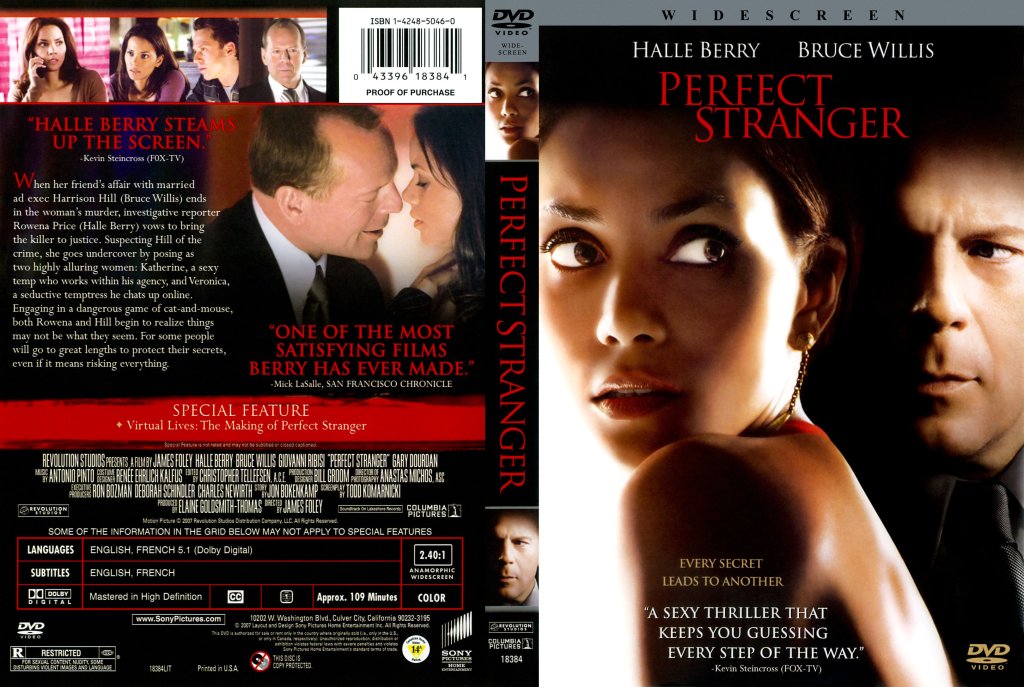
While Perfect Stranger (2007) is a few years removed from this famous losing streak it carries that same stench of failure, boasting piss poor box office returns and an even more dismal critical reception (10% on Rotten Tomatoes).

And while I don’t think this psychological thriller is that bad, it’s still crushingly stupid and something that definitely won’t be brought up in any of Berry’s future sit-down interviews with Oprah.

In terms of plot, Berry stars as crusading journalist Rowena Price who decides to investigate wealthy businessman Harrison Hill (Bruce Willis) after her childhood friend (who was having an affair with Hill) turns up dead.

To find the real killer, Rowena goes undercover at Hill’s ad agency and even adopts an online persona to try and seduce him on two fronts.

https://www.youtube.com/watch?v=nXHxd3wDzL4

It’s hard to talk about Perfect Stranger without veering off into the realm of spoilers, since the film’s biggest weakness is it over reliance a ludicrous plot twist that’s meant to prop up the entirety of the story.

Sticking to just the acting for just a minute, Berry’s performance as the movie’s lead is very hit and miss. She’s perfectly serviceable in scenes involving tense intrigue or flirty conversations over drinks. But whenever she’s called upon to deliver a line that’s above a dull roar, Berry can’t help but go over the top and chew up the scenery like she’s headlining a Lifetime Movie.

Thankfully, Giovanni Ribisi picks up the slack in the acting department, since he does a much better job of finding a happy medium between those two conflict tones in a supporting role as Rowena’s closest confidant and secret stalker.

Willis is also surprisingly decent at playing the sinister ad executive, although that’s probably because his dialogue is kept to a minimum.

PerfectStranger(2)

On the directing side, James Foley does a good job of emphasizing the lurid subject matter, making sure to crowd the screen with bold colours in every scene involving explicit sex and violence.

And screenwriters Jon Bokenkamp and Todd Komarnicki should be given some credit for trying to tell a story about losing one’s identity in the digital age way before the explosion of social media.

But that’s about as far as I’ll go to praise the writing, since the film’s plot is one long Shaggy Dog story.

While each individual story development isn’t too outlandish, for this kind of trashy thriller anyway, it’s all built on a foundation of sand.

Without going into specific details, the revelation of the killer’s identity and their overarching motivation comes completely out of nowhere and resembles something the producers put together at the last minute to artificially throw savvy moviegoers off the scent.

In fact, according to IMDB, the filmmakers shot three different endings for this movie, each with a different character as the killer, which means the revelation was designed to be a gimmick rather than an organic conclusion.

Unlike a good movie twist, there’s no breadcrumb trail to follow up on after the fact that puts everything in the proper context. Instead, all the audience is left with is a wet fart of a climax that’s meant to shock but not make any sense.

It’s the kind of bad ending that taints the rest of the film, even the parts that are relatively enjoyable.

Suffice it to say, Perfect Stranger is not a modern answer to the films of Alfred Hitchcock. Hell, it’s not even on the same level as 2000s M. Night Shyamalan.

It’s basically Hitchcock for wine-moms, where well-crafted suspense and intrigue is replaced by hammy acting, cheap titillation, and soap opera style plot progression.

On that level, this thriller is worth watching just for the fun of picking apart its non-sensical plots threads.

Halle Berry completionists also might want to give this film a look, although their time is probably better spent watching B*A*P*S for the 20th time.

Verdict:

5/10

Corner store companion:

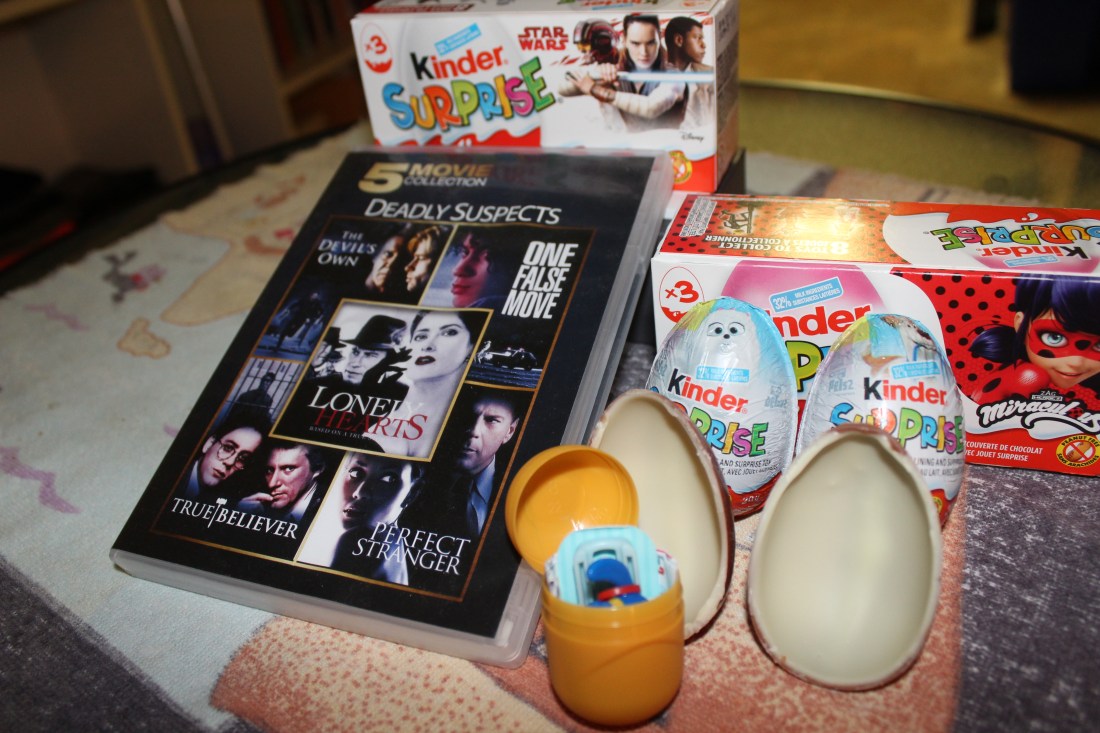
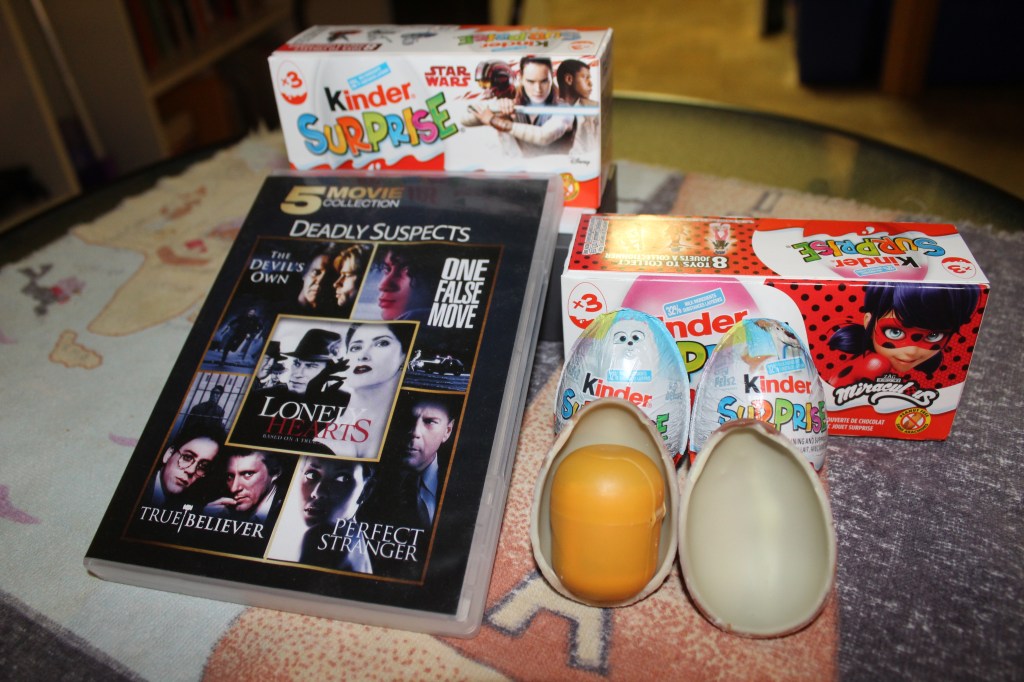
Kinder Surprise (because it’s an appealing shell containing a crappy surprise)

IMG_9002

Fun facts:

-Release date: April 13, 2007

-Budget: $60,795,000

-Box office gross: $23,984,949 (US), $73, 090, 611 (worldwide)

-Film critic Richard Roper ranked Perfect Stranger as his 10th worst film of 2007, right behind Rush Hour 3 and I Now Pronounce You Chuck and Larry.

-This movie was originally supposed to be set in New Orleans, but the script was re-written to take place in New York City after Hurricane Katrina hit during pre-production.

-Unexpected cameo: model Heidi Klum pops up briefly during a Victoria’s Secret party that is being thrown by Willis’ fictional ad agency.

-After helming Perfect Stranger, James Foley would go on to direct TV for the next decade, including episodes of Hannibal, Billions and House of Cards. He returned to the world of feature films with a vengeance in 2017-18 by directing the second and third entry in the cinematic Fifty Shades of Grey trilogy (Fifty Shades Darker and Fifty Shades Freed).

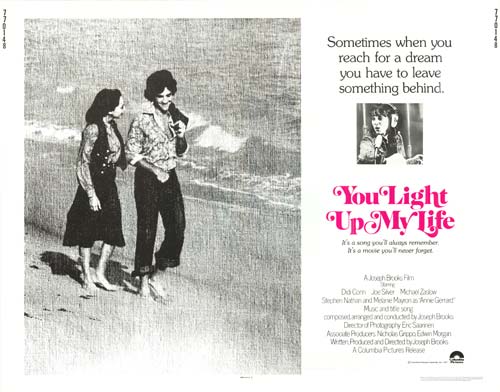
You Light Up My Life (1977) review- Why you should give this film (and the song) a second chance

Movies don’t always stick into the popular consciousness the way their directors would like them to. Some films, for example, are only remembered for one particular thing, whether it’s a standout scene or a single iconic performance.

You Light Up My Life is an obvious victim of this phenomenon, since many people forget that it was even a movie in the first place.

Instead, most people associate this film with its title track, which was one of the biggest hit songs of 1977, staying at the #1 position in the Billboard charts for an unprecedented, at the time, 10 consecutive weeks.

Not only did this single’s popularity make Debby Boone a star, but the following year it also netted director/composer Joseph Brooks an Oscar for Best Original Song, giving him a lot of credibility in the eyes of Hollywood elites (albeit temporarily).

Meanwhile, the original 1977 film that spawned this track is definitely not remembered as a classic, judging by its low rating on sites like Rotten Tomatoes (20%) and IMDB (4.6).

And even though the song initially fared well in the eyes of the public, its stock has severely diminished with time. In fact, if you Google “You Light Up My Life” right now you’ll find a bunch of modern culture critics writing about how it is one of the worst songs of the 1970s.

This overwhelmingly negative critical consensus on both fronts definitely came as a big surprise to me, since I found this film to be a charming romantic drama and the song to be an absolute show stealer.

MPW-39057

The story proper follows Laurie Robinson (Didi Conn), a working artist in Los Angeles who bounces around different commercial auditions and comedy acting gigs at the behest of her overbearing showbiz father (Joe Silver). However, her true passion lies with composing music and she even gets the opportunity to showcase this talent when she meets an established director (Michael Zaslow) by chance.

Laurie’s personal life is also put in jeopardy when she starts to develop feelings for this director, which complicates her impending marriage to another man.

Now, I’ll admit, there’s a lot of melodrama packed into this movie, especially when the run time is a slim 90 minutes. But Conn’s lead performance as Laurie really holds everything together, since she carries this entire movie on her back almost single-handedly.

It’s hard to put into words how endearing and likable she is on screen, as her character goes from audition to audition, facing rejection and failure at almost every turn. Conn’s optimistic personality and lack of cynicism really makes her a captivating underdog to watch, someone who also isn’t afraid to show cracks in that sunny demeanor when things get really rough.

Her relationship with Joe Silver is also a pivotal part of the movie’s appeal.

While Silver’s showbiz dad is totally ignorant of his daughter’s real interests, he isn’t trying to be malicious or exploit his only child for financial gain. Instead, he pushes her in a certain direction out of a genuine belief that stand-up comedy is her real passion, even though that’s mostly projection on his part.

The warm back-and-forth between Conn and Silver comes across as being very authentic and makes you believe that the actors would carry out these same conversations once the cameras stopped rolling.

In fact, most of the characters and dialogue in the movie comes across as very naturalistic, to the point where I almost thought I was watching a slice-of-life drama in the same vein as a Richard Linklater or Cameron Crowe film.

But I know what you’re asking: “What about the title song? Isn’t it awful and derail the entire movie?”

Actually, no. I would actually argue that the title track works on many levels and is one of the film’s biggest highlights.


https://www.youtube.com/watch?v=NZP9iCfkSAE

From a filmmaking point of view, this uplifting number comes in at just the right point in the story, when Laurie desperately needs a win and finally gets the chance to showcase her singing and song writing ability in front of some Hollywood big wigs.

This exulted feeling is hammered home by the way the scene is shot, since it is all presented to the audience in a single take with fluid, sweeping camera movements.

And even though Conn obvious isn’t providing her own singing voice, she still acts the hell out of this moment, since her body language and facial expressions perfectly match the pipped in vocals.

(Plus, if Rami Malek can win an Oscar for lip syncing, why should I hold back praise for another quality pantomime performance?)

On a musical level, it’s important to point out that the movie version of “You Light Up My Life” is different than the Debby Boone rendition most people are familiar with.

The track was originally performed by classically trained opera singer Kasey Cisyk, whose powerful, uplifting voice effortlessly elevates the admittedly simple lyrics and makes them sound profound.

Boone’s performance is pretty bland and lifeless by comparison, which is part of the reason why, I imagine, this song has garnered such a bad reputation in the intervening 40 years.

I also feel like the instrumental accompaniment in the movie version of the song is alot stronger, especially the string section, but that could just be my imagination.

And even if you don’t like Cisyk’s version of the “You Light Up My Life,” the film is sprinkled with a handful of other catchy numbers, with “Do You Have a Piano” being another standout.

That’s not to suggest that every song is used appropriately.

The director has a bad habit of artificially squeezing his original music into scenes just to pad out the run time, like whenever Conn has to drive from one location to another.

Plus, not every track is a winner, with the dreary “California Daydreams” coming across as a bad Simon and Garfunkel rip-off.

In terms of filmmaking weaknesses, I would be remiss not to mention that You Light Up My Life occasionally veers off into the realm of a sappy soap opera, with some cheesy lines and plot contrivances that really strain the realm of believability.

But at its core, this movie still has a beating heart and the director is obviously very passionate about showcasing the struggle one must endure to make it in the entertainment industry.

The filmmakers in general do good job of blending the music with the overarching narrative, so movie-goers who have re-watched the recent A Star is Born remake for the 15th time might get a kick out of this story too.

I know that singing You Light Up My Life’s praises won’t win me any critic brownie points, since the movie has fallen into relative obscurity and the song has garnered a pretty unshakable reputation as being seven shades of uncool.

But every now and then I’m in the mood for some romantic fluff, especially if the lead performance is strong and the soundtrack adds an extra layer of intrigue.

For everyone else, just make sure you go in with an open mind and don’t buy into the anti-hype that’s built up around this song (and the movie that bears its name) for the last four decades.

Verdict:

8/10

Corner store companion:

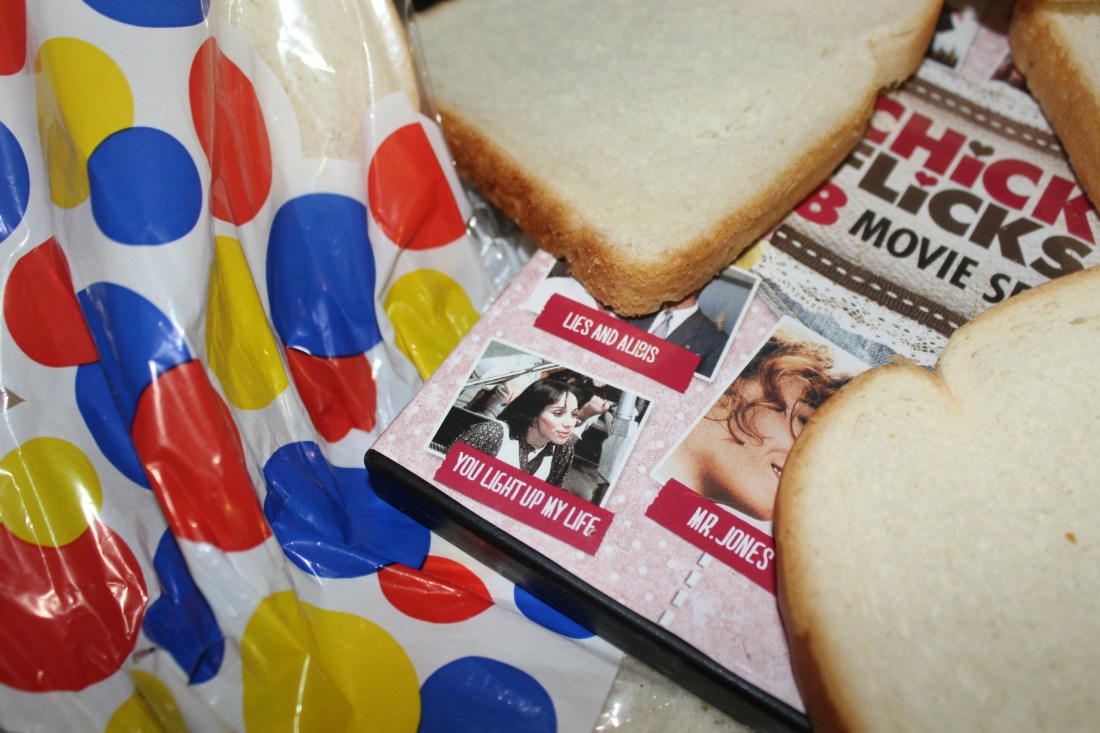
White Wonder Bread (because it’s bland but emotionally satisfying)

IMG_9385

Fun facts:

-If you’re wondering why director Joseph Brooks didn’t use the Kasey Cisyk version of “You Light Up My Life” for radio play it’s because he is a giant piece of shit. According to Cisyk’s second husband Ed Rakowicz, Brooks made improper advances towards the young singer and became angry when she rejected him. The director went on to hire then newcomer Debby Boone to re-record the song and even instructed her to replicate Cisyk’s performance as closely as possible.

-Even though her rendition of “You Light Up My Life” is (arguably) inferior to Cisyk’s version, Boone’s career took off like a rocket after it hit the airwaves. Not only did the single earn her an Oscar and Golden Globe for Best Original Song, but she also won a Grammy for Best New Artist in 1977 and Song of the Year in 1978.

-Brooks’ monstrous behavior with Cisyk was only the tip of the iceberg. In June 2009 he was arrested for raping or sexually assaulting over 10 different women after his assistant lured them to his Manhattan apartment. Brooks committed suicide on May 22, 2011 before he could be tried for 91 counts of rape, sexual abuse, criminal sexual act, assault, and other charges.

Star Trek scholars cite Michael Zaslow, who plays the director Didi Conn falls for, as being the franchise’s first-ever “red shirt” or expendable crew member that perishes during a planetary expedition. During the Original Series’ first official episode titled “The Man Trap,” Zaslow’s character, crewmember Darnell, famously met his end after being seduced and killed by a shape-shifting alien.

-You can watch the entire movie on YouTube for free (with Spanish subtitles) here:

https://www.youtube.com/watch?v=qxjPEwUAN7Y&t=2025s

True Believer (1989) review- A compelling legal thriller if you can get past James Woods’ awful ponytail

If there’s one thing I’ve learned from my lifetime of consuming media it’s that people never tire of legal dramas.

Whether it’s watching old re-runs of Law & Order or listening to the latest true crime podcast, the public’s appetite for seeking out some form of justice in a cruel and uncaring world is seemingly bottomless.

Even though it was released in theatres thirty years ago, Joseph Ruben’s True Believer still scratches that itch through presenting a compelling mystery and a trio of rock-solid performances that give its courtroom proceedings even more dramatic weight.

James Woods stars as brilliant lawyer Eddie Dodd, who’s become so disillusioned with the legal system over the years that he’s gone from defending civil rights activists in the 60s to bailing out scummy drug dealers in the 80s.

[insert lame boomer joke about how those two are the same thing]

However, Dodd starts to regain some of his lost mojo after he reluctantly takes on the case of Shu Kai Kim, a man who is currently in jail for a gangland murder that he (according to his family) didn’t commit.

True Believer is by no means a ground breaking story, since it doesn’t radically deviate from the legal drama tropes that were old hat even when the film came out back in 1989.

Even if you’ve haven’t seen a second of this movie, rest assured that legal loopholes will be exploited, surprise witnesses will be conjured out of thin air and objections will be overruled in increasingly dramatic fashion.

However, Cape Fear scribe Wesley Strick makes those clichés a lot more digestible thanks to his tight script, which does a great job of gradually revealing clues and plot information without feeling forced or contrived.

It also helps that Woods and his plucky legal clerk (played by a pre-arc reactor Robert Downey Jr.) have great chemistry and are talented enough to make this overly complicated jargon sound compelling.

You also can’t ask for a better villain than Kurtwood Smith, especially since he plays a smarmy, elitist district attorney who is diametrically opposed to Woods’ champion of the downtrodden in every conceivable fashion.

The only weak link in the cast is Yuji Okumoto as Shu Kai Kim, who isn’t given nearly enough screen time to provide any insight into what it’s like being falsely accused of murder.

Instead, he becomes more of a plot device than an actual character, which is very disappointing since so much of the movie’s tension is built up around his well-being.

And since we’re talking about negatives, I don’t know who thought it was a good idea to saddle Woods with wearing this terrible wig that makes him look like your frumpy, middle-aged aunt.

JamesWoodsPonytail(TrueBeliever)

I know the ponytail is supposed to serve as a tribute to iconic civil rights attorney Tony Serra, who inspired Woods’ character, but that rug just kept taking me out of the story, especially when it is “complimented” by a big purple scrunchie.

Luckily, Woods was able to win me back with his very heartfelt performance, which straddles the line between the sleazy, underhandedness of Saul Goodman and the moral righteousness of Atticus Finch.

It’s also hilarious when you consider that Eddie Dodd’s lefty politics are completely at odds with Woods’ actual world view. In fact, I don’t think it’s a stretch to imagine that the actor would probably blast someone like Dodd as a “cuck” on his Twitter.

james-woods-twitter-ban

All that aside, if you aren’t sick to death of true crime content by this point then you should definitely give True Believer a watch.

It won’t set your world on fire, and you may even roll your eyes at the use of some well-worn tropes, but its potent mix of efficient storytelling and magnetic performances is perfect for the aspiring legal crusader in all of us.

That being said, Woods’ wig is still super gross, so I have to deduct points from this movie’s final score because of that alone.

Sorry. I don’t make the rules.

Verdict:

8/10

Corner store companion:

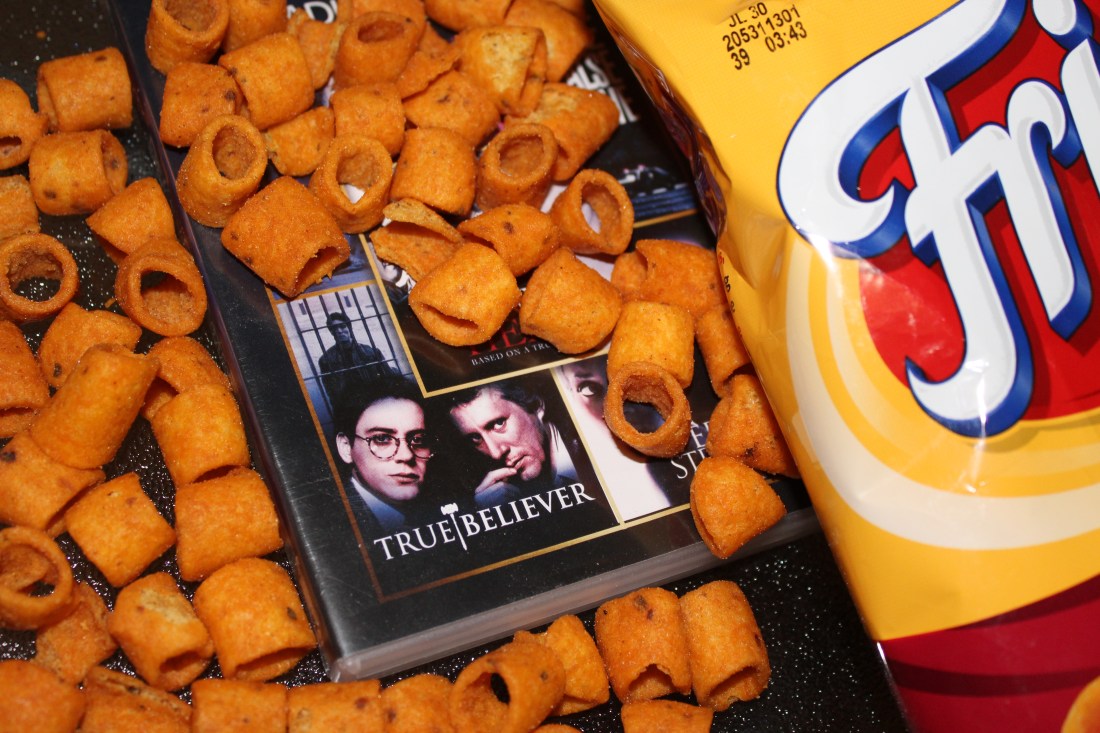
Fritos Hoops (because it’s an acquired taste, but very satisfying once you get to the bottom of it)

IMG_2974.JPG

Fun facts:

-Release date: Feb. 17, 1989

-Box officer gross: $8.7 million

-The plot of True Believer is loosely based on the real-life case of Chol Soo Lee, a Korean American who was wrongly convicted of a gangland killing in 1973 San Francisco. Not only did Chol Soo inspire the film’s character played by Yuji Okumoto, but his real-life attorney Tony Serra (mentioned above) also served as the main inspiration for James Woods’ eccentric lead performance.

-In a season five episode of The Simpsons titled “Homer and Apu” guest star James Woods, playing himself, namedrops True Believer during his job interview to become the temporary manager of the Kwick-E-Mart.

https://www.youtube.com/watch?v=DMYm0QvYoMM

– This film was popular enough to inspire a short-lived television spin-off in 1991 called Eddie Dodd, which starred Treat Williams in the title role. The show only lasted six episodes before it was cancelled by ABC.

True Believer was nominated for an Edgar Allan Poe Award in the “Best Motion Picture” category back in 1990 (based on the strength of Wesley Strick’s screenplay). It eventually lost out to Daniel Waters’ work on the dark teen comedy Heathers.

-Musical highlight: “All Along the Watchtower” by Bob Dylan and Jimi Hendrix (the song marks a major turning point in the story when Dodd decides to stop being cynical and return to his roots are a moral crusader).

Lady Frankenstein (1971) review-This exploitation film is poorly stitched together, just like the monster itself

Comic book franchises and cinematic universes are all the rage in Hollywood right now, but any keen film historian could tell you that this trend was pioneered way before the Avengers assembled back in 2012.

The Universal Studios monster mash of the 1940s is probably the earliest example of this, where larger-than-life characters like Dracula, the Wolf Man, and Frankenstein’s monster dominated the box office and would regularly pop up in each other’s movies.

While Universal’s take on the Frankenstein monster was one of the most iconic figures to emerge from this cycle, neck bolts and all, he wasn’t the only version of Mary Shelley’s original characters to grace the silver screen.

Outside of being featured in eight movies made by Universal, Shelley’s Frankenstein characters would play a prominent role in at least 58 other feature films produced by film studios from around the world, ranging from Britain (Hammer) to Japan (Toho).

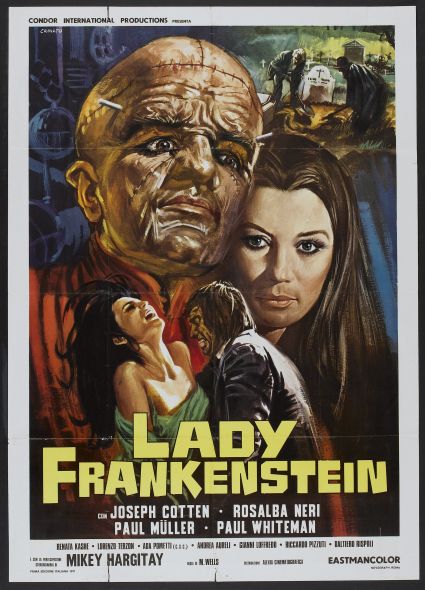
In 1971, the Italian studio Alexia Films took a stab at adapting this property with Lady Frankenstein,which shifted the focus to a female perspective and injected a healthy dose of sex and violence into the proceedings.

lady_frankenstein_poster_02

Even though this movie starts off by following the basic framework of most Frankenstein stories (where an eccentric European aristocrat digs up corpses and uses their limbs to create a unholy monstrosity) the filmmakers begin to deviate from this source material around 30 minutes in.

After completing his initial experiment, Baron Frankenstein (Joseph Cotten) is killed by his creation and the rest of the story follows his daughter Tania (Rosalba Neri) as she tries to carry on the family name by bringing her own “monster” to life.

On the surface this premise is full of potential, since Frankenstein stories aren’t usually told from a female point-of-view. With a motivated creative team behind it, this film could have subtly explored gendered expectations in the 19th century scientific community and how that influences Tania’s monster making process.

However, the filmmaking on display is shackled by grindhouse sensibilities and an extremely low-budget, which means that most of that interesting subtext gets swept under the rug in favourof bad monster make-up and cheap nudity.

Of course, there’s nothing wrong with selling your film using this kind of lurid subject matter, but the filmmakers decided to take the laziest possible route to get there.

For example, the screenwriters decided to put their unique stamp on that famous scene from the 1931 Boris Karloff Frankenstein film where the monster accidently drowns a small girl by throwing her into a lake.

In Lady Frankenstein, the monster’s drowning victim is an adult female … and naked, which is an edgy 13-year-old’s idea of making a classic story more “mature.”

This grade school understanding of adult dynamics also pervades the rest of the movie, since Tania’s motivation for carrying on her father’s work is to create the perfect “man” through combining the body of a hunky servant and the brain of her father’s assistant.

This is a big step down from most other Frankenstein protagonists, since they were mainly preoccupied with unlocking the secrets of life and death and couldn’t care less about their own sex life.

The filmmakers pay some lip-service to the idea that Tania’s creation is the only thing that can stop her father’s original monster from rampaging throughout nearby villages, but they seem much more preoccupied with the idea of an Italian beauty like Neri bumping uglies with a reanimated corpse.

Again, this concept could have been salvaged if it was put in the right hands, since acclaimed storytellers like David Fincher and Bryan Fuller have established successful careers through creating high art from trashy source material (like in Gone Girl and the most recent Hannibal TV series, respectively).

However, it doesn’t help that the film’s production values are in the toilet.

I didn’t expect much from a 70s exploitation horror movie, but the least they could have done is sync up the actor’s dialogue with their lip movements, which seems to be off at least 70 per cent of the time.

The film’s editing also operates on the same level of incompetence, since scenes abruptly change without any natural rhythm. These transitions are so sudden that the editor even managed to cut off key lines and important pieces of music.

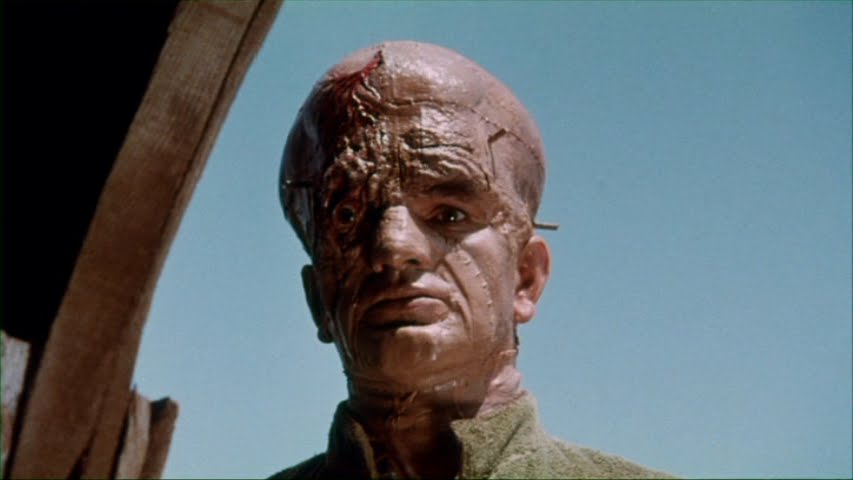
And since most Frankenstein films live and die based on their unique monster design, the specimen on display here is mostly forgettable. The only interesting thing about Lady Frankenstein’s signature creature is a goofy prosthetic eyeball that looks equal parts fake and laughable.

ladyfrankenstein2

Not even a solid lead performance from Neri can salvage this exploitation remake, since she does an admirable job of balancing Lady Frankenstein’s alluring sensuality and her drive to meddle with the forces of nature.

Unfortunately, the rest of the film buckles under the weight of its own unrealized potential, poor production values, and unmitigated sleaze, which makes it much more interesting to talk about rather than to actually watch for entertainment purposes.

Lady Frankenstein isn’t even interestingly bad enough to justify viewing it as a cult classic, which means you might have to dust off that old Blu-ray copy of Blackenstein to get your fix.

https://www.youtube.com/watch?v=6bxOc–RLtA

Verdict:

3/10

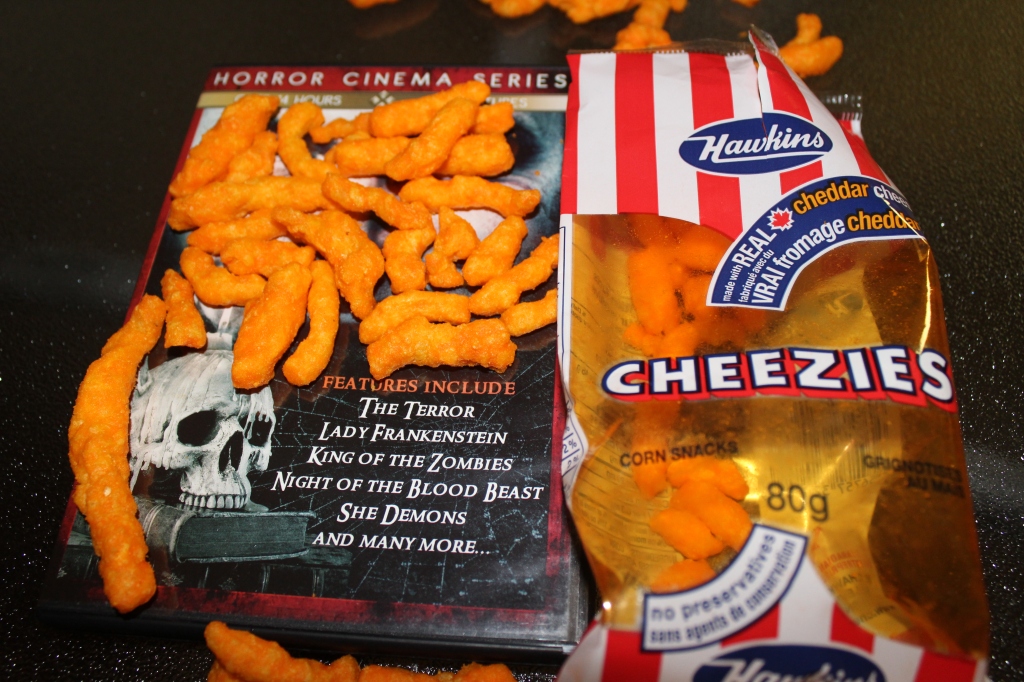
Corner store companion:

Cheezies (because they’re just a cheap imitation of a better product)

img_0125

Fun facts:

-Original release date:

October 22, 1971 (Italy)

October 1973 (US)

-Budget: Under $200,000.

-Box office gross: ₤ 139.683 (Italian lire).

-This film was distributed in America through Roger Corman’s New World Pictures after this American studio provided the Italian filmmakers with an additional $90,000 to complete principal photography.

-Musical highlight: “Living Dead Girl” by Rob Zombie (Rob samples a line from the movie’s trailer at the very beginning of the song).

-You can watch the full movie on YouTube here.

Buck Privates (1941) review- Abbott and Costello finally make it big

If you’re trying to get a stubborn friend or family member to start watching older movies, I wouldn’t recommend starting them off with a comedy.

While all films are, in some way, influenced by the rapidly changing culture around them, comedies usually tap into something that is very unique to the specific time and place in which they were produced, more so than most other genres.

Plus, it goes without saying that what was once funny back in the day doesn’t always hold up to our [current year] sensibilities. I will never forget the first time I watched National Lampoon’s Animal House and was so confused when the filmmakers expected me to laugh at a scene where the joke basically boiled down to: BLACK PEOPLE ARE SCARY.

However, broad slapstick and clever wordplay usually breaks through these generational barriers, which is why comedy acts like the Bud Abbott and Lou Costello are still recognizable names to this day.

Even though this legendary duo starred in 36 features together, their first big hit came in 1941 with Buck Privates, a film that casts the two as sleazy con men who accidently enlist in the army during America’s peacetime draft.

As Abbott and Costello pratfall their way through basic training they also come into contact with a quirky cast characters, which includes a spoiled playboy and his former valet, who are fighting over the same woman, a disgruntled drill instructor, and a musical trio played by The Andrews Sister, who serve as a kind of Greek chorus for the developing plot.

Now, when it comes to reviewing comedies, most flowery analysis about things like cinematography, pacing, and structure can be thrown out the window in favour of one simple question: “is the movie funny?” And when it comes to Buck Privates, the answer is (mostly) “yes.”

Abbott and Costello’s act might be in its infancy on screen in 1941, since this is only their second film as a team, but their classic “skinny straight man-fat buffoon” routine is already very polished after years performing on stage and on the radio together.

The duo’s chemistry is so on-point that they even managed to make me chuckle at a reoccurring bit about math and probability, which is something I never thought possible for someone as allergic to numbers as myself.

And despite the fact that a lot of the scripted jokes are pretty corny, the two still managed to generate some pretty consistent laughs through sheer delivery alone, which is the true litmus test for any great comedian.

The Andrews Sisters also inject the film with a nice bit of musical variety, since they perform their hit songs like “Boogie Woogie Bugle Boy” and “(I’ll Be With You) In Apple Blossom Times” to punctuate every major story beat.

Unfortunately, the filmmakers did not entirely play to the movie’s strengths, since they  dedicated a lot of screen time to the dull love triangle featuring some satellite characters who wouldn’t be out of place in a daytime soap opera.

Maybe it’s because Abbott and Costello had yet to prove themselves as big box office draws in 1941 and the studio was trying to hedge their bets with two conventionally attractive leading men, but whenever the story cuts back to the boilerplate alpha males it seems like we’ve switched to a completely different movie.

The comedy duo doesn’t even factor into the film’s war games climax, which really downgrades them to the status of comedy sidekicks rather than protagonists you want to get behind.

Another thing worth noting is how this film is a pretty transparent recruitment tool to encourage movie-goers of the time to enlist in the US peacetime draft.

Unlike another WWII era propaganda film I reviewed earlier this year, Commandos Strike at Dawn, the filmmakers try to accomplish this feat by making the army look like a outdoorsy vacation spot instead of a dangerous environment where you get to prove your worth as a man.

I’m not necessarily saying this approach hurts the movie in any significant way, but I definitely noticed the sheer amount of scenes that would emphasize how the military is a great place to meet women, eat ice cream, and kill time playing dice with your buddies.

But then again, this movie was selling itself as a light comedy, so maybe writing jokes about amputated limbs and shell shock would have been too much for a 1941 US audience that hadn’t experienced the horrors of World War II just yet.

Ultimately, while Abbott and Costello would go on to star in better movies with higher production values, Buck Privates is still worth watching to catch a glimpse of the comedy duo’s first big break on screen.

It also serves as a good reminder of physical comedy’s universal appeal, since someone getting tripped up by their own loose pants is funny no matter what generation you were born into.

Verdict:

6/10

Corner store companion:

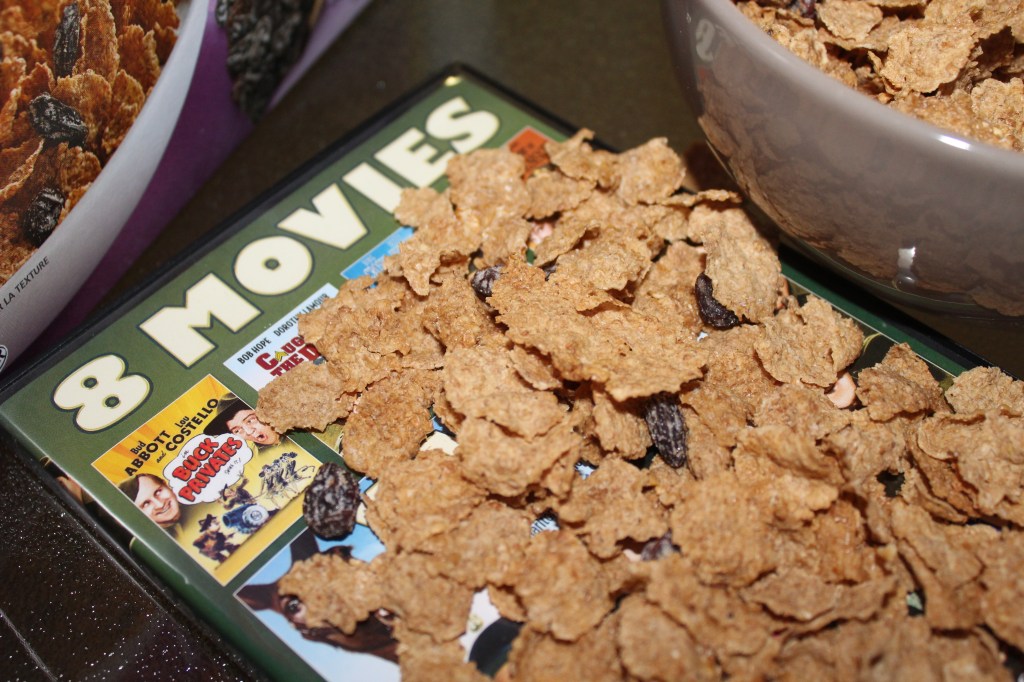
Raisin Bran cereal (because the little sugary bits make the surrounding blandness tolerable)

IMG_0001

Fun facts:

-Original release date: Jan. 11, 1941.

-Budget: $180,000 (estimated)

-Box office gross: $4 million

-In addition to signing up for an official sequel in 1947, Buck Privates Come Home, Abbott and Costello would go on to star in two other service comedies that highlighted different branches of the military. These includes In the Navy and Keep ‘Em Flying, which were both released later that same year.
-The Andrews Sisters co-stared with Abbott and Costello in a total of three feature films.

-On IMDB, The Andrews Sisters are listed as a trio in addition to having separate acting profiles.

-This film scored two Academy Awards nominations for Best Score and Best Original Song (“Boogie Woogie Bugle Boy”).

-According to film scholars, the Japanese military showed their troops clips from Buck Privates to demonstrate how incompetent the US army was during World War II.

-Musical highlight: “(I’ll Be With You) In Apple Blossom Times” (because “Boogie Woogie Bugle Boy” has already gotten enough shine).

The President’s Man (2000) review- Everybody gets old, even Chuck Norris

As a pop culture figurehead, Chuck Norris has left behind a very complex legacy.

Despite being lauded as an action movie heavyweight alongside Schwarzenegger and Stallone, the U.S. Air Force veteran turned actor never really got the chance to star in any classic films that have stood the test of time.

Instead, Norris wallowed in B-movie schlock throughout most of the 80s and 90s, riding off his reputation as a real life martial artist and fitness spokesperson to generate box office returns. Even Norris’ lead role in the TV show Walker, Texas Ranger, which ran for nine-ish seasons on CBS, is mostly enjoyed ironically today thanks to comedians like Conan O’Brien and Chris Elliot.

This strain of ironic appreciation was brought to a whole new level in 2005 with the popularization of “Chuck Norris Facts” on the Internet, which cemented the exaggerated power of his roundhouse kicks and facial hair for a whole new generation.

Even though these jokes are old hat in 2018, I think it’s safe to say that Norris was at least vaguely aware of his own vaunted reputation several years before these memes started to spread, since that’s the only way I can explain his ridiculous character in the 2000 TV movie The President’s Man.

In this film, Norris plays Joshua McCord, an American government operative who is such a badass that he’s called in to complete dangerous missions that even the Marines Corps can’t handle. Basically, he’s a combination of James Bond, Batman, and Solid Snake, with a dash of Bushido philosophy thrown in for extra seasoning.

When he’s not busy breaking necks for the good ol’ US of A, McCord also busies himself with playing chess, teaching philosophy at a Dedman College in Dallas, and other scholarly pursuits.

This diverse skill set is put on full display in the first 15 minutes of the film, when McCord is summoned from a Japanese tea ceremony to rescue the First Lady after she is held hostage by terrorists in Rio de Janeiro.

After this latest mission is complete, McCord begins to wonder if he’s getting too old to carry on the mantle of “the President’s Man” and begins to train a younger replacement to maintain his legacy and keep Americans safe from domestic and international threats.

Now, an ambitious director and screenwriter could have taken this premise and elevate the story above what one would expect from the star of Invasion U.S.A and Lone Wolf McQuade.

Similar to what Clint Eastwood tired to accomplish in Unforgiven and Gran Torino, The President’s Man could have easily turned this into a meaningful deconstruction of Norris’ legacy as an 80s and 90s action star and what that means for a whole new generation of film fans.

Unfortunately, since this is a TV movie made by Norris’ production company and co-directed by his youngest son, any promise that this premise might have had is flushed down the toilet in the first 20 minutes, when it becomes painfully obvious that this film was shot for cheap and pumped out as quickly as possible to satiate the Walker, Texas Ranger fanbase watching CBS.

This means that the film is littered with production shortcuts that exposes its status as a TV movie, such as stock sound effects, bad original music, sloppy fight choreography, a generous use of stock footage and sub par acting from a lot of the cast’s major players.

Even someone who is a big fan of Norris won’t really get what they’re looking for here, since he’s not really the main focus of the plot after the first 15 minutes.

By then the movie mostly follows his protégé Deke Slater (played by Dylan Neal), who is doing all the heavy lifting in terms of character development as he trains to become the next “President’s Man.”

As such, Norris is mostly saddled with a mentor role for the next hour, which means all he has to do is give stern looks, dish out fortune cookie wisdom and barely break a sweat during the few action sequences he takes part in.

And despite being in great shape for someone who is over 60, Norris’ age is big detriment to his status as a believable action hero in this movie, since it becomes blatantly obvious whenever a stunt double 20 years his junior takes over on screen.

It also doesn’t help that Neal is much more charismatic and likable that his mentor, who can’t even be bothered to raise his voice a few octave levels above normal once he confronts the man who killed his wife during the film’s climax.

With that being said, I’m still a sucker for these kinds of legacy-hero stories, where a grizzled veteran takes a cocky young upstart under his wing and molds him into a more responsible person who is willing to sacrifice his well-being for the greater good.

Even though this dynamic was done much better in films like The Mask of Zorro and Ant-Man, I still found myself charmed by Neal’s gradual transformation and his good-natured flirting with Norris’ daughter Que (Jennifer Tung), who also serves as his liaison to the President.

However, Norris himself still barely registers as a presence on screen, which is a shame since he is obviously written to serve as the glue that holds this entire film together.

Instead, it’s obvious that he’s only interested in showing up to collect a paycheque and maintain his almost decade long stranglehold on the CBS television landscape.

And while I do think that Norris has earned his place alongside the Schwarzeneggers and the Stallones in the pantheon of American action heroes, The President’s Man is not a good representation of why he earned that reputation in the first place.

Verdict:

4/10

Corner store companion:

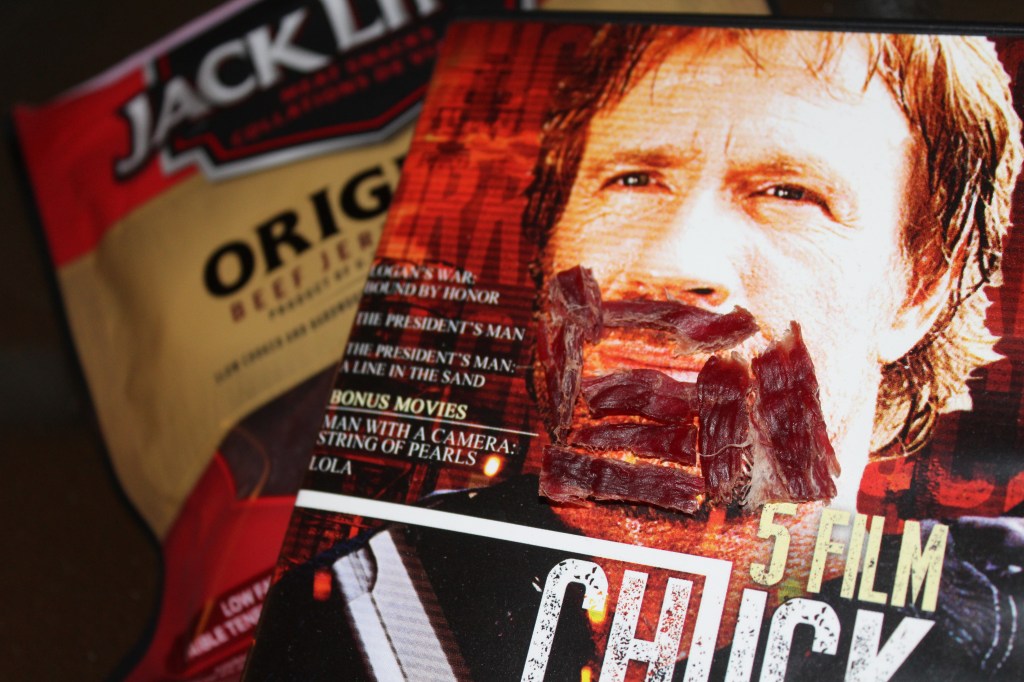
Jack Link’s Original Beef Jerky (because it’s the manliest snack you’re likely to find, despite being bland and largely flavourless).

IMG_4526

Fun facts:

-Original air date: April 2, 2000 (on CBS).

-Budget: $2 million.

-Chuck Norris’ birth name is Carlos Ray Norris.

-Despite his reputation for dishing out white-hot death through the barrel of a gun, Norris only tallies one firearm related kill in this film. The rest of his fatalities are courtesy of neck breaks, throwing knives, and roundhouse kicks.

-Two years later, Norris would star in this film’s direct sequel The President’s Man: A Line in the Sand. While Tung returns as his daughter Que, Neal wouldn’t reprise his role and the character Deke Slater is played by actor Judson Mills, instead. The only other thing worth noting about this sequel is that it’s actually a lot more competently put together than the original, which makes it much less interesting to talk about.

-Between the original airing of The President’s Man in 2000 and today, Norris would only star in four more feature films. The rest of his film and TV credits roles throughout that time consist of the last two seasons of Walker, Texas Ranger and cameo appearances in movies like The Expendables 2 and Dodgeball: A True Underdog Story.

Commandos Strike at Dawn (1942) review- Uncle Sam gets creative with his recruitment techniques

The 1940s was truly a golden age in terms of Hollywood produced war propaganda.

Not only would these productions play as cartoons or documentary shorts before the beginning of a feature film, but sometimes they would take the form of the main attraction itself.

This can even be seen through a screen classic like Casablanca, which was made entirely to capitalize on America’s decision to enter the Second World War and reassure the US public that their government had made the right decision.

John Farrow’s Commandos Strike at Dawn, released at the very tail end of 1942, operates on that very same logic, since its plot and characters are meant to serve as an stand-in for America’s transition from neutrality to outright involvement in the Allied war effort.

In this film, the role of audience surrogate doesn’t go to Humphrey Bogart but Paul Muni, who plays a mild-mannered Norwegian fisherman whose sleepy village is taken over by the Third Reich in 1939.

While Muni’s character originally believes that the best course of action is to simply cooperate until the war blows over, he’s gradually pushed to violence after witnessing the atrocities committed by the Nazis and recruits a squad of British commandos to help liberate his home.

Now, when I use the term “propaganda” to describe this film, I don’t use it in an entirely negative sense. After all, I’m perfectly willing to stomach some ham-fisted messaging in my entertainment as long as the end product is well-made.

For example, even though Casablanca is a pretty transparent World War II allegory, it’s done with a certain level of sophistication and the film contains a pretty timeless love story that still strikes a cord with audiences to this day.

Unfortunately, the same really can’t be said for Commandos Strike at Dawn, since the filmmakers settle for cheap gimmicks that relegate the production to being simply a product of its time.

This kind of tone is established in the first couple seconds of the film, when the opening credits prominently display all the flags of the Allied powers, including the Soviet Union’s hammer and sickle. This kind of intro immediately dates the film, especially with the Cold War being right around the corner.

Even though there are times where the movie’s attempts to be timely do work out in its favour (like how the characters mention the persecution of Jews at a time when they were being slaughtered in concentration camps in real life) this kind of tacky filmmaking has way more misses than hits.

Although Muni is a compelling lead, he’s saddled with a lot of corny lines about how “nobody’s going to win the war for anybody else,” which sound like they are meant to lecture the 1942 audience rather than inform the movie’s characters.

The rest of the film’s cast is even more disposable.

Despite the fact that all the major players are given a long introduction through a fairly impressive tracking shot, most of them disappear halfway through the movie as the narrative focuses exclusively on Muni and his mission to coordinate a rescue operation.

The worst example of this is probably Muni’s love interest, who doesn’t affect the plot in any way and only seems to exist to reassure the audience that their protagonist has (if I may borrow a term from Red Letter Media) a “case of the not gays.”

The writers don’t even have the decency to provide us with a main antagonist, and settle for flooding the screen with a bunch of nameless German foot soldiers instead.

With that being said, the one segment of the cast who do manage to make an impression are the “British” commandos themselves.

The climactic clash between them and the Nazis feature some really impressive stunt work, which probably has something to do with the fact that they were played by real-life members of the Canadian Armed Forces.

Commandoes(1)

What’s even better is that director John Farrow compliments their military acumen with some good production decisions, since a lot of explosions are done in-camera and aren’t watered down by post-production trickery.

With that being said, basically none of these commandos are given personalities or even a single line of dialogue, which means it’s hard to get emotionally invested in this climax beyond admiring the pure spectacle of it.

And that’s probably the biggest problem with Commandos Strike at Dawn: it doesn’t know what it wants to be.

Sure, the filmmakers make a big show at the beginning about how they want to present an intimate character piece, but it’s clear by the final frame of the film that that’s all window dressing.

Instead, they’d much rather settle for showcasing flashy pyrotechnics and real-life military hardware, something that would have worked as long as they fully committed to this idea.

As a result, Farrow and his team fall victim to the classic filmmaking mistake of trying to make a movie for everyone, which inevitably means that they made a movie for no-one (especially by 2018 standards).

(Side note: it’s clear that the final climactic battle wasn’t shot in the early in the morning, but I guess “Commandos Strike at Mid-Day” wouldn’t have looked great on a movie poster.)

Verdict:

4/10

Corner store companion:

Bits & Bites Original (because it should have stuck to doing one thing, instead of mixing a bunch of stuff that doesn’t belong together).

IMG_0278

Fun facts:

-Release date: Dec. 30, 1942.

-Box office gross: $1.5 million (estimated).

-This film was nominated for an Oscar in the category of Best Scoring of a Dramatic or Comedy Picture at the 1944 Academy Awards (the same year Casablanca won Best Picture).

-Paul Muni is probably best know for starring in the original Scarface from 1932, when the title character was an Italian gangster named Tony Camonte.

-Even though he’s kind of slumming it in this movie, Muni has five Oscar nominations for Best Actor under his belt, with an eventual win in 1937 for starring in The Story of Louis Pasteur.

-Unexpected cameo: Lillian Gish (a silent movie star best known for playing the pivotal role of Elsie Stoneman in the Birth of a Nation) makes her first screen appearance in almost a decade by portraying one the Norwegian villagers under Nazi siege.

-According to IMDB, the entirety of this film was shot on Vancouver Island, British Columbia.