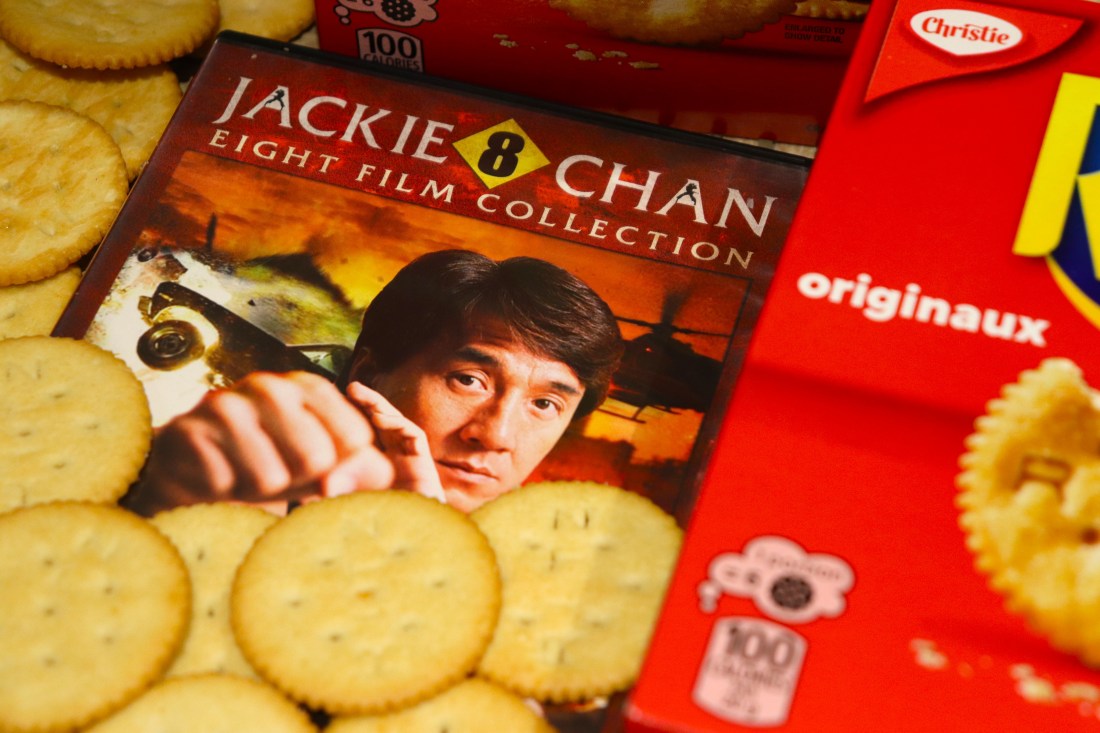
Battle Creek Brawl (1980) review: rough-around-the-edges charm

A universal rule of life is that you only get one shot at making a good first impression, and that fact extends to big time celebrities as well.

Movie studio execs almost certainly had this maxim in mind during the production of Battle Creek Brawl (1980), since it marked Jackie Chan’s inaugural attempt to break into the U.S. film market.

Even though the Hong Kong martial artist had cultivated a series of hits in Asia, his star power remained an unproven commodity in the West.

So, to roll out the figurative red carpet, Warner Bros. producers did all they could to make Chan palatable to Western audiences, going so far as to hire the same director (Robert Clouse) and crew responsible for introducing Bruce Lee to the world in Enter the Dragon (1973).

While Lee became a household name thanks to that movie, Chan was less successful with Battle Creek Brawl, and would have to wait another 16 years before he truly “arrived” in the U.S.

Watching this movie today, it’s easy to see why Battle Creek Brawl didn’t connect with audiences or critics the way some hoped, since Chan’s signature kinetic movements are much more reserved compared to his other works.

Despite these limitations, Chan’s best qualities as a performer still manage to shine through, making this film an interesting historical artefact and decently entertaining action flick at the same time.

For his American film debut, Chan plays Jerry, a Chinese American living in 1930s Chicago with his family.

Jerry’s strong moral convictions and love of martial arts cause him to run afoul of some local gangsters, who repeatedly threaten his family through physical intimidation and eventually a kidnapping.

Through this kidnapping, the mob blackmails Jerry into entering a Texas street fighting tournament on their behalf, leading to a life-and-death struggle where his combat skills are put to the ultimate test.

Like a lot of Jackie Chan movies, the plot of Battle Creek Brawl isn’t that original or sophisticated. Instead, it mostly serves as a narrative device to string together a series of action sequences that showcase the star’s pure athleticism and daredevil charisma.

Having said that, the story here is particularly threadbare, with certain important plot points being brought up and totally forgotten by the end.

The worst example of this sloppy writing is the aforementioned kidnapping, where the bad guys snatch Jerry’s sister-in-law off the street and use her as leverage to get him to enter the fighting tournament. The mobsters then replace the sister-in-law with a decoy to ensure that the rest of his family aren’t tipped off to their sinister machinations.

This serves as a decent set-up for the third act, where the stakes are raised and Chan’s character is fighting for something more than just money and personal pride. The problem is that we never see these two women (the sister-in-law or her decoy) again after their initial introduction, and the whole kidnapping business is (I assume) resolved after the credits roll.

By failing to resolve these plot threads, the film’s finale is severely lacking in emotional payoff, leaving me with the bewildering feeling that I hit the “skip” button on my remote by mistake.

Equally confusing is the movie’s production design and costuming, which is a total mess in terms of maintaining a consistent look and feel for the established 1930s setting.

Nowhere is this more apparent than in the film’s underground roller derby scene, where the participants are wearing funky jumpsuits pulled right out of a 1970s disco dance lineup.

The film’s fighting tournament finale is also littered with background extras who are similarly out of place, including all the on-duty cops who (based on their uniforms) look like they spend most of their time chasing after the Dukes of Hazzard.

I know this all sounds like trivial details that shouldn’t amount to much, but it just points to the fact that the filmmakers’ commitment to making a period piece was half-hearted at best, making me question why they decided to take this route in the first place.

Of course, all this shoddy craftsmanship can be forgiven if the film delivers on its main course, which is Chan’s signature mix of comedy and martial arts that endeared him to generations of action movie fans.

On that front, Battle Creek Brawl is more of a mixed bag.

Compared to the insane stunt choreography that Chan would put together throughout the remaining 1980s and 90s, the fight scenes here are noticeably slower and more restrained.

This diminished work rate is clear from Chan’s opening scuffle, where it seems like he’s going out of his way to not hurt the American stunt team.  

A noticeable lack of coordination is also present during the anachronistic roller derby, which is a fun sequence in concept but remains a little awkward in terms of execution.

That said, Chan performing at half speed is still a sight to behold, and the filmmakers do at least have the good sense to put him front and centre when it matters.

Chan’s status as a fearless stunt man is firmly established from the get-go, with his character being introduced in a scene where he fearlessly swings around the top of a bridge without any wires holding him up.

The movie also features plenty of solo training montages sprinkled throughout the runtime, where the camera is singularly focused on Chan’s impressive athleticism through long, uninterrupted takes.

Plus, as the movie goes on, it seems like the stunt team does eventually hit their stride, doing a decent job of synthesizing the action-comedy formula that Chan would go on to perfect in the subsequent decades.

The filmmakers are also good at keeping things unpredictable by adopting a “why not” approach for some of their fight scenes.

My favourite example of this kitchen-sink strategy takes place during the quarter finals of the fighting tournament, when Chan’s opponent gets tired of using his fists and opts to just run him over with a stolen police car.  

However, the most impressive element of Battle Creek Brawl is how it manages to maintain a fun and charming vibe outside of its fight scenes.

Much of this is due to Chan, who remains a likable underdog protagonist even in quieter scenes involving his girlfriend (Kristine DeBell) or mentor (Mako). This feat is especially impressive when you consider the fact that Chan had to learn all his English dialogue phonetically for this film and didn’t rely on someone else to dub in his lines later.

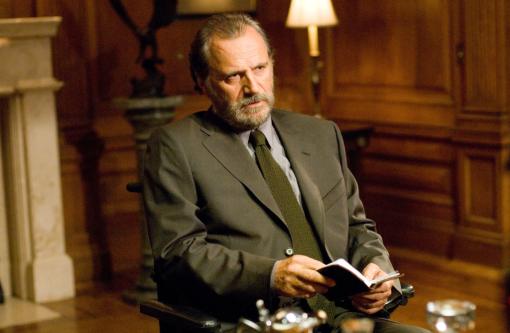
The film’s supporting cast is equally responsible for cultivating this breezy atmosphere, with actors like Mako and José Ferrer being just as entertaining as Chan when fists aren’t flying.

Mako comfortably slots himself into the classic role of the martial arts mentor, putting Chan through his comedic paces as a surly chiropractor who has a weakness for Rubenesque women.

And Ferrer brings a surprising amount of laidback charisma to the table as the film’s main villain. Rather than spend his time snarling and lacing every line with creeping menace, this Chicago mob boss is far more affable when it comes to his criminal dealings, perfectly falling in line with the movie’s lighter tone.

These charming elements are also wrapped up in the film’s eclectic score, which mixes Spaghetti western whistling with some heavy jazz base lines.

Like a lot of Battle Creek Brawl, these disparate musical influences shouldn’t work when fused together. But, against all odds, the score eventually becomes a catchy earworm that’s perfectly synced up to the movie’s pervasive silliness.

Ultimately, the filmmakers’ refusal to take themselves too seriously is what saves this project from completely collapsing in on itself.

Had the movie detoured into dramatic pathos or over-the-top grizzly violence, then all of its bad writing and technical shortcomings would stick out even more.

But by keeping things fun and light throughout the entire runtime, Battle Creek Brawl remains an endearing viewing experience despite its many rough edges.

It’s the film equivalent of that weird guy you meet at a party who is a little off-putting at first, but he eventually wins you over due to his wholesome nature and infectious humour.

That’s essentially Chan’s relationship with Western audiences, since his hard work and raw talent (expertly showcased in this film) would eventually pay off and result in him becoming one of the biggest movie stars in the world.

So forget what I originally said about first impressions being the end all, be all. Sometimes life gives you countless opportunities to prove your worth. You just have to be willing to put it all on the line and pick up the pieces in case of tremendous failure.  

Thank you for coming to my TED Talk.

Verdict:

6/10

Corner store companion:

Ritz crackers (because this food item is pretty plain by itself, but serves as a good foundation for future projects)

Fun facts:

Release date: Sept. 10, 1980 (U.S.)

Budget: $6 million

Box office: $21.5 million

-Alternate titles: The Big Brawl, Killer’s Trench

Chan finally received his major North American breakthrough hit with Rumble in the Bronx (1995). Not only was Rumble popular with fans and critics (even screening at the 1996 Sundance Film Festival), but the movie made back nearly five times its budget thanks to its run in international markets.  

-Fans of Avatar: The Last Airbender may get a kick out of Mako’s role in Battle Creek Brawl. In both properties he plays an unconventional master arts master who loves tea and dishing out words of wisdom to his nephew.

Battle Creek Brawl marks the first time Chan’s authentic voice was heard in a movie. Before this film, all of Chan’s previous work was dubbed in Cantonese or Mandarin by another actor.

-Both Chan and Mako would go on to voice Master Splinter in different screen iterations of the Teenage Mutant Ninja Turtles. Mako would lend his voice to the character in 2007, while Chan was cast to give Splinter life in 2023’s Mutant Mayhem.  

Battle Creek Brawl can be watched in its entirety on YouTube for free (with occasional ads breaks)

Coneheads (1993) review-good ideas, subpar execution

Life-long fans of Saturday Night Live have been eating well over the past eight months.

Not only did SNL air its 50th anniversary special earlier this year, but the 2024 fall movie season graced us with a high-profile feature film chronicling the sketch comedy show’s inaugural broadcast in 1975.

As a casual fan, it’s still hard to believe this show has been on the air for half a century, serving as a pop culture incubator for several generations of comedy superstars (not just Molly Shannon).

SNL has had such a lengthy run that its producers have been trying to mine nostalgia for certain sketches as far back as the early 90s.

While Wayne’s World (1992) was greenlit to capitalize on a skit that was popular at the time, Coneheads (1993) was a much more confusing prospect, since those characters hadn’t appeared on TV (in live action) since 1979.

But SNL creator Lorne Michaels, in his infinite wisdom, clearly thought that people would flock to the theatres to watch Dan Aykroyd shuffle around in a phallic cranial prosthetic, since he managed to secure a $30 million budget for this project.

In retrospect, this probably wasn’t the wisest of investments, since Coneheads was a commercial and critical flop, harbingering the public’s less-than-stellar reception to SNL movies over the remaining decade.

While I’d like to be a typical film bro contrarian and tell you how critics and audiences were wrong for casting this movie aside, it’s hard to break from this consensus over 30 years later.

As it stands, the Coneheads movie is just off putting and unpleasant a lot of the time, even though its central schtick did eventually grow on me.

For this film adaptation, Aykroyd and Jane Curtain reprise their roles as Beldar and Prymaat, two aliens from the planet Remulak who crash land on Earth.

With repair to their spaceship impossible and rescue being years away, the extraterrestrial couple must carve out a living amongst the humans, all the while eluding the U.S. government.

While Coneheads has plenty of faults, the filmmakers at least do a better job of justifying its existence compared to other SNL movies.

Unlike Superstar (1999) or The Ladies Man (2000), the plot and characters are far better suited to a feature-length runtime. Beldar and Prymaat’s struggle to navigate life on Earth actually evolves over time, and the writers put in some nice details that parallel their story with the American immigrant experience.

Probably the best example of this is when the film introduces Connie, the couple’s offspring whose upbring on Earth clashes with her alien heritage.  

Not only does Connie take to human customs (like shopping and blasting popular music) much more naturally, but actress Michelle Burke also embeds this generational divide into her performance by shedding her parents’ nasally monotone in favour of a kind of Valley Girl accent.

This injects the movie with a tangible sense of thematic conflict, giving the characters a lot more to do in the second half of the film beyond leaning into jokes about the Coneheads’ strange biology and inability to understand idioms.

The producers should also be commended for putting that $30 million budget to good use, leaning into the sci-fi aspect of the story by staging impressive scenes of space travel and a charming stop-motion monster fight on Remulak.

Unfortunately, you have to wade through a lot of unfunny BS to arrive at the goods parts, with the first third of the movie being a major slog.

Maybe it’s because I wasn’t familiar with these specific SNL skits ahead of time, but my introduction to the Coneheads’ signature tics and idiosyncrasies in this film was like hitting a brick wall.

Within the first ten minutes, Aykroyd and Curtain’s screeching and cartoonish mugging had already grown tiresome, and I seriously considered turning down my TV’s volume to minimize the impact.

To make matters worse, the first third of the film relies on a lot of shock humour that isn’t clever or insightful, with many of the gags boiling down to the writers thinking “what’s the grossest thing we can shove into Aykroyd’s mouth?”

That being said, I do admire the filmmakers for testing the boundaries of the MPAA rating system by smuggling grotesque body horror into a PG movie.

In one scene, Beldar goes to a dentist to file down his teeth and reveals several rows of hideous fangs behind his retracted mouth.

In another moment, a pregnant Prymaat floods an entire basement apartment when her water breaks, leading to a baby delivery scene where Beldar cuts the umbilical cord with his new teeth.

Even the climactic fight at the end has some pretty grizzly sights for a kids movie, since a couple Remulak jobbers get their head and limbs torn off by a stop-motion space troll.

While these gags barely elicited a chuckle out of me, I at least respect the writers’ willingness to make the audience uncomfortable and not settle for a completely sanitized experience.

Unfortunately, Coneheads is still meant to be a comedy and in that area the film mostly falls flat.

Outside of its overreliance on gross-out humour, the film’s remaining jokes become pretty predictable and fall into a familiar pattern, where misunderstandings about Earth culture are sandwiched between cracks about the Remulak’s unique physiology and speaking patterns.

That repetition may not be noticeable in an eight-minute sketch, but every subpar gag becomes magnified in a feature-length environment, and Coneheads doesn’t have enough standout lines or bits to even out this ratio.  

And even though the actors do the best with the material they’re given (especially Curtain), one puzzling casting decision really threw me for a loop and torpedoed a romantic subplot that dominates the second half of the film.

This story thread revolves around Connie’s growing infatuation with Ronnie, an auto mechanic played by Chris Farley.

While Farley (rest in peace) was a man of many talents, he definitely looked his age and should have never been hired to play a character who is lusting after a teenager.

Even if Farley’s character is meant to be 18 or something, the scenes between him and Burke come off as extra weird and creepy, which is a major problem when so much of the story’s emotional weight is reliant on their relationship.  

You could argue that this creepy dynamic is intentional, since the movie thrives on this kind of absurdist contrast, like how all the human characters never once remark on the Coneheads’ freakish appearance as being alien.  

But Farley’s casting seems like it’s moreso a matter of convenience, since the rest of the cast is chock full of comedians who were already in SNL’s orbit during the early 90s.

So overall, I can’t really recommend Coneheads as a comedy, although I do admire some of the work being done at its core.

The writers at least had a solid foundational idea to play around with by using Beldar, Prymaat, and Connie to mirror the American immigrant experience. This framing gives the movie a sense of momentum as the plot moves forward and it never feels like the film is a series of random skits strung together with a loose plot.

This story about undocumented aliens becoming productive members of society is also especially relevant in today’s political climate, where the current U.S. government is so cartoonishly cruel and draconian in its treatment of these people that it makes the film’s main villain (an overzealous immigration agent played by Michael McKean) look like a choir boy by comparison.

Had the jokes been a little sharper, I believe that Coneheads would be on the same tier as beloved SNL features like Wayne World or The Blues Brothers (1980), rather than being relegated to the middle of the pack.

Thankfully, two of the movie’s writers (Bonnie and Terry Turner) would later find success creating 3rd Rock from the Sun, an NBC sitcom that used the same basic premise as Coneheads and even featured Curtain as a series regular.

Not only did 3rd Rock run for six seasons, but the show also picked up eight Primetime Emmys throughout its run, including multiple wins for series leads John Lithgow and Kristen Johnston.

So clearly this writing team had the talent to make this concept work; they just needed the right platform to give it room to breathe.

In that sense, the Coneheads movie could be seen as a (very expensive) learning experience, where the writers were given space to see what doesn’t work, refine their craft, and become better comedians down the line.

That opportunity to learn and grow is what draws so many up-and-coming comedians to SNL even in the 2020s, so Coneheads should at least be praised for staying true to that spirit of self-improvement.  

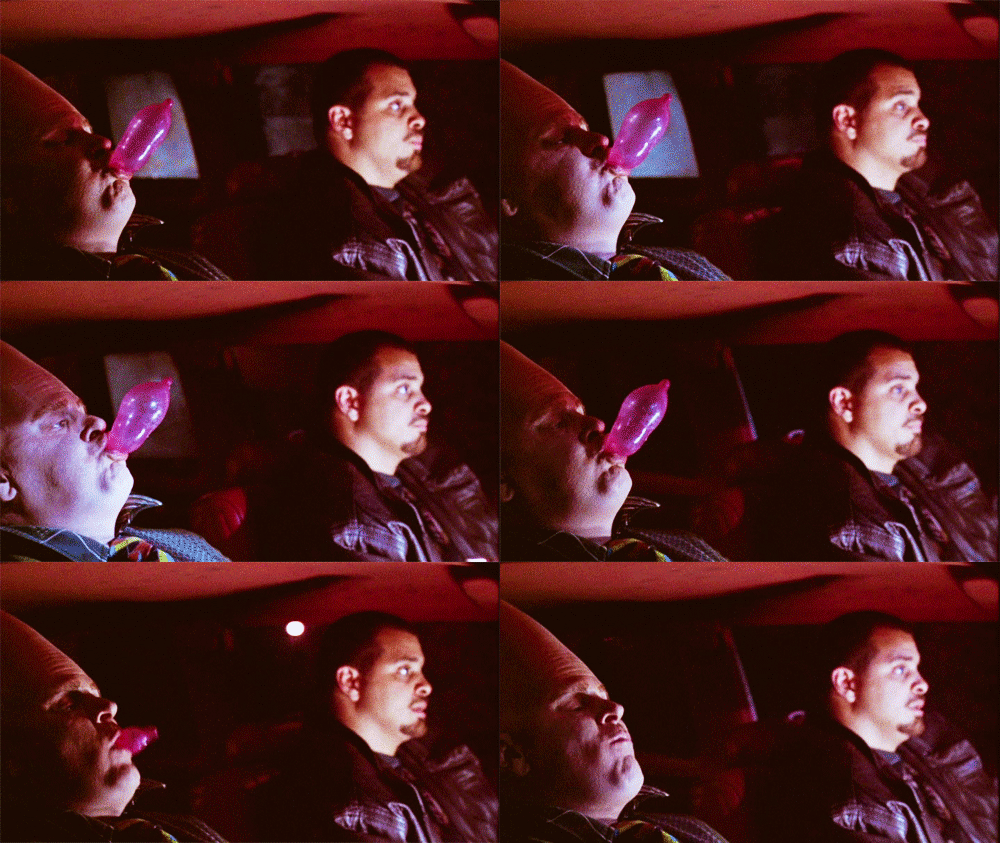
Then again, I had to sit through multiple scenes of actors chewing on condoms like bubble gum, so my positive feelings for this film can only go so far.

Verdict:

5/10

Corner store companion:

Toblerone (because it’s triangle shaped and meant to be consumed in mass quantities)

Fun facts:

Release date: July 23, 1993

Budget: $30 million

Box office: $21 million

-The Coneheads made a total of 11 appearances on SNL between January 1977 and February 1979.

-The Coneheads movie features a smorgasbord of cameos from established comedians and up-and-comers who would go on to be majors players in the industry. This list of cameos includes: Adam Sandler, Drew Carey (in his film debut), Ellen DeGeneres, Sinbad, Eddie Griffin, Jon Lovitz (uncredited), Kevin Nealon, Phil Hartman, Tom Arnold, Parker Posey, Dave Thomas, Tim Meadows, and Michael Richards.

-Aykroyd and Curtain perform the original song “Conehead Love” over the credits in character as Beldar and Prymaat. This song would receive the full music video treatment to help promote the film.  

-Prior to this film, SNL tried to turn the Coneheads into an ongoing cartoon series in 1983 via animation giant Rankin/Bass. The 22-minute special, which was never picked up for a full series, follows a lot of the same plot beats as the 1993 film, with Beldar and Prymaat crashing landing on Earth and adjusting to life amongst humans.

-Despite never scoring a sequel or returning to SNL as these characters, Aykroyd and Curtain reprised their roles as Beldar and Prymaat in a series of commercials for State Farm in 2015.

-Musical highlight: “Kodachrome” by Paul Simon (plays over a montage of Beldar and Prymaat raising their daughter in the suburbs)

Shooter (2007) review-just off the mark

Lately, I’ve been getting this sinking feeling that certain genres of film are becoming completely irrelevant to modern audiences. This endangered species list includes any thriller or drama that touches on contemporary U.S. politics, given how chaotic, fractured, and patently absurd the real-life machinations of the current administration are. After all, how can a Hollywood screenwriter compete with the sheer ludicrousness of SignalGate or top the cartoonish villainy exhibited by a shifty interloper like Elon Musk?

In this context, Antoine Fuqua’s Shooter (2007) seems pretty tame by comparison. This is because the film’s U.S. government baddies are at least marginally intelligent and vaguely discreet when it comes to enacting their evil plans, not at all like their modern, real-world counterparts.

But regardless of the differences between Bush and Trump era politics, these conspiracy-themed thrillers can be a lot of fun, as long as they have a decent script, smooth pacing, and some tight direction.

Shooter definitely excels in a few of these areas, providing the perfect kind of disposable action movie fluff to watch on a lazy Sunday afternoon alongside your dad.

Unfortunately, the film is also weighed down by a weak lead performance and far too many genre cliches, making it hard to distinguish from the dozens of other “one man army” stories clogging up your local DVD bargain bin or drugstore book rack.

The eponymous “Shooter” in this film is Mark Wahlberg, who steps into the boots of elite Marine sniper Bob Lee Swagger. Despite being retired from the U.S. military for several years, Swagger is pulled back into service by Colonel Isaac Johnson (Danny Glover), who needs his help to thwart a presidential assassination attempt. However, the job quickly reveals itself to be a set-up, with Swagger being blamed for killing the Archbishop of Ethiopian (who was standing next to the American president during the shooting). Now on the run, Swagger must clear his name and get to the bottom of a vast conspiracy that reaches all the way to the U.S. Senate.

Like I mentioned at the top, the film’s major weak link is Wahlberg, who does very little to elevate this material above your standard action schlock.

Sure, Marky Mark pulls off the right rugged look and is convincing when he’s holding a gun. But there’s very little in his performance that helps engage the audience on an emotional level.

One moment that stuck out to me was when Swagger’s love interest (Kate Mara) tells him that the bad guys killed his dog. Rather than reacting with piercing sadness or explosive anger over the murder of his best friend, Wahlberg responds with mild annoyance, like someone just told him that he needs to replace his Brita filter.

Unfortunately, Wahlberg remains stuck in this subdued acting mode for most of the film’s runtime, offering only brief glimpses beneath his stoic persona.

I’m not suggesting he needed to break down crying every five minutes to be more relatable or whatever, but some psychological insight would have been welcome.

Maybe this could have been accomplished through casting an older actor, someone capable of bringing a genuine world-weary quality to the role.

According to IMDB, men like Clint Eastwood, Tommy Lee Jones, and Harrison Ford were all considered for the part, which sounds like a much better fit for the vibe the movie was trying to convey.

But to be fair to Wahlberg, the film’s script doesn’t do him any favours.

Despite being established as a conspiratorial shut-in (who lives in the mountains and reads the 9/11 Commission Report for fun), Swagger is surprisingly willing to trust this shadowy government figure (Glover) and fall for the most obvious frame up job of all time.

So when he’s betrayed and literally shot in the back, I was left wondering why Swagger didn’t have any contingency plans in place, since being a rigid individualist who doesn’t trust the government is one of his only defining character traits.

Plot nitpicking aside, Shooter at least delivers the goods once Wahlberg goes on the run.

While nothing approaches the tension director Andrew Davis created for The Fugitive (1993), Fuqua and his team make up for that by staging some impressive kinetic action.

This means juicy blood squibs, bright muzzle flashes, and big practical explosions, all tied together with crisp editing that makes the moment-to-moment carnage easy to follow.

The best example of this technical expertise is on display in the third act, when Wahlberg teams up with a sympathetic FBI agent (Michael Peña) to storm a rural compound full of cannon fodder enemies.

This flashy spectacle is also helped by the cast of great character actors assembled to play the bad guys.

Outside of Glover, this rogue’s gallery includes the likes of Ned Beatty as a corrupt U.S. senator and Elias Koteas as a psychopathic henchman on Wahlberg’s trail.

While these three are suitably over-the-top, and serve as the perfect rivals for Wahlberg’s salt-of-the-earth veteran, the movie does at least carve out some depth for Rade Šerbedžija.

The well-known Croatian actor makes the most of his tiny role as a wheelchair-bound sniper who is working under the thumb of Glover’s corrupt army colonel.

Even though most of his lines are relegated to a single exposition dump, Šerbedžija conveys a lot of potent regret and melancholy through his delivery alone, making me wish the movie was about him instead.  

Unfortunately, familiar action movie tropes eventually pile up and dilute whatever unique sense of identity Shooter had going for it.  Some of these trappings I’m willing to forgive, like all the bad guys not being able to hit the broad side of a barn in a firefight. But other cliches are pretty egregious and took me out of the movie. These moments include:

  • Wahlberg’s soldier buddy pulling out a photo of his wife moments before getting ravaged by bullets
  • Mara delicately dressing the wounds of a naked Wahlberg despite barely knowing him
  • One of the bad guys delivering the “we’re not so different, you and I” speech to Wahlberg as he’s being held at gunpoint
  • Wahlberg being way too cool to look back at the explosion he just set off

Many of these moments were old hat in the 1990s, so the fact that they were smuggled into a 2007 film (without anyone in production batting an eye) is very concerning.

And while Shooter is fairly generic overall, I will at least give the filmmakers credit for grounding it in the specific real-world politics of the time.

Instead of taking the coward’s way out and giving the bad guys vague motivations (as to not offend anyone), the screenwriters zero in on U.S. foreign policy being a pervasive antagonistic force.

Not only is the Abu Ghraib torture scandal mentioned by name, but most of the plot revolves around [SPOILERS] the American military covering up an African village massacre to further Big Oil business interests.

After watching my fair share of military propaganda for this blog, it was refreshing to see U.S. imperialism portrayed in a critical light, even if it is packaged in a movie where the hero solves all his problems with brute force.

In that sense, Shooter may resonate with more people in 2025 than it did in 2007, given that the current American government is explicitly threatening to annex places like Greenland, Panama, and even my home country of Canada

I’m not suggesting that a dumb action movie like Shooter will wake people up to this growing American hegemony or shake them from the kind of political apathy that allows evil to flourish.

But if someone receives a shock to the system by noticing how these goofy movie villains are being eclipsed by the sinister actions of real-world politicians, then maybe this film is a worthwhile watch after all.

Plus, did you see that scene where Wahlberg sniped three guys while standing up in a boat? That was sick!

Verdict:

6/10

Corner store companion:

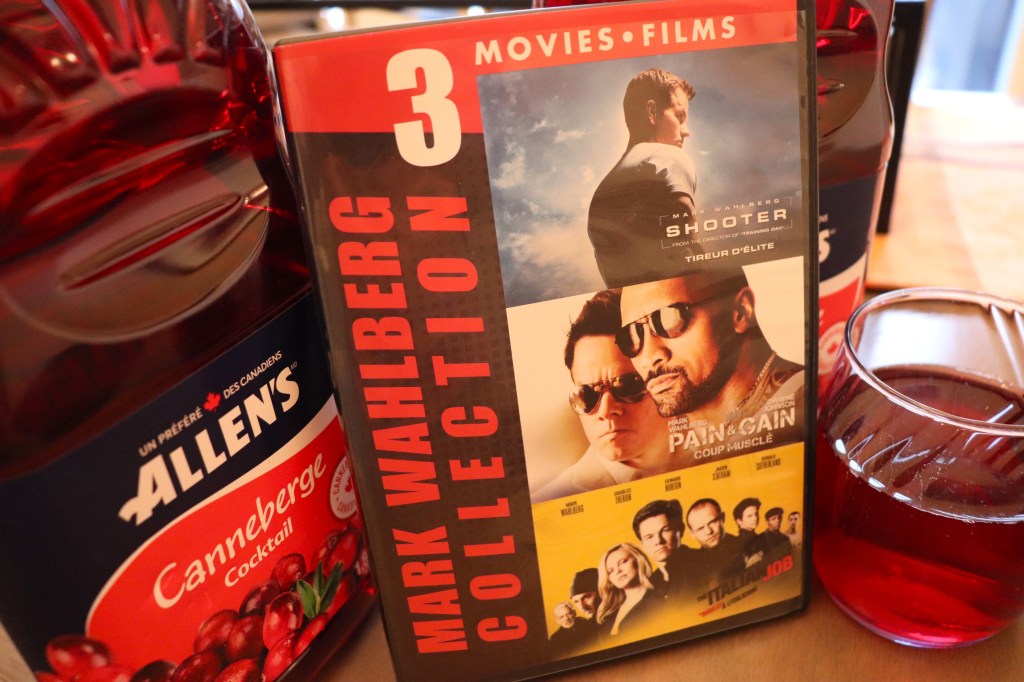
Allen’s Cranberry Juice (because when it comes to resisting U.S. imperialism, buying a Canadian food product is on the same level as watching a vaguely anti-American film from 18 years ago)

Fun facts:

Release date: March 23, 2007

Budget: $61 million

Box office: $95.7 million

-The character Bob Lee Swagger was originally created by author/film critic Stephen Hunter and first appeared in the 1993 novel Point of Impact. Hunter has written 12 books in the Bob Lee Swagger series, with the last story (Targeted) being published in 2022.

-The gun expert Wahlberg meets in the middle of the film is played by musician Levon Helm, who served as a drummer for The Band and was a 1994 inductee into the Rock and Roll Hall of Fame. Outside of his lengthy music career, Helm also appeared in films such as Coal Miner’s Daughter (1980) and The Right Stuff (1983).

-This film was later spun off into a TV series that ran for three seasons (2016-2018) on the USA Network. Ryan Phillippe took over the lead role from Wahlberg and the plot of the TV show revolved around the first three novels in the Bob Lee Swagger book series.

-Musical highlight: “Nasty Letter” by Otis Taylor (plays during the end credits)

The Man With The Golden Arm (1955) review-inject this into my veins

This year’s Oscar season birthed no end of controversy, with unearthed racist Tweets, accusations of unethical AI use, and concerns about absent intimacy coordinators clogging up the news cycle. While it’s fun to partake in all this chaos, it’s also important to remember that the Academy Awards do hold some cultural value beyond fueling online discourse.

Not only are the winners immortalized in film history, but even the nominees enjoy an elevated degree of prestige that prevents them from getting completely swallowed up by the relentless march of time.

Otto Preminger’s The Man With The Golden Arm (1955) certainly benefited from being in the Oscar race, with its nods for Best Actor (Frank Sinatra), Best Music, and Best Art Direction ensuring that it remained in the cultural conversation long after it left theatres.

Luckily, this film noir is the kind of movie that actually deserves a longer shelf life. It isn’t some flash-in-the-pan distraction that somehow snuck its way on the Oscar telecast through sleazy backdoor politicking. Preminger’s production is genuinely groundbreaking, being one of the first major Hollywood films to seriously grapple with the issue of hard drug addiction.

But beyond this historical distinction, The Man With The Golden Arm is just a damn good movie in its own right, with stellar performances, dynamic camera work, and a bombastic jazz score that cuts to the bone.

The film follows Frankie Machine (Sinatra), a recovering drug addict who vows to go on the straight and narrow after he’s released from prison. But finding honest work as a musician isn’t so easy for Frankie, especially after ghosts from his past lure him back into the world of illegal card dealing. Frankie also finds himself caught between the affections of two women, his wife Zosh (Eleanor Parker) and old flame Molly (Kim Novak), who represent his possible damnation to or salvation from the cycle of crime and addiction.

Sinatra is obviously the main draw here, coming in hot after winning a Best Supporting Actor Oscar for his role in From Here to Eternity (1953). While the crooner didn’t walk away with another golden statuette for headlining The Man With The Golden Arm, his work here is no less extraordinary.

Given the subject matter, it would have been easy to present a completely deranged character who rapidly shifts between big emotions to sell their less-than-ideal circumstances. But Sinatra usually plays it somewhere in the middle. He’s very restrained in the early parts of the movie, trying desperately to put his past behind him and carve out a new life through measured hope and optimism.

It’s only when the walls start to close in that he begins to lose his cool, resorting to a much broader acting style that some might consider “hammy” by today’s standards.

But considering the fact that he didn’t have a lot of influences to draw from (with the depiction of hard drug use being largely taboo in Hollywood at the time), Sinatra still presents a nuanced portrait of someone suffering through substance abuse, no doubt setting an entertainment industry standard for decades to come.

The rest of the cast put in similarly impressive work.

Even though they inhabit familiar film noir archetypes (the petty crook, the femme fatale, the heartless drug pusher, the hard-boiled cop, etc.), each actor gives their characters enough depth to keep things interesting.

This is especially true for Kim Novak, who could have easily come across as an evil seductress for preying on a married man. Instead, her concern and affection for Sinatra appears genuine and endearing, making her the most sympathetic player in the film’s overarching love triangle.

Another surprisingly charming character is Sparrow (Arnold Stang), a small-time hustler who is always trying to reel Sinatra into his latest scam. But despite Sparrow’s unsavory modus operandi, Stang manages to play him with a degree of kindness and good humour, so much so that he almost becomes the film’s Jiminy Cricket.

And as cliché as this might sound, one of the movie’s most interesting characters doesn’t actually appear on screen.

This is because the camerawork, led by cinematographer Sam Leavitt, is always engaging, constantly moving and finding interesting ways to frame the characters, illustrating their inner thoughts without strictly relying on dialogue.

One of the best examples of this takes place midway through the film, when Sinatra and Novak stroll by a department store window displaying a shiny new kitchen set. By capturing the character’s snappy back-and-forth dialogue within this backdrop, Leavitt offers the audience an aspirational glimpse into a possible domesticated future where the characters no longer have to scratch and claw to carve out a meager living.

It also doesn’t hurt that the movie captures these kinds of moments in mostly long, unbroken takes, which gives the actors lots of room to breathe and make the most of the script.

Said script, penned by Walter Newman and Lewis Meltzer, remains engaging throughout the movie’s runtime, mixing in insightful character moments with the kind of tough-guy dialogue one would expect from a film noir.  

The film’s Oscar-nominated score, composed by Elmer Bernstein, adds to this rhythm, serving as a kind of internal monologue for Sinatra’s state of mind. When those chaotic brass and percussion instruments pick up in speed and intensity, the actor doesn’t have to utter a word about suffering from withdrawal. The music does a lot of the heavy lifting.

Conversely, this emotionally-resonate score also kicks in when Sinatra is sharing a tender moment with Novak or Parker, except this time the composer relies on gentle woodwinds and strings to sell the fact that he is keeping his demons at bay.  

So just like the camerawork, the film’s music almost becomes another colourful member of the cast, or at least some kind of omniscient narrator that adds texture to the story.

That being said, the incorporation of music into the plot itself is a little half-hearted. While Sinatra’s main goal throughout the narrative is to become a professional drummer, his actual talent with the instrument is mostly talked about and only briefly shown. Plus, the big studio audition that the movie’s been building up to is over far too quickly, which slightly blunts the impact of Frankie’s downward spiral.

And while the movie usually does a good job of balancing its goofier elements with hard-hitting drama, that formula can get thrown out of whack sometimes.

Outside of a couple hokey speeches about drug addiction, which wouldn’t be out of place in a 1990s after-school special, the ending leaves a little to be desired.

Without getting into spoilers, one character exits the movie in a very silly fashion right before the credits roll, which caps off the film on a slightly sour note.

But those are just small quibbles, to be sure, and they don’t take away from The Man With The Golden Arm being the real deal.

Anyone who enjoys the look and feel of movies from that era of Hollywood can find it in spades with this production, with plenty of talented people working in front of and behind the camera.

And while it didn’t walk away with any golden statuettes at the 1956 Oscars, the film did legitimately push boundaries by allowing different kinds of stories (in this case, hard drug addiction) to appear on the big screen.

Because of the film’s controversial subject matter, the Production Code Administration (enforcers of the conservative Hays Code) refused to give it a seal of approval, thereby limiting its distribution in North America.

But after the movie garnered a lot of buzz without this seal, the Motion Picture Association of America eventually pressured the PCA to revise its code and allow drug addiction to be allowed in the movies.

And honestly, busting up obtuse censorship guidelines might be a better legacy to leave behind over winning big at the Academy Awards, especially given the tired discourse that plays out every time a movie brings home an Oscar.   

Verdict:

9/10

Corner store companion:

Golden Oreos (because they’re delicious and a lot less addictive than heroin)

Fun facts:

Release date: December 15, 1955

Budget: $1 million

Box office: $4.3 million

The Man With The Golden Arm finally received its PCA production code in 1961, six years after the film’s initial release. The PCA and the Hays Code were discarded in 1968 and were replaced by the modern MPAA rating system that same year.

The Man With The Golden Arm was inducted into the United States’ National Film Registry in 2020 for being “culturally, historically or aesthetically significant.” It was added alongside classic films such as The Blues Brothers (1980), A Clockwork Orange (1971), The Dark Knight (2008), and Grease (1978).

-Actor Arnold Stang (who plays Sparrow) is probably best known for voicing the Hanna-Barbera cartoon character Top Cat for several decades.

The Man With The Golden Arm is currently in the public domain and can be watched in its entirety on YouTube. Please watch using the provided link below and don’t bother with the official YouTube upload (since it’s been colourized and looks awful).

In The Navy (1941) review-pratfall propaganda

Much has been written about the manufacturing might of the United States during times of conflict.

This is especially true during the Second World War, which sparked an industrial boom that single-handedly lifted America out of the Great Depression.

But outside of producing tanks, planes, and battleships, the U.S. was also keen on pumping out a flood of pop culture properties that kept the public sympathetic to the war effort.

This was mostly accomplished through the U.S. Office of War Information, which reviewed over 1,600 scripts throughout 1942-1945, excising anything that cast the country in a bad light.

But even before America officially entered the conflict (in December 1941), military officials were already deeply involved in various Hollywood productions, including the escapist comedies of Bud Abbott and Lou Costello.

In fact, the duo got their first big break in the movies through the military-themed Buck Privates (1941), which became so financially successful that it spawned two follow-up “service comedies” that same year.

The second part of this spiritual trilogy, In the Navy, was shot and released four months after the original, and that quick turnaround definitely shows.

While Buck Privates was charming because of its loose plot and slapstick gags, this nautical follow-up feels pretty lazy by comparison, content with coasting off Abbott and Costello’s newfound fame on the big screen.

The filmmakers’ military overseers also had a noticeably heavier hand in production this time around, to the point that the movie’s finale gets completely torpedoed thanks to third-party meddling.

As a result, it’s hard to see In the Navy as anything other than a blatant piece of military recruitment propaganda, despite it being able to squeeze in a couple decent laughs here and there.

After being relegated to a supporting role in Buck Privates, Abbott and Costello get promoted to main-character status for In the Navy, serving as a pair of hapless sailors who are eager to prove themselves on the high seas.

The duo eventually cross paths with a famous crooner (Dick Powell), who enlists in the navy under a fake name to escape the showbiz limelight.

Abbott and Costello agree to help the singer conceal his identity, which is a lot easier said than done now that an ambitious photojournalist (Claire Dodd) is on the hunt for an exclusive.

Many of the observations I made during my original review of Buck Privates hold true in this pseudo sequel, although the formula has hit some diminishing returns.

As expected, Abbott and Costello’s comedic chemistry is beyond reproach, with rapid-fire zingers and swift physical gags being delivered with pinpoint precision.

The pair work wonders even when things don’t go according to plan. An obvious outtake involving Abbott and Costello spitting water at each other is just left in the final cut of the film and remains one of biggest laughs In the Navy has to offer.

However, several of these routines drag on for far too long and bring the movie’s pace to a screeching halt.

One memorable scene involving a chaotic shell game eats up around five minutes of screen time, ending on a punchline that fails to justify such a lengthy, plotless detour.  

Another skit involving Costello’s unique math skills is similarly disconnected from the overarching narrative and is most likely included to pad the film’s runtime.

A lot of these bits are obviously holdovers from the duo’s stint on the vaudeville stage, given how they would continue to recycle this same material in future projects.

While these career callbacks had some novelty in Buck Privates, they’ve grown stale by this point, especially since these digressions are so disconnected from the ongoing plot concerning Powell’s crooner.

This is a shame, since Powell’s attempts to conceal his identity from Dodd’s photojournalist are quite charming. The pair establish a contentious yet flirty back-and-forth early on, which would have given the film another layer of appeal if it was given time to breathe.

But because of director Arthur Lubin’s focus on unrelated schtick (and another factor we’ll get into later), the film fails to synthesize its various plot threads into a cohesive whole, serving as a showcase for its headlining stars more than anything.

That being said, In the Navy does improve over Buck Privates in one area, and that is how the Andrews Sisters are used.

While the singing trio were a glorified Greek chorus last time, here they function as actual characters in the plot, with Costello looking to woo one of the sisters throughout.

Additionally, the sisters offer a wider variety of musical performances this time around, ranging from a military march to a jazzy club number to a luau-themed ditty.

Unfortunately, whatever goodwill In the Navy built up during its runtime is completely washed away in its third act.

Until this point, the movie’s propagandistic aims were visible but nothing I haven’t seen in other films produced during this era.

Just like with Buck Privates or Caught in the Draft (starring Bob Hope), the military is clearly involved in the movie’s production, providing access to vehicles, equipment, and other window dressing to present an appealing vision of service life.

However, the military’s involvement is taken one step further for In the Navy, since they basically vetoed the film’s climax.

U.S. naval officers reportedly took issue with the film’s ending sequence, where Costello [SPOILERS] unwittingly commandeers a battleship and wreaks havoc in a Hawaiian harbour.  

Not being able to edit this scene out of the movie, the studio opted to assuage the navy’s concerns via costly reshoots, which turned the real-life vehicular mayhem into a dream Costello experiences after ingesting a sedative.  

As if the “it was all a dream” ending wasn’t bad enough, the filmmakers also kneecap the ongoing romance storyline by kowtowing to this pressure from the military.

Since Powell and Dodd can’t be included in this dream sequence climax, their development as a couple is squeezed into the dying minutes of the film, having apparently resolved all their personal hangups off screen.

Some may bristle at me putting so much thought into the plot mechanics of a silly slapstick comedy, but sacrificing your big finale due to outside interests really is beyond the pale.

When this kind of meddling is so obvious, even to the naked eye, it really mutes the film’s other admirable qualities, regardless of how appealing Abbott and Costello’s brand of humour remains in the modern day.

And by the time the credits roll, all you’re left with is the feeling that you’re being fed a meal that is severely undercooked, despite there being way too many cooks in the kitchen.

But don’t let these cliched food metaphors mislead you into thinking that I’m above enjoying some World War II movies phantom-produced by Uncle Sam.

In the past, I’ve given a tepid recommendation to glorified recruitment ads starring American golden boy John Wayne (Back to Bataan, Operation Pacific), because the people behind those projects at least 1) knew how to somewhat disguise their propagandistic aims and 2) deliver on what was being advertised.

With In the Navy, the filmmakers largely failed on both of those fronts, with the movie’s only real saving grace being its eclectic soundtrack.

However, the American public obviously didn’t see it that way in 1941, since this film netted Universal Pictures a tidy profit and continued to push Abbott and Costello as a major box office draw.

The pair then used their newfound fame to help the military more directly once the U.S. officially entered the war, conducting a 78-city tour in 1942 that sold $85 million in war bonds.

Perhaps this cross-country campaign was a better venue for the two parties to collaborate, especially if their other service comedies turned out to be as slap-dash and half-baked as In the Navy.

Verdict:

4/10

Corner store companion:

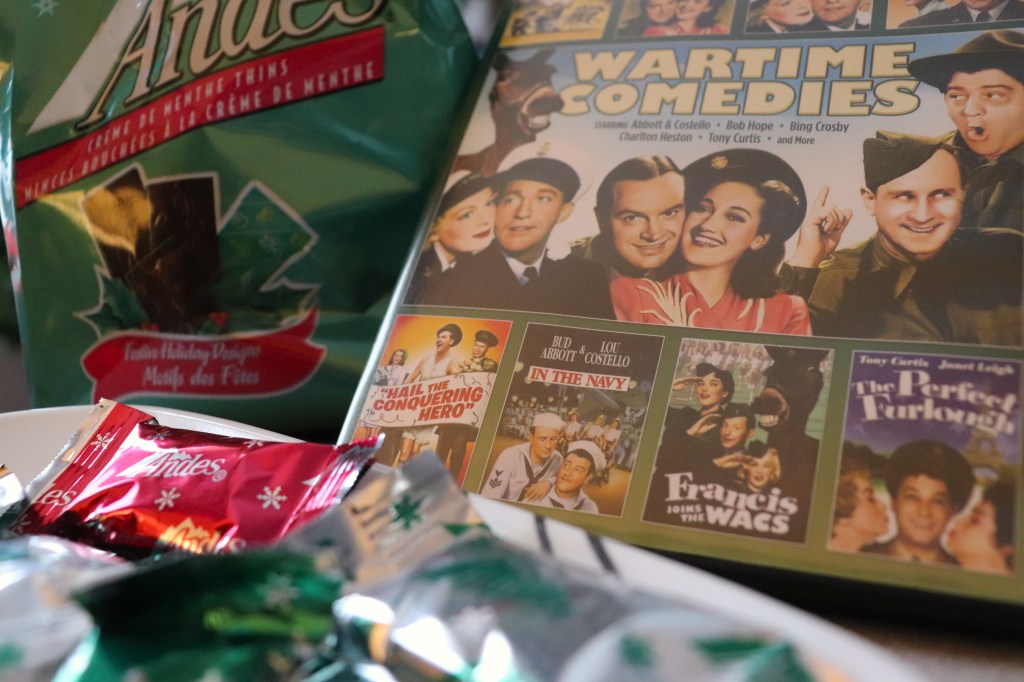
Andes thin chocolate mints (because it’s Christmas, dammit, and I need something sweet!)

Fun facts:

-Release date: May 31, 1941

-Budget: $379,207 (estimated)

-Box office: $2 million (estimated)

-The final entry in Abbott and Costello’s 1941 service comedy trilogy, Keep ‘Em Flying, was released on Nov. 28. This film features the comedy duo enlisting in the U.S. Army Air Corps.

-Outside this 1941 service comedy trilogy (Buck Privates, In the Navy, Keep ‘Em Flying), Arthur Lupin directed Abbott and Costello in Hold that Ghost (1941) and Ride ‘Em Cowboy (1942). Lupin is also responsible for helming five films in the Francis franchise, which features a talking mule enlisting in various branches of the military. 

-Musical highlight: “Gimme Some Skin, My Friend,” by the Andrews Sister

(despite the blatant cultural appropriation on display, originally being recorded by The Delta Rhythm Boys, this is the movie’s catchiest number by far)

Bulletproof (1996) review-a complete misfire

When people talk about the widening gap between film critics and average movie-goers, I feel like Adam Sandler was a harbinger of things to come.

For nearly three decades now, Sandler has been a consistent punching bag for critics, who find the majority of his comedies low-brow, lazy, and juvenile.

At the same time, Sandler’s brand of humour has endeared him to the broader movie-going masses, who ensure that most of the films released under his production company (Happy Madison Productions) turn a profit.

This success even carried through into the streaming era, with Sandler signing a lucrative multi-picture deal with Netflix in 2014 that was extended in 2017 and 2020.

Despite this long-standing divide between critics and fans, the two groups at least found some common ground in terms of their dislike for Bulletproof (1996), an R-rated action comedy that Sandler starred in (alongside Damon Wayans) just as his career was really taking off.

While the film’s reviews are predictably dismal, it also bombed at the box office, only generating $22.6 million (worldwide) out of a $25 million budget.

Even the film’s director Ernest Dickerson wasn’t happy with the final product, telling DVD Talk in the mid-2000s he wishes he could “just erase that whole experience” from his memory.  

Having now seen Bulletproof for myself, it’s easy to see why few remember it fondly.

Not only is this film a complete misfire both in terms of action and comedy, but it also features some truly shoddy filmmaking that’s shocking to see in a major Hollywood release.

Because of this, I imagine that Sandler fans in 2024 will struggle to find something to like in Bulletproof, since even they have standards.   

In Bulletproof, Sandler stars as a hood named Archie, who steals cars and smuggles drugs on behalf of crime kingpin Frank Colton (James Caan).

Unbeknownst to Archie, his best friend and business associate Jack is an LAPD cop working undercover to bring down Colton’s operations from within.  

Jack finally reveals his identity to Archie during a police raid on one of Colton’s warehouses, resulting in Archie accidently shooting his best friend in the head before escaping.

After somehow recovering from this grievous injury, Jack is tasked with bringing Archie into custody so that he can testify against his boss.

The rest of the movie basically turns into an elaborate trust building exercise, where Archie and Jack must squash their personal beef and work together to stay one step ahead of Colton’s hitmen.

Based on this premise, the film has a lot of potential and instantly calls to mind underrated  action-comedy classics like Midnight Run (1988) and Bird on a Wire (1990).

Unfortunately, Bulletproof lacks all the key ingredients that made those movies work, including a sharp script, well-choreographed chase scenes, and palpable chemistry between the two leads.

The most glaring omission from this recipe here is the rapport (or lack thereof) between Sandler and Wayans.

A lot of the film’s glaring weaknesses could be forgiven if the pair were at least believable as former best friends who gradually rebuilt their relationship throughout the narrative.

But the back-and-forth between Sandler and Wayans is consistently stiff and lifeless, almost like the duo rehearsed to shoot a Super Bowl commercial rather than a feature film.

It also doesn’t help that their individual performances are pretty weak.

Wayans ends up looking the worst out of the two, since he’s tasked with tackling a dual role as an undercover cop.

As Sandler’s criminal associate, Wayans adopts this ludicrous “street” accent that’s supposed to make him sound tough, but he just comes across as one of his sketch characters from In Living Color.

Once he sheds that identity, Wayans is similarly unconvincing as a strait-laced police officer, who lacks the commanding presence necessary to sell the film’s dramatic beats.  

Sandler doesn’t fare much better, since his performance in Bulletproof is indistinguishable from the wise-cracking characters he played in films like Happy Gilmore (1996) or Big Daddy (1999).

Perhaps that approach was intentional, to satisfy the fanbase Sandler had cultivated through his pure comedies and stand-up career, but it doesn’t it doesn’t jive with the movie’s harder edge.

Admittedly, there is some appeal in watching Sandler tackle some R-rated material, like yelling “gross, right in the fucking eyeball” after he shoots a bad guy in the head.

But that novelty quickly runs out its welcome, and all you’re left with is an unfunny script that never transcends lazy middle-school jokes related to bodily functions and implied gay sex.

The film’s action sequences suffer from the opposite problem.

Dickerson and his team show no shortage of ambition, since they stage several set pieces that feature plenty of carnage and vehicular mayhem.

Unfortunately, the filmmakers obviously bit off more than they could chew, since these scenes are poorly shot and clumsily slapped together in the editing room.

This incompetence is on full display during an airplane crash sequence early on, where Dickerson doesn’t even attempt to hide Sandler and Wayans’ stunt doubles as they leap to safety.

The only time the film really nailed that 90s action feel was during a quick shootout in the third act, when Sandler and Wayans encounter some goons in a suburban kitchen.

For whatever reason, the filmmakers decided to significantly up their game for this 60-second scene, tying it together with smooth camera movements, juicy blood squibs, and Sandler’s only funny quip in the movie (“I think they’re eating fajitas!”).

It’s almost like the studio hired Robert Rodriguez for an afternoon of uncredited consulting work, where he was able to impart his tricks of the trade to a crew that was clearly in over their heads.

But momentary flashes of competence can’t make up for the film’s other technical shortcomings, including its atrocious sound.

If you clicked on the above clip, you’re sure to get an earful of the ambient techno diarrhea that’s meant to serve as the film’s score.

Not only does the music sound like a toddler hitting a Casio keyboard at random, but the mixing is also all over the map.

During the movie’s climax, the music is so low it’s nearly inaudible, almost like the filmmakers left it in the final cut by accident.

And then there’s the movie’s spotty ADR, where the characters’ dialogue is piped in seemingly at random.  

At one point, the filmmakers even neglected to dub in one of Wayans’ lines, resulting in an awkward moment where he mimes his dialogue with no sound.

Some may tilt their head at my attempt to critique the mise-en-scène of a goofy Adam Sandler comedy, which isn’t meant to be taken seriously.

While that may be true, I feel some baseline professionalism must be maintained in even the zaniest of film projects, and Bulletproof fails to clear that low bar.

This is especially true given that Bulletproof is standing in the shadow of much better buddy action movies starring stand-up comedians, with Eddie Murphy having found great success with this formula over a decade ago with 48 Hrs. (1982) and Beverly Hills Cop (1984).

However, the film’s worst sin is how painfully unfunny its script is, with virtually all attempts to pull a chuckle out of me landing with a dull thud.

One of the few exceptions to this dismal trend takes place during a climactic fist fight between Wayans and Caan, when the latter nonchalantly removes his toupee before throwing hands.

Does this gag sully the dignity of a legendary actor like Caan? Definitely. But that’s kind of why it works, and I wish the film took more chances like this rather than fall back on jokes that were already worn out by the mid-90s.

Admittedly, this same criticism could be levied at a lot of Sandler’s other comedies, even though most of those projects were financially successful and well-liked by fans.

So why is Bulletproof largely forgotten these days?

My guess is that the R rating turned a lot of people away, with most of Sandler’s other projects falling into that PG-13 sweet spot.

Another factor is that this movie was presented as more of a vehicle for Wayans, who was given top billing as his career was much better established at that point.

But whatever the reason, Sandler wouldn’t let this little bump in the road stall his career.

Over the subsequent 28 years, he went on to churn out dozens of films that have cumulatively grossed over $3 billion worldwide, making him one of the most successful comedians in Hollywood.

He even used this industry clout to (occasionally) flex his dramatic chops, seeking out projects with heavyweight directors like Noah Baumbach, Paul Thomas Anderson, and the Safdie Brothers.

Because of these career detours, some of which resulted in industry awards, I get the sense that critics have softened on Sandler these days, or are at least willing to ignore his comedies now that they’re all relegated to Netflix.

While critical re-evaluation is always welcome (and necessary) in today’s increasingly hostile film discourse, this exercise can only go so far.

No amount of historical hindsight could convince me that Bulletproof is worth recommending to anyone other than diehard fans who are compelled to consume every one of Sandler’s films in a marathon rewatch.

Even in this case, these folks may want to skip Bulletproof anyway, since its sheer awfulness may sour the rest of Sandler’s early filmography by association.   

Verdict:

2/10

Corner store companion:

Maltesers (because they look good on the outside, but there’s nothing going on under the surface)

Fun facts:

-Release date: Sept. 6, 1996

-Budget: $25 million

-Box office: $22.6 million (worldwide)

-Sandler nabbed a “Worst Actor” Razzie nom for his performance in this film and Happy Gilmore. He ultimately lost this award to the dream team of Tom Arnold and Pauly Shore, who starred in a number of comedies throughout 1996. Bulletproof was also represented at the 19th Stinkers Bad Movie Awards, with Caan being nominated for “Worst Supporting Actor.”

– Ernest Dickerson went to film school alongside Spike Lee and served as a cinematographer on several of his early projects. These collaborations include She’s Gotta Have It (1986), School Daze (1988), Do The Right Thing (1989), and Jungle Fever (1991).  After trying his hand at directing feature films, Dickerson has been mostly focused on directing television for the last two decades. His TV credits include work on Treme, Bosch, Dexter, and The Walking Dead.

-“Bulletproof” serves as the title for a number of other films, including a 1988 action movie starring Gary Busey and a 2020 documentary on gun violence in American schools. “Bulletproof” is also the name of a British police procedural that ran between 2018 and 2021.

-A direct-to-video sequel to Bulletproof was released in January 2020, 24 years after the original film was released. It featured none of the original cast, with actors Faizon Love and Kirk Fox filling in for Wayans and Sandler, respectively.

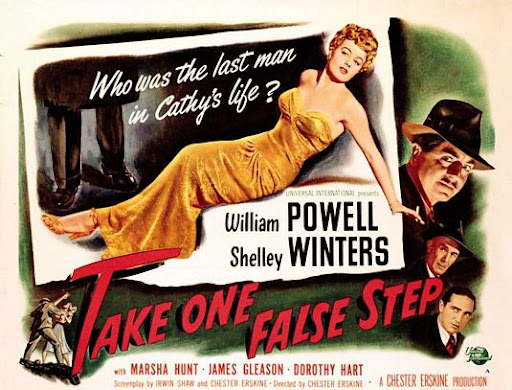
Take One False Step (1949) review-tripped over its own two feet

When it comes to escapist cinema, crime thrillers and film noir always hit that sweet spot for me.

While sci-fi and fantasy movies are often marketed as the ultimate break from earthly concerns, the settings and characters are sometimes a little too outlandish to be relatable.

Film noir, however, always keeps one foot rooted in the real world by focusing on the kinds of gritty crime stories that have been grabbing news headlines since Prohibition.

But at the same time, these movies also present a heightened reality full of broad archetypes, hard-nosed dialogue, and stylized visuals.

Another recurring trope is the protagonist (whether that be a private eye, journeyman boxer, or everyday schmuck) getting wrapped up in a vast criminal conspiracy beyond their comprehension, which serves as an ideal audience surrogate.

All these elements are at play in Chester Erskine’s Take One False Step (1949), one of three movies bundled into Kino Lorber’s Film Noir: The Dark Side of Cinema IX collection.

For the first half-hour or so, this project showcases some of the best that the “classic” era of film noir has to offer, with an intriguing mystery and appealing cast that draws you into the story.

Unfortunately, Erskine’s film kind of falls apart after taking a major plot digression in its second act, resulting in an experience that feels like the cinematic equivalent of a giant red herring.

In Take One False Step, William Powell stars as Andrew Gentling, a respected professor who is visiting the State of California to secure funding for a new university.

However, Gentling’s plans get waylaid by the sudden appearance of an old flame (Shelley Winters), who strong arms him into a night of flirtatious drinking before vanishing the following day.

Fearing he could become the prime suspect in this missing persons case, Gentling must scramble to find out what happened to his former lover and dodge a cadre of shady characters in the process.

Despite its title, and a goofy opening montage showcasing a bunch of random people tripping over themselves, Take One False Step actually kicks off on the right foot.

Powell does such a good job at playing the strait-laced academic that his descent into the criminal underworld, where he is forced to constantly lie and break the law to evade police, feels like a big deal.

This tonal shift is hammered home thanks to a nice selection of colourful characters, who give the film’s first act a lot of weight and texture.

Winters’ femme fatale is an obvious example of this, since her glamorous wardrobe and hot-blooded persona serve as the perfect foil for Powell’s dry everyman.

The two also make for an interesting pair considering their contrasting views towards post-WWII America.

While Winters is content with wallowing in the excitement and uncertainty of wartime, Powell remains committed to leaving his military service in the past and build towards a better future (hence the new university).

However, as the story moves forward, Powell is increasingly put in a position where he must abandon these high-minded ideals for his own self-preservation, which adds a nice psychological wrinkle on top of everything.

His descent into moral ambiguity is made even more compelling thanks to some strong supporting players besides Winters.

This includes Marsha Hunt as Winters’ level-headed best friend and James Gleason as the police detective on Powell’s heels, with the latter projecting an unassuming intelligence reminiscent of Peter Falk’s Columbo.

All this is all tied together with some snappy dialogue and slick visuals that one would expect from the genre, combined with an energetic score that helps move the action along at a nice pace.

Unfortunately, all this good set-up is thrown out the window 33 minutes into the movie when Powell gets bitten by a supposedly rabid dog.

Once that happens, the broader mystery regarding Winters’ disappearance is quickly abandoned in favour of this rabies sub plot, where Powell must avoid the authorities while fighting off any emerging symptoms of the disease.

This leads to a handful of scenes where the movie basically stops so that medical professionals can explain what rabies is and how it affects the human body.

It got to the point that I started to wonder if the film’s budget was subsidized by some advocacy group, with its funding being dependent on the script containing some amount of educational content concerning rabies.

This is extra puzzling given the fact that rabies was hardly considered a scourge in North America at that point, with around 40 cases reported each year in the early 1940s and decreasing to a total of 99 for the entire next decade.

While Erskine eventually circles back to the main mystery plot, the film has lost much of its momentum by that point and must settle for a bunch of rushed resolutions.

We don’t even find out about the true nature of the bad guy’s criminal dealings until the last five minutes of the movie, which comes across as a complete afterthought.

This weak revelation is also preceded by one of the stupidest cinematic deaths I’ve seen in a while, which takes place [SPOILERS] when Powell confronts the bad guy in a rail yard.

After a brief tussle with Powell, the villain is spooked by incoming police and quickly finds himself caught between two trains travelling in the opposite direction.

Even though there is clearly enough space and time to avoid these oncoming locomotives, the bad guy stutter-steps like an idiot and gets crushed.

Despite not being shot in a comedic style, I was instantly reminded of the steamroller scene from the first Austin Powers movie, where a henchman’s severe lack of self-preservation is played up for yuks.

The similarly ridiculous death in Take One False Step is extra confusing since the film is sprinkled with humorous moments throughout, which don’t always land or gel with the more serious story beats.

This points to a broader problem with the film, since it lacks a cohesive vision that can marry the good performances and moody visuals with a complimentary script. 

As a result, watching Take One False Step is a profoundly frustrating experience, since you can tell its merits are being weighed down by a few head-scratching decisions.

Turning this mystery story into a rabies PSA is obviously the filmmakers’ biggest blunder, and it might be one of the strangest narrative detours I’ve witnessed covering movies for this blog.

Admittedly, it is kind of funny that a film called Take One False Step so noticeably trips over itself in its second half, a fate that might have been willed into existence by running with such an unwieldy title in the first place.

Hopefully the remaining two films in this Kino Lorber collection can provide more of that crime thriller escapism I mentioned earlier, while containing at least 50% less canine fear mongering.

Verdict:

5/10

Corner store companion:

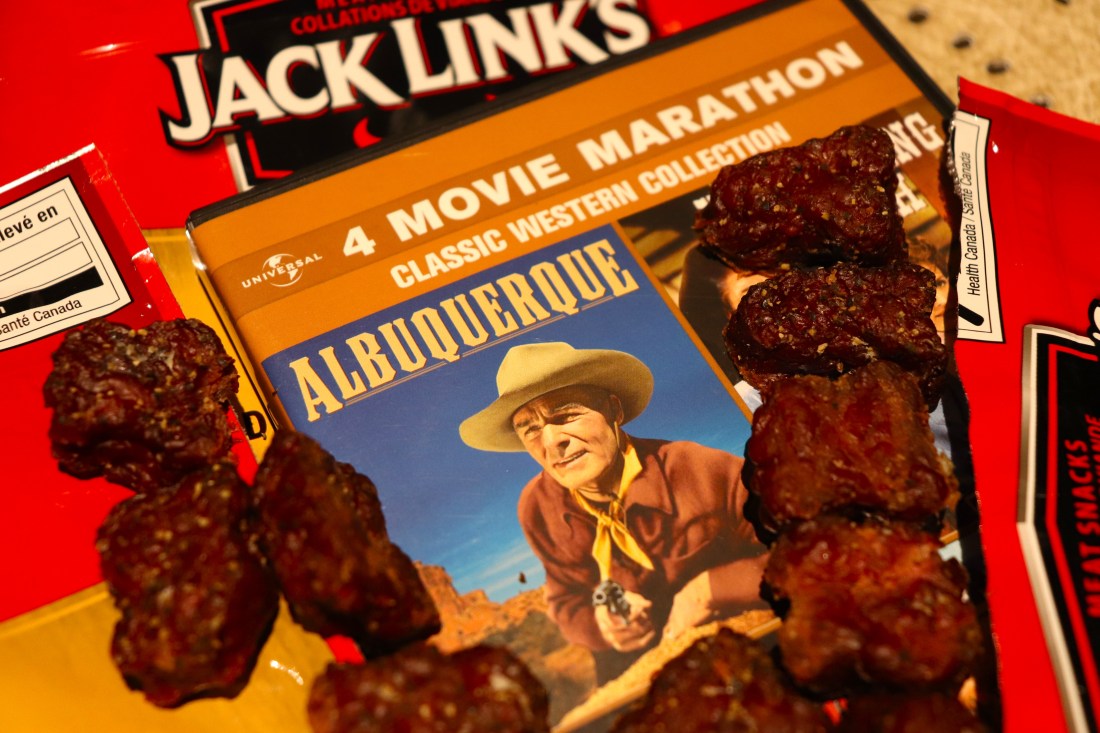
Nature’s Recipe Chewy Bites (because dog owners will pick up a lot of useful information watching this film)

Fun facts:

-Release date: Aug. 14, 1949

-Budget: $855,000

-Kino Lorber’s DVD case for Take One False Step claims that actor Tony Curtis makes an uncredited appearance in the film, with AFI listing his role as “hot rod driver.” However, Curtis is not included amongst other uncredited actors on the movie’s IMDB page and I personally didn’t spot him during my multiple viewings of the film.

-William Powell received three Best Actor Oscar nominations throughout his career for his work in The Thin Man (1934), My Man Godfrey (1936), and Life With Father (1947). Powell retired from acting following his supporting role in the Best Picture-nominated Mister Roberts (1955) due to health issues.

-I might have subconsciously selected Take One False Step (1949) for a screening based on its titular similarity to Carl Franklin’s One False Move (1992), another crime thriller that I covered back in 2018.

-Despite her extensive filmography throughout the 1930s and 40s, Marsha Hunt was largely blacklisted from Hollywood in the 1950s for speaking out against the House Committee on Un-American Activities and being branded as a Communist sympathizer. Hunt was mostly relegated to working on TV throughout this time, although she would return to film in the decades to come and received a star on the Hollywood Walk of Fame in 1960. She passed away in 2022 at the age of 104.

Take One False Step can currently be watched in its entirety on YouTube.

Wimbledon (2004) review-getting me to care about tennis is a feat

Film critic Roger Ebert famously described cinema as a “machine that generates empathy” and to me that machinery is running at peak efficiency when it comes to sports dramas and romantic comedies.

As someone who doesn’t follow professional sports in real life, I’m constantly wowed by films like Moneyball (2011), Rocky (1976) and Remember the Titans (2000) that sucked me into the world of professional baseball, boxing, and high school football, respectively.  

The same kind of amazement is at play when I watch a good rom com, since I generally don’t dwell on the interpersonal lives of those outside of my friends and family.

Richard Loncraine’s Wimbledon (2004) was largely able to bridge that divide on both fronts.

Not only did Loncraine and his team create a couple I actively rooted for, but they also managed to hook me in with the competitive aspect of a sport that I couldn’t care less about (tennis).

Plus, the writing team should be commended for the way they turned this genre mash-up into a core part of the plot, since the protagonist is caught between his athletic legacy and his desire to pursue a new relationship.   

While there are some annoying remnants of 2000s filmmaking at play, Wimbledon is still an immensely charming affair that should unify fans of sports movies and romantic comedies, as long as both parties come in with an open mind.  

The plot of Wimbledon follows Peter Colt (Paul Bettany), a journeyman tennis pro who is at the end of his career and decides to enter the renowned UK tournament for the final time.

Despite going into the competition with limited expectations, Peter quickly finds that his fortune has changed once he meets and begins a relationship with up-and-coming American tennis star Lizzie Bradbury (Kirsten Dunst).

Not only is he playing better on the court, but Peter’s growing feelings for Lizzie allow him to envision a happy life beyond tennis for the very first time.

Unfortunately, the high-pressure environment of Wimbledon, and the media circus surrounding it, threatens to tear these two apart as the tournament reaches its conclusion.

Of course, the first inevitable hurdle that most romantic comedies must clear has to do with the leads and whether or not they are a believable on-screen couple.

Luckily, Bettany and Dunst sell you on this idea as soon as they first lock eyes in Wimbledon.

Their mutual attraction and chemistry is palpable, so much so that you don’t question the pair hooking up less than 20 minutes into the movie (a development that other filmmakers would have saved for the, er, climax of the story).

Bettany’s performance is particularly impressive given that Wimbledon marked his first major role in a romantic comedy.

During a 2018 interview with GQ, Bettany revealed this part proved extremely difficult, as he wasn’t prepared to take on a character who is required to be “relentlessly charming” in every scene.

But whatever difficulties Bettany was experiencing behind the scenes didn’t follow him in front of the camera, as his underdog tennis pro remains a consistently engaging presence who is easy to get behind.   

Dunst is even better equipped to handle this material, having recently cut her teeth on a range of comedies and romantic dramas like Drop Dead Gorgeous (1999), Bring It On (2000), and Crazy/Beautiful (2001).

Because of this, she effortlessly slips into the role of a firecracker love interest, while also maintaining a strong sense of agency that makes her an interesting character in her own right.

Much of the pair’s likability should also be credited to Wimbledon’s trio of screenwriters (Adam Brooks, Jennifer Flackett, and Mark Levin), who managed to craft a whole cast of characters that remain grounded despite engaging in some heightened romantic comedy hijinks.

Peter Colt (Bettany) is a prime example of this, since a lesser film would have taken the easy route and presented audiences with a complete screw-up to garner more sympathy right off the bat.

Instead of being saddled with a drinking problem or some inherent klutziness, Peter’s inner conflict is rooted in his fear of becoming irrelevant in a sporting world that is leaving him behind.

And despite his oblivious foibles, Bettany remains a cool operator when it comes time to chat with reporters or literally fight for his lady’s honour at a party, presenting a character who is aspirational without being unrealistic.  

I know this sounds like basic screenwriting, but a surprising number of romantic comedies screw up this formula, where the characters are presented as one note or cartoonishly flawed in order to generate cheap laughs.  

One such famously underwritten rom com archetype is the love interest’s disapproving father, whose dislike of the protagonist often borders on psychotic.

However, Sam Neill injects some much needed subtly into this kind of character in Wimbledon.

While he definitely serves as an obstacle that Bettany must overcome to court Dunst, Neill remains soft-spoken and completely reasonable from the get-go, explaining that his daughter’s full attention should be on the tournament if she wants to succeed as a tennis star.

This concern mirrors Bettany’s lingering anxiety about his own legacy in the sport, creating a shred of understanding between the two opposing characters that was a nice touch.

That being said, the film’s main antagonist is the one character in the cast who remains completely underwritten.

As Bettany’s American tennis rival, Jake Hammond isn’t given any opportunity to play anything other than an arrogant, sneering villain, who slut shames women off the court and (accidently) assaults small children while on it.

These antics do succeed in getting you to hate Hammond, but it doesn’t take away from the reality that his one-dimensional character sticks out like a sore thumb.

A similar lack of subtlety is on display during the early one-on-one tennis scenes, which feature some garish computer-generated trickery.

Instead of focusing on the athleticism of his actors, Loncraine uses these digital camera movements to follow the ball from one side of the court to the other, harking back to that dark period of the mid 2000s when most directors hadn’t quite mastered CGI as a story-telling tool just yet.  

Thankfully, Loncraine reels back his usage of this virtual reality hell as the film goes on, letting Bettany and Hammond take centre stage for the grand finale.

And by that point, the writers had already laid the groundwork necessary to get me invested in this big showdown, tying Bettany’s success in the tournament to many of the supporting characters in the cast.

Not only does his relationship with Dunst ebb and flow in tandem with each successive match, but so do the financial endeavors of his brother (James McAvoy), his agent (Jon Favreau), and the emotional reconciliation of his parents (Bernard Hill, Augusta Colt).

And by having all these characters show up to cheer him on in the finals, alongside the rest of England watching on TV, Loncraine creates an organic underdog story that doesn’t seem phony or forced.

Because of this, I can look past a lot of the film’s shortcomings, like its bland villain, sporadic use of bad CGI, and dated soundtrack that features the kind of radio-friendly soft pop that’s best left in the 2000s.

All that noise fades into the background for what ends up being a solid sports-romantic comedy hybrid that focuses on the human element first and athletic spectacle second.

If you feel like the filmmakers’ priorities are backwards when it comes to this material, then Wimbledon might not be for you.

But for someone like myself who gravitates towards the theatrical elements of professional sports, but not the games themselves, this movie hits the right notes and is an easy recommendation.

Unfortunately, Wimbledon wasn’t compelling enough to convince me to watch the actual tournament this coming July.

That being said, I might change my mind if this year’s event features another relentlessly drunk Woody Harrelson cheering from the sidelines.

That’ll be must-see TV.

Verdict:

7/10

Corner store companion:

Kiwi Strawberry Vitamin Water (because it’s a refreshing treat, as long as you’re prepared to deal with the sugar rush)

Fun facts:

-Release date: Sept. 17, 2004

-Budget: $31 million

-Box office: $17,001,133 (US and Canada), $41,682,237 (international)

-Scenes from this film were shot during the actual 2003 Wimbledon tournament, with real-life spectators and officials featured in the background. This is the only time this kind of filming has been allowed in the tournament’s history.

Wimbledon features several actors who have played famous Marvel Comics characters on the big screen. This includes Dunst (Mary Jane, Spider-Man), McAvoy (Professor X, X-Men), Favreau (Happy Hogan, Iron Man), and Bettany (Jarvis/Vision, various). In fact, Bettany claims that Favreau cast him as Jarvis in the first Iron Man film because of their time shooting Wimbledon together.

-Bettany spent eight months training to prepare for his role as a tennis pro, having never picked up a tennis racket beforehand. He credits Wimbledon champion Pat Cash with teaching him how to play.

-The career trajectory of Bettany’s Peter Colt parallels real-life Croatian tennis pro Goran Ivanišević, who remains the only wild card singles player to win a Wimbledon title (having done so in 2001 while being ranked 125th in the world).

-Surprise cameo(s): Renowned tennis pros John McEnroe and Chris Evert (playing themselves) provide play-by-play and colour commentary throughout the film.

Man Hunt (1984) review- a journey into the uncanny valley

If you’re looking to pick a fight on social media these days, a good place to start (outside of the ongoing Israel-Hamas conflict) is talking about generative artificial intelligence.

This is especially true in sections of the internet where people like to discuss the arts, since this new technology is viewed (depending on who you ask) as something that will either revolutionize the entertainment industry or bring about its downfall.

Personally, most of the AI-generated images and videos I’ve seen aren’t a convincing substitute for the projects made by flesh-and-blood creators, since they almost always possess some bizarre alien quality that makes my skin crawl.

However, the recent advances in AI shouldn’t distract you from the fact that humans have always had the potential to produce works of art that are completely uncanny, off-putting, and devoid of logic.

Enter Fabrizio De Angelis’ Man Hunt (1984), a neo western so lazy and nonsensical in its construction that you think the script was written during a drunken round of Mad Libs.

Admittedly, this does result in somewhat of an engaging viewing experience, since you’re constantly left wondering when the next wacky story development or plot hole will pop up. 

But taken as a whole, Man Hunt’s pervasive weirdness can’t sustain a feature-length runtime and it just leaves you with the creeping feeling that your home has sprung a gas leak.

Some may look at this film’s synopsis on IMDB or Wikipedia and conclude that I’m being a little hyperbolic, since the set-up is typical western shenanigans.

The plot of Man Hunt revolves around a nameless stranger (Ethan Wayne), who buys a pair of horses at a rodeo and accidently wanders onto some land belonging to a corrupt rancher (Ernest Borgnine).

After the rancher steals the horses for himself, the stranger gets thrown in prison after attempting to retake his property.

The rest of the film details the stranger’s attempts to escape from captivity and clear his name, all the while trying to stay one step ahead of the law.

You’ve probably seen a variation of this plot in a dozen other movies, but it’s the way that De Angelis and his crew tell this story that’s truly baffling.

For one thing, the stranger’s first escape from prison is never shown or discussed on screen, even though it’s supposed to represent a major turning point in the story.

Before you can get your head around such a weird creative decision, the stranger is immediately caught and gets thrown back behind bars, leading to his second escape minutes later.

After hijacking a bus and blasting his way through an army of cops, the stranger is then given safe passage thanks to Borgnine’s corrupt rancher, whose change of heart comes out of nowhere and is never given any explanation.

This kind of plot progression would make sense if Man Hunt was a comedy or Zucker Brothers-esque parody of old prison break movies.

But the tone of the film is deadly serious throughout its 91-minute runtime, which exposes the grim reality that De Angelis and his team have no idea what they’re doing.

That lack of direction is laid bare in the first four minutes of the film, which consists almost entirely of boring b-roll footage of the rodeo where the stranger buys his horses.

This opening remains a pretty blatant example of “Shooting the Rodeo,” a term coined by RedLetterMedia that describes the tendency for directors of low-budget movies to pad their runtime by filming real public events.

Man Hunt is an especially egregious example of this trope, since De Angelis lingers on this intro for way too long and includes elements like unnecessary slow motion to add insult to injury.  

These strange filmmaking techniques persist throughout the entire narrative, so much so that I was almost convinced that De Angelis was trying to create the kind of surreal, dream-like atmosphere one would find in a David Lynch movie.

But unlike Lynch’s works, Man Hunt is a pretty boring and lifeless affair for long stretches of its runtime, which is made even worse by a lead performance that is dull as dishwater.     

For those of you who are unaware, Ethan Wayne is the son of Hollywood icon John Wayne, who found work as an actor throughout the 1980s, 1990s, and early 2000s.

A brief scan of Wayne Jr.’s acting credits reveal that he never really made it as a major leading man like his dad, and in Man Hunt it’s easy to see why.

Pretty much every line that comes out of his mouth is stiff and robotic, almost like he’s a non-English speaker who learned the language for this role.

Wayne’s monotone performance extends to his blank facial expressions, which I’m assuming he employed to come across as a stoic western hero archetype just like his father.

But Wayne just doesn’t have the presence or charisma to pull this off and ends up looking like a pretender, especially when he’s asked to do anything physical.

This includes a couple of embarrassing running scenes, where Wayne gets to show that he has all the dignified grace and coordination of a young Steven Seagal.

To be fair, even a lauded thespian like Orson Wells would have trouble grasping this material, since it never finds its footing in a consistent style or tone.

Instead, the filmmakers decide to put a bunch of other movies in a blender, with the beginning of Man Hunt serving as a clumsy fusion of First Blood (1982) and Cool Hand Luke (1967).

The last third of the film ultimately becomes a downscaled version of Clint Eastwood’s The Gauntlet (1977), where the stranger has to evade an army of trigger-happy cops.

And to the film’s credit, these chase sequences do at least feature a lot of impressive pyrotechnics and automotive stunt work.

One scene near the end of the film stands out as a particular highlight, where a police cruiser flips over and showers the concrete street with broken glass.

Seconds later, two cruisers collide into each and explode, treating us to the amusing sight of flaming wheels skipping down the road.

All this technical expertise comes to a head in the film’s climax, where [SPOILERS] Wayne gets cornered in a mobile home and the cops open fire on him for what feels like five minutes.

This one-sided shooting is so excessive that it becomes a complete farce and instantly reminded me of a famous gag from The Naked Gun 21/2(1991).

Unfortunately, the filmmakers had to ruin this fun time by delivering one of the dumbest endings that’s ever been committed to celluloid.

Once Wayne emerges from this bullet-riddled trailer, completely unscathed of course, the cops go to arrest him, but he has a secret weapon up his sleeve.

Instead of carrying a gun or smoke bomb, the stranger produces a bill of sale which proves that he legally bought the horses at the beginning of the story.

This magical receipt completely freezes the corrupt cops in their place and forces them to let the stranger go, even though they were trying to unlawfully cut him into Swiss cheese seconds earlier.

Of course, this piece of paper shouldn’t absolve Wayne of all the property damage and lives he put in mortal danger during his multiple escape attempts.

But I guess we’re well past the point of pretending like Man Hunt takes place in a world that adheres to logic or reason, unless there’s some real legal precedent that gives you immunity from all manner of prosecution if you simply yell “It’s okay, officer! I have a receipt!!”

I know I’ve spent a lot of time on this one plot point, but I think it’s a microcosm of how disorienting this film is as a whole.

Almost every aspect of this project feels artificial or randomly generated, from its script to the acting to the musical score.

Part of me feels like this comes down to De Angelis’ inexperience as a director, since Man Hunt is only his third feature film after nearly a decade of producing Italian genre schlock.

Perhaps that jump into the director’s chair was too much to handle, so he resorted to throwing a bunch disparate American film tropes at the wall to see what would stick.  

De Angelis’ scattershot approach to directing Man Hunt is probably what triggered the AI comparison I brought up earlier, since that technology (in its current form) is only able to generate new works of art using pieces of pre-existing material.

Some may argue that this is no different than the creative process most humans undertake, and maybe there is some merit to that line of thinking.

But with a man-made trainwreck like Man Hunt, I can at least trace the creative influences of the people who worked on it and see that the director went on to embrace his exploitation roots by making films like Killer Crocodile (1989), Karate Rock (1990), and Breakfast With Dracula (1993).

This form of film analysis is infinitely more interesting than looking at the prompts and lines of code that went into creating an AI-generated blockbuster, which sounds about as fun as filing my taxes.

I would much rather look into the history of a deeply imperfect filmmaker than stare into the gaping maw of a machine-driven algorithm, even if the former ends up producing a completely incomprehensible piece of shit like Man Hunt.    

Verdict:

3/10

Corner store companion:

Buffalo Ranch Pringles (because this film is seriously lacking in real western flavour)

Fun facts:

-Release date:

Nov. 30, 1984 (West Germany)

Dec. 6, 1984 (Italy)

-Outside of the film’s original Italian title of Cane Arrabbiato (which roughly translates to “Mad Dog”), Man Hunt was also known as Uppercut Man in France.

-For most of his directing career, Fabrizio De Angelis was credited under the more American-sounding name of “Larry Ludman,” including for his work on Man Hunt. De Angelis also directed under the alias of “Ted Russell” for Breakfast With Dracula (1993).

-As an actor, Ethan Wayne is probably best known for portraying Storm Logan on The Bold and the Beautiful. Wayne played this character throughout 217 episodes of the long-running soap opera, eventually retiring from acting after he left the show for good in 2003.

Man Hunt can currently be watched in its entirety on YouTube (with Asian subtitles).

Back to Bataan (1945) review- military retribution through cinema

The American public was riding a collective high in the spring of 1945, with the Third Reich having officially surrendered to the Allies in early May of that year.

With the fighting in Europe now wrapping up, the United States military turned its full attention to the Pacific theatre of World War II, with the hope of bringing this destructive conflict to a swift end.

Several weeks after Germany’s surrender, American cinemas were able to capitalize off this massive change in fortune through the release of Edward Dmytryk’s Back to Bataan, a film that chronicles the US’ attempt to liberate the Philippines from Japanese control.

Now, I’ve sampled a decent number of WWII-era propaganda for this blog, including another war film starring John Wayne called Operation Pacific (1951).

While that movie was a lot more easy-going in its tone, Back to Bataan features a much more palpable sense of urgency, probably due to the fact that it was shot and released while the Philippines campaign was still underway.  

In fact, Dmytryk’s film could be seen as a form of cinematic retribution on behalf of the US military, who had been handed a monumental defeat when Japan successfully invaded and conquered the Philippine islands several years earlier.

Even though the war would eventually come to an end in summer of 1945, Back to Bataan was probably viewed as a way to keep American morale high in the interim, with a fictionalized recount of the hardship US soldiers and local resistance fighters endured to take back the commonwealth territory.

Admittedly, this “ripped-from-the-headlines” kind of story doesn’t hold nearly the same weight as it did 78 years ago, especially with world-shaking conflicts in Europe and the Middle East holding everyone’s attention in the final months of 2023.

So while Back to Bataan is pretty dated, it at least serves as a time capsule of a lesser known chapter of WWII, with some well-produced action sequences that hammer home the desperation and brutality that characterized the Pacific theatre of that war.

Instead of sailing the high seas like he did in Operation Pacific, John Wayne mostly sticks to dry land this time around as Joseph Madden, an army colonel who is tasked with mobilizing Filipino guerilla fighters to drive Japanese troops out of their homeland.

After making contact with some eager recruits, Madden and his men find themselves in a hopeless situation after US forces are decimated following the Battle of Bataan in early 1942.

Despite being outnumbered and outgunned, this small resistance group is determined to liberate the islands from this invading force, especially with the grandson of Filipino revolutionary Andrés Bonifacio (played by Anthony Quinn) on their side.

Some may bristle at my use of the word “propaganda” to describe Back to Bataan, but I think it’s pretty apt.

Not only does the film begin with a title card thanking the US armed forces for their aid in the production of this film, but it’s followed up by a parade of supposedly real-life American POWs rescued from Japanese prison camps in the Philippines.   

While you could brush this off as just patriotic window dressing, Dmytryk and his screenwriters actively bake these themes and images into key points of the film, usually to its detriment.

For example, the film opens with a puzzling flash forward, where US Army Rangers raid a Japanese prisoner camp near Cabanatuan City in 1945.

This scene is only included because the real-life Raid at Cabanatuan (also known as “The Great Raid”) took place in January of that year and the filmmakers wanted to include it even if they couldn’t organically work it into their story that’s set three years earlier.

By introducing the movie with such a momentous military victory, Dmytryk and his team immediately deflate the ongoing tension in favour presenting the audience with a comforting narrative right off the bat.

American movie-goers are presented with further nationalistic navel gazing once the actual plot gets underway.

This includes a moment when some Filipino school children take turns listing all the great things the US has done during its occupation of their country (like importing soda pop, baseball, and Hollywood movies).

The school’s principal then adds his two cents by proclaiming that America taught the Filipino people that “men are free or they are nothing,” underplaying the fact that the US took control of these islands through shedding lots of blood in the Philippine–American War (1899-1902).

However, the principal’s martyr status is solidified once he is executed by the Japanese several minutes later, firmly establishing the Americans as the benevolent colonizers in this scenario.  

Revisionist history aside, the scenes are pretty blunt and heavy-handed in their presentation, focusing on political talking points rather than the humanity of the people caught up in this conflict.

Thankfully, all this patriotic cheerleading is largely balanced out by the filmmakers’ sound technical expertise, particularly when it comes time to blow shit up.    

Rather than pushing the complicated action off screen, or hiding it behind convenient edits, Dmytryk’s team relies on long takes that keep a lot of the explosions in-camera.

Special credit should be also given to the stunt team on this project, who were willing to stand uncomfortably close to these pyrotechnics to create a tangible sense of danger.

This praise must be extended to Wayne himself, who noticeably performed a lot of his own stunts for this project, including a scene where he was tied to a leather harness to simulate being blown away by a mortar shell.

For the time, Back to Bataan also features some particularly grizzly kills that highlight the nasty jungle fighting that the Pacific front of WWII was known for.

Midway through the film a Filipino resistance fighter takes out a Japanese soldier with a throwing knife and the director is not shy about showing the bloody blade visibly sticking out of both sides of the sentry’s neck.

And despite not being shot in the Philippines, for obvious reasons, the filmmakers do a decent job of replicating the look and feel of a south-pacific battlefield with some interior sets and scenic exterior locations in southern California.

I understand that this visceral action aesthetic is meant to reinforce the movie’s propagandistic aims, but the caveman part of my brain can’t help but admire the high level of craftsmanship on display.

And while Wayne puts in the kind of stilted, stoic performance you would expect from this kind of film, the rest of the cast is filled out by some decent supporting performances that give the dry military proceedings some life.

Outside of veteran character actors like Beulah Bondi and Paul Fix, Anthony Quinn puts in some good work as the film’s co-lead, whose Aragorn-like reluctance to accept his destiny as a leader injects the story with some much-needed humanity.

Still, your enjoyment of this project is entirely dependent on whether or not you can disassociate it from the politics of the time.

While the US’ entry into WWII was undoubtedly a just course of action, some of the government’s domestic policies during this period were decidedly not, like the internment of Japanese citizens from 1942 to 1946.

Despite not being explicitly stated in the film itself, I can’t shake the feeling that movies like Back to Bataan were made to reassure American audiences that their xenophobic paranoia towards certain groups is justified during wartime.

But with all those caveats out of the way, I still think Dmytryk and his team put together a slickly produced piece of entertainment that works as an action movie and an interesting window into the past.

And if you’re still concerned about the film’s propagandistic aims, just know that the negative impact of one war movie from 1945 pales in comparison to all the social media misinformation currently being spread about conflicts in Israel and Ukraine.

That may seem like cold comfort, but in today’s incendiary political landscape old movies like Back to Bataan seem quaint and harmless by comparison.

That’s not a ringing endorsement, by any stretch, but these days I’ll take some dumb escapism where I can find it.

Verdict:

6/10

Corner store companion:

Werther’s Original Caramel Hard Candies (because it’s something your grandpa would enjoy)

Fun facts:

-Release date: May 31, 1945

-Box office: $2,490,000

-Despite the strong nationalistic themes present in Back to Bataan, director Edward Dmytryk was actually a member of the Communist Party in 1945 and was later called to testify before the House Committee on Un-American Activities. Alongside nine other directors, screenwriters, and producers —collectively known as the “Hollywood 10” — Dmytryk refused to testify before the committee and was blacklisted from the American film business as a result. However, Dmytryk managed to worm his way back into Hollywood after telling the committee about his former communist associations in 1951. He would go on to work steadily throughout the next three decades, including high-profile gigs like The Caine Mutiny in 1954 (which earned him seven Oscar nominations including Best Picture).

-The Axis occupation of the Philippines officially ended on Aug. 15, 1945 following the atomic bombing of Hiroshima and Nagasaki earlier that month. Japanese forces in the Philippines were ordered to surrender by the mainland government, who officially capitulated on Sept. 2 aboard the USS Missouri in Tokyo Bay.

-The Philippines finally received its independence on July 4, 1946 through the Treaty of Manila, which relinquished US sovereignty over the land.