

In modern film discourse, it’s pretty easy to call something derivative or a “rip-off.”
After all, we have over 120 years of movie history to pull from, which gives us the breathing room to spot repeated uses of certain plots, settings, and character archetypes over a period of time.
Movie-goers from the 1940s-50s, meanwhile, weren’t burdened with the same historical hindsight and couldn’t even rely on the internet or home video releases to keep track of every time Hollywood re-used the same picturesque rock formation for a generic western backdrop.
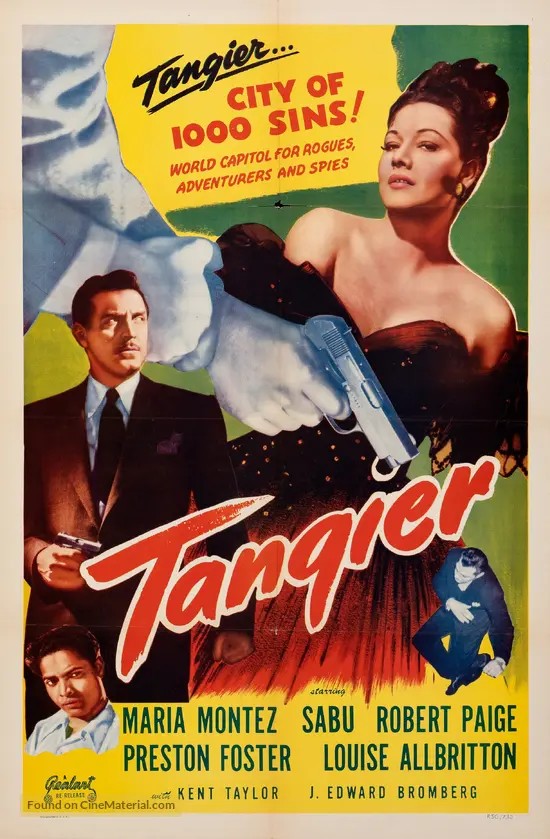
But even with that all in mind, I still think 1946 audiences would have tilted their heads at George Waggner’s Tangier, given how many elements it blatantly lifts from Michael Curtiz’s Casablanca (1942).
After all, Casablanca was a massive hit that netted Warner Brothers some major Oscar wins (including Best Picture), thereby guaranteeing it a firm place in the American pop culture zeitgeist.
The film’s success also encouraged Warner Brothers to produce several other films made in the same mold, with The Conspirators (1944) and To Have and Have Not (1944) liberally borrowing cast members and plot elements from Casablanca.
So by 1946, US movie fans were quite familiar with film noir set in exotic locales, where glamorous women and hard-nosed men fall in love while bringing down fascist sympathizers.
And Universal Pictures was definitely hoping to cash in on that formula with Tangier, resulting in a product that often looks and feels like Casablanca with the serial number filed off.
Despite being such a blatant knock-off, Tangier manages to retain some charm thanks to its strong cast, sharp dialogue, and moody visuals, which keep the film’s more derivative aspects at bay (for the most part).
That being said, the parallels between Tangier and Casablanca are nakedly obvious even from a surface reading of the plot.
In both films, the setting is a coastal Moroccan city during World War II, with most of the action revolving around a glitzy nightclub that is frequented by all the big movers and shakers in town. The “usual suspects” in Tangier are led by American journalist Paul (Robert Paige), who is on the trail of a Nazi collaborator attempting to buy his freedom using a stolen diamond. Paul’s quest eventually intersects with club dancer Rita (Maria Montez), who is on the trail of the same Nazi collaborator for personal reasons. The two eventually team up to recover the diamond and bring the secret Nazi to justice, all the while making bedroom eyes at each other.
Even someone with a cursory knowledge of Casablanca could pick up on the similarities at play here. Not only is Tangier’s setting and overriding conflict virtually the same, but the romance at the centre of the story occupies the same emotional space that Humphrey Bogart and Ingrid Bergman did in the 1942 film.

In that respect, Tangier definitely pales in comparison, with the romance between Paige and Montez feeling rushed and undercooked. Even if the two have decent chemistry, their relationship develops far too quickly, with the pair agreeing to marry after only knowing each other for a single day.
The filmmakers try to compensate for this weak romance by throwing a four-way love triangle (a love square?) into the mix, but that only serves to complicate what’s already an overstuffed plot.

Luckily, most of the sights and sounds surrounding the central romance are interesting enough to keep the rest of the film on track.
Despite not really working as a couple, Paige and Montez know exactly how to play up the film noir aspect of the story. Paige’s war reporter has a roguish Hemingway flair about him, whereas Montez is totally believable as a femme fatale whose glamour is ultimately a means to end.
The supporting cast is also a rich tapestry of character actors from Hollywood’s Golden Age, who manage to squeeze a lot of life out of what are otherwise stock noir archetypes.
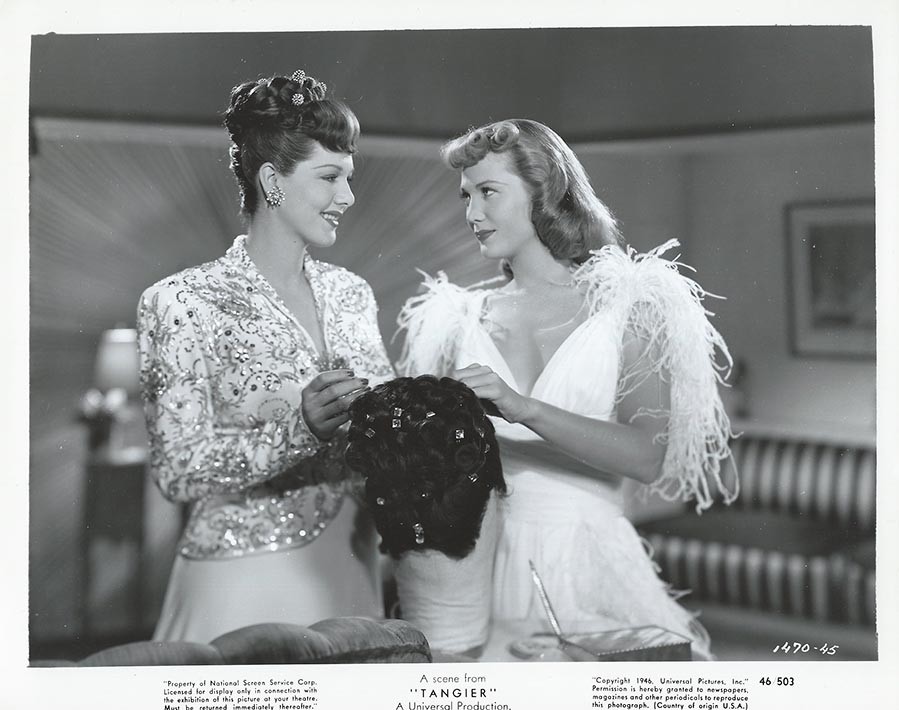
Louise Allbritton shines as a fellow club dancer who is constantly standing in Montez’s shadow, both professionally and romantically. In less talented hands, Allbritton could have come across as whiny or annoying, but she manages to hit all the right notes and make this character a genuinely tragic figure.
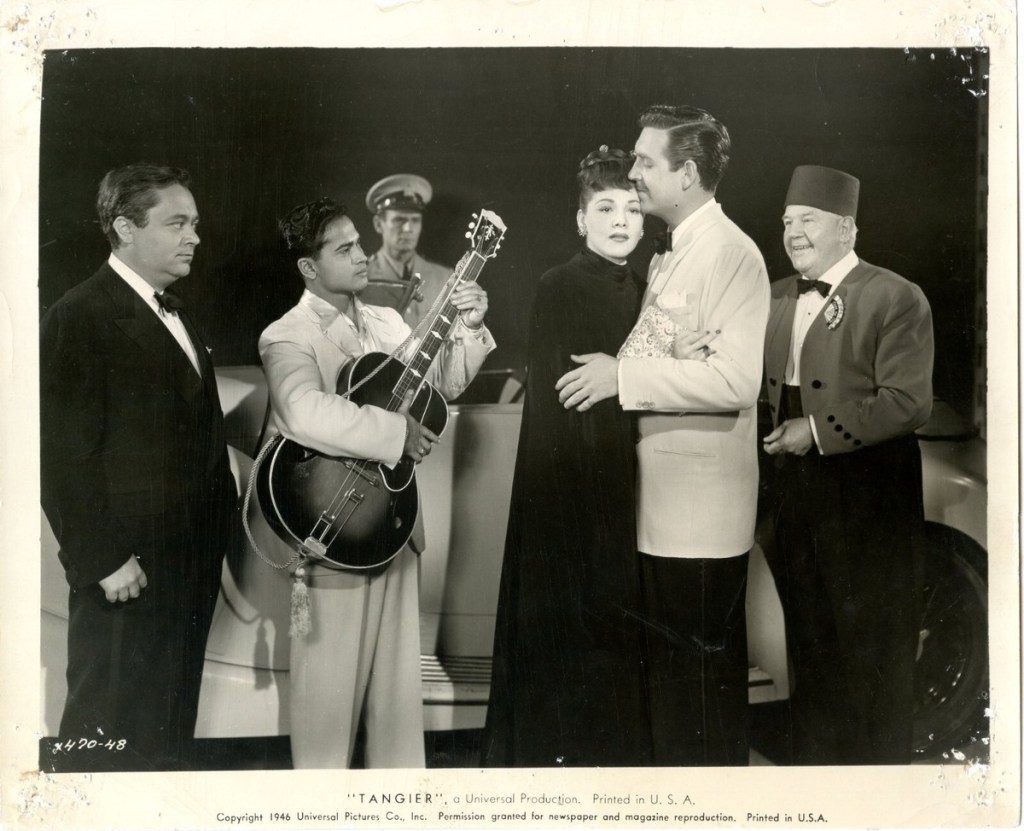
Meanwhile, Sabu is playing largely the same role that Dooley Wilson (Sam) occupied in Casablanca, namely the musical sidekick who is a confidant to the main hero. There’s definitely a lot of cultural baggage to unpack with this type of character, but, for what it’s worth, Sabu uses his natural charisma to inject some much-needed levity into the film.
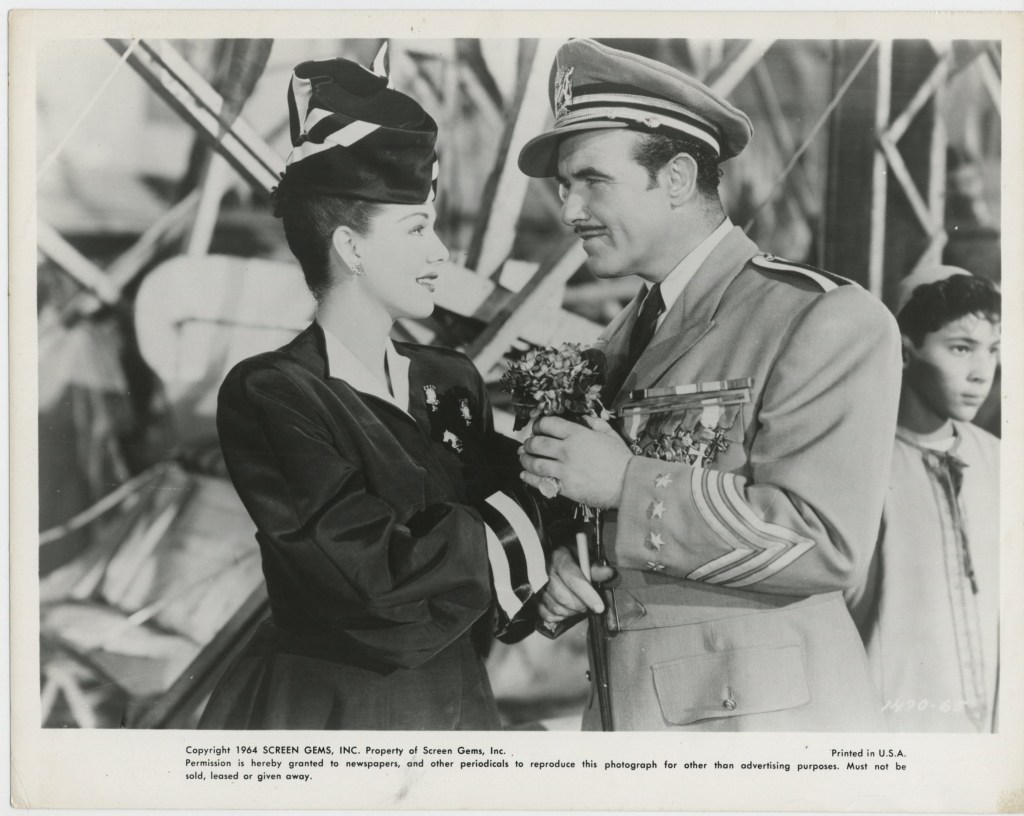
And then there’s Preston Foster as the stuffy military police colonel, who is the main obstacle standing in the heroes’ way. Again, this sounds like a generic villain role on paper, but Foster manages to imbue his character with a kind of gentlemanly poise that makes him at least fun to watch.
It also doesn’t hurt that the film’s overall production values are quite high, from the sets to the costumes to the classic film noir lighting that scratches a major itch for a certain breed of cinephile.
Like the best examples of the genre, the dramatic lighting filters through blinds, latticework, and prison bars, giving all the action a layer of texture that communicates awe and menace simultaneously.
The snappy dialogue is just the icing on the cake, with the cast effortlessly navigating through a steady stream of quips, comebacks, and double entendres that one would normally associate with an energetic stage play.
Unfortunately, some sound filmmaking around the edges can’t take away from the fact that Tangier doesn’t bring anything new or unique to the table to distinguish itself from other entries in the genre.
The Casablanca parallels really do drag everything down, with the filmmakers behind Tangier even having the gall to end their movie [SPOILERS] with the main characters escaping via an airfield. Where on Earth did they get that idea?
But beyond that, there’s a general sense that the filmmakers are running on autopilot, relying on the talented cast and crew to bail out what’s ultimately an unremarkable script.
Even the casting department didn’t think too deeply about who best to inhabit these characters. This film is inundated with far too many male actors with slicked back hair and pencil-thin mustaches, making it hard to tell who’s who for the first 20 minutes or so.
Still, if you have no knowledge of the films Tangier is cribbing notes from, it’s a fairly entertaining watch. Nothing life-changing of course, but it taps into an appealing vibe and aesthetic that is impossible to deny.
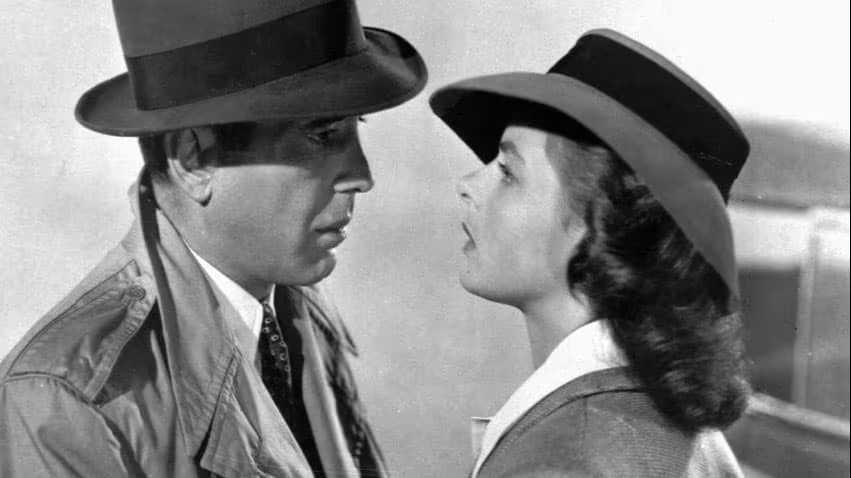
Plus, it’s difficult to be too harsh on a movie that takes inspiration from one of the most influential films of all time. Casablanca left a massive impact on the entertainment industry following its release, so much so that specific clips from that film are still being used as visual shorthand for what classic Hollywood romance is supposed to look like on screen.
So it’s only natural for that influence to worm its way into a bunch of other projects, whether the filmmakers are aware of that or not.
In the case of Tangier, I’m pretty sure Waggner and his writers knew exactly what they were doing, since there are too many glaring similarities between the two films to ignore.
The end result is like watching a really talented cover band play through all your favourite hits; sure, you appreciate the craft and skill on display, but can’t escape that sinking feeling that a genuine creative spark is missing.
Verdict:
6/10
Corner store companion:
Compliments macaroni and cheese (because it’s a cheap alternative to the real thing, but it still gets the job done)

Fun facts:
–Release date: June 6, 1946
-Tangier was one of the last films to be released under the “Universal Pictures” banner before the studio merged with International Pictures and was reorganized as “Universal-International” in July 1946.
-Following the release of Tangier, Maria Montez would only appear in nine other films before suffering a heart attack and drowning in her bathtub on Sept. 7, 1951. She was 39 years old.
-Leading man Robert Paige later became a TV newscaster in the 1960s, reporting out of Los Angeles for ABC News.
-After a multi-decade career in the film business, George Waggner transitioned to working in television in the 1960s, directing episodes of Batman, The Green Hornet, and The Man from U.N.C.L.E.
 Corner Store Cinema