Message in a Bottle (1999) review- missing that crucial spark

When it comes to film criticism, I always try to take my professional life out of the equation, especially when a movie decides to mimic the world I inhabit as reporter.

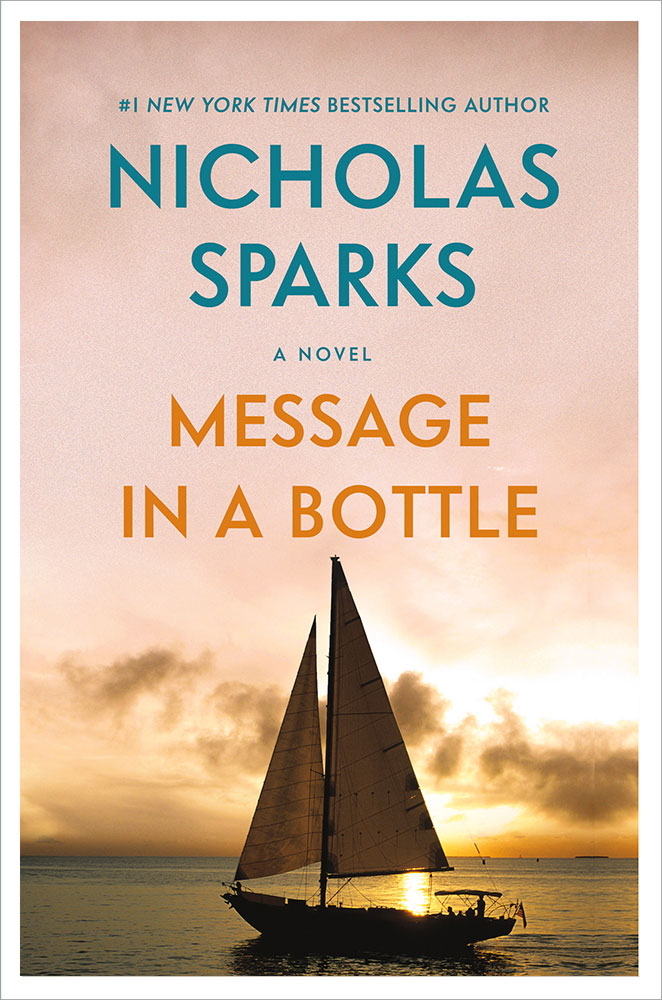
But Luis Mandoki’s Message in a Bottle (1999), based on a novel by Nicholas Sparks, contains such a flagrant example of journalistic malpractice from the main character that I couldn’t help but roll my eyes at what’s otherwise a pretty enjoyable romantic drama.

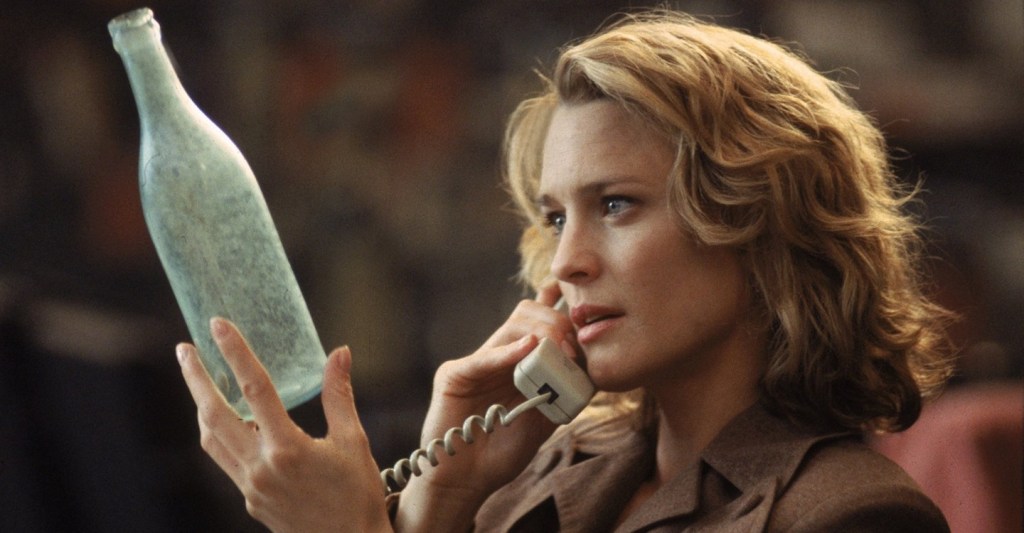
The film stars Robin Wright as Theresa Osbourne, a researcher for the Chicago Tribune who conducts a nation-wide search for a mystery man after one of his love letters (contained in a bottle, naturally) washes up on the shore of a nearby beach.

Theresa’s search eventually leads her to a sleepy sea-side town in North Carolina, where she comes face-to-face with the author himself: a soft-spoken widower played by Kevin Costner.

Even though Theresa was sent there to gather information on the man (Garrett) and his tragic love story, she neglects to disclose the real reason for her visit, not wanting to spoil the mutual attraction that’s growing between them.

Now, there’s a lot wrong with this set-up on multiple levels.

In terms of journalistic ethics, Theresa failing to divulge her true assignment to Garrett from the get-go is incredibly sketchy, since she’s gathering sensitive details about a man’s dead wife under false pretenses.   

This approach might have made sense if the character worked for a scuzzy tabloid newspaper that is completely devoid of editorial scruples.

But in the real world, even the gutter trash “reporters” that work for TMZ announce who they are when they harass celebrities at the airport, so I don’t know why Sparks and screenwriter Gerald Di Pego decided to portray the Chicago Tribune staff in such a negative light (intentionally or not).

On a writing level, this deceitful action also drags down Wright’s otherwise solid lead performance as Theresa, who is meant to be this kind, empathetic figure but just comes across as being manipulative.

No matter how many times she shares a cute moment with Garrett or even his crusty father Dodge (played by Paul Newman), I couldn’t get invested in these relationships since they are built on a foundation of lies.

Of course, it’s obvious why they decided to include this plot element in the story: to build tension.

Theresa’s deception serves as a kind of Sword of Damocles for the narrative, something that hangs over the central romance and threatens to destroy it at any second.

And while every good love story needs tangible conflict beyond a “will they, won’t they?” dynamic, a seemingly good-hearted person lying to a grieving widower by omission seems like the laziest possible way to inject that sort of speed bump into the plot.

In my view, Message in a Bottle (1999) would be vastly improved if Theresa simply revealed her intentions to Garrett from the outset.

Not only is this approach more consistent with how the character is written, but it also provides a much more interesting avenue for conflict, where she gradually has to win Garrett’s trust as both a reporter and romantic partner throughout the course of the story.

I know my fixation on this one plot point is a little over-the-top, but that’s only because it drags down a movie that I really wanted to like.

After all, this is my first time indulging in a Nicholas Sparks story, and it’s easy to see why his specific slice of romantic fiction has spawned such a vast media empire on the printed page and silver screen.

For one thing, the film’s cinematography is consistently gorgeous, with Oscar-nominated DP Caleb Deschanel doing an expert job of capturing the beauty of costal America that Sparks loves to write about.

Some lingering shots of sailboats and crashing ocean waves might wander into the territory of scenery porn, but that at least has some relevance to the plot, reinforcing Theresa’s desire to abandon her life in the big city to live with Garrett.

This idyllic, small-town atmosphere is made even more appealing thanks to a really strong supporting cast, who come across as the exact kind of people you would want to chat up after checking into a bed and breakfast.

Paul Newman really shines in this capacity, with his character’s salt-of-the-earth wisdom and sassy comebacks leading to some of the film’s best moments.

Plus, the movie’s soundtrack features a bevy of easy-listening icons like Faith Hill, Sheryl Crow and Sarah McLachlan, which compliments this laid-back aesthetic in a very meaningful way.

Of course, Message in a Bottle has a couple other things holding it back aside from a single questionable writing decision at its core.

For one thing, the film’s runtime clocks in at over two hours, which is way too long for this kind of movie and it really kills the momentum in the third act.

You’ll also notice that I haven’t commented on Costner’s qualities as a romantic lead up until this point, and that’s because he barely registers as a presence on screen.

I understand that it’s difficult to squeeze a compelling performance out of a character who is meant to emotionally withdrawn, but Costner never really manages to get himself out of first gear, even when he’s asked to deliver a passionate monologue later on in the movie.

It’s almost like he suffers from the reverse problem of his co-star (Wright), since Costner’s wooden acting doesn’t compliment some admittedly solid character writing from Sparks and Di Pego.

Unfortunately, these two incomplete characters don’t coalesce into a compelling whole, which is a big problem when your romantic leads are the movie’s biggest selling point.  

Despite this film’s mixed quality, it still hasn’t discouraged me from watching the remaining four entries in my “5 Film Collection: Nicholas Sparks” DVD set.

Clearly the author has tapped into a formula that resonates with a lot of people—having sold over 115 million copies of his books worldwide—and I’m curious to see if the more appealing qualities of Message in a Bottle (1999) are way more prevalent in future film adaptations.

But hopefully this story marks the last time Sparks dips his toes into writing about the world of journalism, since he’s clearly out of his depth when it comes to this subject.  

Verdict:

5/10

Corner store companion:

Sensations Cracker Assortment (because this is possible one of the whitest movies I’ve ever seen)

Fun facts:

-Release date: Feb. 12, 1999

-Budget: $80,000 (estimated)

-Box Office Gross: $52,880,016 (domestic), $118,880, 016 (international)

Message in a Bottle is the first of 11 total Nicholas Sparks film adaptations. Altogether, these movies have grossed a combined $ 889,615,166 worldwide. 

-While all of Sparks’ films manage to turn a profit, none of them are critical darlings. Out of all 11 movies, The Notebook has come the closest to achieving a “fresh” rating on Rotten Tomatoes at 53 per cent.

-Sparks originally published Message in a Bottle back in 1998. It was his second official novel after The Notebook in 1994.

-Sparks’ most recent written work, The Return, was released back in September of this year, which marked his 21st published novel. He’s also written two non-fiction books.

-Kevin Costner was nominated for a Golden Raspberry Award (Worst Actor) in 2000 for his performance in both Message in a Bottle and For The Love of the Game.

-Musical highlight: “Carolina” by Sheryl Crow (plays over the end credits)

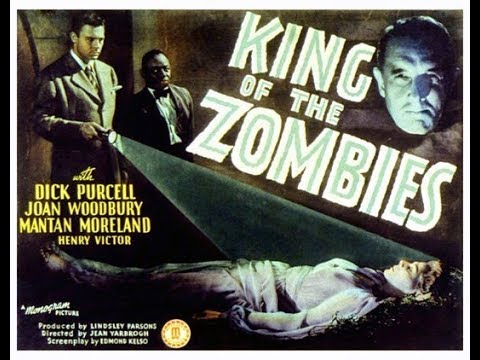
King of the Zombies (1941) review-possibly the worst Oscar contender of all time

To properly gauge the Academy of Motion Picture Arts and Sciences’ historic distain for the horror genre, one need only consider the curious case of Jean Yarbrough’s King of the Zombies (1941).

As it stands, this low-budget film is, according to IMDB, the only zombie-related property to ever be nominated for an Oscar, with Edward Kay getting the nod for Best Original Score for a Dramatic Picture.

Now, there’s a lot wrong with that scenario, the most obvious gripe being the fact that King of the Zombies actually bills itself as a comedy and features truly forgettable music.

But the bigger problem emerges once you realize how bad this 1941 shit-fest actually is in comparison to all the other great horror cinema that came along after it, only a small fraction of which got any attention from the Academy Awards.

The plot of King of the Zombies, if you can call it that, revolves around three travellers (a pilot, a passenger and his manservant) who crash land on a mysterious Caribbean island that’s inhabited by a mad scientist.

After a lot of haunted house hijinks transpire, the trio eventually discover that their host has enslaved the native population and turned them into mindless zombies, hoping to use their voodoo magic to extract military secrets from a captured US Admiral.

As zany and madcap as that plot recap sounds, it’s incredible how dull and devoid of life (pun intended) King of the Zombies actually is for most of its runtime.

Most scenes just involve the film’s principle characters standing in the middle a static shot and spouting off one-liners, like they are rehearsing for a high school play.

Even when zombies finally enter the picture, at least two out of three leads treat this situation way too casually and do a really poor job of conveying the fact that anything remotely supernatural is happening.

The filmmakers also put next to no effort into establishing a macabre or spooky atmosphere, as most of the props and sets seem like they were recycled from a patchwork of other, better movies.

Of course, as I’ve mentioned in the past, most of these cinematic shortcomings can be forgiven if a comedy manages to bring the laughs on a consistent basis.

Unfortunately, King of the Zombies only has one big comedic trump card in the form of Mantan Moreland, who plays the befuddled manservant Jeff.

On one hand, Moreland is the most endearing character in the movie, since he reacts appropriately to the existence of shambling corpses, as opposed to his fellow co-stars who might as well be replaced with cardboard cutouts.

The actor also manages to score some of the movie’s only genuine laughs through his natural comedic timing, something that he probably developed through years of performing vaudeville.

But it’s impossible to talk about Moreland’s performance without tackling the style of comedy that he employs, which is heavily influenced by southern minstrel shows.

Now, I don’t usually like to bash older movies for containing elements that [inset current year] audiences might find distasteful. But when it comes to King of the Zombies, the filmmakers’ over reliance on Moreland’s bugged-out eyes and dull-witted enunciation gets old quickly, especially when you realize that the movie has nothing else to offer in terms of comedy.

It also doesn’t help that Moreland’s Jeff is constantly put in a position to try and convince the other characters that they are in danger, even though his concerns are regularly swatted away like he is an over-imaginative child.

Racial stereotypes aside, the biggest acting sin on display in King of the Zombies actually belongs to Henry Victor, who plays the mad scientist Dr. Miklos Sangre.

Reportedly, Victor was a last-minute replacement for a role that was designed for two other actors and it really shows.

Outside of being of horribly miscast as a villain, Victor also can’t seem to remember his lines half the time, resulting in a bunch of awkward scenes that should have been relegated to a blooper reel.

Even though the film’s two remaining leads (Dick Purcell and John Archer) can at least deliver their dialogue confidently, the pair still have very little personality or charisma to speak of.

This leaves Moreland to carry the entire movie on his back almost single-handedly, even though its screenwriter (and broader society at the time) didn’t view him as anything more than a cheap comedy sidekick.

As a result, King of the Zombies’ biggest failing, outside of its piss-poor production values, is the fact that it doesn’t provide the audience with any emotional weight to anchor all of the supernatural shenanigans.

And it’s not like this is a tough formula to crack. Around that same time, actors like Bob Hope, Bud Abbott and Lou Costello found a lot of success mixing comedy and horror through projects like The Ghost Breakers (1940) and Abbott and Costello Meet Frankenstein (1948).

But King of the Zombies probably didn’t have a hope of being good at its conception, since it was produced by Monogram Pictures.

Unlike Universal Studios or any other big-time operation in Hollywood, Monogram employed a “fast and dirty” approach to film production that emphasized speed over quality, resulting in movies that managed to turn a profit despite not getting a lot of attention from critics.

But even with this reputation, King of the Zombies still managed to snag a historic Oscar nomination in 1941, which is either the result of an insider bet gone wrong or someone working at Monogram knowing how to play the system.

Either way, this movie remains an interesting footnote in the Academy Awards’ storied history, serving as a small exception to the organization’s traditional disdain for horror filmmaking.

It’s just a shame that such a historically significant film is the cinematic equivalent of watching paint dry.  

Verdict:

2/10

Corner store companion:

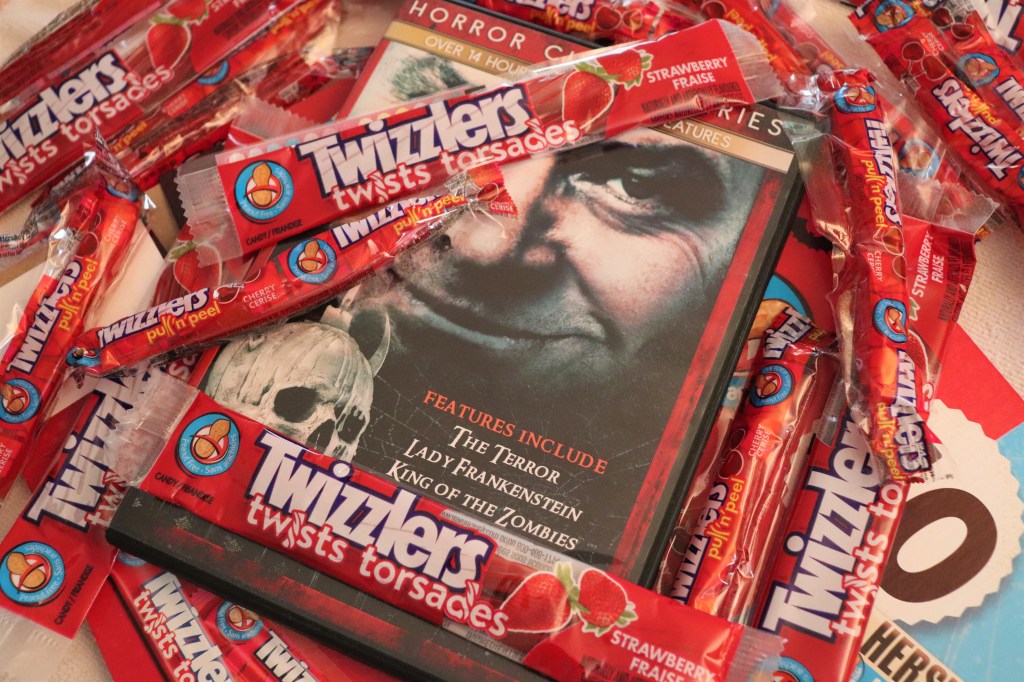
Twizzlers (because you deserve to enjoy something tasty while watching this dreck)

Fun facts:

-Release date: May 14, 1941

King of the Zombies ultimately did not take home the Oscar for Best Original Score for a Dramatic Picture at the 1942 Academy Awards. That honour went to Bernard Herrmann for his work on All That Money Can Buy.

-Both Bela Lugosi and Peter Lorre were considered for the role of the film’s mad scientist, but a deal could not be reached in time for either actor.

-While horror movies routinely get snubbed at the Academy Awards, some films have managed to break through that barrier and actually bring home a gold statue. These movies include: Rosemary’s Baby (Best Supporting Actress-Ruth Gordon), The Exorcist (Best Adapted Screenplay, Best Sound), The Omen (Best Original Music), Misery (Best Actress-Kathy Bates), Black Swan (Best Actress-Natalie Portman), Get Out (Best Original Screenplay) and Silence of the Lambs (Best Picture, Best Director, Best Adapted Screenplay, Best Actor-Anthony Hopkins and Best Actress-Jodie Foster).

-Monogram Pictures operated in Hollywood from 1931 to 1953 before transitioning to the name Allied Artists Pictures Corporation. Monogram/Allied ultimately filed for bankruptcy and dissolved in 1979.

– Mantan Moreland reprised his role as Jeff in the film’s sequel Revenge of the Zombies, which was released in 1943.

King of the Zombies is currently in the public domain and can be watched in its entirety on YouTube.

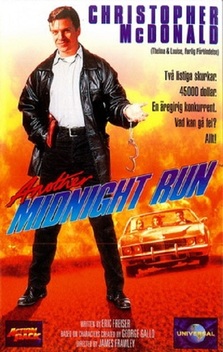
Another Midnight Run (1994) review-Flagrant false advertising

You ever buy some frozen food based solely on the strength of the brand name or box art, and it turns out to be some bland, goopy piece of shit? That is what’s it’s like watching Another Midnight Run.

FrozenFood(1)

This made-for-TV movie bills itself as an continuation of the original Midnight Run, a 1988 action-comedy that gained a lot of traction from critics at the time thanks to its potent mix of exciting car chases and sharp dialogue.

It also didn’t hurt that this original project starred Robert De Niro, who injected street-smart bounty hunter Jack Walsh with a lot of edge and gravitas, qualities that would have been neglected by a lesser actor.

However, pretty much all of those elements are missing from this 1994 pseudo-sequel, which retains the names of some of the principle characters from the 1988 original but none of its charm.

That being said, the film does at least mimic the basic structure of its predecessor, since it finds Walsh being hired by a bail bondsman (again) to transport a pair of criminals from San Francisco to Los Angeles.

Of course, Walsh’s captors (married con artists played by Jeffrey Tambor and Cathy Moriarty) are always trying to give him the slip every step of the way and go into business for themselves.

But after that promising set-up, it doesn’t take long before the filmmakers reveal that they don’t have any new ideas and are content with poorly rehashing old elements from the original film.

Strike one against Another Midnight Run is the fact that they replaced Robert De Niro with Christopher McDonald in the role of Jack Walsh.

No offense to the future Shooter McGavin, but he leans way too much on buffoonish comedy to play a convincing world-weary bounty hunter and comes across like he’s playing a parody version of the character on Saturday Night Live.

Shooter(1)

It also doesn’t help that the screenwriter makes him out to be a complete idiot, who is constantly outsmarted by his captors.

Sure, De Niro’s Jack Walsh was a screw-up as well, but he at least displayed a basic level of competence and quick thinking that helped him get out of sticky situations.

In Another Midnight Run, McDonald can barely tie his shoes without fucking up, let alone keep a pair of career con artists in check.

At one point, the married couple successfully distract their captor by convincing him that a nearby bar patron is giving him the bedroom eyes, which he completely falls for like horny 14-year old.

And without a likable protagonist to anchor the narrative, or any supporting performances on par with Charles Grodin from the 1988 original, the rest of the movie completely falls apart.

Strike two against the film is that it’s hampered by a restrictive TV budget, which means it can’t come close to replicating the intricately staged action sequences that made the original film so memorable.

All Another Midnight Run can offer up in terms of excitement are scenes of McDonald falling into some trash cans or mildly jogging through an airport.

While this downgrade is to be expected when a property makes the transition from film to television, Another Midnight Run doesn’t even have a good script or likable characters to fall back on.

All it can provide in exchange is lame comedy and annoying characters that you wish would just drive off a cliff so the movie could end.

The third and final strike that sends Another Midnight Run back to the figurative dugout is that it comes across as being a big pile of wasted potential.

A motivated director and screenwriter could have used this opportunity to think outside the box and expand on the Jack Walsh character.

Maybe they could have explored his past as a police officer in Chicago or shown us his first stint as a bounty hunter after resigning from the force. You know, typical origin story type stuff that people can’t get enough of.

Instead, the filmmakers decided to play it safe and replicate the basic structure of the original, albeit without any of sharp wit or fun that made it so successful six years ago.

I know most of this rundown is just me bitching about how this made-for-TV sequel pales in comparison to the original film, but the filmmakers definitely invite this criticism.

The only reason Universal greenlit this project in the first place (as well as the two other made-for-TV sequels released in the same year) is because they wanted to cash in on a recognizable name that was still worth something in the mid-90s.

AnotherMidnightRunPoster(1)

But rather than putting in the work to remind people why this property was valuable in the first place, all they did was slap the name Midnight Run onto an otherwise generic, low-energy road trip comedy and hope that nobody notices the difference.

And while the film did manage to siphon a couple chuckles out of me here and there, I still couldn’t shake the feeling that I was being grifted by the same kind of con artists and trickster characters that make up two-thirds of the cast.

Verdict:

3/10

Corner store companion:

Blue Water Seafoods’ Pacific Pink Salmon (because it promises quality but delivers a sub-standard product instead)

IMG_6624

Fun facts:

-Original air date: Feb. 6, 1994.

Another Midnight Run was followed be another two made-for-TV sequels in the same year: Midnight Runaround and Midnight Run For Your Life. All three films were produced for Universal Television’s “Action Pack” block that aired from 1994 to 2001.

-While the “Action Pack” line produced a lot of duds, like Knight Rider 2020 and Cleopatra 2525, Universal also debuted some landmark 90s television under this umbrella. Not only did they introduce the world to Kevin Sorbo’s Hercules through a series of TV movies, but the spin-off Xena: Warrior Princess proved to be even more popular and still has a cult following to this day.

One False Move (1992) review- It sounded better on paper

After suffering through trash like You Got Served, I was pretty excited to pop in Carl Franklin’s One False Move.

Not only is this gritty crime drama a radical departure from anything I’ve looked at so far, but the behind-the-scenes details relating to its production and release is a real heartwarming underdog story that will reaffirm your faith in the power of independent filmmaking.

Shot on a shoe-string budget of $2.3 million and helmed by a then amateur director, One False Move was originally set to go straight-to-video. However, strong word of mouth from critics helped it get a limited theatrical release and strong circulation on that year’s awards circuit.

Legendary film critics Gene Siskel and Roger Ebert were some of the film’s biggest cheerleaders throughout this whole process, with the latter praising Franklin’s “powerful” directing and the “extraordinary” screenplay from star Billy Bob Thornton and his writing partner Tom Epperson.

Siskel and Ebert would even go on to name One False Move their first and second favourite movie of 1992, respectively. To put that in perspective, next year both critics would give their number one spot to Steven Spielberg’s Schindler’s List.

I mention all of this inside baseball malarkey up front because, unfortunately, it’s a lot more compelling than the actual film itself.

Now don’t get me wrong, One False Move isn’t a bad movie. In fact, there are quite a few things to like about it (especially given its humble roots). But nothing about this film really grabbed me on a visceral level.

And I hate to sound like a smug contrarian, but I couldn’t help but feel that I was watching a standard episode of a 90s cop show stretched out to two hours (albeit with a little more hardcore violence and profanity).

Part of my problem has to do with how the film is structured, since the runtime is divvied up into two parallel plotlines.

One story features a trio of criminals (Billy Bob Thornton, Cynda Williams and Michael Beach) who are on the run from the law after committing a horrific drug robbery in Los Angeles that resulted in multiple homicides.

The second story follows the two detectives (Jim Metzler, Earl Billings) tasked with tracking down these outlaws, who are eventually drawn to one of the suspect’s old stomping grounds in Star City, Arkansas. There, they team up with a local police chief (Bill Paxton), whose boy-scout attitude clashes with big city cops’ approach to law enforcement.

Now, taken as two separate stories, both plots feature plenty of tension, snappy dialog and nuanced performances from the entire cast.

Special mention goes out to Michael Beach, who plays the quiet psychopath “Pluto” with a complex level of menace that really got under my skin.

However, much of the film’s dramatic impact is supposed to come from the interaction between the cops and the criminals and the two groups barely spend any screen time together.

This is especially true for Bill Paxton’s police chief, whose shared history with one of the criminals is a key part of the movie, since it gradually peels away his benevolent façade and reveals a more sinister side of his personality.

BillPaxton

Sounds interesting, right? Well, to bad, because this element is only squeezed into the last 20 minutes, which doesn’t give it any room to breathe.

These shortcoming aren’t helped by flat direction, poor editing in spots and a dated score which relies heavily on harmonicas and what I like to call “90s sax.”

Some might view this criticism as a little harsh, especially considering that One False Move marks Carl Franklin’s first big film project after spending most of his career acting on TV and directing low budget schlock for producer Roger Corman.

But now that we live in film industry that’s filled with dazzling first-time directors like Jordan Peele (Get Out) and Greta Gerwig (Lady Bird), it’s really hard to go back and pass off a simply “passable” job as something that is “brilliant.”

Again, I don’t get any joy in dumping on a small production like this, especially since, from what I could gather, every member of the cast and crew had their hearts in the right place while making it.

Sadly, good intentions alone aren’t enough to convince me that this movie is some kind of hidden gem. The various moving parts on display just don’t end up coalescing as a whole, which left me feeling like the movie ended 10−15 minutes before its story was complete.

But be sure to take my criticism with a golf ball sized grain of salt, since pretty much every professional movie critic under the sun disagrees with me.

Besides, who am I to second-guess the benevolent wisdom of the great Siskel and Ebert?

SiskelAndEbert(2)

Verdict:

5/10

Corner store companion:

Lay’s Ketchup Chips (because it’s not for me, but I can understand why other people like it).

IMG_8351

Fun facts:

-Release date: May 8, 1992

-Budget: $2.3 million

-Box office gross: $1.5 million (estimated)

-Despite my reservations about his early work, director Carl Franklin took home a number of accolades from his peers during the 1992−93 film awards circuit, including “Best Director” at the 1993 Independent Spirit Awards and the “New Generation Award” at the Los Angeles Film Critics Association Awards.

-Two decades later, Franklin managed to carve out an impressive directing career for himself after his initial success in the 1990s. Today, he’s managed to generate steady work for himself on a lot of hit TV shows, sporting directing credits for: Homeland, Bloodline, 13 Reasons Why, and, most recently, Mindhunter. He was even nominated for a Primetime Emmy after helming “Chapter 14” from House of Cards (you know, the episode with the subway).

-This film marks Billy Bod Thornton’s first film writing credit, which would earn him a nomination for “Best Screenplay” at the 1993 Independent Spirit Awards. Thornton would eventually walk way with that prize in 1997 thanks to his screenplay for Sling Blade.

-Co-stars Cynda Williams and Billy Bob Thornton got married shortly after filming on One False Move wrapped. They were divorced before the film was released two years later.