Logan’s War: Bound by Honor (1998) review-one epic drop kick can’t save this movie

Writing about an actor or filmmaker’s work shortly after their death is always a dicey exercise.

On one hand, if the film is good, you can use it as a stepping stone to wax poetic on their entire career. I got that opportunity earlier this year through reviewing The Story of Us (1999), which I found to be quite enjoyable and emblematic of director Rob Reiner’s broader filmography.

However, if the movie is bad, you run the risk of coming across as a callous engagement farmer who is dancing on someone’s grave for clicks. This puts me in an awkward position having recently watched Logan’s War: Bound by Honor (1998), a made-for-TV movie starring recently deceased action star Chuck Norris.

Because the movie IS bad (no doubt about it), so how do I thread that needle without sounding like a brazen opportunist?

But I soon realized that even the most diehard Norris fans (I’m talking about the people who enjoy his work unironically, outside of all the internet memes), would probably admit that Logan’s War is not his best.  

It marks a time when Norris had all but given up his role as a theatrical leading man and he was more than willing to rest on his laurels as a mainstay of scripted CBS programming.

Plus, despite getting top billing, Norris barely appears in this movie and only dishes out his trademark martial arts ass whoopings in the last five minutes.

So, I think trashing Logan’s War is a pretty safe prospect, given that it barely registers as a Norris vehicle at all and just comes across as some cheap movie-of-the-week that’s meant to be played in the background at a West Texas retirement home.

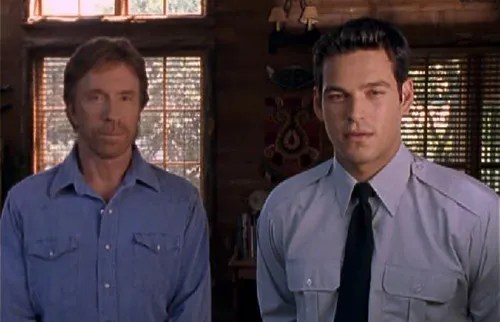
In terms of screentime, the real star of this film is the titular Logan (Eddie Cibrian), who’s orphaned as a young boy after his entire family is murdered by the mob.

After being taken in by his uncle Jake (Norris), Logan vows revenge and is trained in martial arts, eventually using these skills to become an Army Ranger.

But government-sanctioned bloodshed can only satisfy Logan for so long, and he eventually leaves the military to set his sights on finally killing mobsters who wronged him as a child.
From this synopsis, you’ve no doubt noticed that this movie covers a lot of ground, so much so that you’re probably wondering how the filmmakers elegantly squeeze all these story beats into a svelte 95-minute runtime.

Well, the short answer is: they don’t.

Instead, the movie just kind of arbitrarily switches genres every 30 minutes or so. It starts out as a coming-of-age story before transitioning into a military action film, leaving just enough room at the end for an urban revenge thriller to take over at the end.

This means that barely any time is dedicated to letting these disparate elements marinate, with all plot and character development flying by at lightning speed.

The cast member who suffers the most from this relentless pacing is Brendon Ryan Barrett, who plays Logan at 10 years old. Despite being saddled with some pretty heavy material (mourning the brutal murder of his parents and baby sister), Barrett manages to navigate these complex emotions with remarkable poise despite his age.

But just as we’re getting used to following this kid’s emotional journey, the film transitions to Cibrian as adult Logan, and all the groundwork that Barrett laid is thrown out the window.

It’s not that Cibrian is bad or anything, but the script basically doesn’t give him the opportunity to emote past the cool, stoic professionalism one normally associates with action heroes from the 1980s and 90s.  

As for Norris, he’s such a non-entity in this film that he might as well not be there.

While he’s definitely up to the task of leading a grizzled pep talk or patriotic training montage, he doesn’t have the acting chops to anchor all the scenes in between. He showcases maybe two or three different facial expressions throughout the entire film, and his voice rarely rises above a dull monotone.

And then, he disappears for a 30-minute stretch in the middle of the film, like he couldn’t even be bothered to star in his own movie.

As a result, Logan’s War comes across as low effort and half-baked most of the time, even for a TV movie from this decade.

Outside of all the cheap production tricks (stock sound effects, digital zooms, flat lighting, etc.), the film’s writers can’t even commit to their zanier ideas.

Early in the story, it’s revealed that Logan possesses a supernatural ability called a “proximity sense.” It’s essentially a bootleg “Spidey Sense” or a watered-down version of “the Shining,” where Logan receives a vision of the future that warns him of incoming danger.

Is introducing psychic superpowers into a grounded action drama incredibly dumb and creatively bankrupt? Sure. But at least this reveal caught my attention and made me wonder how they’re going to incorporate this element into the film’s myriad fight scenes.

Unfortunately, the scriptwriters (which includes Norris and his brother Aaron) either got bored of Logan’s “proximity sense” or just plain forgot about it, since it doesn’t factor into the last third the movie.

I’m just saying, Logan could have definitely used these superpowers in the film’s climax, where he takes on an entire mansion full of armed mobsters.

The only reason he doesn’t perish during this assault is thanks to a last-minute save from Norris, who shows up despite not knowing about his nephew’s plan ahead of time.

At the very least, this nonsensical plot development leads to the movie’s best (and funniest) moment, where a 58-year-old Norris takes out the main villain by drop kicking him through a car windshield.

Now, clips like this might give you the impression that the action choreography in Logan’s War is consistently crazy and off-the-wall. However, the reality is that most of the fight scenes are pretty bog standard and not that different from what you would find in an average episode of Walker, Texas Ranger.

Norris’ stunt team is obviously very talented, but there’s nothing really going on behind the camera to enhance all the punches, kicks, and grapples.

In fact, some of the production decisions actively take away from the action, such as the filmmakers’ annoying tendency to inject slow motion into a lot of the fight scenes.

This makes a lot of the action choreography appear slow and stagey, like the cast is performing a martial arts demo for a crowd at Six Flags.  

There are occasional flourishes of interesting action outside of Norris’ hilarious windshield kick, like when Cibrian takes out two mobsters by firing his Desert Eagle while hanging upside down in a broom closet.

But those moments are few and far between, which is a major problem when seeing Norris and his acolytes beat up bad guys is the only reason you’d watch one of these movies in the first place.

Instead, all you’re left with is something that looks and feels like an extended TV pilot that never got picked up for a full slate of episodes.

This kind of half-hearted approach to filmmaking is emblematic of the rest of Norris’ career.

Heading into the 21st century, he would eventually move away from full-time acting altogether, using his status as an elder statesman of cheesy action schlock to star in Polish bank commercials and book cameos as himself in other movies.

Today’s younger film fans will probably only recognize Norris as this parody version of himself, alongside his public opposition to gay marriage, signal boasting of Barack Obama birtherism conspiracy theories, and repeated endorsement of a country that’s currently committing a horrific genocide in the Middle East.

So while Logan’s War is a pretty forgettable film overall, it could be seen as a tipping point where Norris decided to just cash in on past glories and fully commit himself to bad politics.

That being said, his legacy hasn’t been etched in stone quite yet, since we’re only a couple months removed from his death at the age of 86.

And even though we won’t know what future generations will think of Norris’ career and public persona, I’m fairly certain that Logan’s War won’t be remembered fondly … outside of that climactic dropkick of course. That shit is evergreen.

Let’s watch it again, shall we …

Verdict:

4/10

Corner store companion:

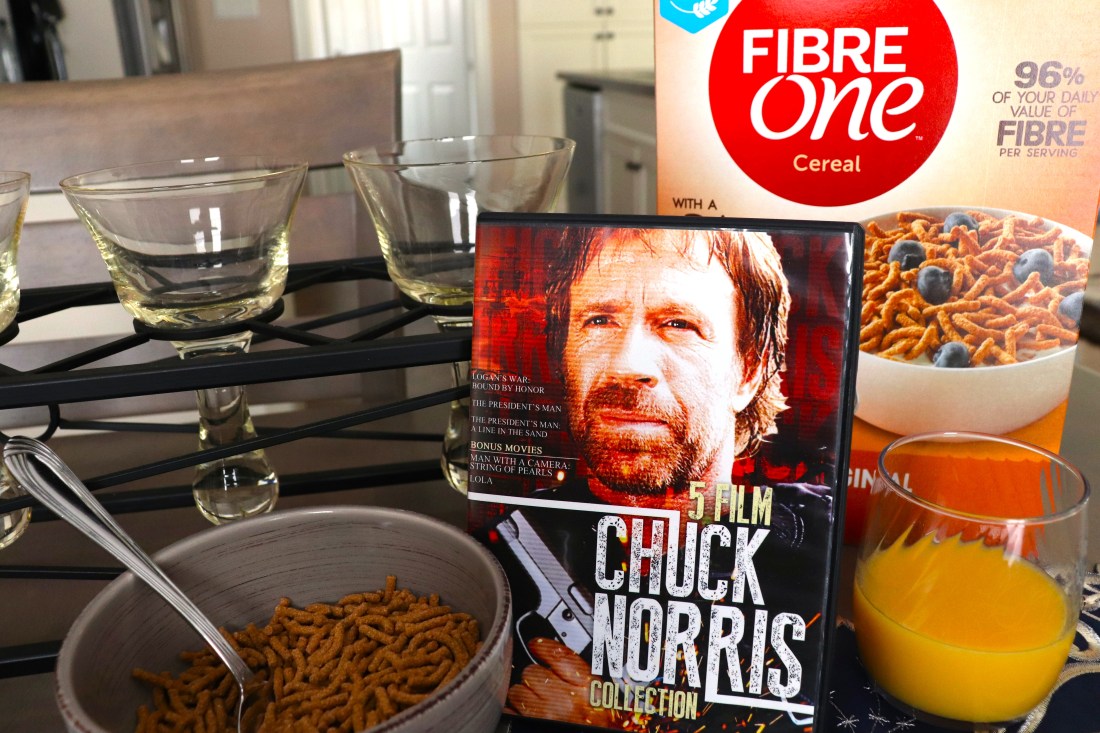
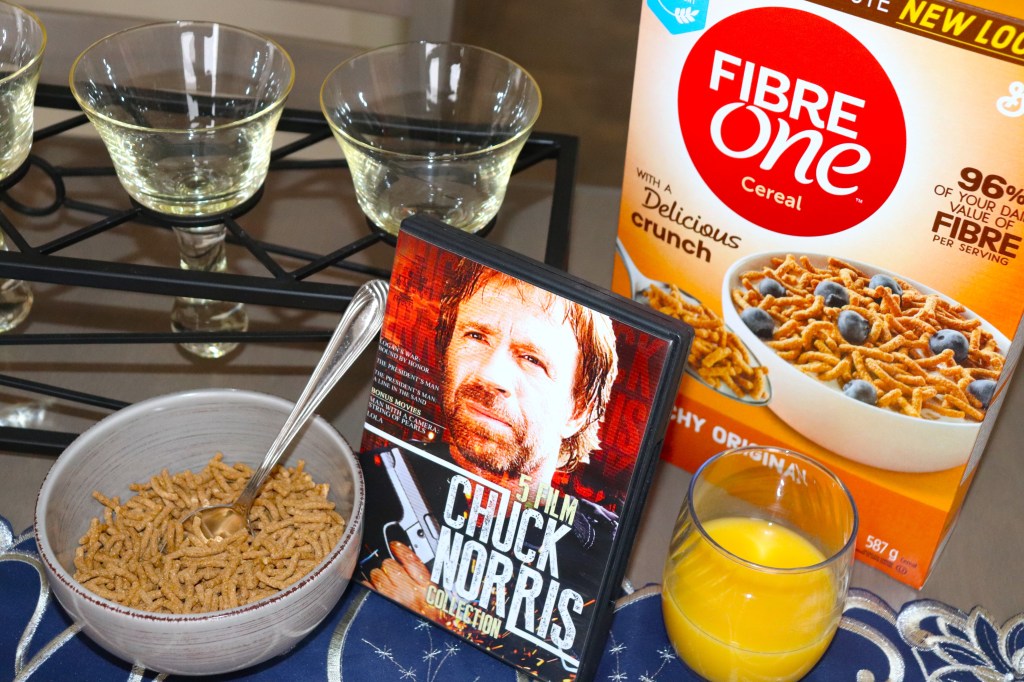
Fibre One Cereal (because if you’re watching a Chuck Norris film in 2026, chances are you need more fibre in your diet)
Fun facts:

-Air date: Nov. 1, 1998

-Logan’s War was created under Norris Brothers Entertainment, a production company run by Norris and his brother Aaron. NBE is also responsible for producing the later seasons of Walker, Texas Ranger and other TV movies starring Norris such as The President’s Man (2000).

-Norris will appear in at least one more film following his death in March. According to IMDB, he has a supporting role in the horror comedy Zombie Plane (starring Vanilla Ice), which is scheduled for a late 2026 release.

Logan’s War: Bound by Honor can be watched in its entirety online through the official Samuel Goldwyn Films YouTube channel.

Battle Creek Brawl (1980) review: rough-around-the-edges charm

A universal rule of life is that you only get one shot at making a good first impression, and that fact extends to big time celebrities as well.

Movie studio execs almost certainly had this maxim in mind during the production of Battle Creek Brawl (1980), since it marked Jackie Chan’s inaugural attempt to break into the U.S. film market.

Even though the Hong Kong martial artist had cultivated a series of hits in Asia, his star power remained an unproven commodity in the West.

So, to roll out the figurative red carpet, Warner Bros. producers did all they could to make Chan palatable to Western audiences, going so far as to hire the same director (Robert Clouse) and crew responsible for introducing Bruce Lee to the world in Enter the Dragon (1973).

While Lee became a household name thanks to that movie, Chan was less successful with Battle Creek Brawl, and would have to wait another 16 years before he truly “arrived” in the U.S.

Watching this movie today, it’s easy to see why Battle Creek Brawl didn’t connect with audiences or critics the way some hoped, since Chan’s signature kinetic movements are much more reserved compared to his other works.

Despite these limitations, Chan’s best qualities as a performer still manage to shine through, making this film an interesting historical artefact and decently entertaining action flick at the same time.

For his American film debut, Chan plays Jerry, a Chinese American living in 1930s Chicago with his family.

Jerry’s strong moral convictions and love of martial arts cause him to run afoul of some local gangsters, who repeatedly threaten his family through physical intimidation and eventually a kidnapping.

Through this kidnapping, the mob blackmails Jerry into entering a Texas street fighting tournament on their behalf, leading to a life-and-death struggle where his combat skills are put to the ultimate test.

Like a lot of Jackie Chan movies, the plot of Battle Creek Brawl isn’t that original or sophisticated. Instead, it mostly serves as a narrative device to string together a series of action sequences that showcase the star’s pure athleticism and daredevil charisma.

Having said that, the story here is particularly threadbare, with certain important plot points being brought up and totally forgotten by the end.

The worst example of this sloppy writing is the aforementioned kidnapping, where the bad guys snatch Jerry’s sister-in-law off the street and use her as leverage to get him to enter the fighting tournament. The mobsters then replace the sister-in-law with a decoy to ensure that the rest of his family aren’t tipped off to their sinister machinations.

This serves as a decent set-up for the third act, where the stakes are raised and Chan’s character is fighting for something more than just money and personal pride. The problem is that we never see these two women (the sister-in-law or her decoy) again after their initial introduction, and the whole kidnapping business is (I assume) resolved after the credits roll.

By failing to resolve these plot threads, the film’s finale is severely lacking in emotional payoff, leaving me with the bewildering feeling that I hit the “skip” button on my remote by mistake.

Equally confusing is the movie’s production design and costuming, which is a total mess in terms of maintaining a consistent look and feel for the established 1930s setting.

Nowhere is this more apparent than in the film’s underground roller derby scene, where the participants are wearing funky jumpsuits pulled right out of a 1970s disco dance lineup.

The film’s fighting tournament finale is also littered with background extras who are similarly out of place, including all the on-duty cops who (based on their uniforms) look like they spend most of their time chasing after the Dukes of Hazzard.

I know this all sounds like trivial details that shouldn’t amount to much, but it just points to the fact that the filmmakers’ commitment to making a period piece was half-hearted at best, making me question why they decided to take this route in the first place.

Of course, all this shoddy craftsmanship can be forgiven if the film delivers on its main course, which is Chan’s signature mix of comedy and martial arts that endeared him to generations of action movie fans.

On that front, Battle Creek Brawl is more of a mixed bag.

Compared to the insane stunt choreography that Chan would put together throughout the remaining 1980s and 90s, the fight scenes here are noticeably slower and more restrained.

This diminished work rate is clear from Chan’s opening scuffle, where it seems like he’s going out of his way to not hurt the American stunt team.  

A noticeable lack of coordination is also present during the anachronistic roller derby, which is a fun sequence in concept but remains a little awkward in terms of execution.

That said, Chan performing at half speed is still a sight to behold, and the filmmakers do at least have the good sense to put him front and centre when it matters.

Chan’s status as a fearless stunt man is firmly established from the get-go, with his character being introduced in a scene where he fearlessly swings around the top of a bridge without any wires holding him up.

The movie also features plenty of solo training montages sprinkled throughout the runtime, where the camera is singularly focused on Chan’s impressive athleticism through long, uninterrupted takes.

Plus, as the movie goes on, it seems like the stunt team does eventually hit their stride, doing a decent job of synthesizing the action-comedy formula that Chan would go on to perfect in the subsequent decades.

The filmmakers are also good at keeping things unpredictable by adopting a “why not” approach for some of their fight scenes.

My favourite example of this kitchen-sink strategy takes place during the quarter finals of the fighting tournament, when Chan’s opponent gets tired of using his fists and opts to just run him over with a stolen police car.  

However, the most impressive element of Battle Creek Brawl is how it manages to maintain a fun and charming vibe outside of its fight scenes.

Much of this is due to Chan, who remains a likable underdog protagonist even in quieter scenes involving his girlfriend (Kristine DeBell) or mentor (Mako). This feat is especially impressive when you consider the fact that Chan had to learn all his English dialogue phonetically for this film and didn’t rely on someone else to dub in his lines later.

The film’s supporting cast is equally responsible for cultivating this breezy atmosphere, with actors like Mako and José Ferrer being just as entertaining as Chan when fists aren’t flying.

Mako comfortably slots himself into the classic role of the martial arts mentor, putting Chan through his comedic paces as a surly chiropractor who has a weakness for Rubenesque women.

And Ferrer brings a surprising amount of laidback charisma to the table as the film’s main villain. Rather than spend his time snarling and lacing every line with creeping menace, this Chicago mob boss is far more affable when it comes to his criminal dealings, perfectly falling in line with the movie’s lighter tone.

These charming elements are also wrapped up in the film’s eclectic score, which mixes Spaghetti western whistling with some heavy jazz base lines.

Like a lot of Battle Creek Brawl, these disparate musical influences shouldn’t work when fused together. But, against all odds, the score eventually becomes a catchy earworm that’s perfectly synced up to the movie’s pervasive silliness.

Ultimately, the filmmakers’ refusal to take themselves too seriously is what saves this project from completely collapsing in on itself.

Had the movie detoured into dramatic pathos or over-the-top grizzly violence, then all of its bad writing and technical shortcomings would stick out even more.

But by keeping things fun and light throughout the entire runtime, Battle Creek Brawl remains an endearing viewing experience despite its many rough edges.

It’s the film equivalent of that weird guy you meet at a party who is a little off-putting at first, but he eventually wins you over due to his wholesome nature and infectious humour.

That’s essentially Chan’s relationship with Western audiences, since his hard work and raw talent (expertly showcased in this film) would eventually pay off and result in him becoming one of the biggest movie stars in the world.

So forget what I originally said about first impressions being the end all, be all. Sometimes life gives you countless opportunities to prove your worth. You just have to be willing to put it all on the line and pick up the pieces in case of tremendous failure.  

Thank you for coming to my TED Talk.

Verdict:

6/10

Corner store companion:

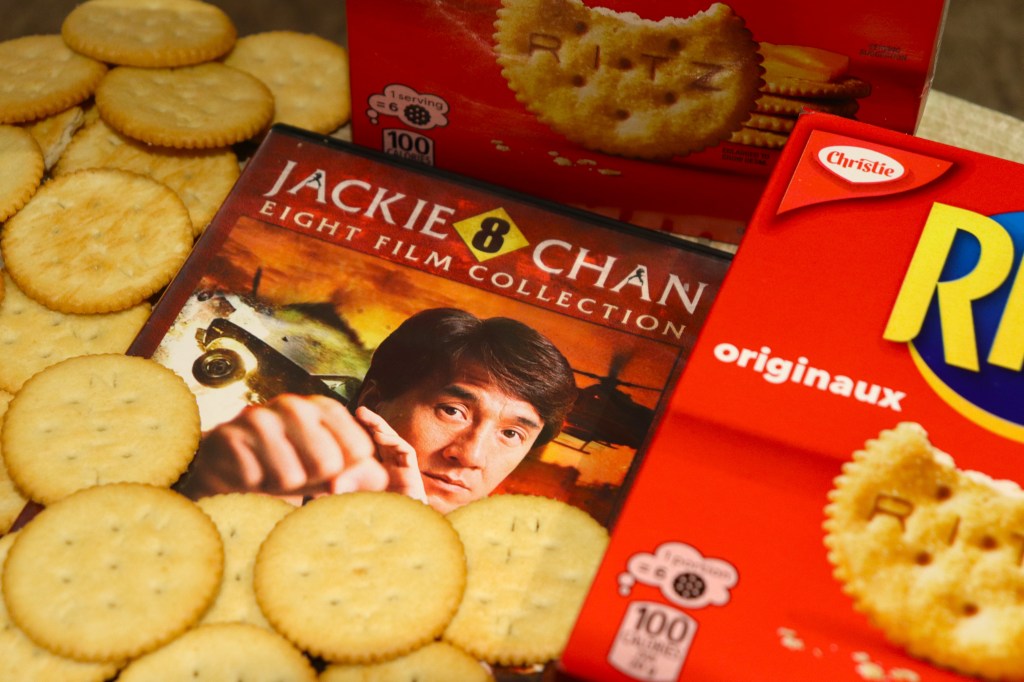
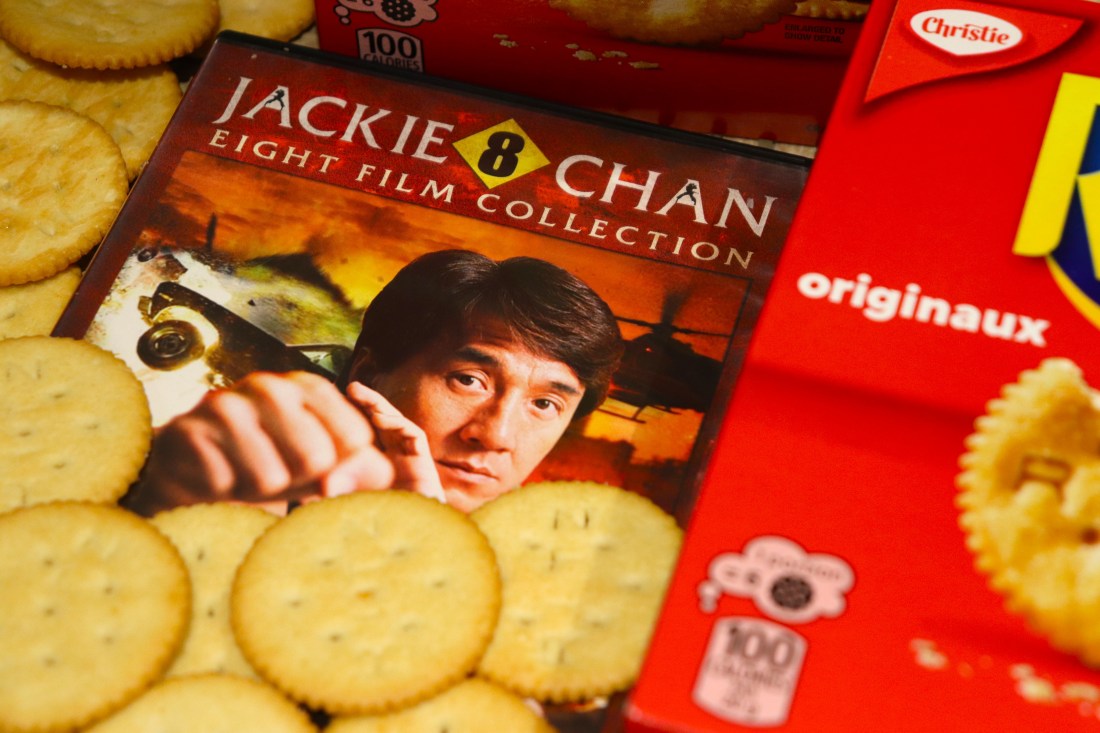
Ritz crackers (because this food item is pretty plain by itself, but serves as a good foundation for future projects)

Fun facts:

Release date: Sept. 10, 1980 (U.S.)

Budget: $6 million

Box office: $21.5 million

-Alternate titles: The Big Brawl, Killer’s Trench

Chan finally received his major North American breakthrough hit with Rumble in the Bronx (1995). Not only was Rumble popular with fans and critics (even screening at the 1996 Sundance Film Festival), but the movie made back nearly five times its budget thanks to its run in international markets.  

-Fans of Avatar: The Last Airbender may get a kick out of Mako’s role in Battle Creek Brawl. In both properties he plays an unconventional master arts master who loves tea and dishing out words of wisdom to his nephew.

Battle Creek Brawl marks the first time Chan’s authentic voice was heard in a movie. Before this film, all of Chan’s previous work was dubbed in Cantonese or Mandarin by another actor.

-Both Chan and Mako would go on to voice Master Splinter in different screen iterations of the Teenage Mutant Ninja Turtles. Mako would lend his voice to the character in 2007, while Chan was cast to give Splinter life in 2023’s Mutant Mayhem.  

Battle Creek Brawl can be watched in its entirety on YouTube for free (with occasional ads breaks)