
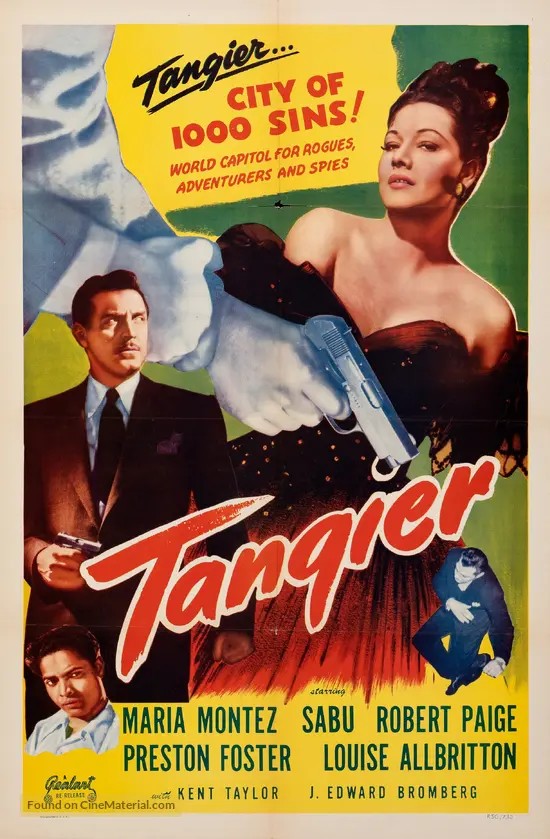
Tangier (1946) review: discount Casablanca

In modern film discourse, it’s pretty easy to call something derivative or a “rip-off.”

After all, we have over 120 years of movie history to pull from, which gives us the breathing room to spot repeated uses of certain plots, settings, and character archetypes over a period of time.  

Movie-goers from the 1940s-50s, meanwhile, weren’t burdened with the same historical hindsight and couldn’t even rely on the internet or home video releases to keep track of every time Hollywood re-used the same picturesque rock formation for a generic western backdrop.

But even with that all in mind, I still think 1946 audiences would have tilted their heads at George Waggner’s Tangier, given how many elements it blatantly lifts from Michael Curtiz’s Casablanca (1942).  

After all, Casablanca was a massive hit that netted Warner Brothers some major Oscar wins (including Best Picture), thereby guaranteeing it a firm place in the American pop culture zeitgeist.

The film’s success also encouraged Warner Brothers to produce several other films made in the same mold, with The Conspirators (1944) and To Have and Have Not (1944) liberally borrowing cast members and plot elements from Casablanca.

So by 1946, US movie fans were quite familiar with film noir set in exotic locales, where glamorous women and hard-nosed men fall in love while bringing down fascist sympathizers.

And Universal Pictures was definitely hoping to cash in on that formula with Tangier, resulting in a product that often looks and feels like Casablanca with the serial number filed off.

Despite being such a blatant knock-off, Tangier manages to retain some charm thanks to its strong cast, sharp dialogue, and moody visuals, which keep the film’s more derivative aspects at bay (for the most part).  

That being said, the parallels between Tangier and Casablanca are nakedly obvious even from a surface reading of the plot.

In both films, the setting is a coastal Moroccan city during World War II, with most of the action revolving around a glitzy nightclub that is frequented by all the big movers and shakers in town. The “usual suspects” in Tangier are led by American journalist Paul (Robert Paige), who is on the trail of a Nazi collaborator attempting to buy his freedom using a stolen diamond. Paul’s quest eventually intersects with club dancer Rita (Maria Montez), who is on the trail of the same Nazi collaborator for personal reasons. The two eventually team up to recover the diamond and bring the secret Nazi to justice, all the while making bedroom eyes at each other.

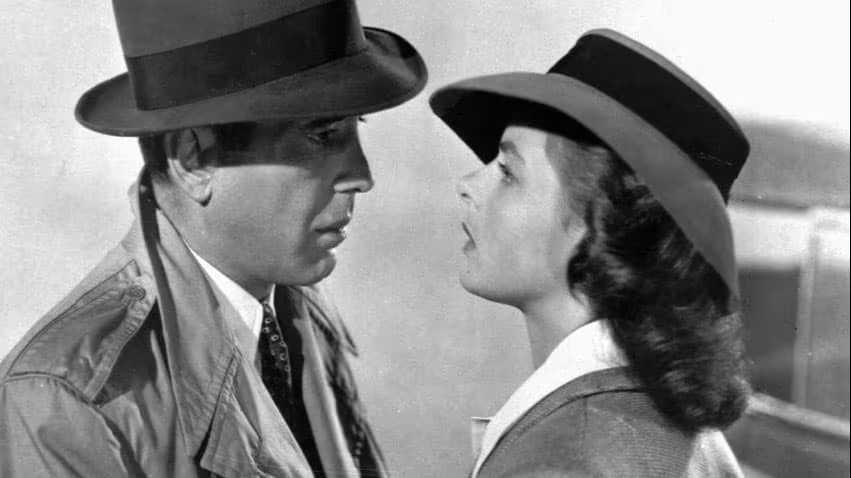
Even someone with a cursory knowledge of Casablanca could pick up on the similarities at play here. Not only is Tangier’s setting and overriding conflict virtually the same, but the romance at the centre of the story occupies the same emotional space that Humphrey Bogart and Ingrid Bergman did in the 1942 film.

In that respect, Tangier definitely pales in comparison, with the romance between Paige and Montez feeling rushed and undercooked. Even if the two have decent chemistry, their relationship develops far too quickly, with the pair agreeing to marry after only knowing each other for a single day.

The filmmakers try to compensate for this weak romance by throwing a four-way love triangle (a love square?) into the mix, but that only serves to complicate what’s already an overstuffed plot.

Luckily, most of the sights and sounds surrounding the central romance are interesting enough to keep the rest of the film on track.

Despite not really working as a couple, Paige and Montez know exactly how to play up the film noir aspect of the story. Paige’s war reporter has a roguish Hemingway flair about him, whereas Montez is totally believable as a femme fatale whose glamour is ultimately a means to end.

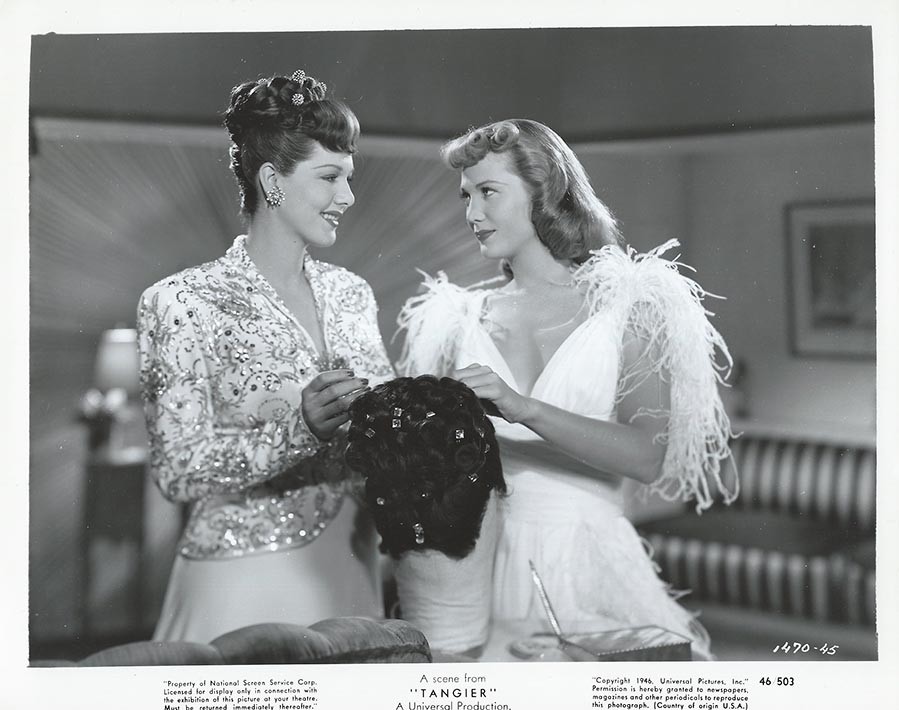
The supporting cast is also a rich tapestry of character actors from Hollywood’s Golden Age, who manage to squeeze a lot of life out of what are otherwise stock noir archetypes.

Louise Allbritton shines as a fellow club dancer who is constantly standing in Montez’s shadow, both professionally and romantically. In less talented hands, Allbritton could have come across as whiny or annoying, but she manages to hit all the right notes and make this character a genuinely tragic figure.
Meanwhile, Sabu is playing largely the same role that Dooley Wilson (Sam) occupied in Casablanca, namely the musical sidekick who is a confidant to the main hero. There’s definitely a lot of cultural baggage to unpack with this type of character, but, for what it’s worth, Sabu uses his natural charisma to inject some much-needed levity into the film.
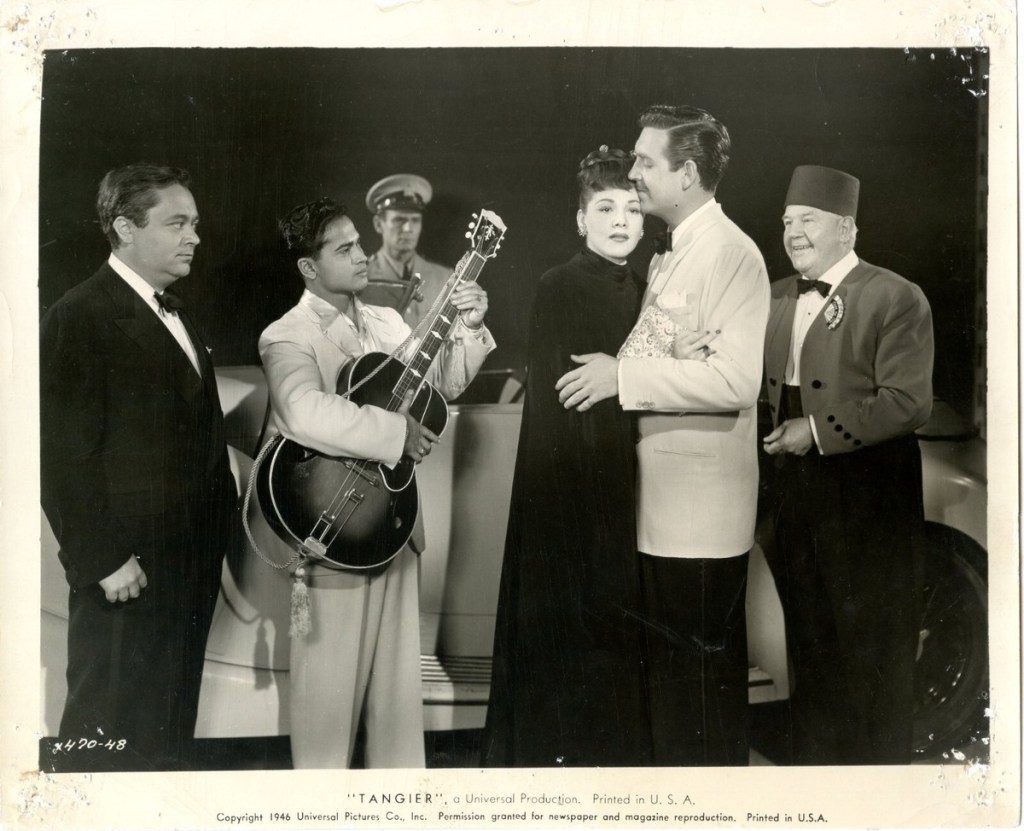
And then there’s Preston Foster as the stuffy military police colonel, who is the main obstacle standing in the heroes’ way. Again, this sounds like a generic villain role on paper, but Foster manages to imbue his character with a kind of gentlemanly poise that makes him at least fun to watch.  
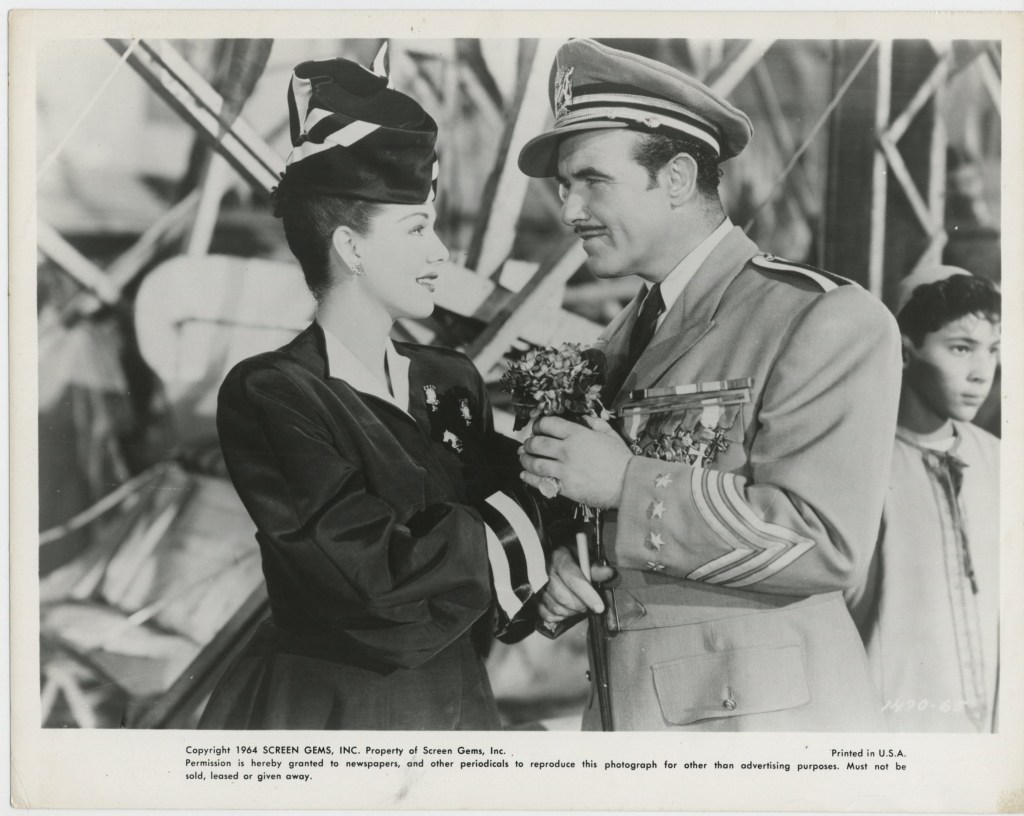
It also doesn’t hurt that the film’s overall production values are quite high, from the sets to the costumes to the classic film noir lighting that scratches a major itch for a certain breed of cinephile.

Like the best examples of the genre, the dramatic lighting filters through blinds, latticework, and prison bars, giving all the action a layer of texture that communicates awe and menace simultaneously.

The snappy dialogue is just the icing on the cake, with the cast effortlessly navigating through a steady stream of quips, comebacks, and double entendres that one would normally associate with an energetic stage play.

Unfortunately, some sound filmmaking around the edges can’t take away from the fact that Tangier doesn’t bring anything new or unique to the table to distinguish itself from other entries in the genre.

The Casablanca parallels really do drag everything down, with the filmmakers behind Tangier even having the gall to end their movie [SPOILERS] with the main characters escaping via an airfield. Where on Earth did they get that idea?
But beyond that, there’s a general sense that the filmmakers are running on autopilot, relying on the talented cast and crew to bail out what’s ultimately an unremarkable script.

Even the casting department didn’t think too deeply about who best to inhabit these characters. This film is inundated with far too many male actors with slicked back hair and pencil-thin mustaches, making it hard to tell who’s who for the first 20 minutes or so.

Still, if you have no knowledge of the films Tangier is cribbing notes from, it’s a fairly entertaining watch. Nothing life-changing of course, but it taps into an appealing vibe and aesthetic that is impossible to deny.
Plus, it’s difficult to be too harsh on a movie that takes inspiration from one of the most influential films of all time. Casablanca left a massive impact on the entertainment industry following its release, so much so that specific clips from that film are still being used as visual shorthand for what classic Hollywood romance is supposed to look like on screen.

So it’s only natural for that influence to worm its way into a bunch of other projects, whether the filmmakers are aware of that or not.  

In the case of Tangier, I’m pretty sure Waggner and his writers knew exactly what they were doing, since there are too many glaring similarities between the two films to ignore.

The end result is like watching a really talented cover band play through all your favourite hits; sure, you appreciate the craft and skill on display, but can’t escape that sinking feeling that a genuine creative spark is missing.

Verdict:

6/10

Corner store companion:

Compliments macaroni and cheese (because it’s a cheap alternative to the real thing, but it still gets the job done)

Fun facts:

Release date: June 6, 1946

-Tangier was one of the last films to be released under the “Universal Pictures” banner before the studio merged with International Pictures and was reorganized as “Universal-International” in July 1946.

-Following the release of Tangier, Maria Montez would only appear in nine other films before suffering a heart attack and drowning in her bathtub on Sept. 7, 1951. She was 39 years old.

-Leading man Robert Paige later became a TV newscaster in the 1960s, reporting out of Los Angeles for ABC News.

-After a multi-decade career in the film business, George Waggner transitioned to working in television in the 1960s, directing episodes of Batman, The Green Hornet, and The Man from U.N.C.L.E.

The Man With The Golden Arm (1955) review-inject this into my veins

This year’s Oscar season birthed no end of controversy, with unearthed racist Tweets, accusations of unethical AI use, and concerns about absent intimacy coordinators clogging up the news cycle. While it’s fun to partake in all this chaos, it’s also important to remember that the Academy Awards do hold some cultural value beyond fueling online discourse.

Not only are the winners immortalized in film history, but even the nominees enjoy an elevated degree of prestige that prevents them from getting completely swallowed up by the relentless march of time.

Otto Preminger’s The Man With The Golden Arm (1955) certainly benefited from being in the Oscar race, with its nods for Best Actor (Frank Sinatra), Best Music, and Best Art Direction ensuring that it remained in the cultural conversation long after it left theatres.

Luckily, this film noir is the kind of movie that actually deserves a longer shelf life. It isn’t some flash-in-the-pan distraction that somehow snuck its way on the Oscar telecast through sleazy backdoor politicking. Preminger’s production is genuinely groundbreaking, being one of the first major Hollywood films to seriously grapple with the issue of hard drug addiction.

But beyond this historical distinction, The Man With The Golden Arm is just a damn good movie in its own right, with stellar performances, dynamic camera work, and a bombastic jazz score that cuts to the bone.

The film follows Frankie Machine (Sinatra), a recovering drug addict who vows to go on the straight and narrow after he’s released from prison. But finding honest work as a musician isn’t so easy for Frankie, especially after ghosts from his past lure him back into the world of illegal card dealing. Frankie also finds himself caught between the affections of two women, his wife Zosh (Eleanor Parker) and old flame Molly (Kim Novak), who represent his possible damnation to or salvation from the cycle of crime and addiction.

Sinatra is obviously the main draw here, coming in hot after winning a Best Supporting Actor Oscar for his role in From Here to Eternity (1953). While the crooner didn’t walk away with another golden statuette for headlining The Man With The Golden Arm, his work here is no less extraordinary.

Given the subject matter, it would have been easy to present a completely deranged character who rapidly shifts between big emotions to sell their less-than-ideal circumstances. But Sinatra usually plays it somewhere in the middle. He’s very restrained in the early parts of the movie, trying desperately to put his past behind him and carve out a new life through measured hope and optimism.

It’s only when the walls start to close in that he begins to lose his cool, resorting to a much broader acting style that some might consider “hammy” by today’s standards.

But considering the fact that he didn’t have a lot of influences to draw from (with the depiction of hard drug use being largely taboo in Hollywood at the time), Sinatra still presents a nuanced portrait of someone suffering through substance abuse, no doubt setting an entertainment industry standard for decades to come.

The rest of the cast put in similarly impressive work.

Even though they inhabit familiar film noir archetypes (the petty crook, the femme fatale, the heartless drug pusher, the hard-boiled cop, etc.), each actor gives their characters enough depth to keep things interesting.

This is especially true for Kim Novak, who could have easily come across as an evil seductress for preying on a married man. Instead, her concern and affection for Sinatra appears genuine and endearing, making her the most sympathetic player in the film’s overarching love triangle.

Another surprisingly charming character is Sparrow (Arnold Stang), a small-time hustler who is always trying to reel Sinatra into his latest scam. But despite Sparrow’s unsavory modus operandi, Stang manages to play him with a degree of kindness and good humour, so much so that he almost becomes the film’s Jiminy Cricket.

And as cliché as this might sound, one of the movie’s most interesting characters doesn’t actually appear on screen.

This is because the camerawork, led by cinematographer Sam Leavitt, is always engaging, constantly moving and finding interesting ways to frame the characters, illustrating their inner thoughts without strictly relying on dialogue.

One of the best examples of this takes place midway through the film, when Sinatra and Novak stroll by a department store window displaying a shiny new kitchen set. By capturing the character’s snappy back-and-forth dialogue within this backdrop, Leavitt offers the audience an aspirational glimpse into a possible domesticated future where the characters no longer have to scratch and claw to carve out a meager living.

It also doesn’t hurt that the movie captures these kinds of moments in mostly long, unbroken takes, which gives the actors lots of room to breathe and make the most of the script.

Said script, penned by Walter Newman and Lewis Meltzer, remains engaging throughout the movie’s runtime, mixing in insightful character moments with the kind of tough-guy dialogue one would expect from a film noir.  

The film’s Oscar-nominated score, composed by Elmer Bernstein, adds to this rhythm, serving as a kind of internal monologue for Sinatra’s state of mind. When those chaotic brass and percussion instruments pick up in speed and intensity, the actor doesn’t have to utter a word about suffering from withdrawal. The music does a lot of the heavy lifting.

Conversely, this emotionally-resonate score also kicks in when Sinatra is sharing a tender moment with Novak or Parker, except this time the composer relies on gentle woodwinds and strings to sell the fact that he is keeping his demons at bay.  

So just like the camerawork, the film’s music almost becomes another colourful member of the cast, or at least some kind of omniscient narrator that adds texture to the story.

That being said, the incorporation of music into the plot itself is a little half-hearted. While Sinatra’s main goal throughout the narrative is to become a professional drummer, his actual talent with the instrument is mostly talked about and only briefly shown. Plus, the big studio audition that the movie’s been building up to is over far too quickly, which slightly blunts the impact of Frankie’s downward spiral.

And while the movie usually does a good job of balancing its goofier elements with hard-hitting drama, that formula can get thrown out of whack sometimes.

Outside of a couple hokey speeches about drug addiction, which wouldn’t be out of place in a 1990s after-school special, the ending leaves a little to be desired.

Without getting into spoilers, one character exits the movie in a very silly fashion right before the credits roll, which caps off the film on a slightly sour note.

But those are just small quibbles, to be sure, and they don’t take away from The Man With The Golden Arm being the real deal.

Anyone who enjoys the look and feel of movies from that era of Hollywood can find it in spades with this production, with plenty of talented people working in front of and behind the camera.

And while it didn’t walk away with any golden statuettes at the 1956 Oscars, the film did legitimately push boundaries by allowing different kinds of stories (in this case, hard drug addiction) to appear on the big screen.

Because of the film’s controversial subject matter, the Production Code Administration (enforcers of the conservative Hays Code) refused to give it a seal of approval, thereby limiting its distribution in North America.

But after the movie garnered a lot of buzz without this seal, the Motion Picture Association of America eventually pressured the PCA to revise its code and allow drug addiction to be allowed in the movies.

And honestly, busting up obtuse censorship guidelines might be a better legacy to leave behind over winning big at the Academy Awards, especially given the tired discourse that plays out every time a movie brings home an Oscar.   

Verdict:

9/10

Corner store companion:

Golden Oreos (because they’re delicious and a lot less addictive than heroin)

Fun facts:

Release date: December 15, 1955

Budget: $1 million

Box office: $4.3 million

The Man With The Golden Arm finally received its PCA production code in 1961, six years after the film’s initial release. The PCA and the Hays Code were discarded in 1968 and were replaced by the modern MPAA rating system that same year.

The Man With The Golden Arm was inducted into the United States’ National Film Registry in 2020 for being “culturally, historically or aesthetically significant.” It was added alongside classic films such as The Blues Brothers (1980), A Clockwork Orange (1971), The Dark Knight (2008), and Grease (1978).

-Actor Arnold Stang (who plays Sparrow) is probably best known for voicing the Hanna-Barbera cartoon character Top Cat for several decades.

The Man With The Golden Arm is currently in the public domain and can be watched in its entirety on YouTube. Please watch using the provided link below and don’t bother with the official YouTube upload (since it’s been colourized and looks awful).

Now and Forever (1934) review-how to weaponize cuteness

Shirley Temple is one of those actors that modern audiences are mostly familiar with through cultural osmosis rather than through her actual filmography.

Even if you can’t name a single movie that the renowned child actor starred in during her peak of popularity, which ran from 1934 to 1938, chances are that you’ve ordered one of her famous non-alcoholic drinks or seen her signature blond curls plastered on an expensive piece of Hollywood memorabilia.

Because of these cultural artefacts, the name “Shirley Temple” is still considered cute and marketable in the 21st century, so much so that modern movie studios were still willing to release some of her films through collections like the “Little Darling Pack” in 2007.

One of the movies included in this collection is Henry Hathaway’s Now and Forever (1934), which served as my official introduction to Temple’s body of work.

Admittedly, I walked into this screening anticipating nothing but light fluff, since my idea of what to expect from a film starring America’s favourite child star had been filtered through all the pop culture refuse mentioned above.

However, I was pleasantly surprised that Hathaway and his writers managed to use Temple’s natural charm to tell a fairly mature story about parenting and how bad decisions can have a disastrous ripple effect on the ones we love most.

Despite this film being included in a Shirley Temple DVD collection, the plot of “Now and Forever” actually revolves around Gary Cooper’s Jerry, a travelling con man who is far too busy globe trotting with his lady friend Toni (Carole Lombard) to check in on his five-year-old daughter Penny (Temple) from his first marriage.

After a trip to Shanghai leaves him in desperate need of cash, Jerry is drawn back to the United States to sell his daughter’s custody rights to his brother-in-law, with the mother having died years ago.

But when Jerry meets Penny for the first time, he’s immediately taken with her and decides to finally become the child’s legal guardian.

While the two establish a strong bond right away, Jerry’s criminal past continues to linger in the background and threatens to tear their new relationship apart as he tries to carve out an honest living.

One of the most important elements to nail right off the bat with a film like this is the chemistry between the leads, since the story would collapse without a believable family unit at its core.

Luckily, Cooper and Temple establish a snappy back-and-forth from their first scene together, with that rapport only growing stronger as the movie moves forward.

This is no easy task, since Cooper’s character was fully willing to abandon his child for money at the beginning of this story; a writing choice that risks putting the audience at a distance right away.

However, the two leads are able to bridge this emotional gap in a very short time through their combined charm alone, even with Cooper’s past misdeeds continuing to hover over the proceedings like an unseen Sword of Damocles.

Lombard also adds an additional layer of jovial camaraderie into the mix, bucking the tired trend of wicked stepmothers in movies by accepting Temple into her life unconditionally.

In all honesty, Hathaway could have gotten away with filming these three having a fun vacation in Paris without any major looming conflict and gotten away with it, since they play off each other in a very compelling fashion.

But as the movie’s narrative moves forward, it becomes obvious that the director’s true objective was to craft this idyllic on-screen family just so he could cruelly smash it into a million pieces.

The agent of chaos mostly responsible for this tonal shift is actor Sir Guy Standing, who plays a shady businessman that catches on to one of Cooper’s scams and is using this knowledge to blackmail him.

Standing’s performance might be the absolute highlight of Now and Forever, since he successfully crafts a menacing persona without coming across as outwardly rude or threatening.

Instead, he reels Cooper back into a criminal lifestyle through fake British politeness and innuendo, which is way more infuriating than if he simply adopted the American method of commanding someone at gunpoint.  

That sleight-of-hand trick is also frequently used by the filmmakers themselves, who lure the audience into a false sense of security thanks to Temple’s cuteness before pulling the rug out from under you.

This dynamic is at play for much of the film’s third act, with Cooper’s unsavory activities constantly overlapping with his idyllic family activities.

The best example of this comes later in the film when Temple performs a lively song and dance number in front of some rich American expatriates living in Paris.

But instead of using this scene for pure spectacle and whimsy, like in most other Temple films, the director intercuts it with shots of Cooper stealing an expensive necklace and stuffing it into his daughter’s teddy bear.  

He later uses this teddy bear to smuggle the necklace out of a rich family’s house and into the villain’s hands, all the while lying to Temple about what really transpired.

Not only is this sequence completely gut wrenching, but it also serves as a succinct encapsulation of the movie’s main theme of childhood innocence being sullied by the world of adults.

It also doesn’t hurt that Now and Forever features a snappy script and tight pacing throughout, which manages to wring some of that old Hollywood charm out of a story that feels pretty modern by 1934 standards.

However, some dated elements from that era have not aged as gracefully.

This includes a noticeable lack of music and prevalence of janky editing that is undoubtedly a byproduct of the limited technology available to filmmakers at the time.

The movie’s ending also leaves a lot to be desired, since it’s pretty obvious that the studio forced Hathaway to tack on a much more uplifting resolution to the main conflict in an effort to not completely alienate the movie-going public.

But minor gripes aside, Now and Forever still managed to surprise me and showcase an engrossing family drama that wasn’t afraid to touch on some darker subject matter.

It might not be the best introduction to Temple’s filmography, as I’m led to believe that most of her other work is pretty wholesome and not subversive in the slightest.

However, I feel like Now and Forever remains a pretty good showcase of Temple’s talent as an adorable child actor, while also offering a prime example of how to harness that cuteness and weaponize it against the audience (in a good way).

In other words, this film is the cinematic equivalent of a candy apple that’s been coated in absinthe, since it looks innocent but will fuck you up if you’re not ready.

Verdict:

7/10

Corner store companion:

Snapple Spiked RaspCherry Tea vodka (because it’s sugary and sweet but will mess you up in quick fashion)

Fun facts:

-Release date: Aug. 31, 1934

-Temple appeared in 29 films by the time she was 10 years old. She would temporarily retire from the film business in 1950 at the age of 22. Her last official acting role was in a 1963 episode of The Red Skelton Hour.

-After retiring from the entertainment industry, Temple began her career as a United States diplomat in 1969 and would serve under several presidents in this capacity, including Gerald Ford and George H.W. Bush. She also became the US government’s chief of protocol between 1976 and 1977.

-Temple won a “Juvenile” Academy Award in 1934 for her outstanding contribution to screen entertainment during that year. She was later given a star on the Hollywood Walk of Fame in February 1960.

-Carole Lombard tragically lost her life eight years after Now and Forever premiered in theatres. The actress, mostly known for her roles in screwball comedies, was the passenger of a plane that was returning from a war bond tour overseas and crashed into a mountain range in Nevada. She was only 33 years old.

-[SPOILERS] In the theatrical ending of Now and Forever, Cooper’s character gives Temple away to a rich friend to raise before he is arrested by the authorities. In the original ending, both Cooper and Lombard die driving alongside a train that is taking Temple away. Paramount executives felt this dark conclusion didn’t jive with the rest of the film and ordered Hathaway to reshoot the ending.  

-The title “Now and Forever” is also associated with popular songs from musicians like Drake, Richard Marx and Carole King.