

When people talk about the widening gap between film critics and average movie-goers, I feel like Adam Sandler was a harbinger of things to come.
For nearly three decades now, Sandler has been a consistent punching bag for critics, who find the majority of his comedies low-brow, lazy, and juvenile.
At the same time, Sandler’s brand of humour has endeared him to the broader movie-going masses, who ensure that most of the films released under his production company (Happy Madison Productions) turn a profit.
This success even carried through into the streaming era, with Sandler signing a lucrative multi-picture deal with Netflix in 2014 that was extended in 2017 and 2020.
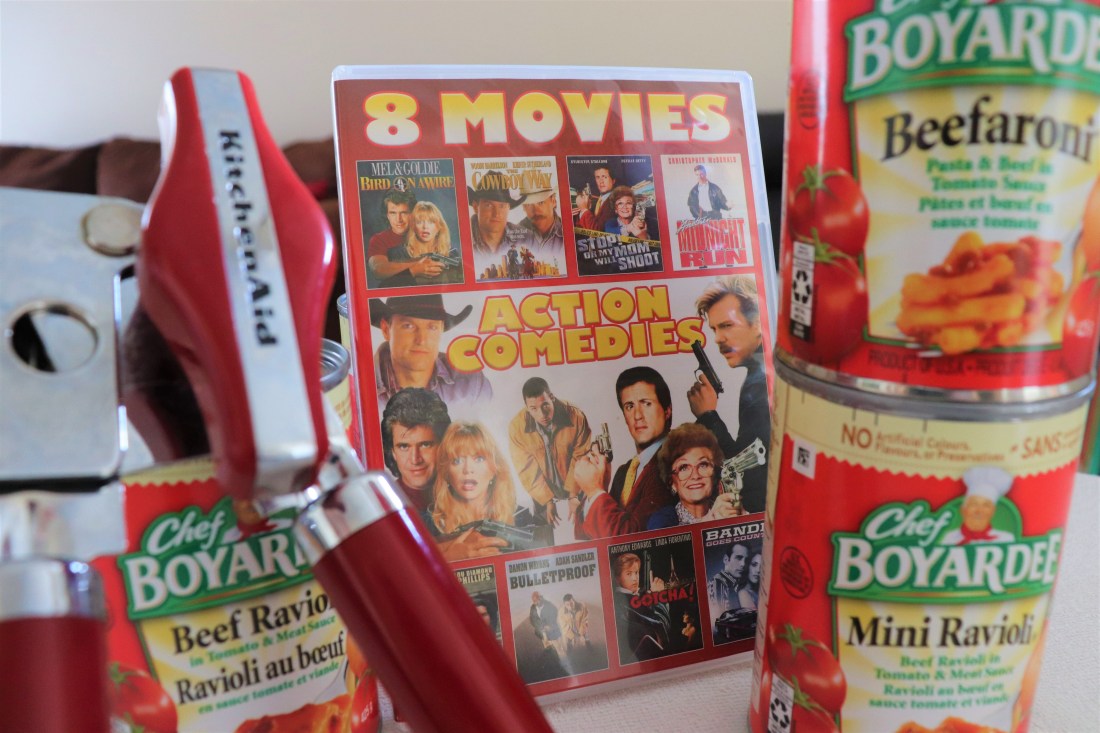
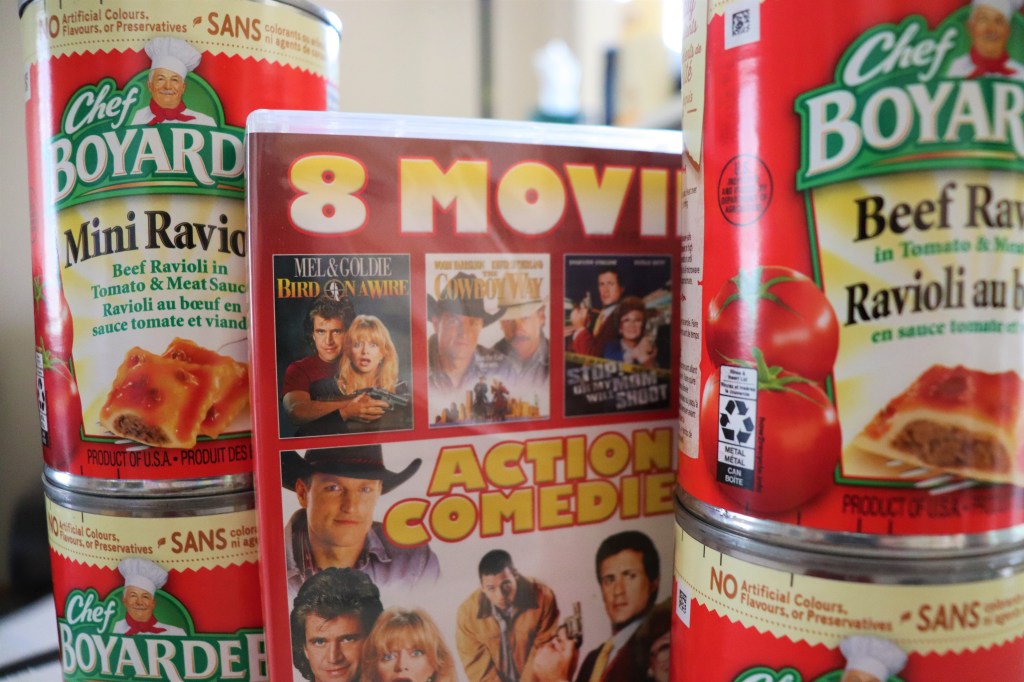
Despite this long-standing divide between critics and fans, the two groups at least found some common ground in terms of their dislike for Bulletproof (1996), an R-rated action comedy that Sandler starred in (alongside Damon Wayans) just as his career was really taking off.
While the film’s reviews are predictably dismal, it also bombed at the box office, only generating $22.6 million (worldwide) out of a $25 million budget.
Even the film’s director Ernest Dickerson wasn’t happy with the final product, telling DVD Talk in the mid-2000s he wishes he could “just erase that whole experience” from his memory.
Having now seen Bulletproof for myself, it’s easy to see why few remember it fondly.
Not only is this film a complete misfire both in terms of action and comedy, but it also features some truly shoddy filmmaking that’s shocking to see in a major Hollywood release.
Because of this, I imagine that Sandler fans in 2024 will struggle to find something to like in Bulletproof, since even they have standards.
In Bulletproof, Sandler stars as a hood named Archie, who steals cars and smuggles drugs on behalf of crime kingpin Frank Colton (James Caan).
Unbeknownst to Archie, his best friend and business associate Jack is an LAPD cop working undercover to bring down Colton’s operations from within.
Jack finally reveals his identity to Archie during a police raid on one of Colton’s warehouses, resulting in Archie accidently shooting his best friend in the head before escaping.
After somehow recovering from this grievous injury, Jack is tasked with bringing Archie into custody so that he can testify against his boss.
The rest of the movie basically turns into an elaborate trust building exercise, where Archie and Jack must squash their personal beef and work together to stay one step ahead of Colton’s hitmen.
Based on this premise, the film has a lot of potential and instantly calls to mind underrated action-comedy classics like Midnight Run (1988) and Bird on a Wire (1990).
Unfortunately, Bulletproof lacks all the key ingredients that made those movies work, including a sharp script, well-choreographed chase scenes, and palpable chemistry between the two leads.
The most glaring omission from this recipe here is the rapport (or lack thereof) between Sandler and Wayans.
A lot of the film’s glaring weaknesses could be forgiven if the pair were at least believable as former best friends who gradually rebuilt their relationship throughout the narrative.
But the back-and-forth between Sandler and Wayans is consistently stiff and lifeless, almost like the duo rehearsed to shoot a Super Bowl commercial rather than a feature film.
It also doesn’t help that their individual performances are pretty weak.
Wayans ends up looking the worst out of the two, since he’s tasked with tackling a dual role as an undercover cop.
As Sandler’s criminal associate, Wayans adopts this ludicrous “street” accent that’s supposed to make him sound tough, but he just comes across as one of his sketch characters from In Living Color.
Once he sheds that identity, Wayans is similarly unconvincing as a strait-laced police officer, who lacks the commanding presence necessary to sell the film’s dramatic beats.
Sandler doesn’t fare much better, since his performance in Bulletproof is indistinguishable from the wise-cracking characters he played in films like Happy Gilmore (1996) or Big Daddy (1999).
Perhaps that approach was intentional, to satisfy the fanbase Sandler had cultivated through his pure comedies and stand-up career, but it doesn’t it doesn’t jive with the movie’s harder edge.
Admittedly, there is some appeal in watching Sandler tackle some R-rated material, like yelling “gross, right in the fucking eyeball” after he shoots a bad guy in the head.
But that novelty quickly runs out its welcome, and all you’re left with is an unfunny script that never transcends lazy middle-school jokes related to bodily functions and implied gay sex.
The film’s action sequences suffer from the opposite problem.
Dickerson and his team show no shortage of ambition, since they stage several set pieces that feature plenty of carnage and vehicular mayhem.
Unfortunately, the filmmakers obviously bit off more than they could chew, since these scenes are poorly shot and clumsily slapped together in the editing room.
This incompetence is on full display during an airplane crash sequence early on, where Dickerson doesn’t even attempt to hide Sandler and Wayans’ stunt doubles as they leap to safety.
The only time the film really nailed that 90s action feel was during a quick shootout in the third act, when Sandler and Wayans encounter some goons in a suburban kitchen.
For whatever reason, the filmmakers decided to significantly up their game for this 60-second scene, tying it together with smooth camera movements, juicy blood squibs, and Sandler’s only funny quip in the movie (“I think they’re eating fajitas!”).
It’s almost like the studio hired Robert Rodriguez for an afternoon of uncredited consulting work, where he was able to impart his tricks of the trade to a crew that was clearly in over their heads.
But momentary flashes of competence can’t make up for the film’s other technical shortcomings, including its atrocious sound.
If you clicked on the above clip, you’re sure to get an earful of the ambient techno diarrhea that’s meant to serve as the film’s score.
Not only does the music sound like a toddler hitting a Casio keyboard at random, but the mixing is also all over the map.
During the movie’s climax, the music is so low it’s nearly inaudible, almost like the filmmakers left it in the final cut by accident.
And then there’s the movie’s spotty ADR, where the characters’ dialogue is piped in seemingly at random.
At one point, the filmmakers even neglected to dub in one of Wayans’ lines, resulting in an awkward moment where he mimes his dialogue with no sound.

Some may tilt their head at my attempt to critique the mise-en-scène of a goofy Adam Sandler comedy, which isn’t meant to be taken seriously.
While that may be true, I feel some baseline professionalism must be maintained in even the zaniest of film projects, and Bulletproof fails to clear that low bar.
This is especially true given that Bulletproof is standing in the shadow of much better buddy action movies starring stand-up comedians, with Eddie Murphy having found great success with this formula over a decade ago with 48 Hrs. (1982) and Beverly Hills Cop (1984).
However, the film’s worst sin is how painfully unfunny its script is, with virtually all attempts to pull a chuckle out of me landing with a dull thud.
One of the few exceptions to this dismal trend takes place during a climactic fist fight between Wayans and Caan, when the latter nonchalantly removes his toupee before throwing hands.
Does this gag sully the dignity of a legendary actor like Caan? Definitely. But that’s kind of why it works, and I wish the film took more chances like this rather than fall back on jokes that were already worn out by the mid-90s.
Admittedly, this same criticism could be levied at a lot of Sandler’s other comedies, even though most of those projects were financially successful and well-liked by fans.
So why is Bulletproof largely forgotten these days?
My guess is that the R rating turned a lot of people away, with most of Sandler’s other projects falling into that PG-13 sweet spot.
Another factor is that this movie was presented as more of a vehicle for Wayans, who was given top billing as his career was much better established at that point.
But whatever the reason, Sandler wouldn’t let this little bump in the road stall his career.
Over the subsequent 28 years, he went on to churn out dozens of films that have cumulatively grossed over $3 billion worldwide, making him one of the most successful comedians in Hollywood.
He even used this industry clout to (occasionally) flex his dramatic chops, seeking out projects with heavyweight directors like Noah Baumbach, Paul Thomas Anderson, and the Safdie Brothers.
Because of these career detours, some of which resulted in industry awards, I get the sense that critics have softened on Sandler these days, or are at least willing to ignore his comedies now that they’re all relegated to Netflix.
While critical re-evaluation is always welcome (and necessary) in today’s increasingly hostile film discourse, this exercise can only go so far.
No amount of historical hindsight could convince me that Bulletproof is worth recommending to anyone other than diehard fans who are compelled to consume every one of Sandler’s films in a marathon rewatch.
Even in this case, these folks may want to skip Bulletproof anyway, since its sheer awfulness may sour the rest of Sandler’s early filmography by association.
Verdict:
2/10
Corner store companion:
Maltesers (because they look good on the outside, but there’s nothing going on under the surface)

Fun facts:
-Release date: Sept. 6, 1996
-Budget: $25 million
-Box office: $22.6 million (worldwide)
-Sandler nabbed a “Worst Actor” Razzie nom for his performance in this film and Happy Gilmore. He ultimately lost this award to the dream team of Tom Arnold and Pauly Shore, who starred in a number of comedies throughout 1996. Bulletproof was also represented at the 19th Stinkers Bad Movie Awards, with Caan being nominated for “Worst Supporting Actor.”
– Ernest Dickerson went to film school alongside Spike Lee and served as a cinematographer on several of his early projects. These collaborations include She’s Gotta Have It (1986), School Daze (1988), Do The Right Thing (1989), and Jungle Fever (1991). After trying his hand at directing feature films, Dickerson has been mostly focused on directing television for the last two decades. His TV credits include work on Treme, Bosch, Dexter, and The Walking Dead.
-“Bulletproof” serves as the title for a number of other films, including a 1988 action movie starring Gary Busey and a 2020 documentary on gun violence in American schools. “Bulletproof” is also the name of a British police procedural that ran between 2018 and 2021.
-A direct-to-video sequel to Bulletproof was released in January 2020, 24 years after the original film was released. It featured none of the original cast, with actors Faizon Love and Kirk Fox filling in for Wayans and Sandler, respectively.


 Corner Store Cinema