
To me, watching older movies always had a joyous archeological quality to it. If you spend enough time checking out films from Hollywood’s Golden Age, for example, you might stumble upon a media artefact that influenced a lot of the pop culture you enjoyed growing up. For example, after discovering Walter Brennan in Sergeant York (1941) I remember thinking to myself, “Oh, so this is the guy all those voice actors have been imitating in my favourite cartoons.”
I experienced the same phenomenon with actors Peter Lorre in The Maltese Falcon (1941) and Charles Laughton in Mutiny on the Bounty (1935), since their likenesses were subsequently repackaged into a variety of animated shorts produced by multiple studios.
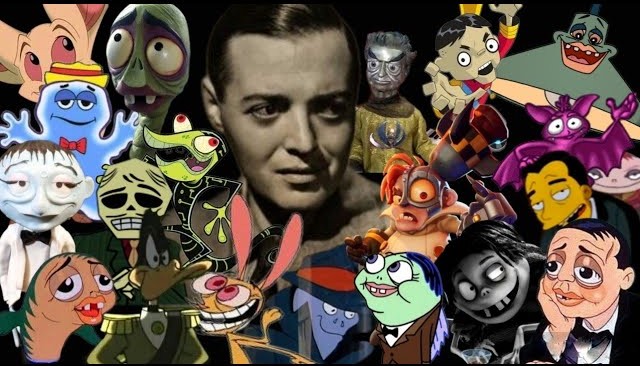
Peter Lorre and his many animated avatars over the years
This sense of déjà vu struck me once again during a recent screening of Ray Enright’s Albuquerque (1948). Even though this film is a pretty standard western overall, actor George “Gabby” Hayes was immediately recognizable as an archetype that’s been imitated and homaged to death in properties such as Blazing Saddles (1974) and Toy Story 2 (1999).
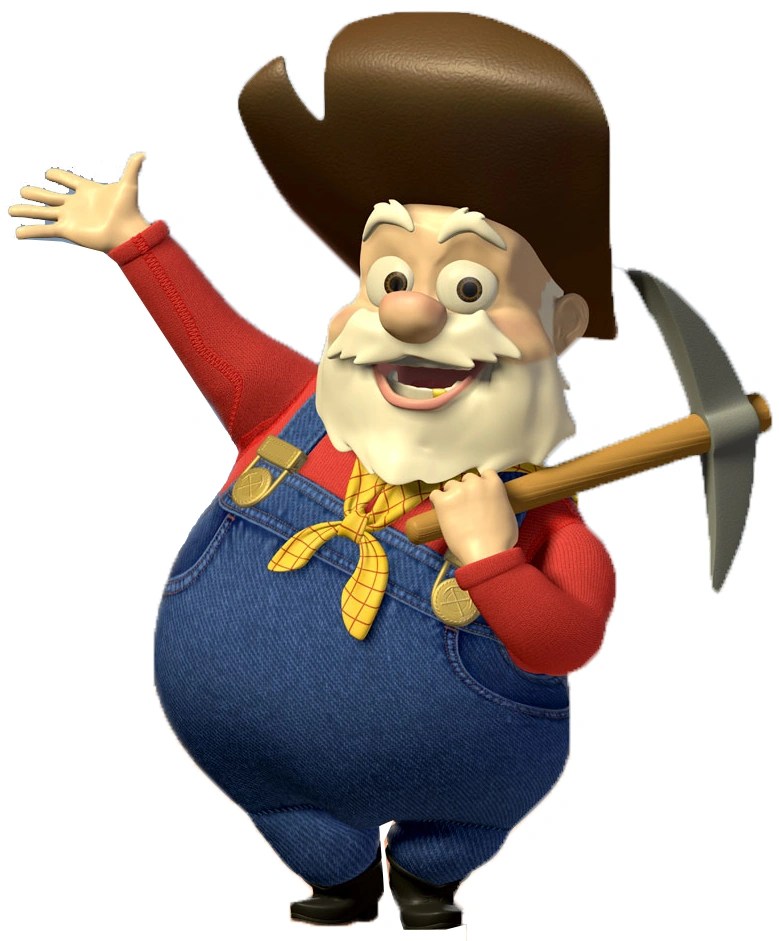
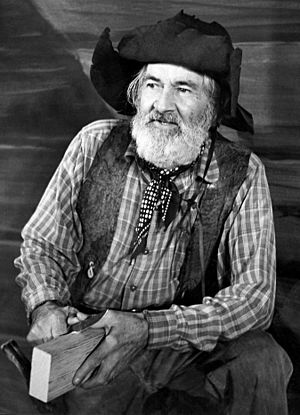
Despite serving as the comedic sidekick to leading man Randolph Scott, Hayes’ old coot with a heart of gold easily steals the show, delivering some of the film’s best lines and breathing some life into a formula that was stock even for the time.
Thanks to Hayes (and other members of the supporting cast), Albuquerque is an entertaining enough watch for a lazy weekend afternoon, despite being weighed down by a generic look and feel that makes it hard to distinguish from other westerns of its era.
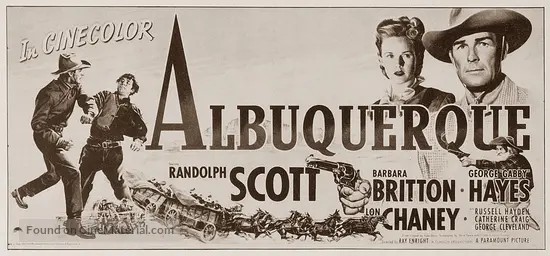
As mentioned before, the film stars Scott as Cole Armin, a former Texas Ranger who travels to Albuquerque to work for his uncle’s freight hauling business. After discovering that his uncle is far from a law-abiding businessman, Armin bands together with some locals to start a rival freight company and run the corrupt tycoon out of town. But Armin’s uncle doesn’t take kindly to this friendly competition, resulting in a gang war of sorts that gradually escalates over time.
Again, the story and characters featured in Albuquerque are pretty old hat, even by 1948 standards. The concept of a lone gunman riding into town and cleaning out its criminal element had already been done countless times before, and the filmmakers don’t even try to switch things up on an aesthetic level.
The most obvious missed opportunity here is the New Mexico setting, which could have been used to highlight the state’s unique topography or its precarious status as a US territory in the 19th century.
Unfortunately, none of that comes to pass in the film itself.
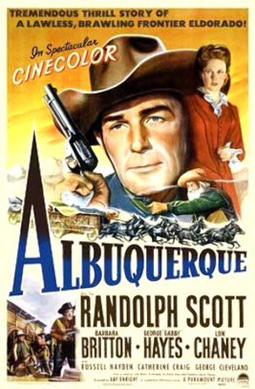
The action could have been set in California, Utah, Nevada, or Texas judging by the standard set decoration and sparse landscape shots of non-descript deserts and canyons.
And lest you think any kind of geographic specificity is an unreasonable ask in a Golden Age western, I remember region-specific vistas being the highlight of Cattle Queen of Montana (1952), where the director opted to at least shoot some of the movie inside Glacier National Park. That decision gave the film a unique flavour that is completely missing in Albuquerque, which was not shot on location. As a result, this film’s setting is severely lacking in personality, especially for modern audiences who are far more familiar with the New Mexico landscape thanks to hit TV shows like Pluribus, Breaking Bad, and Better Call Saul.
That lack of identity bleeds into Scott’s performance, since he plays his character right down the middle without any interesting deviations to speak of.
Some may take comfort in such a strait-laced, nice-guy hero being the lead, since we are currently living in a political ecosystem where evil and corruption run rampant without any checks and balances in place.
However, these real-world circumstances don’t take away from Scott’s character being a little too bland in this film, although a lot of that can be blamed on the screenwriters.
Later on in the film, Scott is thrown into a love triangle of sorts between Catherine Craig and Barbara Britton that’s meant to give him something interesting to do. However, this subplot fails to generate any real tension, since Scott’s gunslinger is far too much of a goody two-shoes to believably fall for Britton’s femme fatale over Craig’s uncomplicated hometown girl.
That being said, Scott does excel in one area and that’s his on-screen bromance with Hayes.
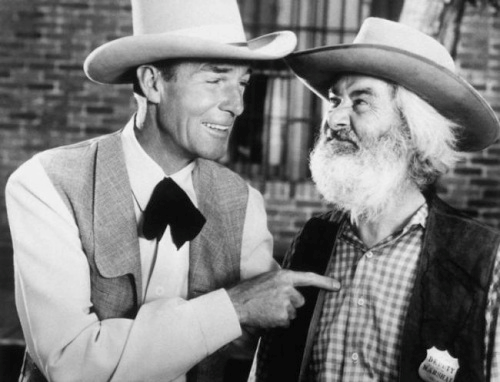
From their first scene together, Scott and Hayes instantly click and fall into a steady back-and-forth repartee that persists throughout the entire film. The pair’s infectious chemistry really buoys the more conventional parts of the movie and leads to some comedic digressions that are far more compelling than anything going on in the main plot.
There’s this recurring bit about Hayes’ unseen wife that’s a particular highlight, since he prattles on about her talents as a barber despite being repulsed by the idea of having his beard shaved. Without giving too much away, this background plot thread leads to a great comedic payoff at the very end of the movie that helps tie the whole story together with a tidy bow.
The rest of the supporting cast provides a lot of the same extra seasoning, especially the villains.
Outside of Britton’s conflicted femme fatale, George Cleveland is suitably despicable as the corrupt business tycoon, while Lon Chaney Jr. (the original Wolfman) is fully committed to his role as the heavy.
One detail I particularly loved about Chaney’s henchman is that he almost always has a cigarette dangling from his mouth, even when he’s riding a horse or getting into a fistfight. Now that’s real dedication to the craft.
As a unit, these shady characters manage to raise the stakes and introduce a little edge into what’s otherwise a pretty sanitized western, which is much appreciated.
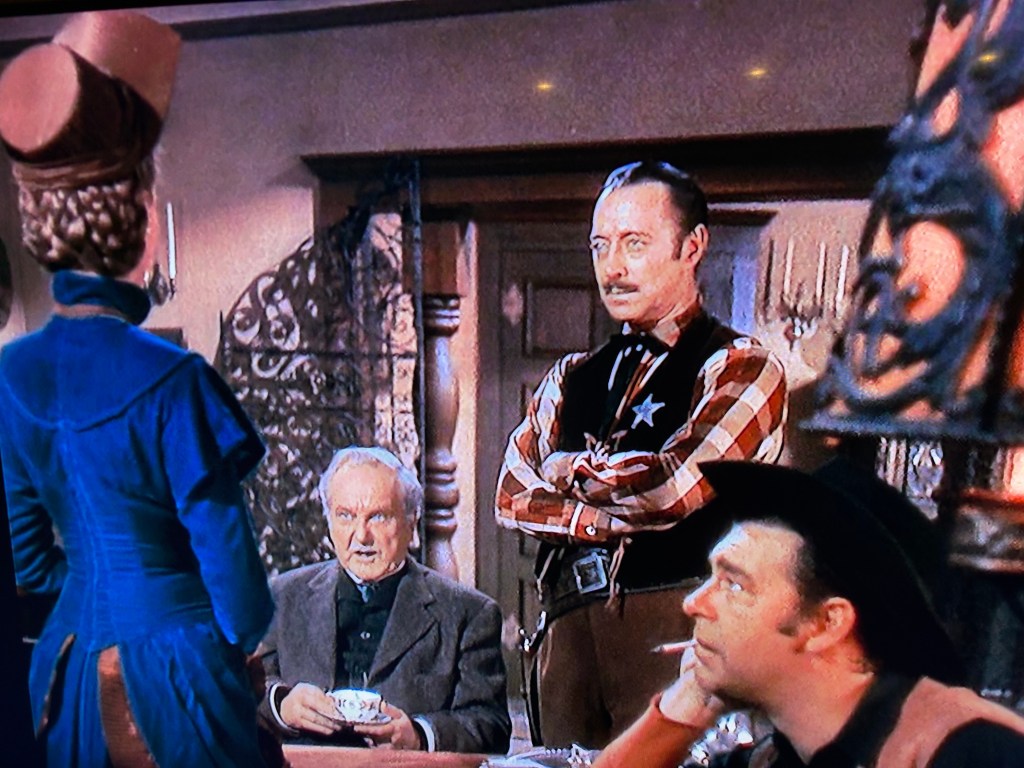
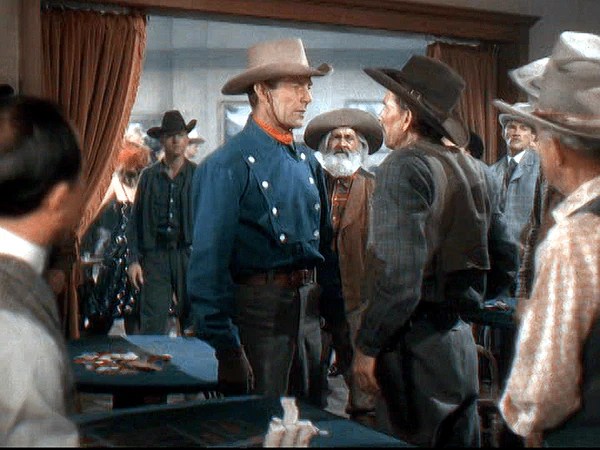
Another impressive element of the film is its use of colour. Despite the movie’s picture process (Cinecolor) being a cheaper alternative to the far more famous Technicolor, the costuming department knew how to make the best of this format by dressing key members of the cast in a vivid combination of blues and reds. This palette is used sparingly (as to not overwhelm the senses), but it remains a consistent part of the film’s visual texture, with Scott’s riding jacket clearly identifying him as the hero in crowded group shots.
Far less impressive is the film’s stunt work.
I’ve harped on this in the past, but I’ll never get used to how older movies depict people getting shot, where the performers dramatically clutch their chest like they’re experiencing severe heartburn. Albuquerque takes this archaic trope even further by having its stuntmen dramatically faint every time they get a bullet, almost as if they’re Southern debutantes suffering from a serious bout of “the vapors.” It’s a ridiculous sight that immediately drains a scene of any serious drama.
Despite the film constantly being at odds with itself, I still ended up having a good time. As I’ve said before, I’m a sucker for old school westerns and Albuquerque had enough timeless elements to outweigh all the stuff that’s aged like milk.
Plus, uncovering a gem like Hayes is really going to bolstered my film education. The actor really helped slot a massive pop culture puzzle piece into place that explains where a lot of these classic tropes and character archetypes come from.
And at the end of the day, that’s really what this blog is all about, since I probably wouldn’t have stumbled across this film or Hayes himself if I wasn’t actively rifling through these bargain bin DVD collections to find some buried treasure.
Now if only I could only find a way to get paid for doing this …

Verdict:
6/10
Corner store companion:
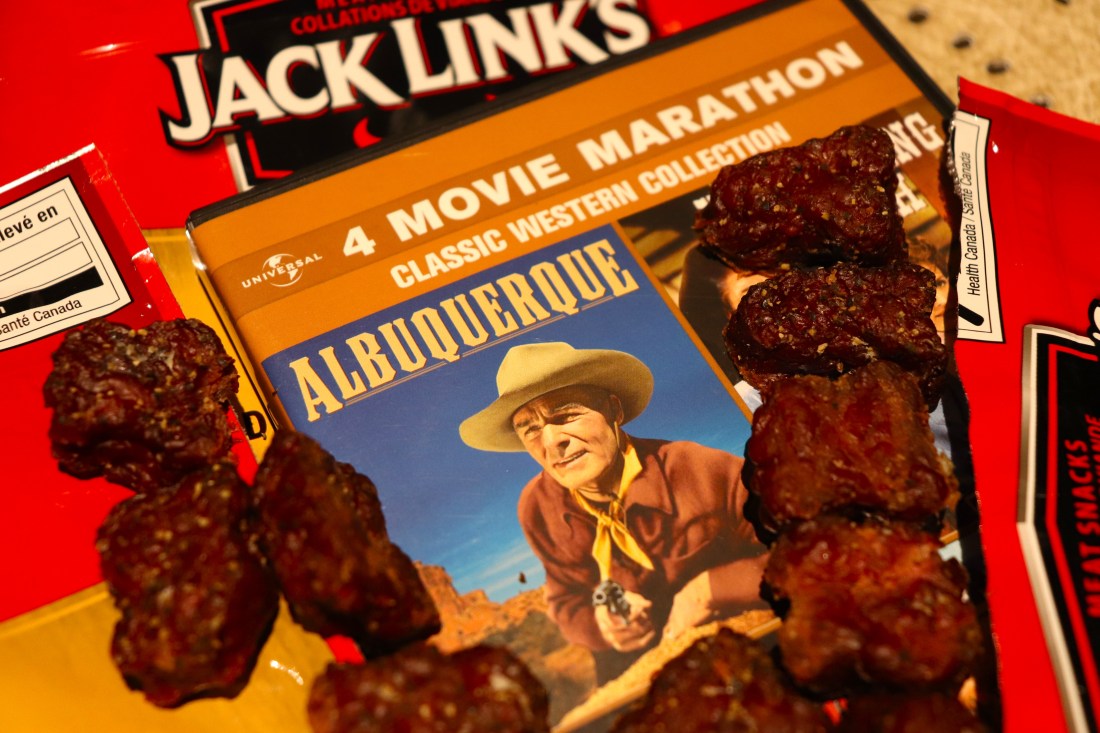
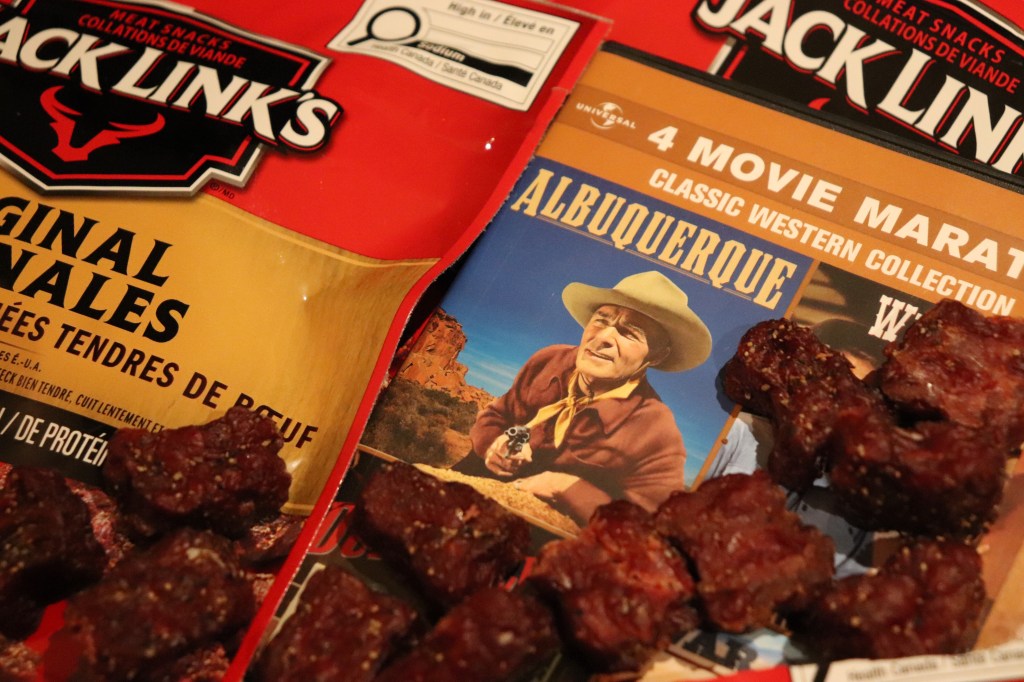
Jack Link’s Original Beef Tender Bites (because it’s a little bland at first, but some flavour eventually manages to work its way in)
Fun facts:
-Release date: Feb. 20, 1948
-Budget: $728,000
-Box office: $1.7 million (US rentals)
–Albuquerque is based on the novel Dead Freight for Piute by prolific western author Luke Short. At least ten of Short’s books have been adapted into films, according to Wikipedia.
-George “Gabby” Hayes brought his talent to dozens of Hollywood westerns throughout the 1930s and 40s, often playing a comedic sidekick to much younger stars. Outside of starring alongside Randolph Scott in six movies, Hayes was also a frequent collaborator with leading men like John Wayne (15 times) and Roy Rodgers (44 times).
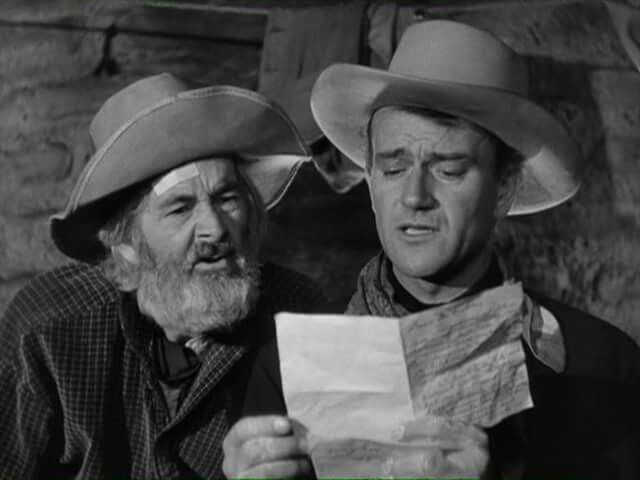
-Hayes has two stars on the Hollywood Walk of Fame: one for his contributions to television and another for his work in radio.
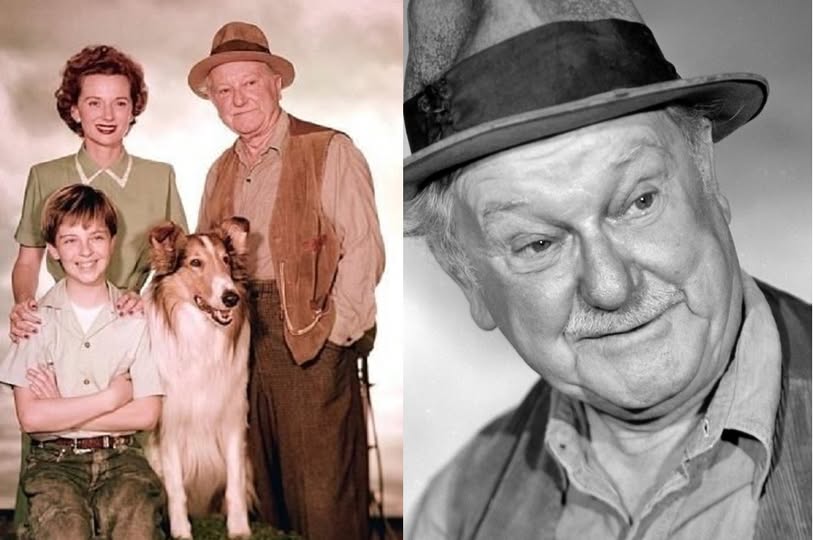
-George Cleveland (who played the villainous uncle in Albuquerque) is probably best known for his role as the grampa in the original Lassie TV show. He appeared in 116 episodes of the program from 1954 to 1957 before passing away at the age of 71.
 Corner Store Cinema