Battle Creek Brawl (1980) review: rough-around-the-edges charm

A universal rule of life is that you only get one shot at making a good first impression, and that fact extends to big time celebrities as well.

Movie studio execs almost certainly had this maxim in mind during the production of Battle Creek Brawl (1980), since it marked Jackie Chan’s inaugural attempt to break into the U.S. film market.

Even though the Hong Kong martial artist had cultivated a series of hits in Asia, his star power remained an unproven commodity in the West.

So, to roll out the figurative red carpet, Warner Bros. producers did all they could to make Chan palatable to Western audiences, going so far as to hire the same director (Robert Clouse) and crew responsible for introducing Bruce Lee to the world in Enter the Dragon (1973).

While Lee became a household name thanks to that movie, Chan was less successful with Battle Creek Brawl, and would have to wait another 16 years before he truly “arrived” in the U.S.

Watching this movie today, it’s easy to see why Battle Creek Brawl didn’t connect with audiences or critics the way some hoped, since Chan’s signature kinetic movements are much more reserved compared to his other works.

Despite these limitations, Chan’s best qualities as a performer still manage to shine through, making this film an interesting historical artefact and decently entertaining action flick at the same time.

For his American film debut, Chan plays Jerry, a Chinese American living in 1930s Chicago with his family.

Jerry’s strong moral convictions and love of martial arts cause him to run afoul of some local gangsters, who repeatedly threaten his family through physical intimidation and eventually a kidnapping.

Through this kidnapping, the mob blackmails Jerry into entering a Texas street fighting tournament on their behalf, leading to a life-and-death struggle where his combat skills are put to the ultimate test.

Like a lot of Jackie Chan movies, the plot of Battle Creek Brawl isn’t that original or sophisticated. Instead, it mostly serves as a narrative device to string together a series of action sequences that showcase the star’s pure athleticism and daredevil charisma.

Having said that, the story here is particularly threadbare, with certain important plot points being brought up and totally forgotten by the end.

The worst example of this sloppy writing is the aforementioned kidnapping, where the bad guys snatch Jerry’s sister-in-law off the street and use her as leverage to get him to enter the fighting tournament. The mobsters then replace the sister-in-law with a decoy to ensure that the rest of his family aren’t tipped off to their sinister machinations.

This serves as a decent set-up for the third act, where the stakes are raised and Chan’s character is fighting for something more than just money and personal pride. The problem is that we never see these two women (the sister-in-law or her decoy) again after their initial introduction, and the whole kidnapping business is (I assume) resolved after the credits roll.

By failing to resolve these plot threads, the film’s finale is severely lacking in emotional payoff, leaving me with the bewildering feeling that I hit the “skip” button on my remote by mistake.

Equally confusing is the movie’s production design and costuming, which is a total mess in terms of maintaining a consistent look and feel for the established 1930s setting.

Nowhere is this more apparent than in the film’s underground roller derby scene, where the participants are wearing funky jumpsuits pulled right out of a 1970s disco dance lineup.

The film’s fighting tournament finale is also littered with background extras who are similarly out of place, including all the on-duty cops who (based on their uniforms) look like they spend most of their time chasing after the Dukes of Hazzard.

I know this all sounds like trivial details that shouldn’t amount to much, but it just points to the fact that the filmmakers’ commitment to making a period piece was half-hearted at best, making me question why they decided to take this route in the first place.

Of course, all this shoddy craftsmanship can be forgiven if the film delivers on its main course, which is Chan’s signature mix of comedy and martial arts that endeared him to generations of action movie fans.

On that front, Battle Creek Brawl is more of a mixed bag.

Compared to the insane stunt choreography that Chan would put together throughout the remaining 1980s and 90s, the fight scenes here are noticeably slower and more restrained.

This diminished work rate is clear from Chan’s opening scuffle, where it seems like he’s going out of his way to not hurt the American stunt team.  

A noticeable lack of coordination is also present during the anachronistic roller derby, which is a fun sequence in concept but remains a little awkward in terms of execution.

That said, Chan performing at half speed is still a sight to behold, and the filmmakers do at least have the good sense to put him front and centre when it matters.

Chan’s status as a fearless stunt man is firmly established from the get-go, with his character being introduced in a scene where he fearlessly swings around the top of a bridge without any wires holding him up.

The movie also features plenty of solo training montages sprinkled throughout the runtime, where the camera is singularly focused on Chan’s impressive athleticism through long, uninterrupted takes.

Plus, as the movie goes on, it seems like the stunt team does eventually hit their stride, doing a decent job of synthesizing the action-comedy formula that Chan would go on to perfect in the subsequent decades.

The filmmakers are also good at keeping things unpredictable by adopting a “why not” approach for some of their fight scenes.

My favourite example of this kitchen-sink strategy takes place during the quarter finals of the fighting tournament, when Chan’s opponent gets tired of using his fists and opts to just run him over with a stolen police car.  

However, the most impressive element of Battle Creek Brawl is how it manages to maintain a fun and charming vibe outside of its fight scenes.

Much of this is due to Chan, who remains a likable underdog protagonist even in quieter scenes involving his girlfriend (Kristine DeBell) or mentor (Mako). This feat is especially impressive when you consider the fact that Chan had to learn all his English dialogue phonetically for this film and didn’t rely on someone else to dub in his lines later.

The film’s supporting cast is equally responsible for cultivating this breezy atmosphere, with actors like Mako and José Ferrer being just as entertaining as Chan when fists aren’t flying.

Mako comfortably slots himself into the classic role of the martial arts mentor, putting Chan through his comedic paces as a surly chiropractor who has a weakness for Rubenesque women.

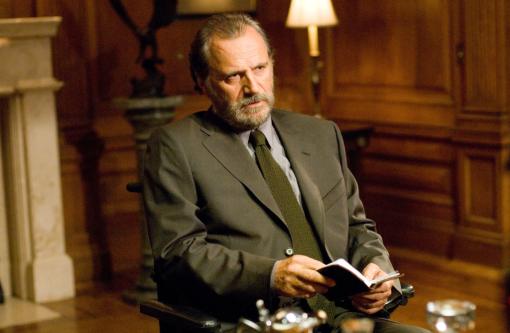
And Ferrer brings a surprising amount of laidback charisma to the table as the film’s main villain. Rather than spend his time snarling and lacing every line with creeping menace, this Chicago mob boss is far more affable when it comes to his criminal dealings, perfectly falling in line with the movie’s lighter tone.

These charming elements are also wrapped up in the film’s eclectic score, which mixes Spaghetti western whistling with some heavy jazz base lines.

Like a lot of Battle Creek Brawl, these disparate musical influences shouldn’t work when fused together. But, against all odds, the score eventually becomes a catchy earworm that’s perfectly synced up to the movie’s pervasive silliness.

Ultimately, the filmmakers’ refusal to take themselves too seriously is what saves this project from completely collapsing in on itself.

Had the movie detoured into dramatic pathos or over-the-top grizzly violence, then all of its bad writing and technical shortcomings would stick out even more.

But by keeping things fun and light throughout the entire runtime, Battle Creek Brawl remains an endearing viewing experience despite its many rough edges.

It’s the film equivalent of that weird guy you meet at a party who is a little off-putting at first, but he eventually wins you over due to his wholesome nature and infectious humour.

That’s essentially Chan’s relationship with Western audiences, since his hard work and raw talent (expertly showcased in this film) would eventually pay off and result in him becoming one of the biggest movie stars in the world.

So forget what I originally said about first impressions being the end all, be all. Sometimes life gives you countless opportunities to prove your worth. You just have to be willing to put it all on the line and pick up the pieces in case of tremendous failure.  

Thank you for coming to my TED Talk.

Verdict:

6/10

Corner store companion:

Ritz crackers (because this food item is pretty plain by itself, but serves as a good foundation for future projects)

Fun facts:

Release date: Sept. 10, 1980 (U.S.)

Budget: $6 million

Box office: $21.5 million

-Alternate titles: The Big Brawl, Killer’s Trench

Chan finally received his major North American breakthrough hit with Rumble in the Bronx (1995). Not only was Rumble popular with fans and critics (even screening at the 1996 Sundance Film Festival), but the movie made back nearly five times its budget thanks to its run in international markets.  

-Fans of Avatar: The Last Airbender may get a kick out of Mako’s role in Battle Creek Brawl. In both properties he plays an unconventional master arts master who loves tea and dishing out words of wisdom to his nephew.

Battle Creek Brawl marks the first time Chan’s authentic voice was heard in a movie. Before this film, all of Chan’s previous work was dubbed in Cantonese or Mandarin by another actor.

-Both Chan and Mako would go on to voice Master Splinter in different screen iterations of the Teenage Mutant Ninja Turtles. Mako would lend his voice to the character in 2007, while Chan was cast to give Splinter life in 2023’s Mutant Mayhem.  

Battle Creek Brawl can be watched in its entirety on YouTube for free (with occasional ads breaks)

Shooter (2007) review-just off the mark

Lately, I’ve been getting this sinking feeling that certain genres of film are becoming completely irrelevant to modern audiences. This endangered species list includes any thriller or drama that touches on contemporary U.S. politics, given how chaotic, fractured, and patently absurd the real-life machinations of the current administration are. After all, how can a Hollywood screenwriter compete with the sheer ludicrousness of SignalGate or top the cartoonish villainy exhibited by a shifty interloper like Elon Musk?

In this context, Antoine Fuqua’s Shooter (2007) seems pretty tame by comparison. This is because the film’s U.S. government baddies are at least marginally intelligent and vaguely discreet when it comes to enacting their evil plans, not at all like their modern, real-world counterparts.

But regardless of the differences between Bush and Trump era politics, these conspiracy-themed thrillers can be a lot of fun, as long as they have a decent script, smooth pacing, and some tight direction.

Shooter definitely excels in a few of these areas, providing the perfect kind of disposable action movie fluff to watch on a lazy Sunday afternoon alongside your dad.

Unfortunately, the film is also weighed down by a weak lead performance and far too many genre cliches, making it hard to distinguish from the dozens of other “one man army” stories clogging up your local DVD bargain bin or drugstore book rack.

The eponymous “Shooter” in this film is Mark Wahlberg, who steps into the boots of elite Marine sniper Bob Lee Swagger. Despite being retired from the U.S. military for several years, Swagger is pulled back into service by Colonel Isaac Johnson (Danny Glover), who needs his help to thwart a presidential assassination attempt. However, the job quickly reveals itself to be a set-up, with Swagger being blamed for killing the Archbishop of Ethiopian (who was standing next to the American president during the shooting). Now on the run, Swagger must clear his name and get to the bottom of a vast conspiracy that reaches all the way to the U.S. Senate.

Like I mentioned at the top, the film’s major weak link is Wahlberg, who does very little to elevate this material above your standard action schlock.

Sure, Marky Mark pulls off the right rugged look and is convincing when he’s holding a gun. But there’s very little in his performance that helps engage the audience on an emotional level.

One moment that stuck out to me was when Swagger’s love interest (Kate Mara) tells him that the bad guys killed his dog. Rather than reacting with piercing sadness or explosive anger over the murder of his best friend, Wahlberg responds with mild annoyance, like someone just told him that he needs to replace his Brita filter.

Unfortunately, Wahlberg remains stuck in this subdued acting mode for most of the film’s runtime, offering only brief glimpses beneath his stoic persona.

I’m not suggesting he needed to break down crying every five minutes to be more relatable or whatever, but some psychological insight would have been welcome.

Maybe this could have been accomplished through casting an older actor, someone capable of bringing a genuine world-weary quality to the role.

According to IMDB, men like Clint Eastwood, Tommy Lee Jones, and Harrison Ford were all considered for the part, which sounds like a much better fit for the vibe the movie was trying to convey.

But to be fair to Wahlberg, the film’s script doesn’t do him any favours.

Despite being established as a conspiratorial shut-in (who lives in the mountains and reads the 9/11 Commission Report for fun), Swagger is surprisingly willing to trust this shadowy government figure (Glover) and fall for the most obvious frame up job of all time.

So when he’s betrayed and literally shot in the back, I was left wondering why Swagger didn’t have any contingency plans in place, since being a rigid individualist who doesn’t trust the government is one of his only defining character traits.

Plot nitpicking aside, Shooter at least delivers the goods once Wahlberg goes on the run.

While nothing approaches the tension director Andrew Davis created for The Fugitive (1993), Fuqua and his team make up for that by staging some impressive kinetic action.

This means juicy blood squibs, bright muzzle flashes, and big practical explosions, all tied together with crisp editing that makes the moment-to-moment carnage easy to follow.

The best example of this technical expertise is on display in the third act, when Wahlberg teams up with a sympathetic FBI agent (Michael Peña) to storm a rural compound full of cannon fodder enemies.

This flashy spectacle is also helped by the cast of great character actors assembled to play the bad guys.

Outside of Glover, this rogue’s gallery includes the likes of Ned Beatty as a corrupt U.S. senator and Elias Koteas as a psychopathic henchman on Wahlberg’s trail.

While these three are suitably over-the-top, and serve as the perfect rivals for Wahlberg’s salt-of-the-earth veteran, the movie does at least carve out some depth for Rade Šerbedžija.

The well-known Croatian actor makes the most of his tiny role as a wheelchair-bound sniper who is working under the thumb of Glover’s corrupt army colonel.

Even though most of his lines are relegated to a single exposition dump, Šerbedžija conveys a lot of potent regret and melancholy through his delivery alone, making me wish the movie was about him instead.  

Unfortunately, familiar action movie tropes eventually pile up and dilute whatever unique sense of identity Shooter had going for it.  Some of these trappings I’m willing to forgive, like all the bad guys not being able to hit the broad side of a barn in a firefight. But other cliches are pretty egregious and took me out of the movie. These moments include:

  • Wahlberg’s soldier buddy pulling out a photo of his wife moments before getting ravaged by bullets
  • Mara delicately dressing the wounds of a naked Wahlberg despite barely knowing him
  • One of the bad guys delivering the “we’re not so different, you and I” speech to Wahlberg as he’s being held at gunpoint
  • Wahlberg being way too cool to look back at the explosion he just set off

Many of these moments were old hat in the 1990s, so the fact that they were smuggled into a 2007 film (without anyone in production batting an eye) is very concerning.

And while Shooter is fairly generic overall, I will at least give the filmmakers credit for grounding it in the specific real-world politics of the time.

Instead of taking the coward’s way out and giving the bad guys vague motivations (as to not offend anyone), the screenwriters zero in on U.S. foreign policy being a pervasive antagonistic force.

Not only is the Abu Ghraib torture scandal mentioned by name, but most of the plot revolves around [SPOILERS] the American military covering up an African village massacre to further Big Oil business interests.

After watching my fair share of military propaganda for this blog, it was refreshing to see U.S. imperialism portrayed in a critical light, even if it is packaged in a movie where the hero solves all his problems with brute force.

In that sense, Shooter may resonate with more people in 2025 than it did in 2007, given that the current American government is explicitly threatening to annex places like Greenland, Panama, and even my home country of Canada

I’m not suggesting that a dumb action movie like Shooter will wake people up to this growing American hegemony or shake them from the kind of political apathy that allows evil to flourish.

But if someone receives a shock to the system by noticing how these goofy movie villains are being eclipsed by the sinister actions of real-world politicians, then maybe this film is a worthwhile watch after all.

Plus, did you see that scene where Wahlberg sniped three guys while standing up in a boat? That was sick!

Verdict:

6/10

Corner store companion:

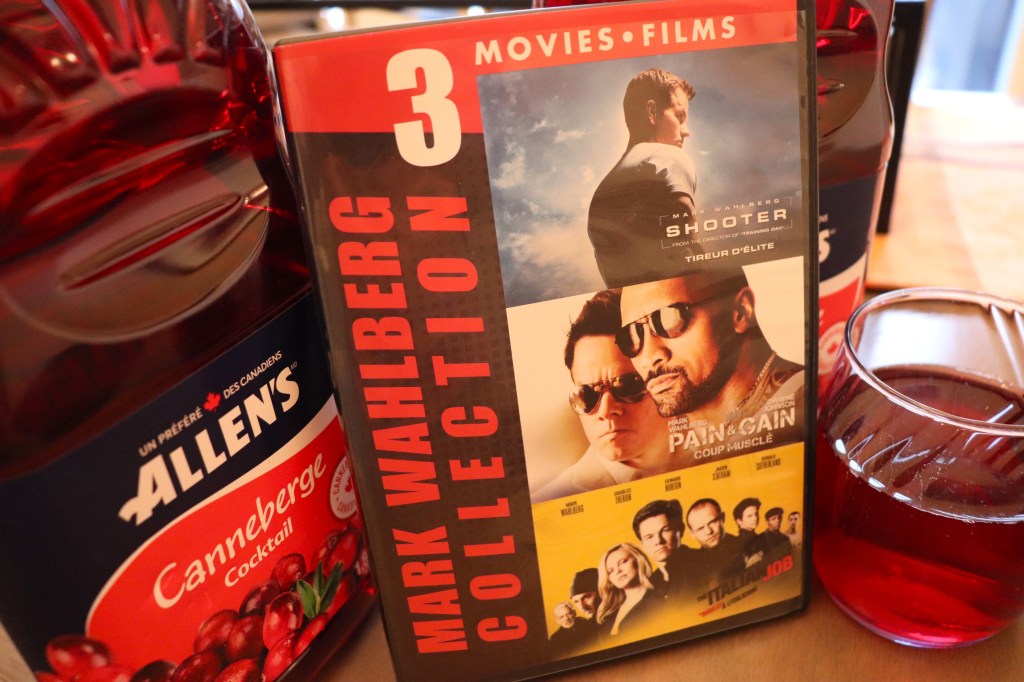
Allen’s Cranberry Juice (because when it comes to resisting U.S. imperialism, buying a Canadian food product is on the same level as watching a vaguely anti-American film from 18 years ago)

Fun facts:

Release date: March 23, 2007

Budget: $61 million

Box office: $95.7 million

-The character Bob Lee Swagger was originally created by author/film critic Stephen Hunter and first appeared in the 1993 novel Point of Impact. Hunter has written 12 books in the Bob Lee Swagger series, with the last story (Targeted) being published in 2022.

-The gun expert Wahlberg meets in the middle of the film is played by musician Levon Helm, who served as a drummer for The Band and was a 1994 inductee into the Rock and Roll Hall of Fame. Outside of his lengthy music career, Helm also appeared in films such as Coal Miner’s Daughter (1980) and The Right Stuff (1983).

-This film was later spun off into a TV series that ran for three seasons (2016-2018) on the USA Network. Ryan Phillippe took over the lead role from Wahlberg and the plot of the TV show revolved around the first three novels in the Bob Lee Swagger book series.

-Musical highlight: “Nasty Letter” by Otis Taylor (plays during the end credits)

Bulletproof (1996) review-a complete misfire

When people talk about the widening gap between film critics and average movie-goers, I feel like Adam Sandler was a harbinger of things to come.

For nearly three decades now, Sandler has been a consistent punching bag for critics, who find the majority of his comedies low-brow, lazy, and juvenile.

At the same time, Sandler’s brand of humour has endeared him to the broader movie-going masses, who ensure that most of the films released under his production company (Happy Madison Productions) turn a profit.

This success even carried through into the streaming era, with Sandler signing a lucrative multi-picture deal with Netflix in 2014 that was extended in 2017 and 2020.

Despite this long-standing divide between critics and fans, the two groups at least found some common ground in terms of their dislike for Bulletproof (1996), an R-rated action comedy that Sandler starred in (alongside Damon Wayans) just as his career was really taking off.

While the film’s reviews are predictably dismal, it also bombed at the box office, only generating $22.6 million (worldwide) out of a $25 million budget.

Even the film’s director Ernest Dickerson wasn’t happy with the final product, telling DVD Talk in the mid-2000s he wishes he could “just erase that whole experience” from his memory.  

Having now seen Bulletproof for myself, it’s easy to see why few remember it fondly.

Not only is this film a complete misfire both in terms of action and comedy, but it also features some truly shoddy filmmaking that’s shocking to see in a major Hollywood release.

Because of this, I imagine that Sandler fans in 2024 will struggle to find something to like in Bulletproof, since even they have standards.   

In Bulletproof, Sandler stars as a hood named Archie, who steals cars and smuggles drugs on behalf of crime kingpin Frank Colton (James Caan).

Unbeknownst to Archie, his best friend and business associate Jack is an LAPD cop working undercover to bring down Colton’s operations from within.  

Jack finally reveals his identity to Archie during a police raid on one of Colton’s warehouses, resulting in Archie accidently shooting his best friend in the head before escaping.

After somehow recovering from this grievous injury, Jack is tasked with bringing Archie into custody so that he can testify against his boss.

The rest of the movie basically turns into an elaborate trust building exercise, where Archie and Jack must squash their personal beef and work together to stay one step ahead of Colton’s hitmen.

Based on this premise, the film has a lot of potential and instantly calls to mind underrated  action-comedy classics like Midnight Run (1988) and Bird on a Wire (1990).

Unfortunately, Bulletproof lacks all the key ingredients that made those movies work, including a sharp script, well-choreographed chase scenes, and palpable chemistry between the two leads.

The most glaring omission from this recipe here is the rapport (or lack thereof) between Sandler and Wayans.

A lot of the film’s glaring weaknesses could be forgiven if the pair were at least believable as former best friends who gradually rebuilt their relationship throughout the narrative.

But the back-and-forth between Sandler and Wayans is consistently stiff and lifeless, almost like the duo rehearsed to shoot a Super Bowl commercial rather than a feature film.

It also doesn’t help that their individual performances are pretty weak.

Wayans ends up looking the worst out of the two, since he’s tasked with tackling a dual role as an undercover cop.

As Sandler’s criminal associate, Wayans adopts this ludicrous “street” accent that’s supposed to make him sound tough, but he just comes across as one of his sketch characters from In Living Color.

Once he sheds that identity, Wayans is similarly unconvincing as a strait-laced police officer, who lacks the commanding presence necessary to sell the film’s dramatic beats.  

Sandler doesn’t fare much better, since his performance in Bulletproof is indistinguishable from the wise-cracking characters he played in films like Happy Gilmore (1996) or Big Daddy (1999).

Perhaps that approach was intentional, to satisfy the fanbase Sandler had cultivated through his pure comedies and stand-up career, but it doesn’t it doesn’t jive with the movie’s harder edge.

Admittedly, there is some appeal in watching Sandler tackle some R-rated material, like yelling “gross, right in the fucking eyeball” after he shoots a bad guy in the head.

But that novelty quickly runs out its welcome, and all you’re left with is an unfunny script that never transcends lazy middle-school jokes related to bodily functions and implied gay sex.

The film’s action sequences suffer from the opposite problem.

Dickerson and his team show no shortage of ambition, since they stage several set pieces that feature plenty of carnage and vehicular mayhem.

Unfortunately, the filmmakers obviously bit off more than they could chew, since these scenes are poorly shot and clumsily slapped together in the editing room.

This incompetence is on full display during an airplane crash sequence early on, where Dickerson doesn’t even attempt to hide Sandler and Wayans’ stunt doubles as they leap to safety.

The only time the film really nailed that 90s action feel was during a quick shootout in the third act, when Sandler and Wayans encounter some goons in a suburban kitchen.

For whatever reason, the filmmakers decided to significantly up their game for this 60-second scene, tying it together with smooth camera movements, juicy blood squibs, and Sandler’s only funny quip in the movie (“I think they’re eating fajitas!”).

It’s almost like the studio hired Robert Rodriguez for an afternoon of uncredited consulting work, where he was able to impart his tricks of the trade to a crew that was clearly in over their heads.

But momentary flashes of competence can’t make up for the film’s other technical shortcomings, including its atrocious sound.

If you clicked on the above clip, you’re sure to get an earful of the ambient techno diarrhea that’s meant to serve as the film’s score.

Not only does the music sound like a toddler hitting a Casio keyboard at random, but the mixing is also all over the map.

During the movie’s climax, the music is so low it’s nearly inaudible, almost like the filmmakers left it in the final cut by accident.

And then there’s the movie’s spotty ADR, where the characters’ dialogue is piped in seemingly at random.  

At one point, the filmmakers even neglected to dub in one of Wayans’ lines, resulting in an awkward moment where he mimes his dialogue with no sound.

Some may tilt their head at my attempt to critique the mise-en-scène of a goofy Adam Sandler comedy, which isn’t meant to be taken seriously.

While that may be true, I feel some baseline professionalism must be maintained in even the zaniest of film projects, and Bulletproof fails to clear that low bar.

This is especially true given that Bulletproof is standing in the shadow of much better buddy action movies starring stand-up comedians, with Eddie Murphy having found great success with this formula over a decade ago with 48 Hrs. (1982) and Beverly Hills Cop (1984).

However, the film’s worst sin is how painfully unfunny its script is, with virtually all attempts to pull a chuckle out of me landing with a dull thud.

One of the few exceptions to this dismal trend takes place during a climactic fist fight between Wayans and Caan, when the latter nonchalantly removes his toupee before throwing hands.

Does this gag sully the dignity of a legendary actor like Caan? Definitely. But that’s kind of why it works, and I wish the film took more chances like this rather than fall back on jokes that were already worn out by the mid-90s.

Admittedly, this same criticism could be levied at a lot of Sandler’s other comedies, even though most of those projects were financially successful and well-liked by fans.

So why is Bulletproof largely forgotten these days?

My guess is that the R rating turned a lot of people away, with most of Sandler’s other projects falling into that PG-13 sweet spot.

Another factor is that this movie was presented as more of a vehicle for Wayans, who was given top billing as his career was much better established at that point.

But whatever the reason, Sandler wouldn’t let this little bump in the road stall his career.

Over the subsequent 28 years, he went on to churn out dozens of films that have cumulatively grossed over $3 billion worldwide, making him one of the most successful comedians in Hollywood.

He even used this industry clout to (occasionally) flex his dramatic chops, seeking out projects with heavyweight directors like Noah Baumbach, Paul Thomas Anderson, and the Safdie Brothers.

Because of these career detours, some of which resulted in industry awards, I get the sense that critics have softened on Sandler these days, or are at least willing to ignore his comedies now that they’re all relegated to Netflix.

While critical re-evaluation is always welcome (and necessary) in today’s increasingly hostile film discourse, this exercise can only go so far.

No amount of historical hindsight could convince me that Bulletproof is worth recommending to anyone other than diehard fans who are compelled to consume every one of Sandler’s films in a marathon rewatch.

Even in this case, these folks may want to skip Bulletproof anyway, since its sheer awfulness may sour the rest of Sandler’s early filmography by association.   

Verdict:

2/10

Corner store companion:

Maltesers (because they look good on the outside, but there’s nothing going on under the surface)

Fun facts:

-Release date: Sept. 6, 1996

-Budget: $25 million

-Box office: $22.6 million (worldwide)

-Sandler nabbed a “Worst Actor” Razzie nom for his performance in this film and Happy Gilmore. He ultimately lost this award to the dream team of Tom Arnold and Pauly Shore, who starred in a number of comedies throughout 1996. Bulletproof was also represented at the 19th Stinkers Bad Movie Awards, with Caan being nominated for “Worst Supporting Actor.”

– Ernest Dickerson went to film school alongside Spike Lee and served as a cinematographer on several of his early projects. These collaborations include She’s Gotta Have It (1986), School Daze (1988), Do The Right Thing (1989), and Jungle Fever (1991).  After trying his hand at directing feature films, Dickerson has been mostly focused on directing television for the last two decades. His TV credits include work on Treme, Bosch, Dexter, and The Walking Dead.

-“Bulletproof” serves as the title for a number of other films, including a 1988 action movie starring Gary Busey and a 2020 documentary on gun violence in American schools. “Bulletproof” is also the name of a British police procedural that ran between 2018 and 2021.

-A direct-to-video sequel to Bulletproof was released in January 2020, 24 years after the original film was released. It featured none of the original cast, with actors Faizon Love and Kirk Fox filling in for Wayans and Sandler, respectively.

Man Hunt (1984) review- a journey into the uncanny valley

If you’re looking to pick a fight on social media these days, a good place to start (outside of the ongoing Israel-Hamas conflict) is talking about generative artificial intelligence.

This is especially true in sections of the internet where people like to discuss the arts, since this new technology is viewed (depending on who you ask) as something that will either revolutionize the entertainment industry or bring about its downfall.

Personally, most of the AI-generated images and videos I’ve seen aren’t a convincing substitute for the projects made by flesh-and-blood creators, since they almost always possess some bizarre alien quality that makes my skin crawl.

However, the recent advances in AI shouldn’t distract you from the fact that humans have always had the potential to produce works of art that are completely uncanny, off-putting, and devoid of logic.

Enter Fabrizio De Angelis’ Man Hunt (1984), a neo western so lazy and nonsensical in its construction that you think the script was written during a drunken round of Mad Libs.

Admittedly, this does result in somewhat of an engaging viewing experience, since you’re constantly left wondering when the next wacky story development or plot hole will pop up. 

But taken as a whole, Man Hunt’s pervasive weirdness can’t sustain a feature-length runtime and it just leaves you with the creeping feeling that your home has sprung a gas leak.

Some may look at this film’s synopsis on IMDB or Wikipedia and conclude that I’m being a little hyperbolic, since the set-up is typical western shenanigans.

The plot of Man Hunt revolves around a nameless stranger (Ethan Wayne), who buys a pair of horses at a rodeo and accidently wanders onto some land belonging to a corrupt rancher (Ernest Borgnine).

After the rancher steals the horses for himself, the stranger gets thrown in prison after attempting to retake his property.

The rest of the film details the stranger’s attempts to escape from captivity and clear his name, all the while trying to stay one step ahead of the law.

You’ve probably seen a variation of this plot in a dozen other movies, but it’s the way that De Angelis and his crew tell this story that’s truly baffling.

For one thing, the stranger’s first escape from prison is never shown or discussed on screen, even though it’s supposed to represent a major turning point in the story.

Before you can get your head around such a weird creative decision, the stranger is immediately caught and gets thrown back behind bars, leading to his second escape minutes later.

After hijacking a bus and blasting his way through an army of cops, the stranger is then given safe passage thanks to Borgnine’s corrupt rancher, whose change of heart comes out of nowhere and is never given any explanation.

This kind of plot progression would make sense if Man Hunt was a comedy or Zucker Brothers-esque parody of old prison break movies.

But the tone of the film is deadly serious throughout its 91-minute runtime, which exposes the grim reality that De Angelis and his team have no idea what they’re doing.

That lack of direction is laid bare in the first four minutes of the film, which consists almost entirely of boring b-roll footage of the rodeo where the stranger buys his horses.

This opening remains a pretty blatant example of “Shooting the Rodeo,” a term coined by RedLetterMedia that describes the tendency for directors of low-budget movies to pad their runtime by filming real public events.

Man Hunt is an especially egregious example of this trope, since De Angelis lingers on this intro for way too long and includes elements like unnecessary slow motion to add insult to injury.  

These strange filmmaking techniques persist throughout the entire narrative, so much so that I was almost convinced that De Angelis was trying to create the kind of surreal, dream-like atmosphere one would find in a David Lynch movie.

But unlike Lynch’s works, Man Hunt is a pretty boring and lifeless affair for long stretches of its runtime, which is made even worse by a lead performance that is dull as dishwater.     

For those of you who are unaware, Ethan Wayne is the son of Hollywood icon John Wayne, who found work as an actor throughout the 1980s, 1990s, and early 2000s.

A brief scan of Wayne Jr.’s acting credits reveal that he never really made it as a major leading man like his dad, and in Man Hunt it’s easy to see why.

Pretty much every line that comes out of his mouth is stiff and robotic, almost like he’s a non-English speaker who learned the language for this role.

Wayne’s monotone performance extends to his blank facial expressions, which I’m assuming he employed to come across as a stoic western hero archetype just like his father.

But Wayne just doesn’t have the presence or charisma to pull this off and ends up looking like a pretender, especially when he’s asked to do anything physical.

This includes a couple of embarrassing running scenes, where Wayne gets to show that he has all the dignified grace and coordination of a young Steven Seagal.

To be fair, even a lauded thespian like Orson Wells would have trouble grasping this material, since it never finds its footing in a consistent style or tone.

Instead, the filmmakers decide to put a bunch of other movies in a blender, with the beginning of Man Hunt serving as a clumsy fusion of First Blood (1982) and Cool Hand Luke (1967).

The last third of the film ultimately becomes a downscaled version of Clint Eastwood’s The Gauntlet (1977), where the stranger has to evade an army of trigger-happy cops.

And to the film’s credit, these chase sequences do at least feature a lot of impressive pyrotechnics and automotive stunt work.

One scene near the end of the film stands out as a particular highlight, where a police cruiser flips over and showers the concrete street with broken glass.

Seconds later, two cruisers collide into each and explode, treating us to the amusing sight of flaming wheels skipping down the road.

All this technical expertise comes to a head in the film’s climax, where [SPOILERS] Wayne gets cornered in a mobile home and the cops open fire on him for what feels like five minutes.

This one-sided shooting is so excessive that it becomes a complete farce and instantly reminded me of a famous gag from The Naked Gun 21/2(1991).

Unfortunately, the filmmakers had to ruin this fun time by delivering one of the dumbest endings that’s ever been committed to celluloid.

Once Wayne emerges from this bullet-riddled trailer, completely unscathed of course, the cops go to arrest him, but he has a secret weapon up his sleeve.

Instead of carrying a gun or smoke bomb, the stranger produces a bill of sale which proves that he legally bought the horses at the beginning of the story.

This magical receipt completely freezes the corrupt cops in their place and forces them to let the stranger go, even though they were trying to unlawfully cut him into Swiss cheese seconds earlier.

Of course, this piece of paper shouldn’t absolve Wayne of all the property damage and lives he put in mortal danger during his multiple escape attempts.

But I guess we’re well past the point of pretending like Man Hunt takes place in a world that adheres to logic or reason, unless there’s some real legal precedent that gives you immunity from all manner of prosecution if you simply yell “It’s okay, officer! I have a receipt!!”

I know I’ve spent a lot of time on this one plot point, but I think it’s a microcosm of how disorienting this film is as a whole.

Almost every aspect of this project feels artificial or randomly generated, from its script to the acting to the musical score.

Part of me feels like this comes down to De Angelis’ inexperience as a director, since Man Hunt is only his third feature film after nearly a decade of producing Italian genre schlock.

Perhaps that jump into the director’s chair was too much to handle, so he resorted to throwing a bunch disparate American film tropes at the wall to see what would stick.  

De Angelis’ scattershot approach to directing Man Hunt is probably what triggered the AI comparison I brought up earlier, since that technology (in its current form) is only able to generate new works of art using pieces of pre-existing material.

Some may argue that this is no different than the creative process most humans undertake, and maybe there is some merit to that line of thinking.

But with a man-made trainwreck like Man Hunt, I can at least trace the creative influences of the people who worked on it and see that the director went on to embrace his exploitation roots by making films like Killer Crocodile (1989), Karate Rock (1990), and Breakfast With Dracula (1993).

This form of film analysis is infinitely more interesting than looking at the prompts and lines of code that went into creating an AI-generated blockbuster, which sounds about as fun as filing my taxes.

I would much rather look into the history of a deeply imperfect filmmaker than stare into the gaping maw of a machine-driven algorithm, even if the former ends up producing a completely incomprehensible piece of shit like Man Hunt.    

Verdict:

3/10

Corner store companion:

Buffalo Ranch Pringles (because this film is seriously lacking in real western flavour)

Fun facts:

-Release date:

Nov. 30, 1984 (West Germany)

Dec. 6, 1984 (Italy)

-Outside of the film’s original Italian title of Cane Arrabbiato (which roughly translates to “Mad Dog”), Man Hunt was also known as Uppercut Man in France.

-For most of his directing career, Fabrizio De Angelis was credited under the more American-sounding name of “Larry Ludman,” including for his work on Man Hunt. De Angelis also directed under the alias of “Ted Russell” for Breakfast With Dracula (1993).

-As an actor, Ethan Wayne is probably best known for portraying Storm Logan on The Bold and the Beautiful. Wayne played this character throughout 217 episodes of the long-running soap opera, eventually retiring from acting after he left the show for good in 2003.

Man Hunt can currently be watched in its entirety on YouTube (with Asian subtitles).

Renegades (1989) review-optimal cable viewing

Media consumers of the streaming era will never truly know the pleasure of randomly flipping through cable channels on a lazy Sunday afternoon, which was one of the most reliable forms of entertainment for bored youth growing up in the 1990s and early 2000s.

Sure, most of the television programs available during that weekend block were infomercials or reruns of ancient sitcoms, but every once in a while you would stumble upon a random action movie that would catch your attention.

Even if the film wasn’t very good, there was something captivating about getting thrown into the middle of a car chase or shootout without the ability to rewind, forcing you to fill in the gaps using your childish imagination.

These impromptu screenings would also serve as a nice bonding experience between you and your dad, who would reliably drop whatever he was doing at the sound of gunfire and explosions and sit down on the couch next to you.

It’s in this environment that movies like Jack Sholder’s Renegades (1989) really thrive, since you don’t need to engage with it at an emotional level and just get to enjoy the cheap spectacle before Sunday dinner is ready.

However, watching this film as an adult on DVD is an entirely different story, since its underlying hollowness is inescapable in this format and you don’t have mom’s famous shrimp pasta dish to help soften the blow.

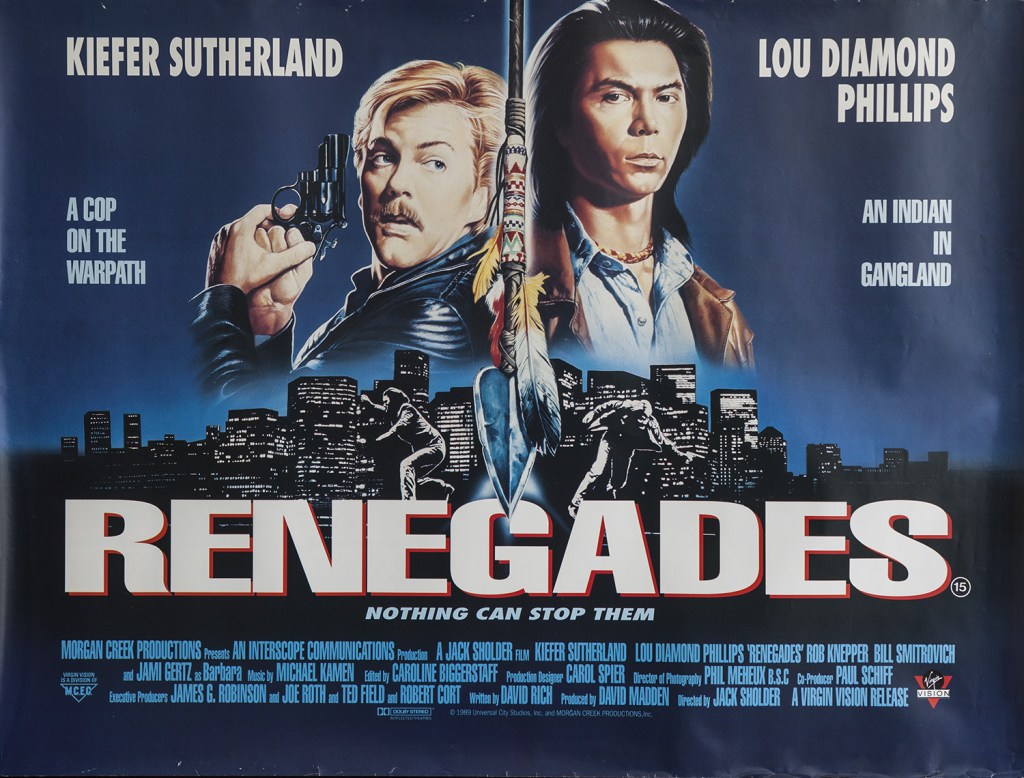
Like so many action movies of the 1980s, Renegades can easily be slotted into the buddy-cop genre, with Kiefer Sutherland and Lou Diamond Phillips starring as an undercover police officer and Native American tourist visiting Philadelphia, respectively.

When Sutherland’s involvement in a diamond heist results in a precious artefact being stolen from Phillips’ tribe, the pair must team up to bring down the bad guys.

From there, the plot unfolds in a pretty predictable fashion, since the two start out not trusting each other but gradually develop a bond as they get closer to cracking the case.

But unlike more famous buddy-cop movies from that era — like Lethal Weapon (1987) or 48 Hours (1982) — screenwriter David Rich doesn’t do a good job of giving these characters contrasting personalities.

Instead, both Sutherland and Phillips are written to be loose cannons who don’t abide by the rule of law when it comes to tracking down the people who have wronged them.

As a result, most of the conflict between these two is purely driven by the plot or superficial elements like their background, which isn’t very compelling.

It’s also pretty apparent that screenwriter David Rich was only interested in fleshing out one main character out of the two.

Sutherland’s undercover cop is at least given a decent backstory to explain his motivation throughout the story, since the audience is explicitly told that his father was a corrupt police officer who died in disgrace.

Meanwhile, Phillips’ character is completely shrouded in mystery, with details surrounding his upbringing only briefly hinted at through sparse bits of dialogue.

To compensate for this lack of depth, Rich takes the lazy route of imbuing Phillips with Jedi superpowers, hoping that viewers will be won over by his quick reflexes and ability to tap into “the force” whenever his family is in danger.  

But believe it or not, this one-note Hollywood depiction of the “noble savage” gets old pretty quickly, especially since Phillips’ chemistry with Sutherland is average at best.

Thankfully, Renegades at least delivers in the action department, with a handful of standout sequences that elevate it over the Steven Seagal-tier shlock that was circulating in the industry around that same time.

A car chase 20 minutes into the movie is honestly worth the price of admission alone, where Sutherland is forced to drive a getaway car at gunpoint after the aforementioned diamond heist goes horribly wrong.

Parts of this scene actually reminded me of the famous car chase from William Friedkin’s The French Connection (1971), where the director used a lot of first-person camera shots to create a palpable sense of danger.

The level of automotive destruction on display is also reminiscent of John Landis’ The Blue Brothers (1980), albeit with a less comedic touch.

The movie’s climactic night-time shootout at a horse ranch is similarly high on spectacle, since the filmmakers expertly compensate for a lack of natural light by setting the surroundings on fire.

And while the rest of the film’s action sequences aren’t up to that same high standard, they are at least well-edited and contain a lot of messy carnage that a more timid director would have shied away from.

Needless to say, these meaty chunks satiated my inner bloodlust and made me temporarily forget about the less desirable aspects of Renegades, like its cliched dialogue, generic music, and pedestrian plot that often veers off into being nonsensical.

But as soon as the action quiets down and you’re given some room to think, all these weaknesses bubble to the surface and the film falls apart.

Even the movie’s inciting incident is half-baked, since the main bad guy decides to take a breather from getting chased by the cops and steal Phillips’ family heirloom (a spear) for no reason.

Because of this, the protracted MacGuffin hunt that follows feels totally perfunctory, almost like the filmmakers were looking for the weakest excuse possible to link a couple of (admittedly cool) action sequences together.

Again, this kind of viewing experience is much better suited for the long-lost days of weekend cable TV, where you could put it on in the background as you wrestled with your brother or finished your homework before school on Monday.

But experiencing Renegades through the lens of an adult who is interested in obscure DVD collections, I can’t help but feel like something was lost in translation, almost like I was watching a foreign-language film with the subtitles turned off.

So unless I get my hands on a time machine, the optimal viewing conditions for this film are lost forever, and all I’m left with is a standard 80s cop movie that features good action but is severely lacking in emotional stakes.

Sounds like my last Tinder date.

Verdict:

5/10

Corner store companion:

McCain Pizza Pockets (because it’s the kind of food that also peaked in the 1990s and early 2000s)

Fun facts:

-Release date: June 2, 1989

-Budget: $16 million

-Box office: $20 million

-Because of Louis Diamond Phillips’ mixed heritage (Spanish-Filipino on his mother’s side and Scottish-Irish, Cherokee on his father’s side) he’s been able to portray a variety of ethnicities throughout his acting career, including Native American. Through preparing for Renegades, Phillips grew closer to the Indigenous community and was even adopted by an Oglala Lakota Sioux family in 1991. His Lakota name translates to “Star Keeper.”  

-Outside of helming Renegades, Jack Solder is probably best known for directing A Nightmare on Elm Street 2: Freddy’s Revenge (1985).

-While Renegades is set in Philadelphia, it was mostly shot in and around Toronto.

-Sutherland and Phillips would later reunite in a two-episode run of the popular TV action drama 24. During this section of season one, Phillips plays the warden of a secret detention facility who encounters CTU agent Jack Bauer (Sutherland) investigating the attempted assassination of a presidential candidate.

-Musical highlight: “Only the Strong Survive” by Bryan Adams (plays over the end credits)

Smokey and the Bandit II (1980) review-a sellout sequel

Few movies have captured the zeitgeist quite like Hal Needham’s Smokey and the Bandit (1977).

Not only did this road action comedy include cultural touchstones like muscle cars, CB radios and country music, but the film’s breezy attitude and blatant anti-authoritarianism was pervasive in many other pieces of media that were popular at the time.

As such, Smokey and the Bandit became the second highest grossing film of 1977 behind George Lucas’ Star Wars, which also featured a colourful cast of characters trying to deliver some precious cargo under the eye of buzz-killing fascists.

Of course, nothing good lasts forever, and the rebellious spirit of the 1960s and 70s quickly turned to corporate pandering in the 1980s, where Wall Street and Reaganomics were the new flavour of the day.

Unfortunately, Needham also decided to sell out at the very start of the decade, making an uninspired sequel to Smokey and the Bandit that contains almost none of the charm or energy that made the original film so special.

One of the most immediate problems with Smokey and the Bandit II (1980) is its plot, which doesn’t even try to mix up the formula.

Just like last time, Bo “Bandit” Darville (Burt Reynolds) is tasked with delivering a big rig worth of illegal product to a client in record time, all the while dodging members of local law enforcement like Texas sheriff Bufford T. Justice (Jackie Gleason).

In order to pull this job off, Bandit enlists the help of his best friend Cledus (Jerry Reed) and old flame Carrie (Sally Field), who also serve as his moral barometer along the way.

The only major difference to the plot here is a matter of aesthetics, with Bandit and his crew delivering an adult elephant instead of 400 cases of beer.

A couple new characters are also thrown into the mix for good measure, including a shouty Dom DeLuise who adopts one of the worst Italian accents in cinema history.

But honestly, the uninspired nature of the plot could have been palatable if Needham also replicated the fun, easy-going tone of the first film, while maintaining his trademark automotive stunt work that thrilled audiences back in 1977.

Instead, Smokey and the Bandit II is mostly a slow, plodding affair that sidelines adrenaline-pumping car chases in favour of bad slapstick comedy, which sometimes comes across as an attempt to appeal to a younger demographic.

For example, a lot of the scenes involving the adult elephant are ripped right out of a live-action Disney movie, with an accompanying score that relies way too heavily on farty brass instruments to artificially pump up the humour.

Another consequence of writing a literal elephant into the script is that the characters have to make a pit stop every five to ten minutes to check on her wellbeing and participate in more unfunny schtick.

Because of this, the film’s pace consistently grinds to a halt, with any kind of impressive vehicular destruction being pushed far into the background.

To give you a better idea of what this dynamic looks like, the first genuine car chase in the movie takes place at around the one-hour mark and is over before you can blink.

While Needham does try and compensate for this imbalance by staging a massive demolition derby for the film’s climax, it’s too little too late by that point, and the entire exercise feels like a waste of time.

However, the movie’s poor pacing pales in comparison to the way Needham and his screenwriters treat their principal characters, some of whom have devolved into complete cartoon characters.

Burt Reynolds’ Bandit, for instance, receives an unflattering comedic makeover in this sequel, being portrayed as an incompetent clown and drunk as opposed to the charming rogue that audiences were introduced to in the first film.

While exploring a new layer of Bandit’s personality sounds interesting on paper, the filmmakers’ approach here is completely misguided, since they repeatedly subject this supposedly rugged hero to a bunch of humiliating skits.

This isn’t helped by the fact that Reynolds seems to be completely disengaged with the material, constantly smirking for the camera like he is reprising the character for an episode of SNL instead of a big-budget sequel to a sleeper hit.  

Sally Field’s character isn’t done any favours by the screenwriters either, since they backtrack on all the development she underwent in the original film.

If you’ll recall, the entire plot of Smokey and the Bandit revolves around Field hitching a ride with a complete stranger to get away from marrying Sheriff Justice’s son Junior, since he repulses her that much.

However, she’s back at the altar with Junior at the beginning of the sequel like nothing happened, because I guess the screenwriters couldn’t think of anything interesting to do with her except hit the reset button.

To make matters worse, Field’s character doesn’t contribute anything meaningful to Bandit’s smuggling operation once it gets underway, beyond serving as his love interest and becoming an increasingly vocal backseat driver.

At least Jerry Reed comes away from this sequel relatively unscathed, with his best friend character still coming across as down-to-earth and relatable despite all the over-the-top shenanigans surrounding him.

Unfortunately, not even some decent chemistry between the three leads can save Smokey and the Bandit II from being a lazy, cash-grab sequel, where it feels like the cast and crew all showed up due to financial obligations rather than some creative drive.

Reynolds even straight up admitted this in a 2016 interview with Ain’t It Cool News, calling himself and Needham “whores” for signing on to this project in the first place.

Even though critics shared Reynolds’ disdain towards this sequel, audiences still showed up in droves, making Smokey and the Bandit II the eighth highest box office draw of 1980.

However, everyday movie-goers must have sensed that Needham’s heart wasn’t really in it anymore, since the action-comedy franchise would never fully recover in terms of its popularity.

Not only did Smokey and the Bandit Part 3 (1983) fail to retain much of the first two films’ cast and crew, but all future “Bandit” projects would be banished to the realm of mid-90s made-for-tv movies.

And while a new tv series is apparently in development, no real update has been given out to in almost a year, which says to me that this project may never see the light of day.

In this sense, Smokey and the Bandit II serves as a cautionary tale for ambitious filmmakers who would rather cash in on their intellectual property than pump it up with some creative passion: it probably won’t work out in the long run.

Verdict:

4/10

Corner store companion:

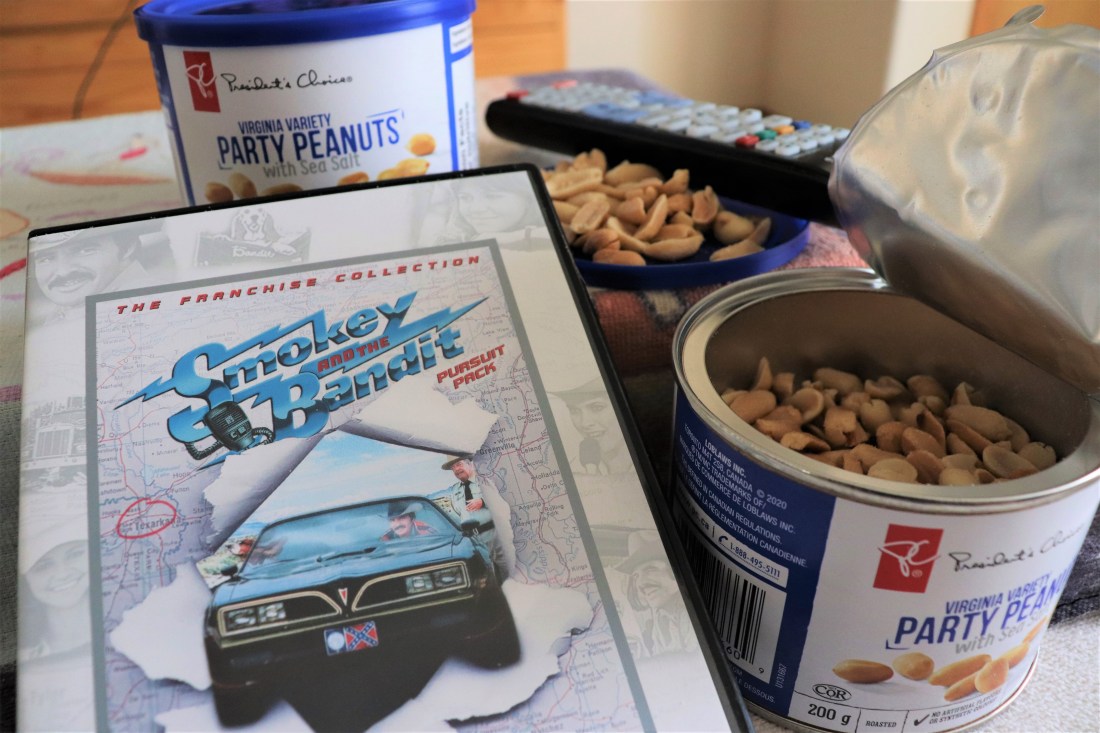
President’s Choice Virginia Variety Party Peanuts (because … the movie features an elephant, I guess. Hey, if the filmmakers aren’t going to put any effort into their craft, then why should I?)

Fun facts:

-Release date: Aug. 15, 1980

-Budget: $17 million (estimated)

-Box office: $66, 132, 626 million (worldwide)

-The film’s demolition derby finale was reportedly one of the biggest collective car stunts in movie history at that point. According to IMDB, it involved 60 stunt people, 100 cars and 18-wheeler trucks, and $250,000 worth of damages.

-Bandit’s 1980 Pontiac Trans Am is given its own credit at the end of the movie. The car is billed as “Son of Trigger,” which is a reference to actor Roy Rogers’ horse. 

Smokey and the Bandit II was released under the title “Smokey and the Bandit Ride Again” in the UK, New Zealand, and Australia.

-Surprise cameo: While the film is littered with real-life country singers, the most amusing cameo actually belongs to former Pittsburgh Steelers stars Terry Bradshaw and “Mean” Joe Greene, since they get to act as literal roadblocks for Bandit.

-Musical highlight: “Texas Bound and Flyin’” by Jerry Reed (it’s no “Eastbound and Down,” but this fun little number still grabs your attention at the very beginning of the film).

Bird on a Wire (1990) review-the perfect Mel Gibson movie

Mel Gibson is definitely one of those public figures who is going to have an * permanently affixed to his career from now until the end of time.

While I don’t have time to go into the actor’s relationship with alcohol abuse, religious fanaticism and outright bigotry, suffice it to say that these transgressions have dogged his otherwise pretty impressive career in the movie business.

Hell, even with all these controversies in mind, I still teared up watching Hacksaw Ridge back in 2016, which is a testament to Gibson’s talent behind the camera (in addition to his acting chops in front of it).

While Bird on a Wire (1990) isn’t as fondly remember as some of Gibson’s other projects (Braveheart, Lethal Weapon, Mad Max), it’s still a great showcase for the actor’s natural charisma, so much so that it will make you briefly forget that he once called a female cop “sugar tits.”

The plot of Bird on a Wire revolves around Rick Jarmin (Gibson), an FBI informant who is trying to adjust to life in the witness protection program after testifying against some corrupt DEA agents (Bill Duke and David Carradine).

But when those criminals finally track Rick down, they immediately swear revenge and seek to put him in the ground.

This situation is made even more complicated when Rick randomly runs into his ex-fiancé Marianne (Goldie Hawn), who previously thought that her old flame had died in a plane crash.

From there, Bird on a Wire turns into a chase movie, where Gibson and Hawn must race across the north-eastern United States to meet up with an old FBI handler who can provide the pair with some protection.

And in that respect, the film mostly succeeds, due in large part to the natural chemistry between the two leads.

Gibson and Hawn really sell you on the idea that they are old lovers reuniting under extreme circumstances, without getting bogged down in the endless bickering that can sink other on-screen relationships.

This core dynamic between the pair is also blended seamlessly into the film’s many action sequences, where each daredevil stunt is punctuated by a zingy one-liner or well-timed physical gag.

In fact, Bird on a Wire is chock full of laugh-out-loud jokes even when the pace slows down, which is a testament to how well Gibson and Hawn play off of each other.

The film also gives Gibson some room to show off his range as an actor, since the plot requires him to adopt a variety of characters as he backtracks through his previous identities in the witness protection program.

Admittedly, the part of the movie where Gibson has to briefly slip back into his life as a gay hairdresser is a little cringey (even attracting the ire of GLAAD), but he still commits to the bit and makes it convincing.

However, some of the writing surrounding Gibson’s character is a little suspect.

While Rick Jarmin is presented as a cinematic everyman, he actually adopts the characteristics of a Mary Sue (or Gary Stu) who is inexplicably good at everything.

Throughout the course of the movie, Rick proves himself to be somewhat of a savant, who is naturally gifted at: hairdressing, automotive repair, carpentry, motorcycle riding, sharp shooting, piloting airplanes and triggering female orgasms.

Plus, all the peripheral characters never really comment on Rick’s genius-level intellect throughout the movie’s runtime, which only draws attention to this disconnect between the writing and the filmmaker’s intent.

That being said, Hawn’s character is treated far worse by the screenwriters, since she spends most of the movie screaming her lungs out and being useless.

Her performance actually reminded me a lot of Kate Capshaw from Indiana Jones and the Temple of Doom; a blond damsel who only exists to be in distress and get bailed out by the rugged male hero.

What’s especially disappointing is that the writers set her up as a smart and gutsy lawyer at the beginning of the movie, and I assumed that that quality was going to come in handy at some point later in the film.

But as soon as she meets up with Gibson, Hawn’s character quickly devolves into a brainless idiot, who never rises to the challenge or uses her intellect to get one up on the bad guys.

It’s not like I expected her to turn into Lisbeth Salander or something, but some kind of tangible character arc would have been welcome.

In fact, a great template for this character already existed in Robert Zemeckis’ Romancing the Stone (1984), where Kathleen Turner’s sheltered city slicker successfully adapts to life as an adventurer in the Columbian rainforest.

But I guess the screenwriters of Bird on a Wire never saw that film, since Hawn’s character continues to wear her high heels even after being chased by gun wielding thugs for several days.

Despite all this shoddy writing, Gibson and Hawn still manage to keep the film afloat through their natural chemistry alone, encouraging the audience to keep watching to see if their characters successfully reconcile in the end.

Coupled with director John Badham’s firm grasp of how to balance action and comedy, Bird on a Wire offers a fun escape for roughly two hours, even if it kind of falls apart in the third act.

But maybe this is the best kind of movie to sum up Gibson’s career, more so than the projects that have resulted in Oscar wins or major box office returns.

After all, Bird on a Wire is fun, charming, and easy on the eyes, even though it does harbor some major character flaws right beneath the surface.

To me, that seems to be an accurate summation of Gibson’s reputation in Hollywood at this point, even though the final chapters of his controversial career have yet to be written.

So while Bird on a Wire is far from perfect, it’s probably the perfect Mel Gibson movie, in the sense that you actively enjoy it against your better judgement.

Verdict:

7/10

Corner store companion:

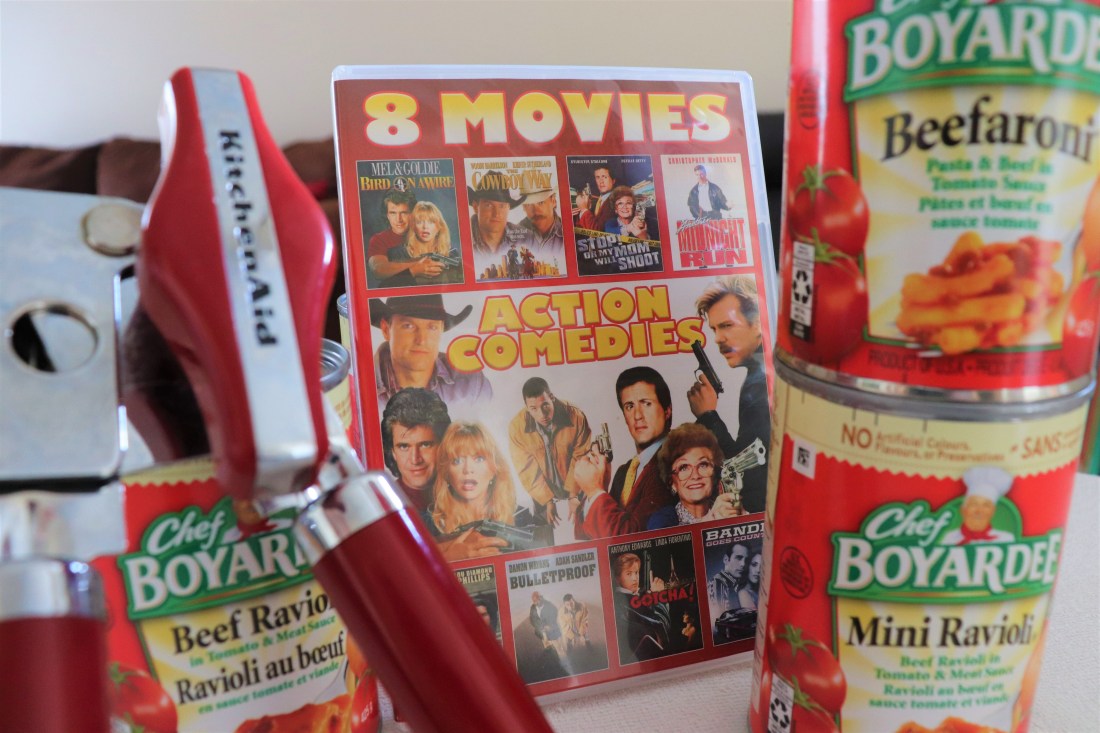
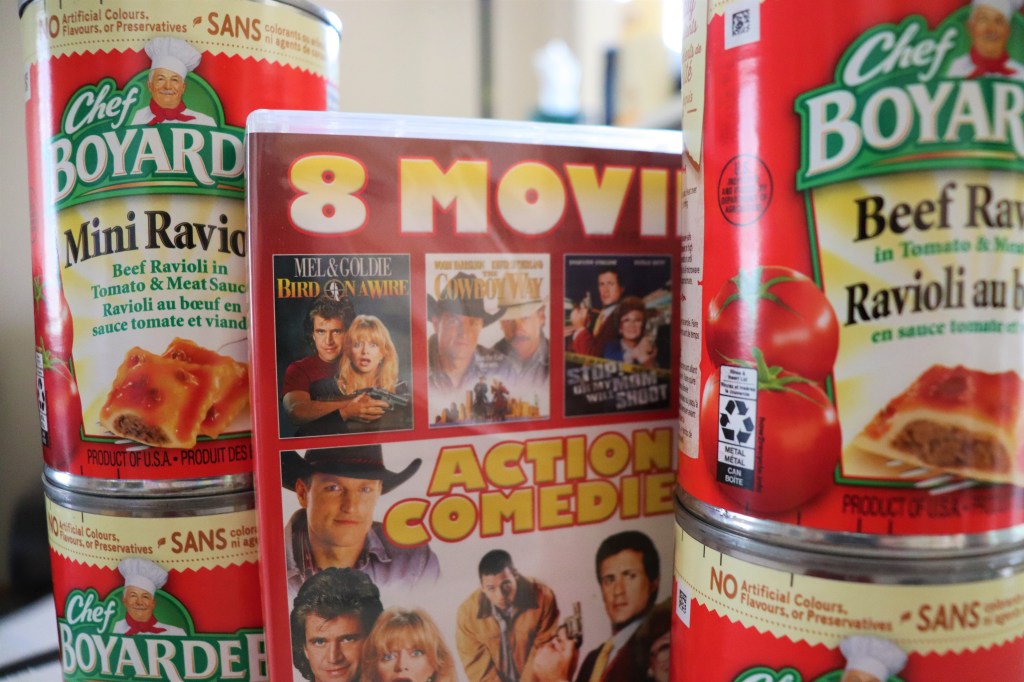
Chef Boyardee ravioli (because you enjoy it, even though it contains some problematic ingredients)

Fun facts:

-Release date: May 18, 1990

-Budget: $20 million (estimated)

-Box office: $70,978,012 (US), $138,697,012 (worldwide)

-The title from this movie is taken from a 1969 Leonard Cohen song “Bird on the Wire.” A cover version of this single, composed by The Neville Brothers, was included on the film’s official soundtrack.

-The second unit director of Bird on a Wire was none other than Rob Cohen, who would go on to spearhead major action blockbusters like xXx (2002) and The Fast and the Furious (2001) years later.

-According to IMDB, the gigantic zoo exhibit featured in the climax of Bird on a Wire was the largest studio set ever built in Vancouver at the time. Much of the movie was shot in and around the British Columbia city.

-Before directing Bird on a Wire, John Badham is probably best known for helming Hollywood hits like Saturday Night Fever (1977) and Short Circuit (1986).

-The end credits for this film scroll up instead of down for some reason.

-Musical highlight: “Aquarius” by The 5th Dimension (this 90s synth cover of the famous medley by The 5th Dimension was arranged by composer Hans Zimmer and plays at the very beginning of the film).

Stop! Or My Mom Will Shoot (1992) review-just as bad as you remember

I honestly find no joy in dogpiling on a universally reviled piece of 90s media, mostly because there’s nothing really left for me to add after all this time.

Case in point: Stop! Or My Mom Will Shoot (1992) has been an industry laughing-stock ever since it was released and remains a stain on Sylvester Stallone’s illustrious career.

Not only did the film “win” three big Golden Raspberry awards, but critics across the board absolutely torn it apart, with Roger Ebert famously calling this action-comedy “one of the worst movies I’ve ever seen” twice in a single review.

Even Stallone holds nothing but contempt for this project. In 2006 interview with Ain’t It Cool News the actor pegged it as “maybe one of the worst films in the entire solar system” and that “a flatworm could write a better script.”

The movie-going public also remained largely ambivalent to this star-studded vehicle, since the film only regained 63% of its $45 million budget at the domestic box office (although it did go on to gross around $70 million thanks to international audiences).

But my guiding philosophy is that every famously bad movie is worth a revisit just in case I end up finding something worth recommending (check out my write-up of You Light Up My Life for proof of that).

However, in this instance I’m going to have to fall in line with the critical consensus, because Stop! Or My Mom Will Shoot fucking sucks!

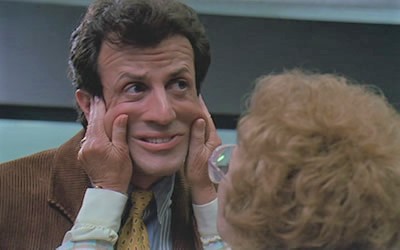
Sly1

The film’s plot follows Stallone’s tough-as-nails LAPD police sergeant Joseph Bomowski, whose world is turned upside down when he gets a visit from his overbearing, elderly mother Tutti (played by Estelle Getty from The Golden Girls).

When Tutti witnesses a murder on the streets of Los Angeles, Joe is forced to keep her around for a longer period of time and tolerate her excessive mothering as he tries to catch some illegal gun dealers.

Of course, the two eventually team up to nab the bad guys and to make sure the screenwriters have an excuse to shoehorn the movie’s title into a cringe-inducing line of dialogue.

Like Stallone pointed out in that 2006 interview, the film’s biggest offense is its script.

Even though the two leads have decent chemistry, the “overbearing mother-exasperated son” dynamic gets old quickly and doesn’t develop past something you would see in a two-minute SNL sketch.

You never get a real sense of where this familial dysfunction came from or why Joe has allowed it to continue well into his adult life. There’s some passing mention of Joe’s father dying when he was a kid, leaving Tutti all alone to raise him, but it’s not explored in any significant detail.

Beyond that, around 95% of the jokes land with a dull thud, since the screenwriters only find two things funny: Stallone getting embarrassed and Getty using harsh language occasionally.

For some reason, they also thought it was a good idea for this Golden Girl to quote lines from Dirty Harry and The Terminator, which is the comedy equivalent of your own mom tagging you in an outdated meme on Facebook.

Additionally, the screenwriters have a tough time keeping Getty’s character consistent in terms of her intelligence.

Despite the fact that Tutti showcases pretty impeccable crime detection ability, she still can’t grasp pretty basic stuff like how it’s not a good idea to wash your son’s service weapon in the sink.

Tutti

All these script writing problems culminate in the film’s finale, where (SPOILERS) the filmmakers expect us to take Tutti’s side and castigate Joe for being too uptight.

Even though the ending is meant to be heartwarming, I couldn’t help but think that none of their underlying problems were resolved and that Joe is going to turn into Norman Bates somewhere down the line.

If it seems like I’m spending way too much time analyzing this movie’s shallow script, it’s because Stop! Or My Mom Will Shoot doesn’t bring anything else interesting to the table.

Not only is Roger Spottiswoode’s direction flat, but all of the side characters are boring carboard cutouts and the music seems like it was composed by a computer program set on “default.”

Admittedly, some of the stunts and practical effects are well done. There’s a particularly impressive scene during the film’s climax where Stallone drives a big-rig truck into an airplane propeller.

But those moments are few and far between and don’t make up for the rest of the movie being a total misfire.

Stop! Or My Mom Will Shoot also isn’t hilariously bad enough to be put in the same category as other famous 90s disasters like Cool As Ice (1991) or Batman and Robin (1997).

Say what you will about those latter two films, but at least the people behind them had a vision and managed to produce something that was entertaining in terms of how misguided it was.

This Stallone vehicle is pretty lifeless by comparison, since the filmmakers never take any risks and just rely on recycling a bunch of tired buddy-cop clichés instead.

So does Stop! Or My Mom Will Shoot earn its status as one of the worst high-profile movies of that decade? Maybe.

But will I ever watch it again to gleefully gawk at the sheer level of incompetence that managed to make it on screen? Definitely not.

Verdict:

3/10

Corner store companion:

Glad garbage bags (because this movie is trash)

IMG_6553

Fun facts:

-Release date: Feb. 21, 1992

-Budget: $45,000,000

-Box office gross: $28,411,210 (US), $70, 611, 210 (worldwide)

Stop! Or My Mom Will Shoot officially “won” three Razzie Awards in 1993 for Worst Actor (Stallone), Worst Supporting Actor (Getty) and Worst Screenplay (Blake Snyder, William Osborne, William Davies).

-The 20th episode of The Simpsons’ 18 season is titled “Stop! Or My Dog Will Shoot” in reference to this film.

-Unexpected cameo: Ving Rhames plays one of the thugs that Stallone takes out in the opening scene of the movie.

-Director Roger Spottiswoode would recover from this giant flop by directing some much better action films in the future, including the 18th entry in the James Bond franchise Tomorrow Never Dies (1997).

-Arnold Schwarzenegger famously tricked Stallone into starring in this film, feigning interest in the project in order to get his big screen rival to audition. Schwarzenegger confirmed this story during a recent interview with Jimmy Kimmel in October of this year.

Another Midnight Run (1994) review-Flagrant false advertising

You ever buy some frozen food based solely on the strength of the brand name or box art, and it turns out to be some bland, goopy piece of shit? That is what’s it’s like watching Another Midnight Run.

FrozenFood(1)

This made-for-TV movie bills itself as an continuation of the original Midnight Run, a 1988 action-comedy that gained a lot of traction from critics at the time thanks to its potent mix of exciting car chases and sharp dialogue.

It also didn’t hurt that this original project starred Robert De Niro, who injected street-smart bounty hunter Jack Walsh with a lot of edge and gravitas, qualities that would have been neglected by a lesser actor.

However, pretty much all of those elements are missing from this 1994 pseudo-sequel, which retains the names of some of the principle characters from the 1988 original but none of its charm.

That being said, the film does at least mimic the basic structure of its predecessor, since it finds Walsh being hired by a bail bondsman (again) to transport a pair of criminals from San Francisco to Los Angeles.

Of course, Walsh’s captors (married con artists played by Jeffrey Tambor and Cathy Moriarty) are always trying to give him the slip every step of the way and go into business for themselves.

But after that promising set-up, it doesn’t take long before the filmmakers reveal that they don’t have any new ideas and are content with poorly rehashing old elements from the original film.

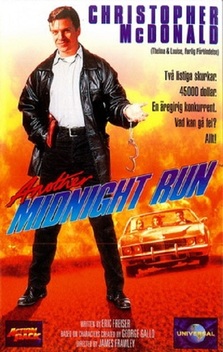
Strike one against Another Midnight Run is the fact that they replaced Robert De Niro with Christopher McDonald in the role of Jack Walsh.

No offense to the future Shooter McGavin, but he leans way too much on buffoonish comedy to play a convincing world-weary bounty hunter and comes across like he’s playing a parody version of the character on Saturday Night Live.

Shooter(1)

It also doesn’t help that the screenwriter makes him out to be a complete idiot, who is constantly outsmarted by his captors.

Sure, De Niro’s Jack Walsh was a screw-up as well, but he at least displayed a basic level of competence and quick thinking that helped him get out of sticky situations.

In Another Midnight Run, McDonald can barely tie his shoes without fucking up, let alone keep a pair of career con artists in check.

At one point, the married couple successfully distract their captor by convincing him that a nearby bar patron is giving him the bedroom eyes, which he completely falls for like horny 14-year old.

And without a likable protagonist to anchor the narrative, or any supporting performances on par with Charles Grodin from the 1988 original, the rest of the movie completely falls apart.

Strike two against the film is that it’s hampered by a restrictive TV budget, which means it can’t come close to replicating the intricately staged action sequences that made the original film so memorable.

All Another Midnight Run can offer up in terms of excitement are scenes of McDonald falling into some trash cans or mildly jogging through an airport.

While this downgrade is to be expected when a property makes the transition from film to television, Another Midnight Run doesn’t even have a good script or likable characters to fall back on.

All it can provide in exchange is lame comedy and annoying characters that you wish would just drive off a cliff so the movie could end.

The third and final strike that sends Another Midnight Run back to the figurative dugout is that it comes across as being a big pile of wasted potential.

A motivated director and screenwriter could have used this opportunity to think outside the box and expand on the Jack Walsh character.

Maybe they could have explored his past as a police officer in Chicago or shown us his first stint as a bounty hunter after resigning from the force. You know, typical origin story type stuff that people can’t get enough of.

Instead, the filmmakers decided to play it safe and replicate the basic structure of the original, albeit without any of sharp wit or fun that made it so successful six years ago.

I know most of this rundown is just me bitching about how this made-for-TV sequel pales in comparison to the original film, but the filmmakers definitely invite this criticism.

The only reason Universal greenlit this project in the first place (as well as the two other made-for-TV sequels released in the same year) is because they wanted to cash in on a recognizable name that was still worth something in the mid-90s.

AnotherMidnightRunPoster(1)

But rather than putting in the work to remind people why this property was valuable in the first place, all they did was slap the name Midnight Run onto an otherwise generic, low-energy road trip comedy and hope that nobody notices the difference.

And while the film did manage to siphon a couple chuckles out of me here and there, I still couldn’t shake the feeling that I was being grifted by the same kind of con artists and trickster characters that make up two-thirds of the cast.

Verdict:

3/10

Corner store companion:

Blue Water Seafoods’ Pacific Pink Salmon (because it promises quality but delivers a sub-standard product instead)

IMG_6624

Fun facts:

-Original air date: Feb. 6, 1994.

Another Midnight Run was followed be another two made-for-TV sequels in the same year: Midnight Runaround and Midnight Run For Your Life. All three films were produced for Universal Television’s “Action Pack” block that aired from 1994 to 2001.

-While the “Action Pack” line produced a lot of duds, like Knight Rider 2020 and Cleopatra 2525, Universal also debuted some landmark 90s television under this umbrella. Not only did they introduce the world to Kevin Sorbo’s Hercules through a series of TV movies, but the spin-off Xena: Warrior Princess proved to be even more popular and still has a cult following to this day.

The President’s Man (2000) review- Everybody gets old, even Chuck Norris

As a pop culture figurehead, Chuck Norris has left behind a very complex legacy.

Despite being lauded as an action movie heavyweight alongside Schwarzenegger and Stallone, the U.S. Air Force veteran turned actor never really got the chance to star in any classic films that have stood the test of time.

Instead, Norris wallowed in B-movie schlock throughout most of the 80s and 90s, riding off his reputation as a real life martial artist and fitness spokesperson to generate box office returns. Even Norris’ lead role in the TV show Walker, Texas Ranger, which ran for nine-ish seasons on CBS, is mostly enjoyed ironically today thanks to comedians like Conan O’Brien and Chris Elliot.

This strain of ironic appreciation was brought to a whole new level in 2005 with the popularization of “Chuck Norris Facts” on the Internet, which cemented the exaggerated power of his roundhouse kicks and facial hair for a whole new generation.

Even though these jokes are old hat in 2018, I think it’s safe to say that Norris was at least vaguely aware of his own vaunted reputation several years before these memes started to spread, since that’s the only way I can explain his ridiculous character in the 2000 TV movie The President’s Man.

In this film, Norris plays Joshua McCord, an American government operative who is such a badass that he’s called in to complete dangerous missions that even the Marines Corps can’t handle. Basically, he’s a combination of James Bond, Batman, and Solid Snake, with a dash of Bushido philosophy thrown in for extra seasoning.

When he’s not busy breaking necks for the good ol’ US of A, McCord also busies himself with playing chess, teaching philosophy at a Dedman College in Dallas, and other scholarly pursuits.

This diverse skill set is put on full display in the first 15 minutes of the film, when McCord is summoned from a Japanese tea ceremony to rescue the First Lady after she is held hostage by terrorists in Rio de Janeiro.

After this latest mission is complete, McCord begins to wonder if he’s getting too old to carry on the mantle of “the President’s Man” and begins to train a younger replacement to maintain his legacy and keep Americans safe from domestic and international threats.

Now, an ambitious director and screenwriter could have taken this premise and elevate the story above what one would expect from the star of Invasion U.S.A and Lone Wolf McQuade.

Similar to what Clint Eastwood tired to accomplish in Unforgiven and Gran Torino, The President’s Man could have easily turned this into a meaningful deconstruction of Norris’ legacy as an 80s and 90s action star and what that means for a whole new generation of film fans.

Unfortunately, since this is a TV movie made by Norris’ production company and co-directed by his youngest son, any promise that this premise might have had is flushed down the toilet in the first 20 minutes, when it becomes painfully obvious that this film was shot for cheap and pumped out as quickly as possible to satiate the Walker, Texas Ranger fanbase watching CBS.

This means that the film is littered with production shortcuts that exposes its status as a TV movie, such as stock sound effects, bad original music, sloppy fight choreography, a generous use of stock footage and sub par acting from a lot of the cast’s major players.

Even someone who is a big fan of Norris won’t really get what they’re looking for here, since he’s not really the main focus of the plot after the first 15 minutes.

By then the movie mostly follows his protégé Deke Slater (played by Dylan Neal), who is doing all the heavy lifting in terms of character development as he trains to become the next “President’s Man.”

As such, Norris is mostly saddled with a mentor role for the next hour, which means all he has to do is give stern looks, dish out fortune cookie wisdom and barely break a sweat during the few action sequences he takes part in.

And despite being in great shape for someone who is over 60, Norris’ age is big detriment to his status as a believable action hero in this movie, since it becomes blatantly obvious whenever a stunt double 20 years his junior takes over on screen.

It also doesn’t help that Neal is much more charismatic and likable that his mentor, who can’t even be bothered to raise his voice a few octave levels above normal once he confronts the man who killed his wife during the film’s climax.

With that being said, I’m still a sucker for these kinds of legacy-hero stories, where a grizzled veteran takes a cocky young upstart under his wing and molds him into a more responsible person who is willing to sacrifice his well-being for the greater good.

Even though this dynamic was done much better in films like The Mask of Zorro and Ant-Man, I still found myself charmed by Neal’s gradual transformation and his good-natured flirting with Norris’ daughter Que (Jennifer Tung), who also serves as his liaison to the President.

However, Norris himself still barely registers as a presence on screen, which is a shame since he is obviously written to serve as the glue that holds this entire film together.

Instead, it’s obvious that he’s only interested in showing up to collect a paycheque and maintain his almost decade long stranglehold on the CBS television landscape.

And while I do think that Norris has earned his place alongside the Schwarzeneggers and the Stallones in the pantheon of American action heroes, The President’s Man is not a good representation of why he earned that reputation in the first place.

Verdict:

4/10

Corner store companion:

Jack Link’s Original Beef Jerky (because it’s the manliest snack you’re likely to find, despite being bland and largely flavourless).

IMG_4526

Fun facts:

-Original air date: April 2, 2000 (on CBS).

-Budget: $2 million.

-Chuck Norris’ birth name is Carlos Ray Norris.

-Despite his reputation for dishing out white-hot death through the barrel of a gun, Norris only tallies one firearm related kill in this film. The rest of his fatalities are courtesy of neck breaks, throwing knives, and roundhouse kicks.

-Two years later, Norris would star in this film’s direct sequel The President’s Man: A Line in the Sand. While Tung returns as his daughter Que, Neal wouldn’t reprise his role and the character Deke Slater is played by actor Judson Mills, instead. The only other thing worth noting about this sequel is that it’s actually a lot more competently put together than the original, which makes it much less interesting to talk about.

-Between the original airing of The President’s Man in 2000 and today, Norris would only star in four more feature films. The rest of his film and TV credits roles throughout that time consist of the last two seasons of Walker, Texas Ranger and cameo appearances in movies like The Expendables 2 and Dodgeball: A True Underdog Story.