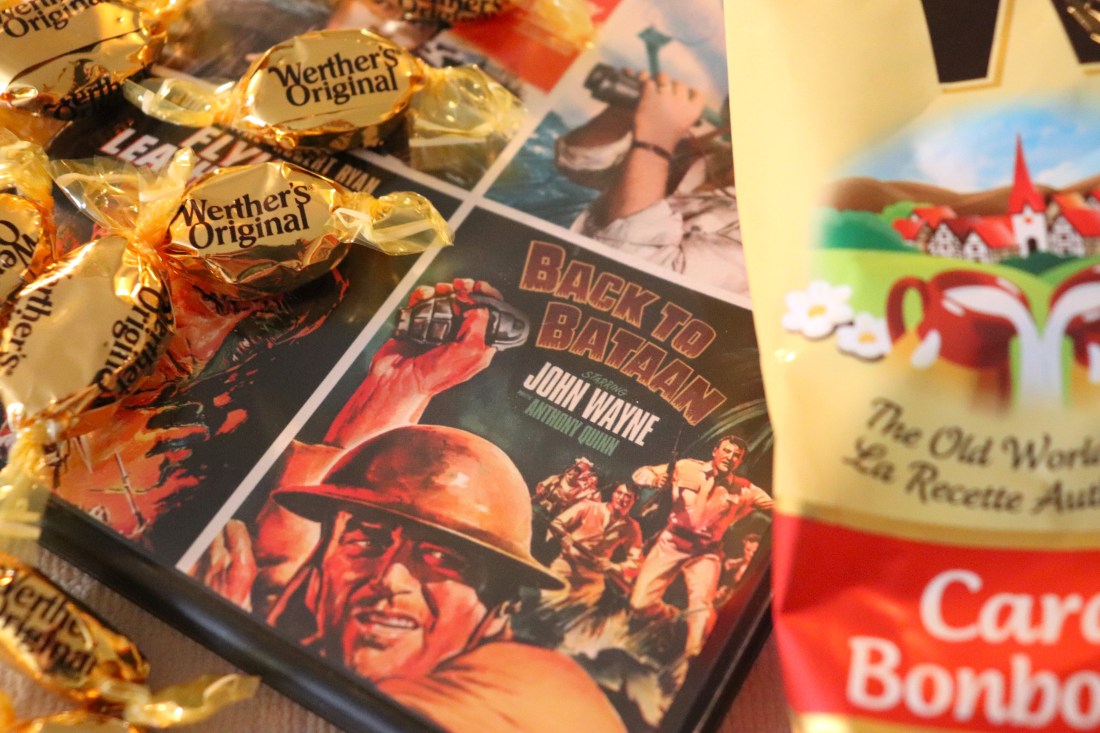
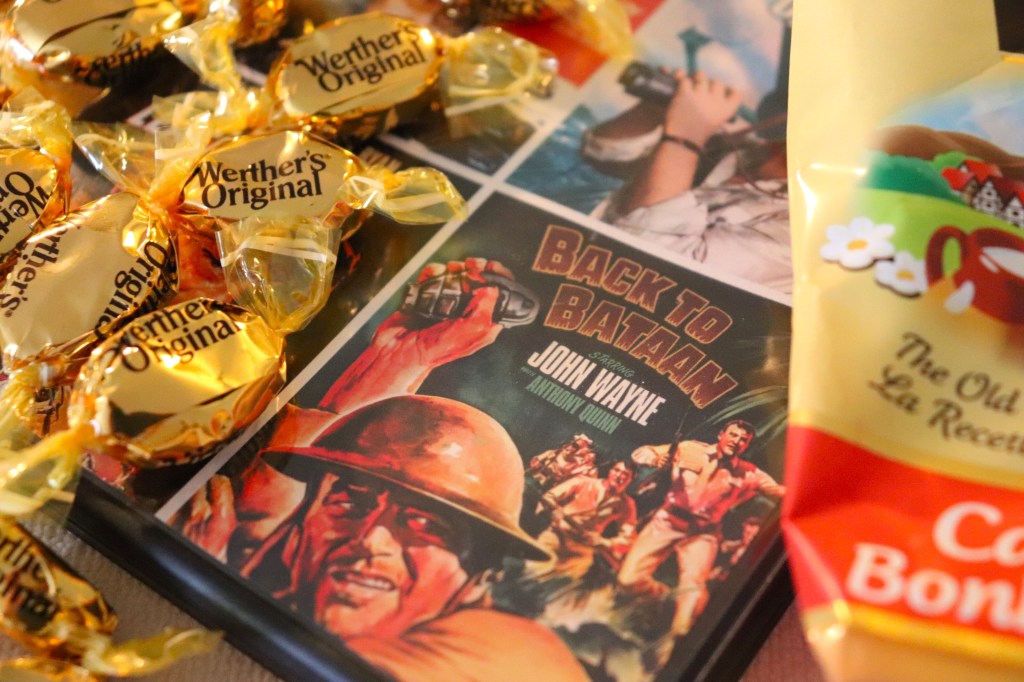
Back to Bataan (1945) review- military retribution through cinema

The American public was riding a collective high in the spring of 1945, with the Third Reich having officially surrendered to the Allies in early May of that year.

With the fighting in Europe now wrapping up, the United States military turned its full attention to the Pacific theatre of World War II, with the hope of bringing this destructive conflict to a swift end.

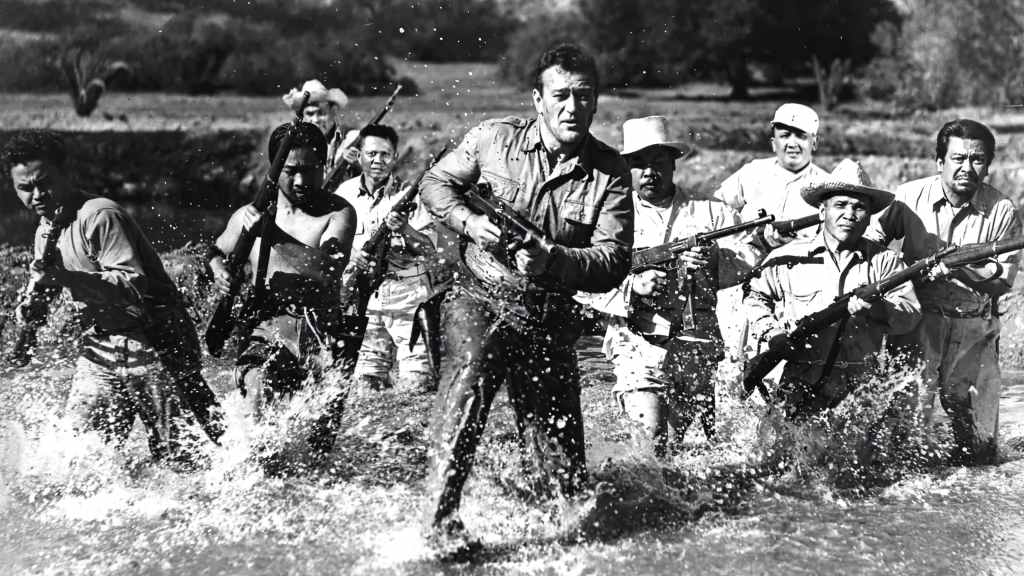
Several weeks after Germany’s surrender, American cinemas were able to capitalize off this massive change in fortune through the release of Edward Dmytryk’s Back to Bataan, a film that chronicles the US’ attempt to liberate the Philippines from Japanese control.

Now, I’ve sampled a decent number of WWII-era propaganda for this blog, including another war film starring John Wayne called Operation Pacific (1951).

While that movie was a lot more easy-going in its tone, Back to Bataan features a much more palpable sense of urgency, probably due to the fact that it was shot and released while the Philippines campaign was still underway.  

In fact, Dmytryk’s film could be seen as a form of cinematic retribution on behalf of the US military, who had been handed a monumental defeat when Japan successfully invaded and conquered the Philippine islands several years earlier.

Even though the war would eventually come to an end in summer of 1945, Back to Bataan was probably viewed as a way to keep American morale high in the interim, with a fictionalized recount of the hardship US soldiers and local resistance fighters endured to take back the commonwealth territory.

Admittedly, this “ripped-from-the-headlines” kind of story doesn’t hold nearly the same weight as it did 78 years ago, especially with world-shaking conflicts in Europe and the Middle East holding everyone’s attention in the final months of 2023.

So while Back to Bataan is pretty dated, it at least serves as a time capsule of a lesser known chapter of WWII, with some well-produced action sequences that hammer home the desperation and brutality that characterized the Pacific theatre of that war.

Instead of sailing the high seas like he did in Operation Pacific, John Wayne mostly sticks to dry land this time around as Joseph Madden, an army colonel who is tasked with mobilizing Filipino guerilla fighters to drive Japanese troops out of their homeland.

After making contact with some eager recruits, Madden and his men find themselves in a hopeless situation after US forces are decimated following the Battle of Bataan in early 1942.

Despite being outnumbered and outgunned, this small resistance group is determined to liberate the islands from this invading force, especially with the grandson of Filipino revolutionary Andrés Bonifacio (played by Anthony Quinn) on their side.

Some may bristle at my use of the word “propaganda” to describe Back to Bataan, but I think it’s pretty apt.

Not only does the film begin with a title card thanking the US armed forces for their aid in the production of this film, but it’s followed up by a parade of supposedly real-life American POWs rescued from Japanese prison camps in the Philippines.   

While you could brush this off as just patriotic window dressing, Dmytryk and his screenwriters actively bake these themes and images into key points of the film, usually to its detriment.

For example, the film opens with a puzzling flash forward, where US Army Rangers raid a Japanese prisoner camp near Cabanatuan City in 1945.

This scene is only included because the real-life Raid at Cabanatuan (also known as “The Great Raid”) took place in January of that year and the filmmakers wanted to include it even if they couldn’t organically work it into their story that’s set three years earlier.

By introducing the movie with such a momentous military victory, Dmytryk and his team immediately deflate the ongoing tension in favour presenting the audience with a comforting narrative right off the bat.

American movie-goers are presented with further nationalistic navel gazing once the actual plot gets underway.

This includes a moment when some Filipino school children take turns listing all the great things the US has done during its occupation of their country (like importing soda pop, baseball, and Hollywood movies).

The school’s principal then adds his two cents by proclaiming that America taught the Filipino people that “men are free or they are nothing,” underplaying the fact that the US took control of these islands through shedding lots of blood in the Philippine–American War (1899-1902).

However, the principal’s martyr status is solidified once he is executed by the Japanese several minutes later, firmly establishing the Americans as the benevolent colonizers in this scenario.  

Revisionist history aside, the scenes are pretty blunt and heavy-handed in their presentation, focusing on political talking points rather than the humanity of the people caught up in this conflict.

Thankfully, all this patriotic cheerleading is largely balanced out by the filmmakers’ sound technical expertise, particularly when it comes time to blow shit up.    

Rather than pushing the complicated action off screen, or hiding it behind convenient edits, Dmytryk’s team relies on long takes that keep a lot of the explosions in-camera.

Special credit should be also given to the stunt team on this project, who were willing to stand uncomfortably close to these pyrotechnics to create a tangible sense of danger.

This praise must be extended to Wayne himself, who noticeably performed a lot of his own stunts for this project, including a scene where he was tied to a leather harness to simulate being blown away by a mortar shell.

For the time, Back to Bataan also features some particularly grizzly kills that highlight the nasty jungle fighting that the Pacific front of WWII was known for.

Midway through the film a Filipino resistance fighter takes out a Japanese soldier with a throwing knife and the director is not shy about showing the bloody blade visibly sticking out of both sides of the sentry’s neck.

And despite not being shot in the Philippines, for obvious reasons, the filmmakers do a decent job of replicating the look and feel of a south-pacific battlefield with some interior sets and scenic exterior locations in southern California.

I understand that this visceral action aesthetic is meant to reinforce the movie’s propagandistic aims, but the caveman part of my brain can’t help but admire the high level of craftsmanship on display.

And while Wayne puts in the kind of stilted, stoic performance you would expect from this kind of film, the rest of the cast is filled out by some decent supporting performances that give the dry military proceedings some life.

Outside of veteran character actors like Beulah Bondi and Paul Fix, Anthony Quinn puts in some good work as the film’s co-lead, whose Aragorn-like reluctance to accept his destiny as a leader injects the story with some much-needed humanity.

Still, your enjoyment of this project is entirely dependent on whether or not you can disassociate it from the politics of the time.

While the US’ entry into WWII was undoubtedly a just course of action, some of the government’s domestic policies during this period were decidedly not, like the internment of Japanese citizens from 1942 to 1946.

Despite not being explicitly stated in the film itself, I can’t shake the feeling that movies like Back to Bataan were made to reassure American audiences that their xenophobic paranoia towards certain groups is justified during wartime.

But with all those caveats out of the way, I still think Dmytryk and his team put together a slickly produced piece of entertainment that works as an action movie and an interesting window into the past.

And if you’re still concerned about the film’s propagandistic aims, just know that the negative impact of one war movie from 1945 pales in comparison to all the social media misinformation currently being spread about conflicts in Israel and Ukraine.

That may seem like cold comfort, but in today’s incendiary political landscape old movies like Back to Bataan seem quaint and harmless by comparison.

That’s not a ringing endorsement, by any stretch, but these days I’ll take some dumb escapism where I can find it.

Verdict:

6/10

Corner store companion:

Werther’s Original Caramel Hard Candies (because it’s something your grandpa would enjoy)

Fun facts:

-Release date: May 31, 1945

-Box office: $2,490,000

-Despite the strong nationalistic themes present in Back to Bataan, director Edward Dmytryk was actually a member of the Communist Party in 1945 and was later called to testify before the House Committee on Un-American Activities. Alongside nine other directors, screenwriters, and producers —collectively known as the “Hollywood 10” — Dmytryk refused to testify before the committee and was blacklisted from the American film business as a result. However, Dmytryk managed to worm his way back into Hollywood after telling the committee about his former communist associations in 1951. He would go on to work steadily throughout the next three decades, including high-profile gigs like The Caine Mutiny in 1954 (which earned him seven Oscar nominations including Best Picture).

-The Axis occupation of the Philippines officially ended on Aug. 15, 1945 following the atomic bombing of Hiroshima and Nagasaki earlier that month. Japanese forces in the Philippines were ordered to surrender by the mainland government, who officially capitulated on Sept. 2 aboard the USS Missouri in Tokyo Bay.

-The Philippines finally received its independence on July 4, 1946 through the Treaty of Manila, which relinquished US sovereignty over the land.

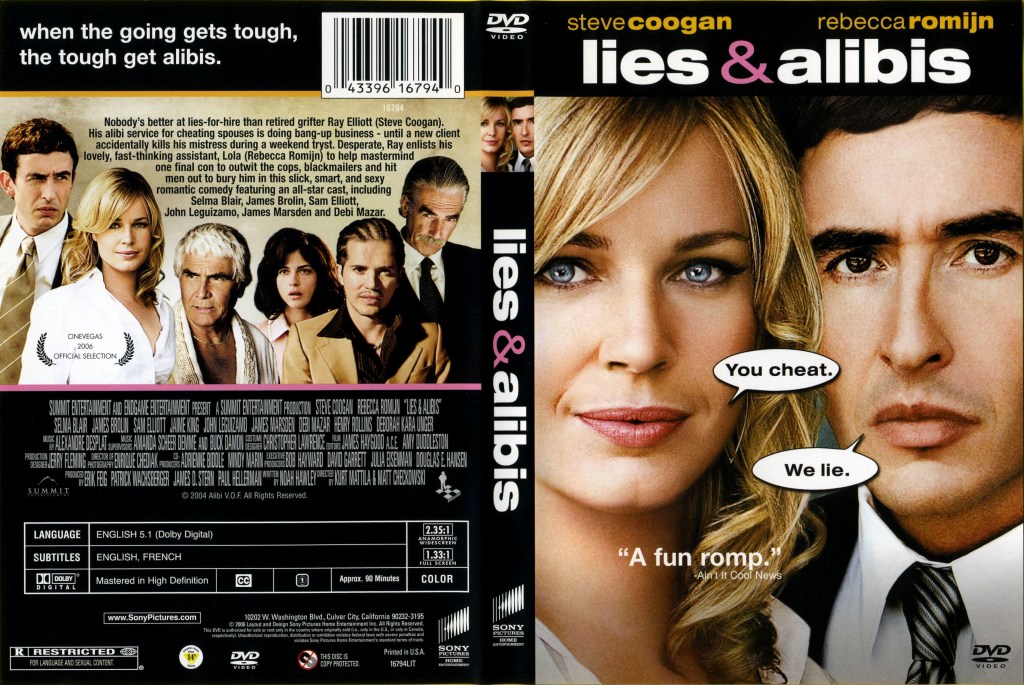
Lies and Alibis (2006) review- humble beginnings for Fargo creator

When it comes to the modern slate of TV showrunners, Noah Hawley can always be relied upon to deliver a pleasant surprise.

Not only did he spearhead a cult series based on an obscure X-Men character (Legion), but he also managed to successfully adapt the Coen Brothers’ beloved 1996 crime drama Fargo for the small screen (winning half a dozen Emmys in the process).

But Hawley’s ability to subvert my expectations can be traced back to the very beginning of his screenwriting career when he penned the script for Lies and Alibies, a 2006 crime thriller that was released straight to home video after a limited theatrical run.

Noah Hawley

Because of its low budget and lack of a wide release, this film has largely been forgotten by vast swaths of the movie-going public, so much so that Mill Creek Entertainment packaged it into their 2014 “Chick Flicks” DVD box set for some reason.

Despite this confusing marketing, I was shocked to discover that Hawley’s writing skills were still sharp in Lies and Alibis, which is particularly impressive given that this is his first produced screenplay.

While elements of this production are a little rough around the edges, it features the same kind of snappy dialogue and quirky criminal archetypes that Hawley would later refine to great success in shows like Fargo.

With that solid script at its core, Lies and Alibis is definitely worth watching for fans of Hawley’s current neo-noir tomfoolery, as long as you can stomach some glaring budgetary restrictions and a couple key casting missteps.  

The plot of Lies and Alibis follows smooth-talking entrepreneur Ray (Steve Coogan), who runs a “risk management” firm that helps men and women cheat on their partners without getting caught.

While Ray runs a pretty tight ship, that all gets upended one day when one of his clients accidently kills his mistress in bed.

The resulting cover-up drags Ray into a seedy underworld full of crooks and Mormon gangsters, with the cops also putting him under heavy scrutiny.

To get out of this predicament unscathed, Ray must rely on his wits and a rag-tag group of allies, including his new alluring assistant played by Rebecca Romijn.

Since I’ve already heaped praise on Hawley’s script, let me at least take a moment to balance the cosmic scales of movie criticism by highlighting this film’s worst elements, which are its two leads.

While Coogan has proven himself to be a more than capable actor in the realm of comedy and drama in other projects, he doesn’t do a good job of fusing those two elements here.

Even though this role calls for a kind of fast-talking slickster with a heart of gold (think Bob Odenkirk in the early seasons of Better Call Saul), Coogan can’t quite tap into that energy and just comes off as a little bland.

Romijn suffers a similar fate playing Coogan’s confidant and love interest, which is made even worse by the fact that these two have absolutely zero romantic chemistry together.

If I were to guess the source of this on-screen dysfunction, I would lay it at the feet of directors Kurt Mattila and Matt Checkowski. Lies and Alibis marks their first feature film project after working as visual effects artists, so perhaps guiding principal actors wasn’t their strength at this point.

Thankfully, the rest of the cast is filled with a treasure trove of veteran character actors who have a much better handle on the material.

Sam Elliot makes a big impression as the head of the Mormon mafia, whose leathery drawl and weather-beaten scowl make for an imposing antagonist.

While not as threatening as Elliot, James Brolin and James Marsden also work well as a father-son team of serial philanderers, whose vast wealth is only outweighed by their blatant sleaziness.

And even though certain film noir stock characters are extremely played out by this point, actors like John Leguizamo (the savvy roughneck), Debi Mazar (the hard-nosed detective), and Selma Blair (the femme fatale) are still used to good effect with the little time they have on screen.

Admittedly, it’s a little difficult to keep track of all these characters and their motivations as the plots barrels along, especially when they start turning on each in the third act.

But all this organized chaos is at least held together with some smooth editing, which rapidly flips between several locations without overwhelming the senses.

This level of craftsmanship is on full display during the last 20 minutes, when all the characters converge on one building (a hotel) for the big finale.

Anyone expecting an explosive climax that’s full of gunfire and blood squibs will be sorely disappointed, since it’s obvious that the filmmakers didn’t have enough money for the kind of theatricality that be found in movies like Joe Carnahan’s Smokin’ Aces (2006) or Tony Scott’s True Romance (1993).
However, directors Mattila and Checkowski at least put their past experience as visual effects artists to good use, staging some impressive floor-by-floor transitions that are reminiscent of their work on Steven Spielberg’s Minority Report.

Hawley’s script also shines in this finale, where he manages to take a bunch of tangled plot threads and resolve them all within the space of a couple minutes (without it feeling too contrived).

This marriage of tight editing and smart writing remains Lies and Alibis’ biggest strength, as it provides the same kind of crime thriller catharsis one can find in an Elmore Leonard or Raymond Chandler novel.

Given that Hawley has published a couple thriller novels of his own, I’m sure he was trying to channel some of that same literary style for his feature film debut.  

And with a svelte 90-minute runtime, the end product definitely succeeds in replicating the look and tone of those old dime-store detective novels that are light on substance but are never-the-less very entertaining.

Admittedly, the narrow confines of a feature film runtime also present a significant drawback for Hawley, since he isn’t given enough time to adequately flesh out the movie’s worldbuilding beyond the first act.

I could actually see the underlying premise of Lies and Alibis functioning much better as a TV series, where the inner workings of this fictional “cheating” agency are given some room to breathe throughout a 10-to-12-episode season.

Hawley obviously shared similar thoughts about the advantages of this format, which is why so much of his later career is defined by crafting long-form stories on television.

But everyone has to start somewhere and Hawley’s ambitions as a writer are still front and centre in Lies and Alibis, even if this early film project has largely faded into obscurity.   

Even so, if Hawley wants to drop some sly references to Ray’s “risk management” firm in the next season of Fargo, he would at least turn me into that meme of Leo DiCaprio pointing at his TV screen.  

Verdict:

7/10

Corner store companion:

Maynards Swedish Berries and Creme (because it’s well-constructed and a lot of fun to consume, even though it largely amounts to a short sugar rush)

Fun facts:

-Release date: Lies and Alibis was screened in various countries throughout 2006, including the CineVegas film festival on June 17. The film later premiered on DVD during the fall and winter that same year.

-This film was also released under the alternate title “The Alibi” and is referred to as such on both Wikipedia and IMDB.

-Noah Hawley is currently developing a new series for FX that’s set within Ridley Scott’s Alien universe. In a recent interview with Esquire, Hawley revealed that this series takes place on earth and will examine the corporate greed that fuels companies like the fictional Weyland-Yutani Corporation. This marks Hawley’s latest attempt to break into a well-established sci-fi franchise after his involvement in a new Star Trek film fizzled out.

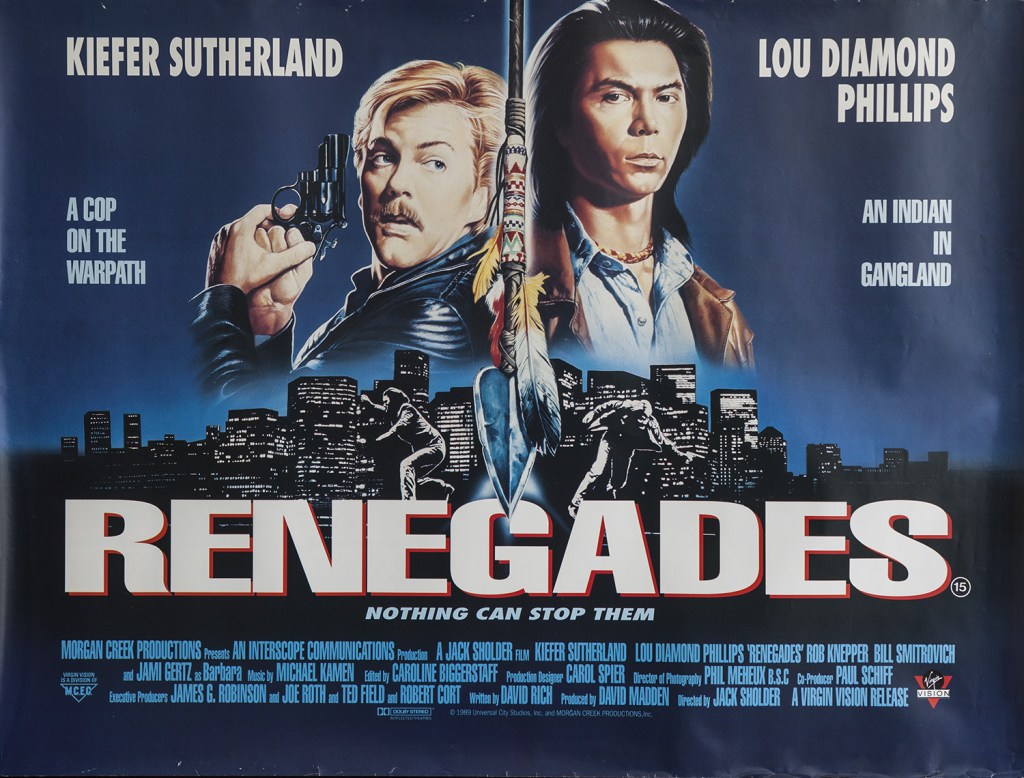
Renegades (1989) review-optimal cable viewing

Media consumers of the streaming era will never truly know the pleasure of randomly flipping through cable channels on a lazy Sunday afternoon, which was one of the most reliable forms of entertainment for bored youth growing up in the 1990s and early 2000s.

Sure, most of the television programs available during that weekend block were infomercials or reruns of ancient sitcoms, but every once in a while you would stumble upon a random action movie that would catch your attention.

Even if the film wasn’t very good, there was something captivating about getting thrown into the middle of a car chase or shootout without the ability to rewind, forcing you to fill in the gaps using your childish imagination.

These impromptu screenings would also serve as a nice bonding experience between you and your dad, who would reliably drop whatever he was doing at the sound of gunfire and explosions and sit down on the couch next to you.

It’s in this environment that movies like Jack Sholder’s Renegades (1989) really thrive, since you don’t need to engage with it at an emotional level and just get to enjoy the cheap spectacle before Sunday dinner is ready.

However, watching this film as an adult on DVD is an entirely different story, since its underlying hollowness is inescapable in this format and you don’t have mom’s famous shrimp pasta dish to help soften the blow.

Like so many action movies of the 1980s, Renegades can easily be slotted into the buddy-cop genre, with Kiefer Sutherland and Lou Diamond Phillips starring as an undercover police officer and Native American tourist visiting Philadelphia, respectively.

When Sutherland’s involvement in a diamond heist results in a precious artefact being stolen from Phillips’ tribe, the pair must team up to bring down the bad guys.

From there, the plot unfolds in a pretty predictable fashion, since the two start out not trusting each other but gradually develop a bond as they get closer to cracking the case.

But unlike more famous buddy-cop movies from that era — like Lethal Weapon (1987) or 48 Hours (1982) — screenwriter David Rich doesn’t do a good job of giving these characters contrasting personalities.

Instead, both Sutherland and Phillips are written to be loose cannons who don’t abide by the rule of law when it comes to tracking down the people who have wronged them.

As a result, most of the conflict between these two is purely driven by the plot or superficial elements like their background, which isn’t very compelling.

It’s also pretty apparent that screenwriter David Rich was only interested in fleshing out one main character out of the two.

Sutherland’s undercover cop is at least given a decent backstory to explain his motivation throughout the story, since the audience is explicitly told that his father was a corrupt police officer who died in disgrace.

Meanwhile, Phillips’ character is completely shrouded in mystery, with details surrounding his upbringing only briefly hinted at through sparse bits of dialogue.

To compensate for this lack of depth, Rich takes the lazy route of imbuing Phillips with Jedi superpowers, hoping that viewers will be won over by his quick reflexes and ability to tap into “the force” whenever his family is in danger.  

But believe it or not, this one-note Hollywood depiction of the “noble savage” gets old pretty quickly, especially since Phillips’ chemistry with Sutherland is average at best.

Thankfully, Renegades at least delivers in the action department, with a handful of standout sequences that elevate it over the Steven Seagal-tier shlock that was circulating in the industry around that same time.

A car chase 20 minutes into the movie is honestly worth the price of admission alone, where Sutherland is forced to drive a getaway car at gunpoint after the aforementioned diamond heist goes horribly wrong.

Parts of this scene actually reminded me of the famous car chase from William Friedkin’s The French Connection (1971), where the director used a lot of first-person camera shots to create a palpable sense of danger.

The level of automotive destruction on display is also reminiscent of John Landis’ The Blue Brothers (1980), albeit with a less comedic touch.

The movie’s climactic night-time shootout at a horse ranch is similarly high on spectacle, since the filmmakers expertly compensate for a lack of natural light by setting the surroundings on fire.

And while the rest of the film’s action sequences aren’t up to that same high standard, they are at least well-edited and contain a lot of messy carnage that a more timid director would have shied away from.

Needless to say, these meaty chunks satiated my inner bloodlust and made me temporarily forget about the less desirable aspects of Renegades, like its cliched dialogue, generic music, and pedestrian plot that often veers off into being nonsensical.

But as soon as the action quiets down and you’re given some room to think, all these weaknesses bubble to the surface and the film falls apart.

Even the movie’s inciting incident is half-baked, since the main bad guy decides to take a breather from getting chased by the cops and steal Phillips’ family heirloom (a spear) for no reason.

Because of this, the protracted MacGuffin hunt that follows feels totally perfunctory, almost like the filmmakers were looking for the weakest excuse possible to link a couple of (admittedly cool) action sequences together.

Again, this kind of viewing experience is much better suited for the long-lost days of weekend cable TV, where you could put it on in the background as you wrestled with your brother or finished your homework before school on Monday.

But experiencing Renegades through the lens of an adult who is interested in obscure DVD collections, I can’t help but feel like something was lost in translation, almost like I was watching a foreign-language film with the subtitles turned off.

So unless I get my hands on a time machine, the optimal viewing conditions for this film are lost forever, and all I’m left with is a standard 80s cop movie that features good action but is severely lacking in emotional stakes.

Sounds like my last Tinder date.

Verdict:

5/10

Corner store companion:

McCain Pizza Pockets (because it’s the kind of food that also peaked in the 1990s and early 2000s)

Fun facts:

-Release date: June 2, 1989

-Budget: $16 million

-Box office: $20 million

-Because of Louis Diamond Phillips’ mixed heritage (Spanish-Filipino on his mother’s side and Scottish-Irish, Cherokee on his father’s side) he’s been able to portray a variety of ethnicities throughout his acting career, including Native American. Through preparing for Renegades, Phillips grew closer to the Indigenous community and was even adopted by an Oglala Lakota Sioux family in 1991. His Lakota name translates to “Star Keeper.”  

-Outside of helming Renegades, Jack Solder is probably best known for directing A Nightmare on Elm Street 2: Freddy’s Revenge (1985).

-While Renegades is set in Philadelphia, it was mostly shot in and around Toronto.

-Sutherland and Phillips would later reunite in a two-episode run of the popular TV action drama 24. During this section of season one, Phillips plays the warden of a secret detention facility who encounters CTU agent Jack Bauer (Sutherland) investigating the attempted assassination of a presidential candidate.

-Musical highlight: “Only the Strong Survive” by Bryan Adams (plays over the end credits)

Now and Forever (1934) review-how to weaponize cuteness

Shirley Temple is one of those actors that modern audiences are mostly familiar with through cultural osmosis rather than through her actual filmography.

Even if you can’t name a single movie that the renowned child actor starred in during her peak of popularity, which ran from 1934 to 1938, chances are that you’ve ordered one of her famous non-alcoholic drinks or seen her signature blond curls plastered on an expensive piece of Hollywood memorabilia.

Because of these cultural artefacts, the name “Shirley Temple” is still considered cute and marketable in the 21st century, so much so that modern movie studios were still willing to release some of her films through collections like the “Little Darling Pack” in 2007.

One of the movies included in this collection is Henry Hathaway’s Now and Forever (1934), which served as my official introduction to Temple’s body of work.

Admittedly, I walked into this screening anticipating nothing but light fluff, since my idea of what to expect from a film starring America’s favourite child star had been filtered through all the pop culture refuse mentioned above.

However, I was pleasantly surprised that Hathaway and his writers managed to use Temple’s natural charm to tell a fairly mature story about parenting and how bad decisions can have a disastrous ripple effect on the ones we love most.

Despite this film being included in a Shirley Temple DVD collection, the plot of “Now and Forever” actually revolves around Gary Cooper’s Jerry, a travelling con man who is far too busy globe trotting with his lady friend Toni (Carole Lombard) to check in on his five-year-old daughter Penny (Temple) from his first marriage.

After a trip to Shanghai leaves him in desperate need of cash, Jerry is drawn back to the United States to sell his daughter’s custody rights to his brother-in-law, with the mother having died years ago.

But when Jerry meets Penny for the first time, he’s immediately taken with her and decides to finally become the child’s legal guardian.

While the two establish a strong bond right away, Jerry’s criminal past continues to linger in the background and threatens to tear their new relationship apart as he tries to carve out an honest living.

One of the most important elements to nail right off the bat with a film like this is the chemistry between the leads, since the story would collapse without a believable family unit at its core.

Luckily, Cooper and Temple establish a snappy back-and-forth from their first scene together, with that rapport only growing stronger as the movie moves forward.

This is no easy task, since Cooper’s character was fully willing to abandon his child for money at the beginning of this story; a writing choice that risks putting the audience at a distance right away.

However, the two leads are able to bridge this emotional gap in a very short time through their combined charm alone, even with Cooper’s past misdeeds continuing to hover over the proceedings like an unseen Sword of Damocles.

Lombard also adds an additional layer of jovial camaraderie into the mix, bucking the tired trend of wicked stepmothers in movies by accepting Temple into her life unconditionally.

In all honesty, Hathaway could have gotten away with filming these three having a fun vacation in Paris without any major looming conflict and gotten away with it, since they play off each other in a very compelling fashion.

But as the movie’s narrative moves forward, it becomes obvious that the director’s true objective was to craft this idyllic on-screen family just so he could cruelly smash it into a million pieces.

The agent of chaos mostly responsible for this tonal shift is actor Sir Guy Standing, who plays a shady businessman that catches on to one of Cooper’s scams and is using this knowledge to blackmail him.

Standing’s performance might be the absolute highlight of Now and Forever, since he successfully crafts a menacing persona without coming across as outwardly rude or threatening.

Instead, he reels Cooper back into a criminal lifestyle through fake British politeness and innuendo, which is way more infuriating than if he simply adopted the American method of commanding someone at gunpoint.  

That sleight-of-hand trick is also frequently used by the filmmakers themselves, who lure the audience into a false sense of security thanks to Temple’s cuteness before pulling the rug out from under you.

This dynamic is at play for much of the film’s third act, with Cooper’s unsavory activities constantly overlapping with his idyllic family activities.

The best example of this comes later in the film when Temple performs a lively song and dance number in front of some rich American expatriates living in Paris.

But instead of using this scene for pure spectacle and whimsy, like in most other Temple films, the director intercuts it with shots of Cooper stealing an expensive necklace and stuffing it into his daughter’s teddy bear.  

He later uses this teddy bear to smuggle the necklace out of a rich family’s house and into the villain’s hands, all the while lying to Temple about what really transpired.

Not only is this sequence completely gut wrenching, but it also serves as a succinct encapsulation of the movie’s main theme of childhood innocence being sullied by the world of adults.

It also doesn’t hurt that Now and Forever features a snappy script and tight pacing throughout, which manages to wring some of that old Hollywood charm out of a story that feels pretty modern by 1934 standards.

However, some dated elements from that era have not aged as gracefully.

This includes a noticeable lack of music and prevalence of janky editing that is undoubtedly a byproduct of the limited technology available to filmmakers at the time.

The movie’s ending also leaves a lot to be desired, since it’s pretty obvious that the studio forced Hathaway to tack on a much more uplifting resolution to the main conflict in an effort to not completely alienate the movie-going public.

But minor gripes aside, Now and Forever still managed to surprise me and showcase an engrossing family drama that wasn’t afraid to touch on some darker subject matter.

It might not be the best introduction to Temple’s filmography, as I’m led to believe that most of her other work is pretty wholesome and not subversive in the slightest.

However, I feel like Now and Forever remains a pretty good showcase of Temple’s talent as an adorable child actor, while also offering a prime example of how to harness that cuteness and weaponize it against the audience (in a good way).

In other words, this film is the cinematic equivalent of a candy apple that’s been coated in absinthe, since it looks innocent but will fuck you up if you’re not ready.

Verdict:

7/10

Corner store companion:

Snapple Spiked RaspCherry Tea vodka (because it’s sugary and sweet but will mess you up in quick fashion)

Fun facts:

-Release date: Aug. 31, 1934

-Temple appeared in 29 films by the time she was 10 years old. She would temporarily retire from the film business in 1950 at the age of 22. Her last official acting role was in a 1963 episode of The Red Skelton Hour.

-After retiring from the entertainment industry, Temple began her career as a United States diplomat in 1969 and would serve under several presidents in this capacity, including Gerald Ford and George H.W. Bush. She also became the US government’s chief of protocol between 1976 and 1977.

-Temple won a “Juvenile” Academy Award in 1934 for her outstanding contribution to screen entertainment during that year. She was later given a star on the Hollywood Walk of Fame in February 1960.

-Carole Lombard tragically lost her life eight years after Now and Forever premiered in theatres. The actress, mostly known for her roles in screwball comedies, was the passenger of a plane that was returning from a war bond tour overseas and crashed into a mountain range in Nevada. She was only 33 years old.

-[SPOILERS] In the theatrical ending of Now and Forever, Cooper’s character gives Temple away to a rich friend to raise before he is arrested by the authorities. In the original ending, both Cooper and Lombard die driving alongside a train that is taking Temple away. Paramount executives felt this dark conclusion didn’t jive with the rest of the film and ordered Hathaway to reshoot the ending.  

-The title “Now and Forever” is also associated with popular songs from musicians like Drake, Richard Marx and Carole King.

Cattle Queen of Montana (1954) review-both of and ahead of its time

While Ronald Reagan’s transition from Hollywood to the White House has been extremely well documented, I always believed the early acting career of the 40th president of the United States was some sort of elaborate hoax.

For someone who was so influential in the realm of politics (for good or for ill), Reagan left virtually no lasting impact on the pop culture zeitgeist past the Baby Boomer generation, unlike some of his tough-guy contemporaries like John Wayne or Gary Cooper.

Up until recently, my only reference for Reagan’s filmography was a single photo of him cradling a chimpanzee in the comedy Bedtime for Bonzo (1951), which could be easily mistaken as a doctored piece of Democratic Party propaganda.

But this past Christmas, my parents provided me with irrefutable proof that Reagan’s acting career was, in fact, real by stuffing a DVD copy of Allan Dwan’s Cattle Queen of Montana (1954) into my stocking.

And after watching this western, it’s easy to see why Reagan’s run as an actor is mostly overshadowed by his political career, since he comes across as a generic leading man who relies on the same three facial expressions over and over.

Luckily, this film is largely saved by the titular “Cattle Queen” Barbara Stanwyck, who is far more compelling than her male co-star and manages to craft a likable protagonist who elevates this fairly boilerplate material.

In fact, Stanwyck is so good that it makes you (temporarily) overlook some of the film’s glaring weaknesses, like its odd production shortcuts and prevalent use of brownface for all the Indigenous characters who have speaking roles.

The plot of Cattle Queen revolves around Sierra Nevada Jones (Stanwyck), who travels from her home in Texas to Montana after her father inherits a large piece of land.

As soon as the family arrives at their destination, they are set upon by Blackfoot tribesmen, who steal their cattle herd, kill the patriarch, and take Sierra hostage, all at the behest of a corrupt local rancher.

Once she is released from captivity, Sierra vows to reclaim what’s rightfully hers and teams up with mysterious ranch hand Farrell (Reagan) to get the job done.   

Even though Cattle Queen of Montana is very much a project of its time in many respects, it does set itself apart from a lot of other Golden Age westerns through Stanwyck’s protagonist.

Rather than be relegated to the role of a love interest or a damsel in distress, Sierra Jones is a surprisingly very active character who drives most of the plot, constantly hatching schemes to outwit the bad guys and using emotional intelligence to recruit allies to her cause.

She also doesn’t hold back during the action scenes, standing toe-to-toe with Reagan and her other male co-stars once the shooting starts.

I know this sounds like very basic character writing, but these kinds of acting roles were few and far between for women in 1950s Hollywood, especially for someone like Stanwyck who was in her late 40s by this point.

But for whatever reason, Stanwyck was able to use the goodwill she built up in the industry to secure herself some meaty roles in this film and several other hard-hitting westerns like The Furies (1950) and The Maverick Queen (1956).

Judging by her performance in Cattle Queen alone, it’s easy to see why so many directors opted to give Stanwyck top billing in a traditionally male-dominated genre, since she oozes that same calm, confident charisma that defines most classic western hero archetypes.

It also doesn’t hurt that Stanwyck is surrounded by so much lovely scenery during her time on screen, with Dwan’s team opting to shoot part of this film on location at Montana’s Glacier National Park in vivid Technicolor.   

This adds a considerable amount of spectacle to what’s admittedly a pretty basic revenge story, since it gives the cast free reign to run around in real meadows and rocky outcrops instead of being stuck on an artificial studio sound stage.

Unfortunately, the use of these gorgeous landscapes is slightly undercut by some head-scratching production decisions, where the filmmakers will occasionally cut from a gorgeous wide shot of a mountain range to two actors standing in front of what’s obviously a rear projection.

Not only is this technique extremely jarring, but it’s employed inconsistently throughout the movie’s 88-minute runtime, with most other outdoor medium shots and close-ups being captured on location in either Montana or rural California.

My guess is that some footage originally shot in Montana was either lost or unusable by the time Dwan and his crew got back to Hollywood, forcing them to cobble together some insert shots on a studio backlot.

These cheap-looking transitions are made even worse by the filmmaker’s prominent use of day-for-night shooting, which makes some of the early action incredibly hard to keep track of on modern TV sets.

I understand that this technique was a necessary evil used to keep movie budgets in the black, but the end result is far from ideal, especially when you can still see puffy white clouds in scenes that are supposed to take place at night.

However, the biggest thing dragging Cattle Queen down, beyond those technical snafus, is the fact that all the Indigenous characters are quite obviously played by Italian actors.

Now, this isn’t a matter of my “liberal” sensibilities getting wounded by a practice that was much more prevalent in old Hollywood.

And in the movie’s defense, Dwan and his screenwriters at least go out of their way to portray the Blackfoot tribe in a nuanced light, casting a great many Indigenous characters as sympathetic and heroic rather than as a uniformly evil force (like in so many other western films of that era).  

Unfortunately, a lot of that hard work goes out the window as soon as actors with names like Lance Fuller and Anthony Caruso show up caked in what looks like dried mud, speaking in broken English like they’ve been clubbed in the head a couple times.

Those distracting sights and sounds are made even worse when the movie tries to posture itself as being anti-racist, with Sierra going out of her way to admonish some of her fellow White settlers for harboring prejudices towards Native Americans.

Again, it’s a nice sentiment, especially in a pre-civil rights America, but it rings very hollow when the very people you’re defending aren’t even allowed to play themselves on screen.

Despite these significant shortcomings, I still had a decent time watching Cattle Queen of Montana, especially since it served as my official introduction to Stanwyck and her filmography, which I’m very interested in exploring further.

The same can’t really be said for Reagan, since his stoic line delivery in this film is definitely better suited for the kind of rabble-rousing stump speeches that he became famous for in his political career.

But at the very least, I can now say with confidence that I’ve seen at least one Ronald Reagan film, which gives me the proper context to fully enjoy this gag from Robert Zemeckis’ Back to the Future.

Verdict:

6/10

Corner store companion:

Simple Pleasures oatmeal cookies (because this movie will remind you of a “simpler” time when you could get away with utilizing brownface to this degree)

Fun facts:

-Release date: Nov. 18, 1954

-Outside of referencing Ronald Reagan’s acting career in Back to the Future (1985), a poster for Cattle Queen of Montana is also featured in a scene immediately after Michael J. Fox arrives in 1955 Hill Valley.  

-Reagan reportedly watched this film at Camp David on Jan. 14, 1989, six days before the end of his two-term presidency.

-Reagan’s career as a screen actor lasted from 1937 to 1965 before he transitioned into politics, first becoming the Governor of California in 1966 before moving on to the White House in 1981.

– Barbara Stanwyck was nominated for four Academy Awards throughout her acting career, eventually winning an honourary Oscar statue in 1982. She also won a Primetime Emmy and a Golden Globe for her role in The Thorn Birds TV miniseries from 1983.  

– Stanwyck performed most of her own stunts in Cattle Queen of Montana, including a scene where her character goes for a swim in an icy lake.

Death of a Prophet (1981) review- an appetizer before a full course meal

Sometimes a filmmaker puts such a definitive stamp on a historical event or figure that it can outright delete previous cinematic depictions from the public consciousness.

James Cameron’s Titanic (1997), for example, was a cultural and financial juggernaut when it was first released, so much so that it became the go-to rendering of this 1912 oceanic disaster for an entire generation of movie goers.

As a result, a lot of people my age don’t even know that half-a-dozen or so Titanic-centric feature films and TV movies came out before 1997, although a lot of these generational blind spots could be blamed on modern streaming services failing to stock up on older media.

A similar phenomenon is at work with the first 20 minutes of Steven Spielberg’s Saving Private Ryan (1998), since this brutal, unflinching portrayal of the 1944 D-Day invasion turned into an aesthetic template that was adopted by countless future films, TV series, and even video games set during World War Two.

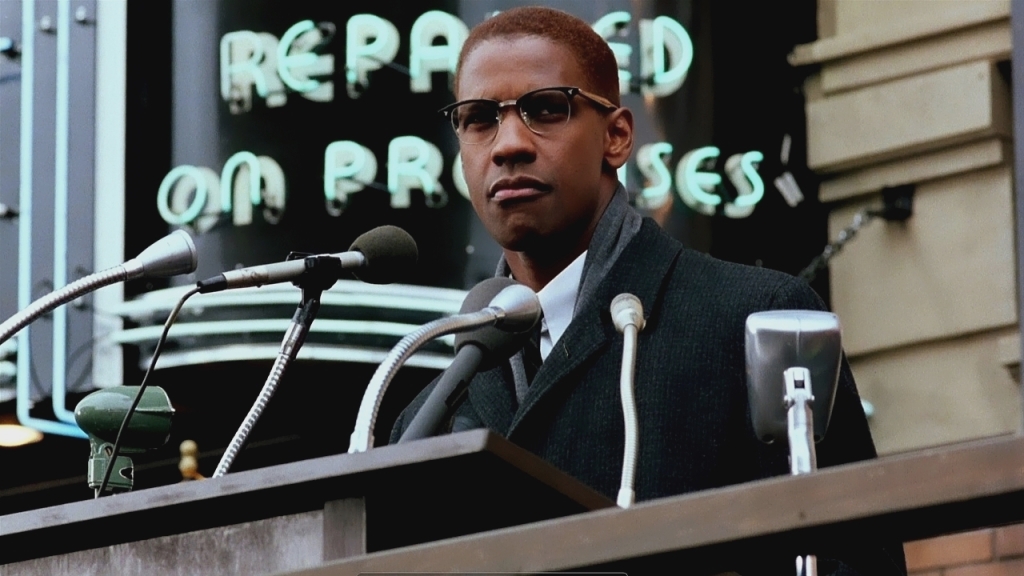
But in terms of biopics, few films are as comprehensive as Spike Lee’s Malcolm X (1992), a three-and-a-half-hour epic that tracks the controversial civil rights leader’s life from his younger years all the way to his assassination in 1965.

Even though these birth-to-death biopics are usually exhausting experiences, Lee’s ferocious directing combined with Denzel Washington’s Oscar-caliber lead performance proved to having staying power with generations of movie-goers, so much so that this motion picture (like the previous two examples) was entered the U.S. National Film Registry decades later.

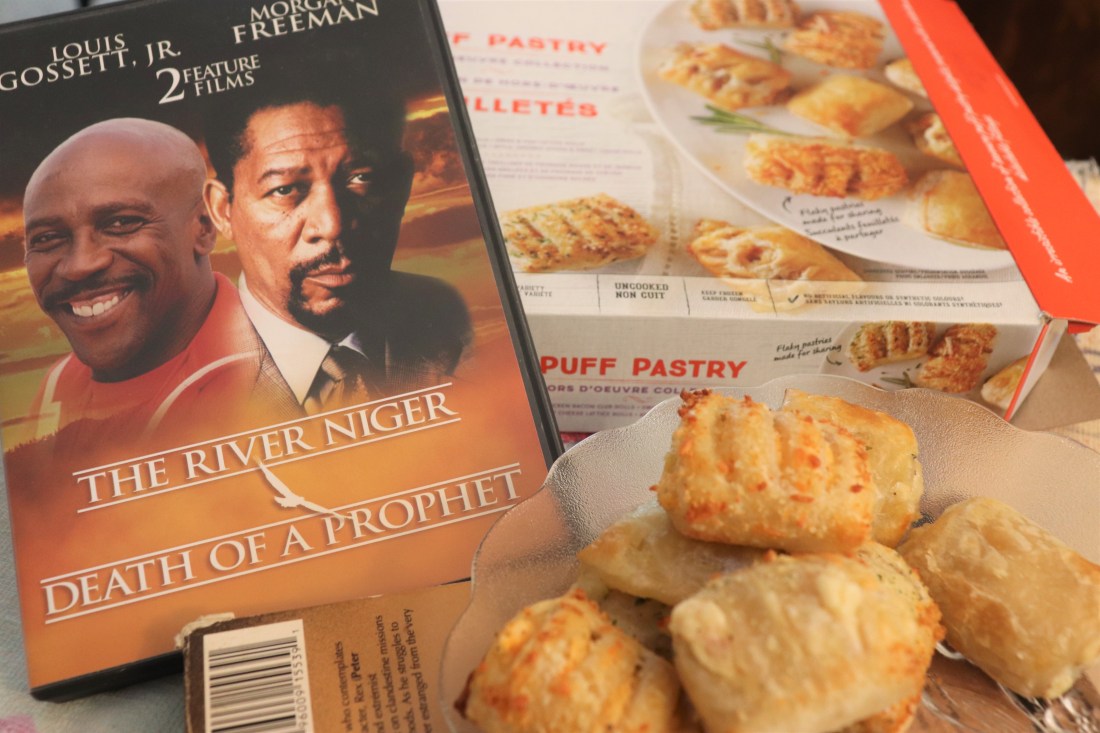
Lee’s Malcolm X is so influential that it’s easy to forget all the other times the Black empowerment icon showed up on the big and small screen prior to 1992, even with a big-time actor like Morgan Freeman taking on the role in Woodie King Jr.’s Death of a Prophet (1981).

But while this low-budget TV movie definitely has its merits, it’s easy to see how it got lost in the pop culture shuffle and eclipsed by future projects like Malcolm X.

Not only is Death of a Prophet plagued with head-scratching filmmaking decisions, but King Jr. also does a poor job of putting the events on screen in the proper context, which does a real disservice to such an important historical figure.

Instead of covering Malcolm X’s entire life, Death of a Prophet focuses on the 24 hours leading up to his demise, attempting to provide a small-scale portrait of a larger-than-life figure who knew his days were numbered.

Even though this premise is loaded with potential, the end product isn’t very compelling and comes across as an unfinished documentary that needed some additional footage.

Freeman spends a lot of his screen time wandering through the streets of New York City, where he bumps into some hippies, chats with a local bookstore owner, and is confronted by members of the FBI.

Throughout these encounters, the audience is rarely provided any real insight into Malcolm’s state of mind, with Freeman never getting the chance to flex any emotional range beyond some stern stoicism.   

Meanwhile, the film also spends a distracting amount of time following Malcolm X’s assassins as they prepare for his eventual killing at Manhattan’s Audubon Ballroom.

These scenes similarly fall flat, since King Jr. is only interested in having these characters discuss the logistics of the hit and bizarrely showcase the strength of their abdominal muscles at a karate dojo.

In both parallel storylines, the director is reluctant to fill audiences in on the historical events and political intrigue that led up to this point, namely Malcolm X’s split from and growing hostility towards the Nation of Islam.

Maybe this was done to avoid ruffling any feathers in the Black community, since the true identity of Malcolm X’s killers remains a contentious topic of debate even to this day.

But whatever the reason, the choice to deprive Death of a Prophet of all these critical background details robs the story of any real weight, especially for someone who isn’t familiar with Malcolm X’s legacy ahead of time.

The film’s low production values also don’t do a great job of selling the serious story that King Jr. is trying to tell.

Not only is the audio recording of the character dialogue pretty spotty, but the prominent hand-held camera work and dingy lighting can sometimes give off the impression that you are watching a series of home movies rather than a civil rights drama.

However, this biggest production shortcoming in Death of a Prophet can be found in the make-up and hairdressing departments, since they didn’t even try to make Freeman look like his historical counterpart.

I mean, would it have been that expensive to give the star of your movie a haircut?

On the other hand, this amateurish feel does imbue the film with a kind of rough-around-the-edges charm that occasionally manifests on screen.

While the recording of character dialogue is rough, King Jr. and his team inject the project with some naturalistic sound that does a decent job of setting the mood.

This heavy ambiance is most prevalent in the middle of the film, where Freeman is accompanied by a cacophony of honking cars and chattering bystanders as he makes his way through the streets of Manhattan, his paranoia of an impending assassination growing by the second.

When it comes to non-diegetic sound, Death of a Prophet features an energetic jazz score full of woodwind, brass, and percussion instruments that similarly manage to crank up the tension.

In fact, portions of the film even reminded me of Alejandro Iñárritu’s Birdman (2014), which also used an aggressive, drum-heavy score to foreshadow the main character’s impending demise.

And while King Jr.’s hand-held shooting style is a little clumsy at times, this technique gives the film a gritty, documentary-like feel that calls back to the vibrant Blaxploitation cinema of the previous decade.

This documentary-like quality extends to the film’s opening six minutes, which features interviews with people who knew Malcolm X in real life, like activist Yuri Kochiyama, poet Amiri Baraka, and actor Ossie Davis.

So even though King Jr.’s filmmaking craft and presentation of history is seriously flawed, it’s difficult to deny his passion for the main subject matter.

In retrospect, Death of a Prophet comes across as the director’s attempt to keep Malcolm X’s legacy alive 16 years following his death.

After all, his depictions in film and television up until that point (excluding an Oscar-nominated documentary from 1972) were relegated to supporting roles in bio pics featuring more mainstream civil rights heroes, like Muhammed Ali and Martin Luther King Jr.

By placing Malcolm X at the centre of his own story, one could argue that Death of a Prophet sets the stage for more comprehensive biopics down the line, with Spike Lee’s epic hitting theatres just over a decade later.

But even with the benefit of historical hindsight, Death of a Prophet still comes across as a half-baked appetizer that’s meant to tide you over for a full course meal.

Sure, you can appreciate it in the moment, but only because you know something way better will be served up shortly.

Verdict:

4/10

Corner store companion:

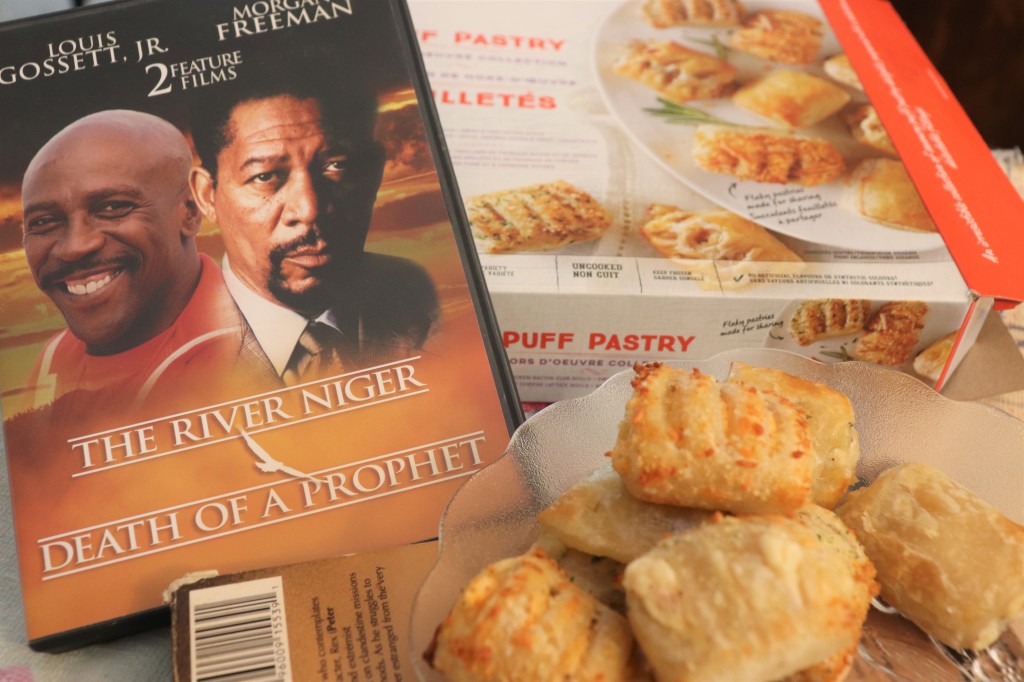
President’s Choice Puff Pastry Hors D’Oeuvres Collection (because they’re tasty enough, but can’t serve as a substitute for an actual meal)

Fun facts:

-Woodie King Jr.’s film and television projects pale in comparison to his work on stage, since he founded the New Federal Theatre in 1970 to better showcase African American playwrights. King Jr. wrote, directed, and produced dozens of plays throughout his multi-decade career, which netted him plenty of accolades (like the NAACP Image Award in 1988).

-Outside Morgan Freeman and Denzel Washington, Malcolm X has been portrayed by a variety of notable actors on film, television, and the stage. This list includes: James Earl Jones (The Greatest, 1977), Al Freeman Jr. (Roots: The Next Generations, 1979), Mario Van Peebles (Ali, 2000), Nigél Thatch (Selma, 2014), and Kingsley Ben-Adir (One Night in Miami, 2020).

-The percussion-heavy score featured in Death of a Prophet was composed by drummer Max Roach, who is known for being a pioneer in the bebop style of jazz.

Death of a Prophet can currently be watched in its entirety on YouTube:

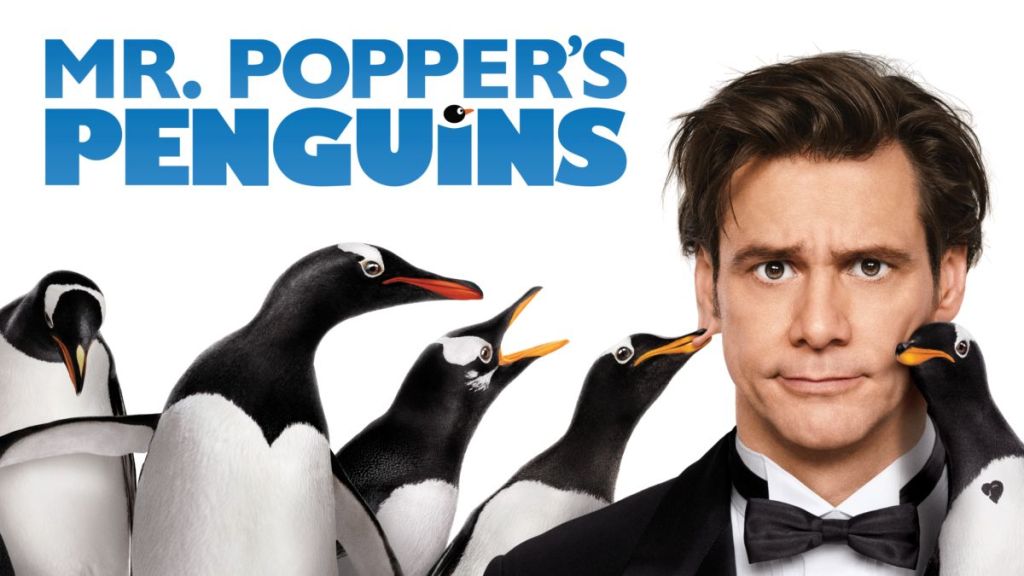
Mr. Popper’s Penguins (2011) review- when being nice isn’t enough

I found out way too late in life that it’s almost never a compliment when someone uses the word “nice” to describe your personality.

While our society could always use more kindness, people often deploy “nice” as a polite synonym for “bland” or “inoffensive,” which is not the kind of reputation that endears you to potential friends or employers.

Despite being on the receiving end of this descriptor for part of my youth, I’m hoping to exact some measure of revenge today by slapping the label on Mark Waters’ Mr. Popper’s Penguins (2011).

Because even though this film is a perfectly serviceable family comedy, there’s nothing really remarkable about the production that jumps out and demands your attention.   

Ironically, the last Mark Waters film I looked at for this blog, Head Over Heels (2001), had the opposite problem, since that rom-com is such a creative train wreck that you simply can’t look away.

Mr. Popper’s Penguins, on the other hand, seems like it’s on autopilot for most of its 94-minute runtime, relying on cute CGI animals and Jim Carrey’s trademark physical comedy to carry a fairly thin premise.

But just like those poor souls who are labelled “nice” in real life, this film does have admirable qualities that occasionally bubble to the surface, even if it’s all undermined by a monotonous quality that sucks all the oxygen out of the room. 

The plot of Mr. Popper’s Penguins revolves around Carrey’s titular real estate shark, who is living the good life in New York City when he suddenly receives a shipment of six gentoo penguins from his recently deceased father.

At first, Popper wants nothing to do with this waddle of Antarctic birds and bends over backwards to get them removed from his high-rise apartment.  

But over time, Popper develops a close bond with these animals, especially after their shenanigans help him reconcile with his divorced wife and kids.

The only thing that threatens this dynamic is antagonistic zookeeper, whose “evil” scheme involves [checks notes] taking the penguins into protective captivity where they can be properly cared for.

As you can probably tell by this recap, Waters and his screenwriters weren’t too concerned with crafting a subversive or ground-breaking story, which is probably the right call for a film that is intended for young children.

And to be fair, this stark simplicity imbues the film with a kind of earnest charm that is hard to deny.

Sure, the physical comedy on display here is pretty low brow — with no shortage of poop, fart, and nut-shot jokes — but it’s the kind of innocent fun you can get by watching “cute animal” compilations on YouTube.

Unfortunately, the titular penguins in this feature-length film fail to capture that same “awww” factor you can spot casually scrolling through Instagram, and it’s not because these birds look like horrifying demons in real life.

The big problem here is that the six main penguins are completely devoid of personality outside of the one shallow character trait that doubles as their name (Captain, Loudy, Bitey, Stinky, Lovey, and Nimrod).

And without the God-like presence of Morgan Freeman to narrate their inner thoughts and feelings, these birds are completely interchangeable throughout the film’s runtime, even during the more serious scenes where they are put in mortal peril.

This seriously makes me wonder why the movie, which was adapted from a 1938 children’s book of the same name, wasn’t given the full animated treatment.

That approach would have allowed the filmmakers to properly anthropomorphize these penguins for its intended family audience, similar to the winning formula that made properties like Happy Feet and Madagascar so popular around the same time.

But since this story is firmly set in the world of live action, most of the emotional beats are buttressed by Carrey and the rest of the human cast, which includes the likes of Carla Gugino as his divorced wife.

And to be fair, these actors have a lot of natural chemistry and do at least sell you on the idea that they are a dysfunctional family who are reconciling under zany circumstances.

Carrey is also surprisingly dedicated to what could have easily been a throwaway role, where he shows up, does the bare minimum amount of work, and collects a paycheck.

Instead, the famous comedian actually manages to wring some pathos out of this admittedly bare-bones script, including a touching sequence where he desperately tries and inevitably fails to save one of his penguin’s eggs.

Unfortunately, those genuine human moments are few and far between, with the movie mostly giving way to prat-fall comedy involving the penguins, like the scene where they wreak havoc at New York’s famous Guggenheim Museum.

While there’s nothing wrong with including these types of fluffy sequences in this breed of family film, they feel particularly superfluous here since there’s not a strong plot to string it all together.

Sure, the filmmakers attempt to add some meat on the bone by including a subplot about Carrey trying to convince a local restaurateur (played by Angela Lansbury) to sell her family business.

But the bulk of the runtime is still dedicated to these penguins causing property damage or dancing to Vanilla Ice music, which seems better suited for a 30-second Super Bowl commercial rather than a feature-length film.

It also doesn’t help that a lot of the film’s written jokes fall flat, with a couple recurring gags that border on excruciating.

The worst example of this is Carrey’s assistant (Ophelia Lovibond), whose vocabulary mostly consists of “P” words that she repeats in an alliterative frenzy.

Like the rest of the movie’s comedy, this gag would have been tolerable in small doses, but it gets old really quickly after an hour.  

With all that being said, I find it difficult to get genuinely worked up about Mr. Popper’s Penguins and the boilerplate filmmaking that is its defining feature.

Even though Waters and his crew don’t bring anything special to the table in terms of how this movie is shot, scored, or edited, it still possesses an innocent charm that is hard to deny.

And if you’re a parent looking to distract your young kids with some dumb bullshit for an afternoon this holiday season, you could certainly do a lot worse.

I know this may sound like I’m valuing Mr. Popper’s Penguins’ status as a “nice” film above all else and that’s partially true.

But given that this film became a punching bag for its admittedly dumb premise, being on the receiving end of some vicious lampooning from the writers of South Park, I thought some charitable words wouldn’t be the end of the world.

It is Christmas after all.

Verdict:

5/10

Corner store companion:

Oreo Mini snack packs (because they’re a good way to entertain the kids for an afternoon, but nothing more)

Fun facts:

-Release date: July 17, 2011

– Budget: $55 million

– Box office: $68,224,452 (Canada/US), $187,361,754 (worldwide)

-Noah Baumbach (Marriage Story, The Squid and the Whale) was originally slated to direct Mr. Popper’s Penguins, with actors Ben Stiller, Owen Wilson, Robin Williams, Rickey Gervais, Adam Sandler, Matthew Broderick, and Jack Black being considered for the title role.

-The end credits for Mr. Popper’s Penguins provide a cute little twist on the standard “no animals were harmed in the making of this film” disclaimer that you see in many motion pictures. In this case, the disclaimer reads: “No penguins were harmed in the making of this film. Jim Carrey, on the other hand, was bitten mercilessly. But he had it coming.”

-In order to keep his new featherless friends occupied during the day, Mr. Popper shows them a series of Charlie Chaplin films, including: The Kid (1921), The Gold Rush (1925), and The Circus (1928).

-A stage version of Mr. Popper’s Penguins was produced and performed in the late 2010s, although this musical is based on the original 1938 children’s novel as opposed to the 2011 feature film.

She Demons (1958) review – micro-budgeted monotony

While independent filmmakers are often lauded for their ability to work outside the system and complete a project using a modest amount of money, they don’t always arrive at the same destination career-wise.

For example, directors like Quentin Tarantino and Paul Thomas Anderson have become critical darlings despite their humble beginnings; debuting with simple crime features that lead to increasingly complex projects.

Meanwhile, people like Robert Rodriguez and John Carpenter have largely stuck with their lurid genre roots and developed more of a cult following as a result.

Then you have luminaries like Roger Corman, who is remembered more as a genius businessman because of his ability to turn a profit by shooting fast and cheap.

Some renegade directors have even cemented a legacy through their sheer lack of talent and business sense, which is largely the case with B-movie king Ed Wood.

But for every Ed Wood there are probably a thousand independent filmmakers like Richard E. Cunha, whose name has been cast into the dustbin of history while his similarly schlocky work lives on in the realm of public domain.

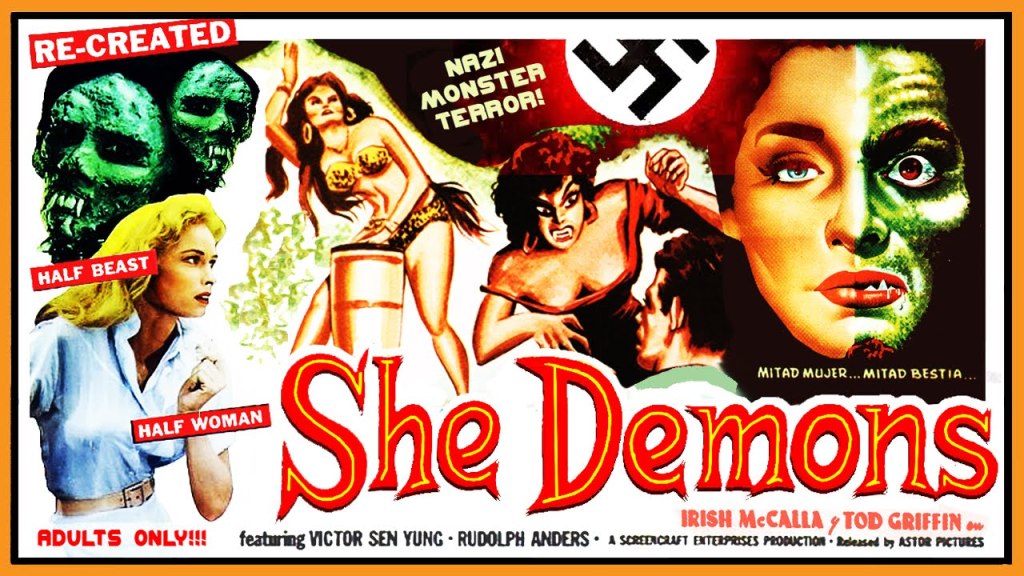
One of these projects is She Demons (1958), a sleazy science-fiction horror film whose production values are about on par with an elementary school play.

But to be fair, most elementary school plays at least go to some lengths to maintain some sense of stylistic consistency, whereas Cunha’s film feels like it consists of assets leftover from eight different movies.

And while part of me always admires the entrepreneurial spirit it takes to get any film project off the ground, especially on a micro budget, I can’t ignore the reality that She Demons feels like it is held together with chewing gum and masking tape.

For as disjointed as this movie gets, the plot is mercifully simple from the outset, where a spoiled heiress (Irish McCalla) and her entourage get shipwrecked on an uncharted island following a hurricane.

As the group gradually explores the island they stumble upon a menagerie of horrors, including Nazi soldiers, a mad scientist, and the titular female monstrosities, which turn out to be some conventionally attractive women wearing cheap Halloween masks.

After a bunch of corny fist fights and lengthy expositions dumps, the mad scientist eventually turns his attention towards McCalla, wanting to use her youth and vitality to restore the beauty of his horribly maimed wife.

Watching She Demons I was constantly reminded of a couple old episodes of Star Trek, the ones where the Enterprise crew would visit an alien planet that looked suspiciously like Earth during World War II or the Prohibition Era.

Of course, this sense of familiarity turned out to be a cost-saving measure, since it allowed the producers to re-use old sets, props, and costumes from other Paramount properties rather than shell out a bunch of money to create new ones.

It seems like Cunha’s team operated under the same penny-pinching philosophy, except they didn’t have access to the same caliber of writers that made those original Star Trek adventures so compelling.

Here, it seems like the story of She Demons was totally dependent on whatever sets, props, and costumes the filmmakers could get their hands on, leading to a weird sense of disconnect throughout the entire 77-minute runtime.

Admittedly, some of the exterior scenes look alright, since Cunha and his team at least had the good sense to shoot on an actual beach and public park in California to maintain the illusion that his characters are stuck on a tropical island.

But that illusion completely shatters whenever the actors venture indoors and are forced to interact with these cheap sets that were either quickly made or taken from other movies.

The patchwork nature of this production is present in a lot of other places as well, with the overuse of stock footage being a repeat offender.

The filmmakers didn’t even bother to set up important establishing shots in some cases, outright omitting any depiction of the giant shipwreck that’s supposed to set the entire plot in motion.

Now, you could excuse a lot of these shortcomings as being a byproduct of the film’s reported $65,000 budget, since that kind of money doesn’t leave a lot of creative wiggle room for a sci-fi, horror mashup, even by 1958 standards.

But what isn’t excusable is the movie’s script, which is simultaneously sloppy, nonsensical, and extremely long-winded.

For whatever reason, Cunha decided to take a simple premise (people getting stuck on an island populated with monsters) and weigh it down with a bunch of extraneous nonsense.

Instead of focusing on the characters’ struggle to survive, the film keeps introducing new outlandish concepts that come out of nowhere, like long-lost Nazis, experimental gene therapy, and using lava as a renewable energy source.

Cunha gets so carried away with these ideas that the titular “She Demons” barely factor into the plot and are only used as set dressing past a certain point.

It also doesn’t help that the movie’s complicated fake science is explained during a 10-minute-long speech from the main villain that only succeeds in bringing the film to a grinding halt.

The characters themselves aren’t much to write home about either, although you can at least tell that certain members of the case are trying to squeeze something meaningful out of this bonkers script.

The only person who comes close to making a lasting impression is Rudolph Anders as the main villain, since this German actor made a career out of playing doctors and Nazis and knows how to fuse those two archetypes together.

Irish McCalla also makes an impression as the leading lady, but that probably has more to do with her measurements than her acting ability.

Tod Griffin isn’t even worth bringing up as the main love interest, since his monotone delivery constantly sounds like he’s reading his dialogue off of cue cards.

While Victor Sen Yung is saddled with the hapless role of the wisecracking sidekick, the filmmakers at least had the decency to not force him to adopt a stereotypical Asian accent (as was the style at the time).

However, that didn’t stop Cunha and his co-writer from inserting some eye-rolling Oriental-flavoured expressions into the script, getting Yung to yell “jumpin’ wanton!” and “Great Confucius’ ghost!” at various points in the movie.

And despite the overall zaniness of the plot, She Demons’ biggest sin is it is a boring watch most of the time, with a punishingly sluggish pace that only picks up in the final five minutes.

So if you’re planning a Halloween-themed bad movie night, it’s best to avoid this film even in that context, since including it in your lineup will only succeed in killing the vibe.

The only real value you can glean from watching She Demons is purely academic, since it might give you some insight on what to avoid if you plan on shooting a movie for $65,000.

Now, I know that sounds harsh, especially since scrappy movie makers like Cunha still serve as inspiration to aspiring artists looking to break into the industry today.

But as much as cinephiles like to celebrate independent filmmaking as a whole, it’s always important to acknowledge the trash alongside celebrating the treasure, with She Demons being a prime example of the former.

Verdict:

2/10

Corner store companion:

OMG! Milk Chocolately Clusters (because you deserve to enjoy a delicious snack while watching this dreck)

Fun facts:

-Release date: Jan. 3, 1958 (U.S.)

She Demons was originally released in theatres as a double feature with Giant from the Unknown (1958), another cheaply made sci-fi, horror mashup directed by Cunha and released by Astor Pictures.

-Richard Cunha got his start in show business during World War II, where he served as an aerial photographer for the military. From there, he was transferred to Hal Roach Studios in Los Angeles to make training films, newsreels, and documentaries. After the war, Cunha worked his way up to becoming a cinematographer on television and eventually started directing his own feature films.  

She Demons marked the only time actress Irish McCalla received top billing in a feature film. She was also known for her starring role in the cult TV show Sheena: Queen of the Jungle (1955-56). McCalla retired from acting in the early 1960s and would go on to establish herself as a respected oil painter.  

She Demons can be viewed in its entirety on YouTube (the picture quality here is actually an improvement over my DVD copy from Echo Bridge Entertainment).

Bandit Goes Country (1994) review – a shoddy new coat of paint

While film studios used to draw their power from the marquee stars they had under contract, it seems like the more valuable resource in the entertainment industry these days is intellectual properties.

So instead of focusing a lot of time and money on producing the next “John Wayne” or “Jimmy Stewart” picture, these movie executives are far more interested in cultivating big money-making franchises that allows them to produce as many sequels, prequels, spin-offs, and ancillary TV shows as possible.

Because of this, a significant amount of online discourse is now being dedicated to how these various studios are managing their IPs, with Disney and WarnerMedia currently catching a lot of heat for their handling of Star Wars and DC Comics projects, respectively.

Even though these multi-billion-dollar companies should be subject to public criticism, we should always keep things in perspective and realize that this dynamic could always be alot worse.

Because in my experience, I don’t ever think I’ve seen a film studio fumble the ball harder than Universal’s stewardship of the Smokey and the Bandit franchise.

After all, the original Smokey film starring Burt Reynolds became a cultural and box office juggernaut in 1977 by tapping into the rebellious spirit and easy-going attitude that characterized that particular decade.

And while the sequel that followed in 1980 was still financially successful, a lot of the magic had been lost by that point, causing director Hal Needham to sit out Part 3 altogether.

The third Smokey movie turned out to be such a thermonuclear disaster both in front of and behind the camera that the studio didn’t even touch the property again until the mid-1990s, greenlighting a series of four made-for-TV movies for Universal Television’s “Action Pack” programming block.

The first of these TV movies to emerge was Bandit Goes Country (1994), which starred Brian Bloom as the title character and saw the return of Needham to the franchise for the first time in over a decade.

Despite these familiar trappings, it’s pretty obvious that Universal was just hoping to produce a generic, low-effort action-comedy series with the “Bandit” name slapped on it.

Because without that title, this movie has no personality of its own and seems like it is riding off the coattails of other mid-90s TV schlock like Renegade or Walker, Texas Ranger more than anything.

Before you even get into the plot, Bandit Goes Country is already a mess from a conceptual level, since it’s very hard to figure out how it relates to the original three feature films.

IMDB describes this TV movie as something that “appears to be a prequel to the Smokey and the Bandit films” based on, I’m guessing, how young Bloom is compared to Reynolds during his first appearance as the character.

However, that theory goes right out the window as soon as you realize that Bandit Goes Country takes place in the 1990s and not in the 1960s like a proper prequel would require.

Additionally, the cast of this TV movie don’t feature any younger versions of the characters from the original trilogy, including Snowman (Jerry Reed) or Sheriff Buford T. Justice (Jackie Gleason).

Even some of the more superficial elements of those original movies are missing, with the Bandit’s iconic Pontiac Trans Am being traded in for a Dodge Stealth.

So based on that information, I can only conclude that Bandit Goes Country is more of an attempt to reboot the franchise with a fresh coat of paint, completely unburdened by any past continuity or canon.

While I can respect the impulse to try something different and not rely on Baby Boomer nostalgia to get by, the filmmakers clearly didn’t have any idea of where to take the character using this blank canvas.

This lack of direction is most visible in the movie’s story, which just meanders for 90 minutes and gets bogged down in a bunch of useless subplots.

The main storyline here involves Bandit returning to his hometown, where he attempts to make peace with a rival community that’s held a grudge against his people for generations.

But instead of sticking to that simple premise, the filmmakers constantly take you on these narrative detours that don’t amount to much.

These distracting subplots include:

-Bandit being hired to transport country music star Mel Tillis to his upcoming concert.

-Bandit being hounded by government agents who are investigating his cousin’s music pirating business.

-Bandit attempting to rekindle a romance with his childhood sweetheart (Elizabeth Berkley).

-Bandit trying to help another one of his old girlfriends marry her new beau in secret (since he hails from this rival community).

-Bandit picking up this random female hitchhiker, who does nothing throughout the whole movie until she decides to shack up with his cousin at the last minute for no reason (the pair had previously shared one small scene together).

With all these things happening at the same time, Bandit Goes Country feels like you’re watching someone play a redneck-themed RPG, where they decide to tackle all the side missions and completely ignore the main quest.

Story structure aside, what really sinks this television reboot is the noticeable lack of impressive automotive stunt work.

After all, this kind of thing was Needham’s big claim to fame as a director and you think that he would cook up something really special for his grand return to the series that made him a household name.

But outside of an early scene involving a light aircraft landing on a moving flatbed truck, the movie plays it pretty safe and seems reluctant to put its main character in any kind of mortal peril behind the wheel.

While I’m sure that Needham and his crew were constrained by a modest TV budget, that doesn’t excuse the sheer lack of imagination that ends up on screen.

To try and compensate, the filmmakers really lean into Bandit Goes Country’s status as a comedy, with Mel Tillis and his manager (Charles Nelson Reilly) taking on the lion’s share of the movie’s slapstick gags.

Unfortunately, most of these jokes fall completely flat and feel just as half-baked as the stunt work, something that’s become a recurring pattern in Needham’s career through films like Smokey and the Bandit II (1980), The Cannonball Run (1981) and Body Slam (1986).

The cast also don’t make a very strong impression overall, with Bloom being the worst offender as the Bandit.

To be fair, the actor was definitely set up to fail from the beginning. Stepping into Reynolds’  boots is no easy task, especially if audiences were only familiar with Bloom’s work through the long-running soap opera As the World Turns at that point.

While Bloom would later showcase his range in the realm of voice acting, he’s completely lost in this project, being content with playing a smirking douche instead of a charming rogue like the role requires.

He’s also not done any favors by the wardrobe department, who decided to dress him up in the worst kind of mid-90s fashion, including a belt buckle with a giant “B” printed on it (like he’s a low-rent superhero).

But in Bloom’s defense, I imagine even Laurence Olivier would have trouble wringing a good performance out of this piss poor material, which seems like it was slapped together over a weekend.

Ultimately, I’m still kind of baffled that Universal Television saw fit to broadcast Bandit Goes Country at all.

It’s so flavourless and devoid of any similarity to the original source material that I can’t imagine it being a great starting point for the studio’s Action Pack programming block (that launched the same month this movie aired).

At least Another Midnight Run (1994), which I screened back in 2019, bore some resemblance to the feature film it was spinning off from in terms of characters and plot, ensuring that someone must have enjoyed it.

With Bandit Goes Country, it seems like Needham and his crew couldn’t even be bothered to put in the bare minimum effort to satisfy old Smokey fans or to even reel in new viewers.

And while I haven’t seen the three remaining TV movies in this series, it’s obvious that Universal’s poor management of this franchise in the 1990s lead to its untimely death, since all other attempts at another revival have sputtered out.

But at the end of the day, that might be for the best.

Our current media landscape is completely built on the cynical resurrection of old nostalgic properties, and we don’t need another re-animated corpse added to its foundations.

Having said that, I could totally see Universal dusting off this property once again if the company needed a new, high-profile TV show to help launch its own streaming service.

Maybe Bandit could wear a fedora and drive a Tesla instead of relying on the classic cowboy hat/Trans Am combo. That would get Twitter buzzing.

Verdict:

2/10

Corner store companion:

No Name Salt and Vinegar Potato Chips (because if you’re watching this movie, you already have an appetite for some off-brand entertainment)

Fun facts:

-Release date: Jan. 30, 1994

Bandit Goes Country was followed by three other made-for-TV movies that aired the same year. This series includes: Bandit Bandit (March 13, 1994), Beauty and the Bandit (April 3, 1994), and Bandit’s Silver Angel (April 10, 1994). All four movies starred Brian Bloom and were directed by Hal Needham.

-Elizabeth Berkley’s role in Bandit Goes Country represents an interesting transitional period for the actress, since her time on the TV sitcom Saved By the Bell (1989-1992) had come to an end and she was a year away from attempting to launch her movie career by starring in Paul Verhoeven’s Showgirls (1995).

-Outside of serving as a supporting character in Bandit Goes Country, Mel Tillis also appeared in Smokey and the Bandit II as an amusement park owner.  

-Musical highlight: “Coca Cola Cowboy” by Mel Tillis (the country music star gets rewarded for being in this turd by having his song play as Bandit rides off into the sunset)

Blood Tide (1982) review- come for the monster, stay for the bikinis

When it comes to my preferred style of film criticism, I try to avoid making it sound like a mathematical equation as much as possible.

After all, your evaluation of a particular movie can’t always be summed up by the simple listing of its pros and cons.

Instead, you sometimes have to just go with your gut and write about how a piece of art makes you feel, even if it flies in the face of a much more empirical form of analysis.

With that being said, weighing a movie’s strengths and weaknesses like you are trying to balance a scale is sometimes your best option, especially if that movie is Richard Jefferies’ Blood Tide (1982).  

Because while this low-budget creature feature has a lot of admirable qualities — like a consistently creepy mood, attractive cinematography, and at least one stand-out performance — it is held back by one glaring flaw.

And unfortunately, that one major shortcoming is the creature itself, which is hilariously fake and barely shows up on screen.

But if you can look past that laughable rubber suit you’ll find that Blood Tide still has a lot to offer fans of the folk horror genre, particularly for those same people who are also fond of James Earl Jones’ unique over-the-top acting.  

The plot of Blood Tide follows Neil and Sherry Grice (Martin Kove and Mary Louise Weller), an American couple who travel to an isolated Greek island to find the former’s missing sister.

Shortly after the Grices arrive at their destination, they discover that the sister (Deborah Shelton) is hanging out with a middle-aged archeologist (Jones), since the pair are obsessed with a mythological legend surrounding the island.

However, as these tourists continue to dig deeper into the island’s secrets, they run afoul of some hostile locals on land and a serpentine beast in the sea, turning this Mediterranean vacation into a real bummer.

Now, before I go on to bash how lame the monster costume is in Blood Tide, I have to commend the filmmakers for at least creating and maintaining a menacing atmosphere throughout the movie’s 92-minute runtime.

One of the hallmarks of the folk horror genre (The Wicker Man, Midsommar, etc.) is making the viewer feel isolated and paranoid, which is usually accomplished through trapping the main characters in a remote geographic location that is populated with sinister, cultish people.

While Blood Tide contains all the plot elements needed to check this box, Jefferies and his team crank up that looming sense of dread using every tool within their limited budget.

Cinematographer Aris Stavrou definitely pulls his weight by providing the viewer with wide, lingering shots of the island and the surrounding ocean, highlighting how alone the main characters really are.

In terms of audio, the film is populated with a bunch of quality music and sound effects that keep you slightly on edge, whether that is water dripping off a cave wall or a synth score that intentionally undercuts all those beautiful Greek vistas.

It also doesn’t hurt that most of the acting on display is pretty solid, with James Earl Jones being a particular standout.

His treasure hunter character easily steals every scene he’s in, with Jones chomping through chunks of scenery as he liberally quotes Shakespeare, handles explosives while drunk, and punches watermelons before eating them.

Even though this kind of zany acting style is very hit or miss for me, Jones brings just enough gravitas to the table so that you can take his character seriously, while also leaving room for some off-the-wall antics.

Unfortunately, a lot of this good will gets squandered by the time the monster shows up.

While I’m sure the filmmakers were trying to make this thing look like some kind of primordial underwater beast, it comes across as being more of a giant muscular seahorse with leprosy.     

And I have a sneaking suspicion that the director knew that his main selling point looked like crap, because it barely shows up in the movie.

If you were to clock it, I would say that the monster in Blood Tide has less than 30 seconds of screen time, with a lot of its movement being hidden by quick, incomprehensible cuts.

As a result, most of the creature’s menace has to be conveyed through first-person POV shots, which are sometimes ripped right out of Steven Spielberg’s Jaws (1975).

But unlike Jaws, there’s no big payoff at the climax of Blood Tide, where the viewer’s patience is rewarded with a clear view of the monster that’s been lurking in the depths this entire time.

Instead, [SPOILERS] all you get is a blink-and-you-miss-it confrontation between Jones and the creature that caps off the story on a real sour note.

Another unfortunate byproduct of the cheap effects is that the pace of the movie can sometimes drag, since the filmmakers can’t rely on shots of the monster to fill up time.

As a result, Jefferies and his team try to compensate by shooting a lot of scenes involving the main cast lounging around in their bathing suits, hoping that the constant presence of sex will override the severe lack of violence.

Even though this strategy works in the beginning, it grows stale as the movie moves forward, especially when the story reaches its rather lame climax.

With that being said, I never found myself truly bored watching Blood Tide, since its eerie mood and likable cast kept my attention throughout (even though it didn’t pay off in the end).

If the filmmakers had been given a bigger budget, it’s entirely possible that this project could have become a genuine folk horror classic, rather than just a cult curiosity that randomly features a heavy-weight actor like Jones.

But as it stands, I think the filmmakers should receive some recognition for working within their limitations and creating something that has managed to lodge itself in my mind.

Of course, one of my biggest takeaways from watching Blood Tide is that we desperately need more B-horror movies set in Greece, since that part of the world seems like an untapped market for combining scantily clad women and mythological beasts. 

Verdict:

6/10

Corner store companion:

Liberté Greek yogurt (because it’s the closest I’m getting to a Greek vacation this summer)

Fun facts:

-Release date: Sept. 24, 1982

-Throughout his career, Blood Tide director Richard Jefferies only helmed one other major project, the 2008 Syfy Channel original movie Living Hell.

-In the movie, Deborah Shelton makes reference to the fact that James Earl Jones’ character played Othello once in college and “never quite got over it.” In real life, Jones has portrayed the Shakespearean character multiple times on stage, including a 1981 Broadway revival alongside Christopher Plummer as Iago.

Blood Tide can currently be watched in its entirety on YouTube (although the picture quality is quite poor and nothing compared to the recent Blu Ray release from Arrow Video).

-The song that plays over the movie’s end credits is sung by actor Deborah Shelton herself.